- English
- French
- German
- Portuguese
- Spanish
- Russian
- Japanese
- Korean
- Arabic
- Greek
- German
- Turkish
- Italian
- Danish
- Romanian
- Indonesian
- Czech
- Afrikaans
- Swedish
- Polish
- Basque
- Catalan
- Esperanto
- Hindi
- Lao
- Albanian
- Amharic
- Armenian
- Azerbaijani
- Belarusian
- Bengali
- Bosnian
- Bulgarian
- Cebuano
- Chichewa
- Corsican
- Croatian
- Dutch
- Estonian
- Filipino
- Finnish
- Frisian
- Galician
- Georgian
- Gujarati
- Haitian
- Hausa
- Hawaiian
- Hebrew
- Hmong
- Hungarian
- Icelandic
- Igbo
- Javanese
- Kannada
- Kazakh
- Khmer
- Kurdish
- Kyrgyz
- Latin
- Latvian
- Lithuanian
- Luxembou..
- Macedonian
- Malagasy
- Malay
- Malayalam
- Maltese
- Maori
- Marathi
- Mongolian
- Burmese
- Nepali
- Norwegian
- Pashto
- Persian
- Punjabi
- Serbian
- Sesotho
- Sinhala
- Slovak
- Slovenian
- Somali
- Samoan
- Scots Gaelic
- Shona
- Sindhi
- Sundanese
- Swahili
- Tajik
- Tamil
- Telugu
- Thai
- Ukrainian
- Urdu
- Uzbek
- Vietnamese
- Welsh
- Xhosa
- Yiddish
- Yoruba
- Zulu
What Are the Advantages of 6al 4v titanium round bar?
The 6Al-4V titanium round bar is the most flexible and widely used titanium alloy in the world of production. It has a unique mix of high strength, low weight, and excellent resistance to corrosion. This alpha-beta alloy, also known as Grade 5 titanium or UNS R56400, performs better than any other in aircraft, medical device production, chemical processing, and marine engineering. It is the best choice for situations where dependability and sturdiness cannot be sacrificed.
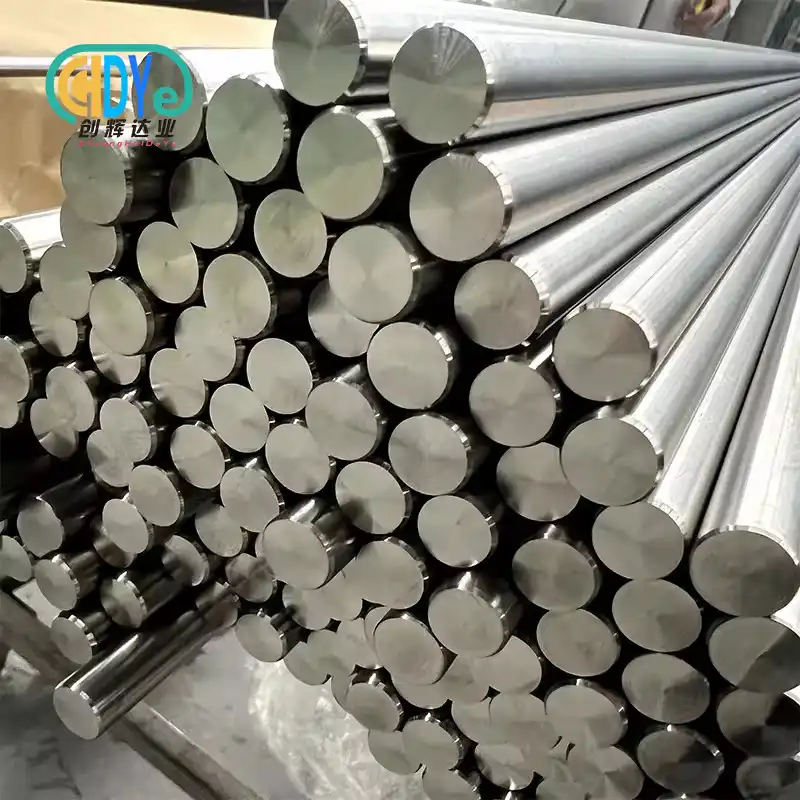
Understanding 6Al 4V Titanium Round Bar: Composition and Properties
Grade 5 titanium is excellent for technology because its chemicals are perfectly balanced. This material has amazing qualities thanks to careful metallurgical design. It is made up of about 90% titanium, 6% aluminum, and 4% vanadium. The aluminum works as an alpha stabilizer, making the material much stronger at room temperature while keeping its workability. At the same time, vanadium keeps the beta phase stable, which makes it more responsive to heat treatment and easier to shape.
Chemical Composition and Microstructure
ASTM B348 and AMS 4928 standards say that intermediate parts must be strictly controlled to ensure that performance is always the same. To keep the material from becoming too weak, the iron content is limited to 0.40%, the oxygen content to 0.20%, and the hydrogen content to below 0.015%. This exact chemical balance makes a two-phase lattice that blends the best features of both alpha and beta titanium alloys. The material is then reliable in harsh conditions.
Mechanical Characteristics and Performance
Engineers choose this material for important uses based on its mechanical features. The metal has a minimum tensile strength of 895 MPa (130 ksi) and a yield strength of 828 MPa (120 ksi) after being heated. It can also stretch by about 10%. The density is about 4.43 g/cm³, which is about 40% lighter than steel. This means that you can save a lot of weight without losing structural integrity. The 113.8 GPa elastic stiffness gives it the flexibility needed for fastener uses while keeping its shape when it's loaded. Hardness usually falls between Rockwell C30 and C34, which makes it very resistant to wear for machined parts.
Heat Treatment Capabilities and Thermal Stability
Solution treatment and age (STA) methods work very well on Grade 5, but not on commercially pure titanium grades. With this type of heat treatment, makers can change the mechanical properties to fit the needs of a specific purpose, making the steel much stronger than when it was just annealed. At temperatures up to 400°C (750°F), the metal keeps its shape and mechanical performance. It also has excellent creep resistance, which means it can be used reliably for a long time at high temperatures. This temperature stability is especially useful for parts of airplane engines and tools used in chemical processing that are exposed to heat for long periods of time.
The Advantages of 6Al 4V Titanium Round Bar in Industrial Applications
Knowing the useful benefits helps engineers and buying workers figure out where this material is the best value. The following properties meet important performance needs in several different industries.
Superior Strength-to-Weight Ratio for Aerospace and Automotive
6Al-4V titanium round bars are very important to the aircraft industry because they have a strength that is similar to many steel alloys but weigh 50% less. When used in cars and aeroplanes, this weight decrease directly leads to better fuel economy. This mix of qualities is good for landing gear parts, rotor blades, aircraft structural elements, and fasteners. More and more, automakers are using Grade 5 titanium in high-performance vehicles. This is especially true for suspension parts, exhaust systems, and engine valves, where less unsprung weight makes the vehicle handle better. The material lets engineers make parts that meet strict safety standards without adding extra weight that comes with using other materials.
Biocompatibility and Medical Device Applications
Due to its high biocompatibility, Grade 5 titanium is used by companies that make medical devices for implants and surgical tools. Through osseointegration, the material naturally joins with human bone tissue. This makes it perfect for hip replacements, dental implants, spine fusion devices, and tools used to fix injuries. The metal meets the standards for medical implants set by ISO 5832-3 and doesn't cause any bad tissue reactions when it's in place for a long time. Surgeons like that the material is radiolucent, which lets them get good X-rays after surgery. An alloy made of titanium is the standard for current medical and dental uses because it is strong, biocompatible, and doesn't rust in body fluids.
Corrosion Resistance in Marine and Chemical Environments
Corrosive conditions are always a problem for places that process chemicals and make marine tools. 6A L-4V titanium round bars of Grade 5 prevent corrosion in seawater, aquatic environments, wet chlorine, chlorine dioxide, and many acidic solutions where stainless steels rust quickly. This alloy is used to make heat exchangers, pressure tanks, pipe systems, and pump parts that last longer and need less upkeep. This material doesn't rust, so it stays strong without protective coatings that wear off over time. This makes it perfect for offshore bases and desalination plants. The longer replacement times and lower upkeep needs save a lot of money over the life of the product, even though it costs more at first.
Fatigue Resistance and Wear Performance
Grade 5 titanium has great wear resistance, which is useful for manufacturing processes that need parts that can handle repeated loads. The material can go through millions of stress cycles without cracking, which makes it good for parts of machinery that spin, springs, and structural parts that shake. The alloy's resistance to wear is useful in tooling, especially for making forming dies and fittings that need to stay the same size. The low rate of thermal expansion keeps size changes to a minimum when temperatures change, which is important for precision production settings that need to keep close tolerances.
Comparing 6Al 4V Titanium Round Bar with Other Materials
When choosing a material, it's important to carefully weigh all of your options to get the best performance and value for your money. The following similarities help people make choices about procurement.
Grade 5 Versus Other Titanium Alloys
But compared to Grade 5 (Ti-5Al-2.5Sn), the 6Al-4V makeup is stronger and works better at high temperatures, but it is a little less flexible. Grade 23 (Ti-6Al-4V ELI) is an extra-low interstitial version that has better fatigue resistance and fracture toughness. It is usually used in medical and military applications that need to be very reliable, which is why it costs more. Grades 1-4 of commercially pure titanium are better at resisting rust and being shaped, but they are not strong enough for structural uses. The alpha-beta microstructure of Grade 5 is just the right mix of strength, formability, weldability, and heat treatment response for a wide range of industrial uses.
Titanium Versus Stainless Steel Performance
When Grade 5 titanium is compared to high-tech stainless steels like 904L, clear benefits can be seen in certain situations. Even though 904L stainless steel is less expensive and has good corrosion protection, titanium works better in chloride-rich settings where stainless alloys rust in pits and cracks. When it comes to aerospace and mobile uses, where every kilogram counts, the weight edge is very important. Titanium is much more biocompatible than stainless steel when it comes to medical uses. But stainless steel is still cheaper for uses where weight and resistance to extreme rust are not as important as the cost at first.
Market Landscape and Supplier Considerations
There are well-known sellers with track records in the global titanium market. Manufacturers like TIMET and VSM offer approved materials that meet aerospace standards. For industrial uses, area suppliers all over the United States offer cheap options. Prices change based on the cost of raw materials, the factory's ability to make the product, and the demand in the market. Depending on the specs and order amounts, prices are usually moderate to high. Instead of just looking at price, procurement teams should look at providers' certifications, quality systems (ISO 9001:2015), traceability processes, and how reliably they deliver. When you have a long-term relationship with a seller, the properties of the materials you use are uniform across production batches. This means that the end product performs more consistently.
Practical Guidance for Procuring 6Al 4V Titanium Round Bars
To successfully purchase something, you need to pay attention to the requirements, the qualifications of the seller, and the details of making sure the material fits the needs of the application.
Certification and Quality Assurance Protocols
Reliable sellers give full material certifications that show the chemical makeup, mechanical qualities, and manufacturing history of the product. Each package should have a mill test report (MTR) that says it meets certain standards like ASTM B348, AMS 4928, or ISO versions. If a company has ISO 9001:2015 approval, it means they have strong quality control systems that check everything from the raw materials to the finished product. For aerospace uses, you may need extra paperwork like AMS standards and certain melting methods like vacuum arc remelting (VAR) to make sure the material is pure and uniform.
Customization Options and Order Considerations
To meet the needs of different applications, manufacturers offer a range of circle sizes, lengths, and surface styles. Standard sizes range from small, precise rods to big forgings that are more than 300 mm across. Depending on what needs to be done next, the surface can be as-rolled, centreless ground, or precisely cut. Many providers can make special sizes for big orders, but there may be a minimum order quantity. Lead times range from a few weeks for normal sizes to several months for unique orders that need special melting campaigns. Getting in touch with sources early on during the planning phase helps figure out what sizes are available and cuts down on the time it takes to get them.
Logistics and Import Considerations
To keep the surface from getting damaged during shipping, titanium parts need to be properly packed. When compared to foreign sources, domestic providers in the United States usually have shorter lead times and easier logistics. Trade rules, taxes, and paperwork for customs make buying things from other countries more difficult. However, if you need a lot of things, global shopping may save you money. Reliable sellers keep extra goods on hand and can change their production schedules quickly to meet the needs of urgent projects. Setting up relationships with chosen suppliers makes it easier to place repeat orders and makes sure that priority orders are given during times when the market is short on supplies.
Why 6Al 4V Titanium Round Bar Is the Strategic Choice for B2B Clients?
Long-term value includes more than just the original cost of the item. It also includes how well it works and how it affects the business.
Lifecycle Cost Efficiency and Durability
Even though Grade 5 titanium costs more up front than steel or aluminum, it has great lifetime economics thanks to its longer service life and lower upkeep needs. Components don't rust because they don't have protective coverings that need to be replaced every so often. The material's resistance to fatigue keeps surprise breakdowns and the costs of downtime to a minimum. Getting mobile apps to use less data means they use less power, which adds up over years of use. When engineering teams compare different materials, they should look at the total cost of ownership, which includes the cost of the material itself, as well as the cost of manufacturing, installation, upkeep, and replacement.
Compliance and Quality Enhancement
Using approved titanium from trustworthy sources makes sure that you follow industry standards and government rules. To get airworthiness approval, aerospace makers must meet strict AMS requirements and show proof of traceability. Manufacturers of medical devices need materials that meet biocompatibility guidelines and FDA rules. Suppliers who are ISO-certified have committed to quality systems that keep product performance stable and reduce differences between batches. This dependability makes customers happier and improves the brand's image while also lowering the cost of warranties and the company's risk.
Innovation and Competitive Advantage
Titanium alloys are being used more and more in advanced businesses to make next-generation goods that work better. Aerospace engineers push the limits of how much fuel can be saved by designing structures that are as light as possible. Medical developers make devices that work better with the body and improve patient results. Automotive speed experts make parts that improve how a vehicle moves. Working with titanium suppliers who know what they're doing gives you access to technical knowledge that can help you improve designs and come up with new ways to make things. This way of working together speeds up the process of growth and makes companies more competitive in tough markets.
Conclusion
In conclusion, 6Al-4V titanium round bar is very useful in many fields, including aerospace, medicine, chemical processing, and the marine industry, because they are strong, light, and doesn't rust. The metal can be heated, is biocompatible, and doesn't wear down easily, all of which are important performance standards that other materials can't meet. When procurement workers work with certified sellers who offer full technical support, reliable delivery, and consistent quality, they gain a competitive edge. In addition to material qualities, the strategic benefits include lower lifetime costs, compliance with regulations, and the ability to bring new ideas to the market, all of which lead to long-term business success.
FAQ
Q: What is the density of Grade 5 titanium compared to steel?
A: Titanium alloys of Grade 5 have a mass of about 4.43 g/cm³ (0.160 lb/in³), which is about 40% less than steel alloys. This big drop in weight lets engineers make parts that are just as strong but have a lot less mass. This saves fuel in aerospace and car uses where weight directly affects performance and monetary costs.
Q: Can Grade 5 titanium be heat treated to increase strength?
A: Solution treatment and age (STA) heat treatment work well on Grade 5 titanium. This feature lets makers greatly boost strength above the properties seen in the annealed state, adjusting the mechanical properties to fit the needs of a particular application. This alpha-beta alloy is different from widely pure titanium types that can't be made stronger through thermal processing because of how it reacts to heat treatment.
Q: How does titanium compare to stainless steel in corrosive environments?
A: When it comes to chloride-rich settings, like seawater, marine atmospheres, and chemical processing, 6Al-4V titanium round bar works better than most stainless steel metals. In these conditions, pitting and crevice corrosion happen to stainless steels, but titanium stays strong without any protective layers. This resistance to corrosion means that the product will last longer and need less upkeep, which is especially helpful in chemical processes and offshore sites.
Partner with Chuanghui Daye for Premium Titanium Solutions
Shaanxi Chuanghui Daye Metal Material Co., Ltd. has been working with rare metals for more than 30 years and has quality systems that are ISO 9001:2015 approved. They can provide reliable 6Al-4V titanium round bar options for tough industrial uses. China's Titanium Capital hosts our modern production facilities, which include vacuum arc remelting, precision machining, and a wide range of testing tools. They ensure that the material features always meet ASTM B348 and AMS standards. We have low factory-direct prices, the ability to make things in any size, the ability to produce small amounts quickly, and we can accommodate pressing orders. For aerospace, medical device, chemical processing, and marine uses, our technical team offers individual advice to help with choosing the right materials and making the best designs. Get in touch with us at info@chdymetal.com to discuss your needs for titanium round bars with a reputable company that is dedicated to quality and customer happiness.
References
1. Boyer, R., Welsch, G., & Collings, E.W. (1994). Materials Properties Handbook: Titanium Alloys. ASM International, Materials Park, Ohio.
2. Donachie, M.J. (2000). Titanium: A Technical Guide, 2nd Edition. ASM International, Materials Park, Ohio.
3. Lütjering, G., & Williams, J.C. (2007). Titanium, 2nd Edition. Springer-Verlag Berlin Heidelberg.
4. ASTM International. (2020). ASTM B348-20: Standard Specification for Titanium and Titanium Alloy Bars and Billets. West Conshohocken, Pennsylvania.
5. SAE International. (2019). AMS 4928T: Titanium Alloy Bars, Wire, Forgings, Rings, and Drawn Shapes 6Al-4V Annealed. Warrendale, Pennsylvania.
6. Peters, M., Kumpfert, J., Ward, C.H., & Leyens, C. (2003). Titanium Alloys for Aerospace Applications. Advanced Engineering Materials, Volume 5, Issue 6, pages 419-427.
Learn about our latest products and discounts through SMS or email