- English
- French
- German
- Portuguese
- Spanish
- Russian
- Japanese
- Korean
- Arabic
- Greek
- German
- Turkish
- Italian
- Danish
- Romanian
- Indonesian
- Czech
- Afrikaans
- Swedish
- Polish
- Basque
- Catalan
- Esperanto
- Hindi
- Lao
- Albanian
- Amharic
- Armenian
- Azerbaijani
- Belarusian
- Bengali
- Bosnian
- Bulgarian
- Cebuano
- Chichewa
- Corsican
- Croatian
- Dutch
- Estonian
- Filipino
- Finnish
- Frisian
- Galician
- Georgian
- Gujarati
- Haitian
- Hausa
- Hawaiian
- Hebrew
- Hmong
- Hungarian
- Icelandic
- Igbo
- Javanese
- Kannada
- Kazakh
- Khmer
- Kurdish
- Kyrgyz
- Latin
- Latvian
- Lithuanian
- Luxembou..
- Macedonian
- Malagasy
- Malay
- Malayalam
- Maltese
- Maori
- Marathi
- Mongolian
- Burmese
- Nepali
- Norwegian
- Pashto
- Persian
- Punjabi
- Serbian
- Sesotho
- Sinhala
- Slovak
- Slovenian
- Somali
- Samoan
- Scots Gaelic
- Shona
- Sindhi
- Sundanese
- Swahili
- Tajik
- Tamil
- Telugu
- Thai
- Ukrainian
- Urdu
- Uzbek
- Vietnamese
- Welsh
- Xhosa
- Yiddish
- Yoruba
- Zulu
Titanium Anode Rod Installation: What You Need to Know
When installed properly, a titanium anode rod protects against rust for a long time in electrochemical and industrial water heating systems. Unlike regular magnesium or aluminium anodes, titanium anodes are very resistant to harsh conditions. This means that equipment lasts longer and needs less upkeep. If you know how to do something correctly, you can avoid costly operating problems and maximise your investment in corrosion mitigation technology. This guide provides useful information about distribution procedures, material requirements, and how to choose a provider. It does this to help procurement managers and engineering teams make smart choices that meet business needs.
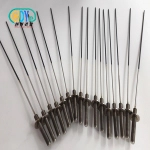
Understanding Titanium Anode Rods: What Are They and How Do They Work?
Electrochemical corrosion protection with titanium anode rods is a new and improved way to keep metal tanks and barrels from breaking down. These parts work differently than regular sacrificial anodes because they use titanium's natural electrical stability along with special coatings.
The Electrochemical Protection Mechanism
The power of titanium-based anodes to help control electrochemical processes is what makes them useful. When these rods are used in water heating systems or electrolytic cells, they keep a safe environment that stops base metals from oxidising. Usually, a layer of mixed metal oxide (MMO) catalysts is put on top of the titanium substrate. These are usually ruthenium-iridium or platinum-based mixtures that help electrons move quickly while keeping the structure stable. This arrangement makes an interface that lasts longer and handles tough chemical conditions better than other options. This feature means that it doesn't need to be replaced as often, which lowers the total cost of ownership over long periods of time.
Performance Advantages Over Traditional Materials
When you compare titanium anodes to magnesium or aluminium versions, you can see that they work much better. Magnesium anodes break down quickly in salty or high-conductivity water, so they need to be replaced often—sometimes once a year in harsh settings. Some types of aluminium are a little better, but they can still be passivated in some pH ranges. Depending on the current density and electrolyte makeup, titanium anodes with the right coatings can last anywhere from 18 to 60 months. This durability has been proven by accelerated life testing methods. The stable oxide layer (TiO₂) that forms naturally on titanium surfaces adds extra safety, making sure that the material works the same way even when the temperature changes and it is exposed to chemicals, which can happen in petrochemical processes and industrial water treatment.
Step-by-Step Guide: How to Install a Titanium Anode Rod?
The efficiency and longevity of titanium anode rods depend directly on how well you install them. Technical teams should be methodical about release, following set rules that take into account factors that are unique to each system.
Pre-Installation Preparation
Before you start installing, review the technical plans to ensure the measurements are correct and that the system will work with the others. Make sure that the titanium rod's thickness and length match how your tank or vessel is mounted. Get the tools you need, like the right wrenches, Teflon tape that can handle high temperatures, and thread glue that works with your process chemistry. To make sure everyone is safe, turn off the whole system and let all the pressure out of the lines. Once the tank is empty enough to reach the mounting port without spilling, check the threaded connection point for any damage or rust that could weaken the seal.
Installation Procedure
Use a wire brush to clean the mounting threads well and get rid of any scale or other dirt that might be blocking the threads from fitting properly. Put a thin, even layer of thread sealant on the male threads of the anode rod or wrap Teflon tape clockwise around them. Three to five wraps are usually enough to seal the threads without too much buildup. Place the anode rod into the mounting port and tighten it by hand at first to make sure the threads connect properly. Tighten the link to the manufacturer's recommended levels, which are usually between 25 and 45 foot-pounds, but rely on the thread size and the material. Do not tighten too much because too much force can damage the threads or make the coating on coated titanium anodes less strong.
Post-Installation Verification
Before you tighten the anode rod, make sure the link lines up correctly, and you can see no holes. Gradually fill the system while watching for leaks near the installation site. Do a second leak inspection using the right detection methods once the pressure is back to normal working levels. Record installation details, including the rod model number, installation date, and original voltage readings of the cells if used in electrochemical systems. Set up a monitoring plan to keep an eye on voltage trends and performance signs that show when the coating is wearing down, or there are problems with the system that need to be fixed.
Titanium Anode Rod vs. Magnesium Anode Rod: Which Should You Choose?
The choice of materials has a big effect on both working costs and maintenance schedules. Knowing the pros and cons of titanium anode rods and magnesium anodes can help you choose the right material for the job.
Material Properties and Lifespan Comparison
Magnesium anodes work best in freshwater systems with low dissolved solids, as they provide strong defence at low starting costs. But their rate of use speeds up a lot in salty or brackish settings, and they can run out in 6 to 12 months with modest current loads. Titanium anodes with MMO coats are resistant to chemical attack over a wider pH range and work reliably in high-chloride water, which is widespread in chemical processing plants and facilities near the coast. The base stays the same even after the covering wears off, so it can be recoated, which extends its useful life and lowers long-term capital costs compared to replacing magnesium more often.
Total Cost of Ownership Analysis
Magnesium anodes are usually 40–60% cheaper than titanium versions when bought outright, but the total cost changes a lot when replacement work, system downtime, and disposal costs are added in. Titanium's longer service intervals are especially useful for industries that need to be available all the time because they cut down on unplanned repair events and the production losses that come with them. A factory with three shifts a year might need four or five magnesium anode replacements instead of just one titanium anode installation. Each replacement requires work, follows strict rules for entering tight spaces, and could cause production delays. When operating consistency is very important or when harsh water chemistry speeds up the consumption of regular anodes, titanium anodes are the better choice from a financial perspective.
Procurement Considerations for Titanium Anode Rods
Deciding where to get things affects the system's reliability and the budget's predictability in the long term. Purchasing managers should look at more than just unit price when judging a seller of titanium anode rods.
Supplier Qualification Criteria
Titanium anode providers you can trust have certifications for their quality management systems that can be checked. This includes ISO 9001:2015 compliance, which makes sure that production methods are always the same and that materials can be tracked. Look for companies that can do metallurgical work in-house, like electron beam melting and precision cutting, and that have the right tools to keep the measurements that are needed for a good fit. Material test results from suppliers should include information on the chemical make-up of the material, especially hydrogen content levels below 0.015% to avoid delayed weakening, and surface finish specs that prove the uniformity and strength of the coating's adhesion.
Strategic Purchasing Options
Chuanghui Daye, which is in Baoji, China's Titanium Capital, offers many buying benefits to companies that want to build reliable supply relationships. Our facility has high-tech processing tools like annealing ovens, electron beam melting systems, and CNC machining centres that can make unique anode setups that exactly match your needs. We offer flexible order numbers that can be used for both prototype development at research centres and high-volume production runs for original equipment makers. Our pricing structures are also scalable to reward partners who stick with us. Direct factory buying gets rid of markups from middlemen and gives you access to technical help from metallurgical experts with more than 30 years of experience in the rare metals business.
Technical Specifications and Standards of Titanium Anode Rods
Engineering teams need accurate specification data for titanium anode rods to ensure that the parts will work together and to predict their performance over time.
Dimensional Standards and Customisation
The width of standard titanium anode rods is usually between 4 mm and 25 mm, and their lengths can be anywhere from 100 mm to 1500 mm, based on the shape of the tank and the electrochemical needs. Threaded links M8, M10, and M12 are common in industrial setups so that they can be mounted with standard tank fittings. Custom sizes are available for various uses. For example, ultra-precision 6mm rods machined to h8 tolerance class (+0/-0.009mm) may be needed for semiconductor processing equipment to fit into small reaction chambers. Large petrochemical tanks use 20mm diameter rods that give them more reach into large vessels. Chuanghui Daye can make products in unique sizes and verify the dimensions using laser micrometry and ovality inspection to make sure the quality is the same from batch to batch.
Material Composition and Performance Standards
According to ASTM B348 standards, Grade 1 and Grade 2 titanium substrates are the best choice for most industrial anode uses because they have the best mix of corrosion protection and mechanical qualities. Verification of the chemical makeup supports the boundaries of the interstitial elements. For Grade 1 material, an oxygen content below 0.18% keeps it flexible enough for forming operations, while nitrogen and iron amounts remain low to prevent the formation of a brittle phase. Different coatings are used for different tasks. For example, ruthenium-iridium oxides work well in chlor-alkali electrolysis, while platinum-iridium combinations are better at selectively polishing valuable metals. Ultrasonic testing according to AMS 2631 guidelines finds internal breaks that might weaken the structure under the current loads.
Conclusion
When installing a titanium anode rod, it's important to pay close attention to technical details that affect how well it protects against rust and how long it lasts. Choosing the right materials based on the chemistry of the water, installing them in a methodical way, and working with skilled suppliers are essential for consistent performance. Investing in titanium technology pays off in a clear way: it requires less upkeep, the equipment lasts longer, and it reduces costs for unexpected downtime. These advanced corrosion-reduction solutions can be safely used in a wide range of industrial settings by technical teams that have a profound understanding of electrochemical principles, best practices for installation, and material specifications.
FAQ
Q: What determines the service life of titanium anodes in industrial applications?
A: The service life is mostly determined by the amount of electricity and the type of liquid used. Titanium anode rods that are properly treated usually work well for 18 to 60 months under normal electrochemical conditions with current levels between 500 and 2000 A/m². These predictions are backed up by accelerated life tests, but the real performance depends on things like temperature changes, pH extremes, and the presence of contaminants in process streams.
Q: Can titanium substrates be refurbished after coating depletion?
A: Even after the catalytic coating wears off, titanium surfaces keep their structural integrity, which makes them perfect for refurbishing services. Chemical stripping is used to remove old covering layers from the base. The surface is then prepared, and new catalytic oxides are applied. When compared to replacing everything, this remanufacturing process saves a lot of money over time, especially for rods with bigger diameters that are used in expensive industrial equipment.
Q: How should maintenance teams monitor the condition of the anodes?
A: The best way to tell if an anode is healthy is to check the cell voltage on a regular basis. As the voltage goes up, the signal coating starts to break down or passivate. This usually happens when the electrocatalytic layer runs out or blocking TiO₂ grows at the substrate surfaces. Voltage logging and trend analysis should be part of maintenance plans every three months so that replacement needs can be predicted before performance loss affects process quality or efficiency.
Partner with a Trusted Titanium Anode Rod Manufacturer
Shaanxi Chuanghui Daye offers precisely designed titanium anode rod solutions, backed by ISO 9001:2015 approval and 30 years of experience in the field of metals. At our Baoji plant, we make custom anode configurations from high-purity titanium substrates. We have strict quality control measures in place, from checking the raw materials to making sure the finished dimensions and coatings are correct. We work with companies that make aircraft parts, chemicals, and research institutions that need solid corrosion protection parts with full evidence on how the materials were made. Your project may need small amounts for a trial or a lot of them for mass production. Our technical team can help you choose the right materials based on your needs. Email our engineering team at info@chdymetal.com to discuss the details of your titanium anode rod needs, get full quotes, or set up samples of the material to be tested. You can expect prompt contact, low factory prices, and reliable shipping schedules that help you meet your project deadlines and budget goals.
References
1. ASTM International. (2020). ASTM B348-20: Standard Specification for Titanium and Titanium Alloy Bars and Billets. West Conshohocken, PA: ASTM International.
2. Chen, G. (2019). Electrochemical Technologies for Corrosion Control in Industrial Water Systems. Cambridge: Royal Society of Chemistry Publishing.
3. Landolt, D., & Mischler, S. (2018). Electrochemical Surface Engineering: Fundamentals and Applications. Weinheim: Wiley-VCH Verlag GmbH.
4. SAE International. (2017). AMS 2631D: Ultrasonic Inspection of Titanium and Titanium Alloy Bar, Billet, and Wire. Warrendale, PA: SAE International.
5. Thompson, R. J., & Martinez, L. P. (2021). Industrial Anode Systems: Material Selection and Performance Optimisation in Electrochemical Processes. New York: Engineering Press.
6. Zhang, W., & Liu, H. (2022). Advanced Materials for Corrosion Protection: Titanium Alloys in Chemical Processing Applications. Singapore: Springer Nature Singapore Pte Ltd.
Learn about our latest products and discounts through SMS or email