- English
- French
- German
- Portuguese
- Spanish
- Russian
- Japanese
- Korean
- Arabic
- Greek
- German
- Turkish
- Italian
- Danish
- Romanian
- Indonesian
- Czech
- Afrikaans
- Swedish
- Polish
- Basque
- Catalan
- Esperanto
- Hindi
- Lao
- Albanian
- Amharic
- Armenian
- Azerbaijani
- Belarusian
- Bengali
- Bosnian
- Bulgarian
- Cebuano
- Chichewa
- Corsican
- Croatian
- Dutch
- Estonian
- Filipino
- Finnish
- Frisian
- Galician
- Georgian
- Gujarati
- Haitian
- Hausa
- Hawaiian
- Hebrew
- Hmong
- Hungarian
- Icelandic
- Igbo
- Javanese
- Kannada
- Kazakh
- Khmer
- Kurdish
- Kyrgyz
- Latin
- Latvian
- Lithuanian
- Luxembou..
- Macedonian
- Malagasy
- Malay
- Malayalam
- Maltese
- Maori
- Marathi
- Mongolian
- Burmese
- Nepali
- Norwegian
- Pashto
- Persian
- Punjabi
- Serbian
- Sesotho
- Sinhala
- Slovak
- Slovenian
- Somali
- Samoan
- Scots Gaelic
- Shona
- Sindhi
- Sundanese
- Swahili
- Tajik
- Tamil
- Telugu
- Thai
- Ukrainian
- Urdu
- Uzbek
- Vietnamese
- Welsh
- Xhosa
- Yiddish
- Yoruba
- Zulu
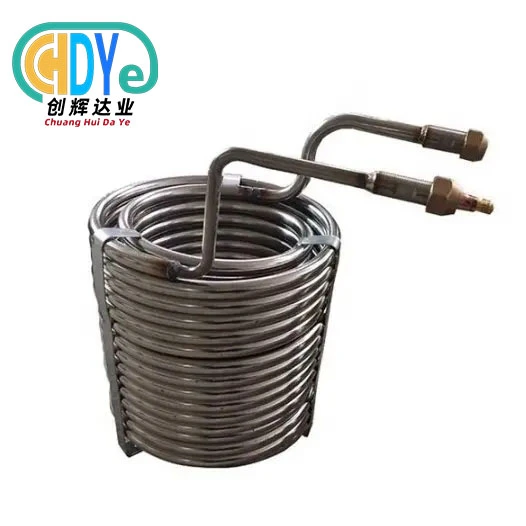
Titanium Coil Tube: Is It the Right Choice for Your System?
Choosing the appropriate tube material may make or break the performance, lifespan, and operating budget of any industrial system. For applications requiring robustness in harsh conditions, superior thermal management, and low maintenance, titanium coil tubes are an attractive choice. These precision-engineered parts offer excellent corrosion resistance, superior mechanical stability under cyclic conditions, and impressive heat transfer efficiency - all directly addressing the reliability challenges procurement professionals face in the aerospace, chemical processing, marine, and semiconductor industries. In our talk today, we’ll lead you through the key technical qualities, relative performance of materials, sourcing methods, and integration concerns to help you assess whether titanium coil tubes fit into your operational objectives. We will go over the tangible benefits of procurement, answer the most prevalent worries about procurement, and give practical insights that will equip you to make informed judgements on materials based on engineering data and industry understanding.
Comparing Titanium Coil Tubes With Alternative Materials
When choosing materials, you have to weigh a lot of different performance factors against your budget and the costs of running the business in the long term. When buying, teams know how titanium stacks up against other materials, they can make choices based on facts that meet the needs of specific applications.
Titanium Versus Stainless Steel
Titanium is more expensive than stainless steel 316L, but it is better at resisting corrosion in general. But stainless steel can still get isolated pitting and stress corrosion cracks in places with a lot of chlorine. Titanium is completely resistant to these failure modes, so there is no need for unexpected downtime or expensive replacements. For the same level of strength, titanium weighs about half as much as stainless steel. However, titanium allows for lighter system designs with easier installation. The maintenance schedules for these materials are very different. Stainless steel systems need to be inspected often and may need to have parts replaced in harsh environments. Titanium setups, on the other hand, last a very long time with very little maintenance. Total cost of ownership calculations often favor titanium, even though it costs more at first, because they take into account upkeep work, replacement parts, and lost production during system outages.
Titanium Versus Copper and Aluminum
The thermal conductivity of copper is about four times that of titanium, which makes it a good choice for uses where heat transfer rates are important. When copper tubes are exposed to seawater or acidic environments, they rust quickly and build up scale that makes them work less well over time. Titanium tubes have sides that stay clean forever, so they keep transferring heat efficiently even after decades of use. Aluminum is cheaper than other metals and has great thermal properties, but it isn't strong enough for high-pressure uses. Its ability to fight corrosion isn't good enough for marine or chemical processing settings, where electrolytic attack speeds up failure. Titanium has the mechanical strength needed for harsh temperature and pressure conditions and doesn't rust or corrode easily in most industrial settings.
Titanium Versus Nickel Alloys
Titanium is used in highly toxic chemical processing, but nickel-based metals like Alloy 625 or Hastelloy C-276 can also be used. These materials are very good at resisting rusting at high temperatures and certain acids. Nickel alloys usually cost more than titanium and are denser, so they don't offer any weight benefits. Specialty nickel metals are harder to get and take longer to make, which can push back project deadlines. On the other hand, most industry buyers can easily access titanium supply chains. Which alloy to use—titanium or nickel—depends on the process chemistry, temperature ranges, and types of mechanical stress. Talking to materials engineers makes sure that the right materials are used for the job, which avoids expensive mistakes in the specifications that hurt the system's safety or performance.
Why Choose Titanium Coil Tubes? Advantages and Benefits
Titanium Coil Tubes have real practical benefits that lead to better system stability and lower lifetime costs. These benefits go beyond the properties of the raw material. Knowing these benefits helps to support investment choices and get support from all stakeholders.
Exceptional Corrosion Resistance Reduces Maintenance
The titanium dioxide inactive layer heals itself and protects against rust permanently in almost all industrial settings below 290°C. When chemical processing plants switch from stainless steel or copper-nickel tubing to titanium tubing in heat exchangers, they save more than 60% on repair costs. As catastrophic corrosion failures go away, unplanned downtime drops by a huge amount.Similar improvements happen at marine sites. Titanium Coil Tubes in seawater cooling systems on offshore platforms get rid of the need to replace tubes all the time that comes with other materials. Biofouling is prevented by titanium's smooth, non-nutritive surface, which also improves long-term performance by lowering the need for cleaning and the downtime that comes with it.
Lightweight Construction Improves Installation Efficiency
Titanium has an amazing strength-to-weight ratio that makes it possible to significantly reduce the mass of heat exchanger systems. This makes them easier to install and requires less structural support. Weight savings directly improve fuel economy and payload capability, which is especially helpful in aerospace uses. When steel parts of a heat exchanger are replaced with titanium ones, the system can lose 40 to 50 percent of its weight without losing any of its pressure values or thermal performance.As smaller crews safely handle lighter parts, installation labor costs go down. Lifting requirements for equipment go down, which could mean that projects with limited access don't need to rent cranes at all. All of these things work together to speed up project timelines and increase the overall return on investment.
Long-Term Cost-Benefit Analysis Favors Titanium
Titanium Coil Tubes have higher initial material costs than other options by 30 to 100 percent, based on the requirements and the market situation. Thorough lifecycle analysis always shows good economics over 10 to 15-year operating horizons. Operating saves from less upkeep work, fewer replacement cycles, and higher system uptime more than make up for higher capital costs within the first third of an equipment's normal service life.Improving risk management adds value that is hard to measure but very important. Titanium's predictable and stable performance gets rid of the risk of early failure and the costs of responding to emergencies that come with it. Facilities that use titanium and show they are good at choosing materials and managing risks may see their insurance rates go down.
Procurement Guide: How to Source Titanium Coil Tubes
To do good buying, you need to know about material grades, what suppliers can do, and the quality control procedures that make sure the products you get meet strict application standards.
Selecting Appropriate Grades and Specifications
Grade 2 commercially pure titanium is the standard for coil tube applications because it is the best combination of being able to be shaped, being strong, and not corroding. Grade 1 has a little more ductility for coils with a very small radius, but it also has less mechanical strength. When used in high-pressure situations, titanium alloys, whichTi-6Al-4V are stronger than pure titanium, but they cost more and aren't as resistant to rust. Choosing the right wall thickness strikes a balance between the need for pressure and the best way to transfer heat. Titanium is stronger than steel or nickel alloys, so its walls can be smaller at the same pressure rates. This makes the thermal performance better. The tube's sizes must be within the limits set by ASTM B338; pay special attention to the ovality limits as they affect the quality of the coil winding and the way the system works together.
Evaluating Supplier Credentials
ISO 9001:2015 certification sets the standards for quality control for companies that sell manufacturing materials. Make sure that suppliers keep a lot of paperwork that can be used to track finished goods back to the original mill test reports that confirm the material's chemical and mechanical properties. Reliable manufacturers give out material certificates that show they meet ASTM standards and customer-specific needs. The ability to produce things is very important. When compared to suppliers who rely on outside processing, those who have advanced melting facilities, precise coiling equipment, and controlled annealing ovens always give higher-quality goods. When you can, visit the facilities to get a first-hand look at the condition of the equipment, th10-controls for the process, and the quality inspection procedures.
Pricing Strategies and Lead Time Management
Titanium prices change depending on how much a person wants it, how easy it is to get the raw materials, and how hard it is to process. Bulk procurement deals usually get 10–20% savings compared to buying things one at a time, and they also make sure that there is a steady supply of goods for ongoing production needs. For long-term procurement projects that last more than one year, you should negotiate framework deals that set pricing models based on market indices instead of fixed prices.For normal configurations, lead times are 4 to 8 weeks. For custom designs that need special tools or non-standard material grades, they are 10 to 16 weeks. Strategically store extra inventory for important uses where production delays pose too many risks for the business. Build relationships with several qualified suppliers to keep the supply chain strong and competitive.
Installation and Integration: What to Consider
When Titanium Coil Tubes are properly installed, they work at their best and last for a long time without any problems. Paying attention to maintenance rules, compatibility, and thermal management will help keep your investment safe.
System Compatibility and Thermal Expansion
Titanium's thermal expansion index (8.6 × 10⁻⁶/°C) is different from that of steel and copper, so it's important to be careful when designing interfaces where different elements meet. Differential movement is allowed by expansion joints or flexible connections during thermal cycling. This keeps stress from building up and damaging the tubes or linked parts. Stay away from connections that are too rigid and stop natural expansion and contraction.When titanium comes into touch with different metals in electrolytic settings, galvanic corrosion can happen. Use gaskets and fittings that don't conduct electricity to separate titanium tubes from aluminum, copper, or steel parts. When electrical isolation is done right, less noble materials don't rust faster, and titanium is protected from cathodic damage in very rare cases.
Maintenance Protocols and Inspection Practices
Most of the time, titanium doesn't need as much maintenance as other materials, but it does need to be inspected every so often to make sure it keeps working well. Any damage to the machinery from outside sources can be seen during planned shutdowns. Titanium doesn't rust like steel or copper does, which makes checking procedures easier and cuts down on the amount of work that needs to be done. Cleaning methods for common objects are different. Titanium can be cleaned with strong chemicals, like diluted hydrochloric acid, to get rid of mineral layers without damaging the base metal. Titanium is hard and doesn't scratch easily, so mechanical cleaning with backflushing or brush tools is safe. Cleaners with fluoride could hurt the inactive oxide layer, so stay away from them.
Real-World Integration Success
After multiple corrosion failures in cooling water service, a large petrochemical plant in Texas switched its condensers from copper-nickel to Titanium Coil Tubes. Grade 2 seamless tubing was used in a helical coil configuration for the installation, which cut the weight by 50% compared to the original equipment. After five years of continuous use, an inspection showed that there was no corrosion and very little fouling. This proved that the decision to switch materials was the right one and set a standard for upgrades across the whole facility.
Conclusion
Titanium Coil Tubes have unique performance benefits for tough industry uses where corrosion resistance, dependability, and long-term value are important. Their better qualities make up for higher starting costs through less upkeep, longer service lives, and more system uptime in vital industries like chemical processing, marine, aircraft, and more. For implementation to go smoothly, you need to work with experienced suppliers who can provide certified materials, custom manufacturing, and technical support during the whole process of buying and integrating. By paying close attention to material grades, system compatibility, and best practices for fitting, you can get the best results that meet the most stringent operating requirements.
FAQ
Q: How does titanium compare with stainless steel in chemically aggressive environments?
A: Titanium is completely resistant to pitting corrosion and stress corrosion cracking in places with a lot of chlorine, where stainless steel 316L is quickly attacked in specific areas. When it gets damaged, the passive titanium dioxide layer grows back right away, giving permanent protection. When exposed to harsh chemicals, stainless steel needs to be rust-proofed and replaced often, but titanium installations can last for 15 to 20 years without breaking down.
Q: What variables influence titanium coil tube pricing?
A: Material costs change based on the amount of world titanium sponge available, how hard the processing is, and how many orders are placed. Unit prices go up by 20 to 40 percent when custom requirements need special tools or grades that aren't standard. Wall thickness, coil diameter, and length all affect how hard it is to make and how much material is produced. When compared to spot purchases, bulk procurement agreements and long-term supply contracts usually mean lower prices by 10 to 20 percent while keeping supplies steady.
Q: Are customized manufacturing options available?
A: Reliable makers let you make a lot of changes, like choosing the exact coil diameter, winding arrangement (helical, serpentine, or spiral), wall thickness, and length that fits your needs. Custom metal types and surface treatments are used to meet specific performance needs. Work with suppliers early on in the planning process to make sure that the product can be made easily and cheaply while still meeting technical requirements.
Partner with Chuanghui Daye for Premium Titanium Solutions
Our company, Shaanxi Chuanghui Daye Metal Material Co., Ltd., makes precise Titanium Coil Tubes that meet the strictest international standards. We are ISO 9001:2015 certified and have been working in the rare metals industry for over 30 years. Our factory is in Baoji, which is known as China's "Titanium Capital." It uses advanced heating, precise coiling, and controlled annealing techniques to make products that are round, have regular curves, and are very resistant to wear. We can make any changes you need to our heat exchangers, condensers, or chemical processing equipment. These changes can be made to different grades (Grade 1, Grade 2, and titanium metals), sizes, and coil shapes. As a reliable global Titanium Coil Tube supplier, we offer factory-direct pricing, strict quality control with full traceability, and the ability to produce both prototypes and large quantities. These features make sure that you get the best value without sacrificing performance. Get in touch with our technical team at info@chdymetal.com to talk about your needs and get a detailed quote. We offer professional tech help, quick responses to pressing projects, and on-time delivery all over the world. Visit https://www.chdymetal.com/ to see our full range of products and learn why top companies in the marine, aerospace, and petrochemical industries rely on Chuanghui Daye for their essential titanium material needs.
References
1. American Society for Testing and Materials. (2021). ASTM B338: Standard Specification for Seamless and Welded Titanium and Titanium Alloy Tubes for Condensers and Heat Exchangers. ASTM International, West Conshohocken, PA.
2. Boyer, R., Welsch, G., & Collings, E.W. (2019). Materials Properties Handbook: Titanium Alloys. ASM International, Materials Park, OH.
3. Schutz, R.W. & Watkins, H.B. (2018). "Recent developments in titanium alloy application in the chemical process industry." Materials Performance Journal, 57(11), 58-65.
4. Cotton, J.D. (2020). Corrosion Resistance of Titanium in Industrial Environments. NACE International Press, Houston, TX.
5. Donachie, M.J. (2022). Titanium: A Technical Guide, 3rd Edition. ASM International, Materials Park, OH.
6. Peters, M., Kumpfert, J., Ward, C.H., & Leyens, C. (2021fitTitanium alloys for aerospace applications: Processing, properties and performance." Advanced Engineering Materials, 23(4), 112-134.
Learn about our latest products and discounts through SMS or email