- English
- French
- German
- Portuguese
- Spanish
- Russian
- Japanese
- Korean
- Arabic
- Greek
- German
- Turkish
- Italian
- Danish
- Romanian
- Indonesian
- Czech
- Afrikaans
- Swedish
- Polish
- Basque
- Catalan
- Esperanto
- Hindi
- Lao
- Albanian
- Amharic
- Armenian
- Azerbaijani
- Belarusian
- Bengali
- Bosnian
- Bulgarian
- Cebuano
- Chichewa
- Corsican
- Croatian
- Dutch
- Estonian
- Filipino
- Finnish
- Frisian
- Galician
- Georgian
- Gujarati
- Haitian
- Hausa
- Hawaiian
- Hebrew
- Hmong
- Hungarian
- Icelandic
- Igbo
- Javanese
- Kannada
- Kazakh
- Khmer
- Kurdish
- Kyrgyz
- Latin
- Latvian
- Lithuanian
- Luxembou..
- Macedonian
- Malagasy
- Malay
- Malayalam
- Maltese
- Maori
- Marathi
- Mongolian
- Burmese
- Nepali
- Norwegian
- Pashto
- Persian
- Punjabi
- Serbian
- Sesotho
- Sinhala
- Slovak
- Slovenian
- Somali
- Samoan
- Scots Gaelic
- Shona
- Sindhi
- Sundanese
- Swahili
- Tajik
- Tamil
- Telugu
- Thai
- Ukrainian
- Urdu
- Uzbek
- Vietnamese
- Welsh
- Xhosa
- Yiddish
- Yoruba
- Zulu
Why Choose Gr2 Titanium Foil for Corrosion Resistance?
When demanding environments challenge material integrity, Gr2 Titanium Foil emerges as the solution that procurement professionals trust. Commercially pure titanium foil excels where traditional metals fail, offering exceptional corrosion resistance through a self-healing oxide layer that forms instantly upon exposure to oxygen. This protective barrier enables the material to withstand seawater, acidic chemicals, and chloride-rich atmospheres without degradation. Industries from chemical processing to aerospace depend on this workhorse grade because it balances moderate strength with superior formability, allowing complex fabrication while maintaining long-term durability. The material addresses a fundamental challenge: preventing catastrophic failure in corrosive environments while reducing maintenance cycles and operational costs.
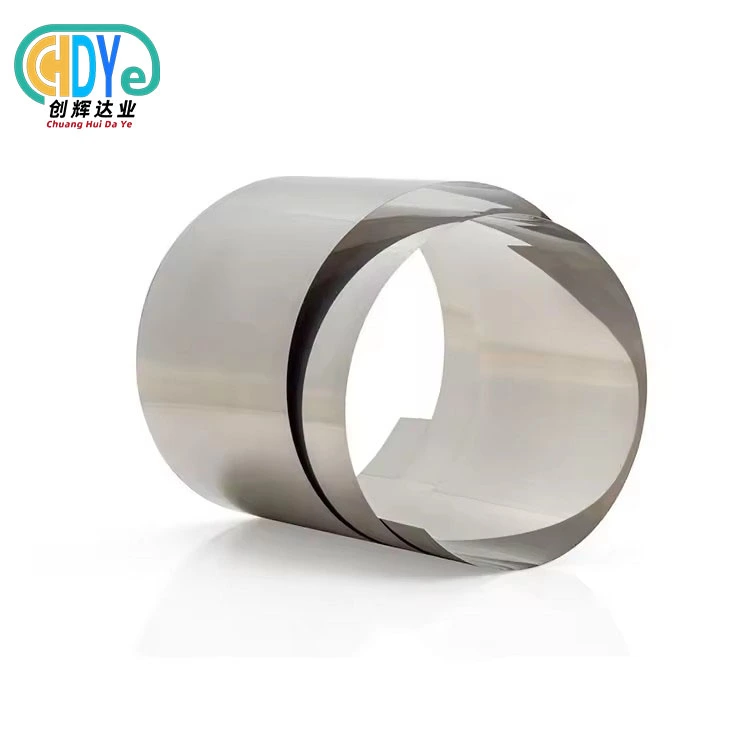
Understanding Gr2 Titanium Foil: Properties and Composition
What Makes Commercially Pure Titanium Unique
Gr2 Titanium Foil is commercially pure titanium that has had very little alloying added to it. It usually has at least 99.2% titanium in it. This alpha-phase microstructure gives a yield strength of 275 to 450 MPa while still being very flexible. Compared to higher-strength metals, the makeup makes it very easy to shape when cold. This makes it perfect for stamping, deep drawing, and making complex parts. The material's density of 4.51 g/cm³ makes it about 45% lighter than stainless steel alternatives. This measure of strength-to-weight is very important in areas like medical devices, chemical equipment, and aircraft ducting where every gram counts. The purity level ensures that medical implants and surgical instruments are biocompatible, which is what the FDA requires.
Manufacturing Precision for Consistent Performance
Precision cold rolling is used in our production process at Chuanghui Daye to keep thickness tolerances within ±0.005 mm. We have full control over every step of production because we are based in Baoji, China, which is known as the "Titanium Capital." Modern rolling mills squeeze titanium billets several times, decreasing their thickness while keeping the purity of the grain structure. After cold rolling, vacuum annealing is done to relieve internal stresses and improve the mechanical properties. For cleanliness reasons, this heat treatment takes place in controlled atmospheres. This keeps the foil free of oxygen-rich alpha case, which makes it brittle. Spectrometry is used to make sure that electron beam furnaces keep the chemical composition stable between batches of production. As a result, the foil has a clean finish, a flat surface, and the same good quality from coil to coil. It meets ASTM B265 and ISO 9001:2015 standards. You can choose from thicknesses ranging from 0.1mm to 10.0mm and widths ranging from 10mm to 1000mm. We can also cut the materials to the lengths you specify. Because it is so flexible, it can be used for both making prototypes for research centers and making a lot of things for manufacturers.
Corrosion Resistance of Gr2 Titanium Foil: Why It Matters
The Science Behind Superior Protection
The amazing resistance to rust comes from a thin layer of passive titanium dioxide (TiO₂) that grows on the surface on its own. This oxide layer is only 1 to 10 nanometers thick, but it protects very well and heals itself right away if it gets scratched or damaged. This barrier is built into the base metal, unlike protective coatings that can come off. Titanium foil will always be strong in chloride conditions where stainless steel rusts through pitting erosion. Titanium that is sold in stores is tested and found to be resistant to damage in seawater up to 260°C. Acidic environments like sulfuric acid, nitric acid, and organic acids don't pose much of a threat, which is why the material is essential for chemical handling equipment. Even in moist chlorine gas, which is terrible for most metals, Gr2 Titanium Foil works well. The substance is very strong against stress corrosion cracking and crevice corrosion, which are common failure modes in austenitic stainless steels used in naval and industrial settings. This dependability immediately leads to longer service life, less downtime, and a lower total cost of ownership. Because parts don't need protective coats, cathodic protection, or to be replaced often, maintenance gaps get a lot longer.
Comparative Performance Against Alternative Materials
Some types of stainless steel, like 316L, don't fight corrosion very well, but they do break down in chloride-rich settings above a certain temperature. Aluminum alloys break down quickly in acidic environments and aren't strong enough for structural use. Even though nickel alloys are very resistant to corrosion, they are heavier and cost a lot more to make. Grade 2 titanium foil is in a unique position because it has corrosion resistance similar to that of exotic alloys while still being affordable enough for wide industrial use. The material doesn't break down at pH levels from 3 to 12, which means it can be used in almost all industrial process streams. Offshore platforms, desalination plants, and naval parts have service lives measured in decades instead of years, which is especially helpful for marine applications. When chemical processing companies switch from using stainless steel to titanium foil for heat exchanger plates, reactor linings, and piping systems, they see huge changes. Getting rid of problems caused by rust improves safety, keeps products from getting contaminated, and makes sure that regulations are followed. Lifecycle cost analysis shows that these operational benefits make the initial investment in the material worth it.
Gr2 Titanium Foil vs Alternatives: Making the Right Choice
Comparing Titanium Grades
Within the titanium family, Grade 1 has slightly better resistance to rust because it is purer, but it loses some of its mechanical strength. Grade 3 gives you more strength but less ability to shape. Because it is made of Ti-6Al-4V, Grade 5 is very strong, but it costs a lot more and is hard to make. Grade 2 is the best choice for corrosion-sensitive uses that need a moderate amount of strength and great fabricability. It can be welded better than higher-strength alloys, which lets complex assemblies be made without heat-affected zone weakening. When it comes to parts that need to be deep drawn, stamped, or bent with a tight radius, Gr2 works better than harder types that break when they are formed.When making procurement choices, the real levels of stress that parts are under should be taken into account. There are many situations where Grade 5 isn't needed because Grade 2 is stronger, more resistant to rust, and cheaper. A lot of the time, an engineering analysis shows that commercially pure titanium meets structural needs while making fabrication easier and lowering production costs.
Strategic Selection Criteria
In applications where corrosion is important, environmental exposure is more important than mechanical loads when choosing materials. Corrosion resistance should be more important than absolute strength in places that work with acidic chemicals, saltwater, or humid chloride atmospheres. In these situations, Gr2 Titanium Foil works great and stops early failures that hurt output. Budget concerns go beyond the cost of raw materials and include costs for assembly, upkeep, and costs over the product's entire life. Because fairly pure titanium is easier to shape, it makes processing simpler, which cuts down on labor costs and scrap rates. The parts are easier to install because they are lighter than steel options. Maintenance times get much longer because rust protection is built in instead of being added. Chemical inertness in Grade 2 is helpful for industries with strict purity requirements, like semiconductors, pharmaceuticals, and food processing. The material doesn't let contaminants into process streams, so the quality of the product stays high and the rules are followed. This non-reactive quality is also important for medical implants, where biocompatibility is what makes a patient safe.
Procurement Guide: Buying Gr2 Titanium Foil for Your Business
Evaluating Supplier Capabilities
To get commercially pure titanium foil, you need to work with manufacturers who have quality systems and technical know-how that can be checked. With ISO 9001:2015 approval, quality control is done in a planned way throughout the whole production process. For each production lot, suppliers should give test reports on the material that show its chemical make-up, mechanical properties, and surface quality. The ability of a supplier to make something determines whether they can meet specific needs. Tight thickness tolerances are needed for electronic parts and aerospace applications. These can be reached in modern facilities with precision rolling mills. Before shipping, quality is checked with spectrometers, tensile testers, and surface inspection systems that are kept in-house. Value-added services like custom slitting, cutting, and surface treatments from suppliers make buying easier and lower the cost of secondary processing. Lead times and transportation costs are affected by where things are located. But Baoji's well-established titanium industry cluster has infrastructure benefits, such as easy access to raw materials, a skilled workforce, and specialized equipment. Even though the distances between countries are long, manufacturers in this region can often deliver faster than domestic competitors who don't have the production capacity. Before committing to large-scale production, asking for samples lets you physically check the surface finish, thickness uniformity, and handling characteristics.
Understanding Price Drivers and Value
The price of raw titanium sponge changes based on world supply and demand, and it usually makes up 40 to 50 percent of the cost of foil. The costs of processing—rolling, heating, and slitting—change depending on the thickness and width. Tighter tolerances and specialized surface finishes raise the cost per unit, but they keep quality problems and rework costs from happening later. Customization options add value above and beyond normal stock sizes. For many uses, specific widths are needed to keep waste to a minimum during fabrication. Custom-length cutting makes it easier to store and handle. When suppliers offer these services, they make supply chains easier to use, which lowers total acquisition costs even though the units cost a little more. When you commit to a certain amount of goods, you can often get better prices and faster production. But buying plans should weigh the benefits of saving money on costs against the costs of keeping inventory and the risk of materials becoming obsolete. Setting up framework agreements with qualified suppliers makes sure that materials are available for urgent projects and that prices stay low by combining purchases. When you buy directly from manufacturers like Chuanghui Daye, you skip the markups that distributors add on and get direct access to technical support. When engineers help choose materials, the specifications are optimized. This stops over-engineering, which raises costs, and under-specification, which leads to failures in the field. This way of working together leads to better results when making prototypes and increasing production.
Real-World Applications and Case Studies of Gr2 Titanium Foil Usage
Marine and Offshore Engineering
Saltwater settings may be the hardest place for industrial products to resist corrosion. Offshore drilling platforms use commercially pure titanium foil in heat exchangers, pipe systems, and process equipment that is exposed to cooling streams from the sea. Because the material doesn't get pitted by chloride, you don't have to worry about maintaining stainless steel parts that need to be replaced every three to five years. Titanium foil is used for the linings of evaporators and parts of reverse osmosis systems in desalination plants that turn seawater into drinkable water. The material can handle levels of brine that quickly corrode normal metals, so it can be used continuously without having to stop for corrosion. Materials used in naval engineering for things like condenser tubes, fire control systems, and radar domes must be able to fight corrosion and be light.
Chemical Processing and Electrochemical Systems
Gr2 Titanium Foil is used as bipolar plates and a current collector in PEM electrolyzers that make green hydrogen. These parts work well with the current flow even in very acidic conditions inside the electrochemical cell. Because the material doesn't rust, it can be used for more than 60,000 hours before it stops working. This makes hydrogen production economically viable. Titanium foil linings keep products from getting contaminated and vessels from breaking down in chemical reactors that work with strong media, like those used to make chlor-alkalis, pharmaceuticals, and specialty chemicals. Because it is non-reactive, it keeps the process pure and stops heavy metals from leaching into the product, which lowers the quality. Heat exchangers made from titanium foil are more thermally efficient than those made of stainless steel because they don't get clogged up or rust over time. Tank truck linings that carry toxic chemicals switch to titanium foil construction, which increases their service life from years to decades and lowers the number of times they need to be serviced. It's better at handling changes in temperature and physical impacts than coatings or rubber linings, which crack and come apart.
Aerospace and Electronics Applications
Manufacturers of airplanes use commercially pure titanium foil to make honeycomb sandwich structures for soundproofing, ventilation, and shielding. Compared to nickel metals, the material is lighter and more resistant to fire up to 425°C, which directly improves fuel economy. The aerospace industry likes that certified suppliers can be tracked and whose work can be trusted. Titanium foil is used for the tweeter domes in high-end speaker systems and other high-fidelity audio equipment. The high strength-to-weight ratio of the material pushes resonance frequencies above the human hearing range, which makes it possible to play sound without any distortion. Internal damping properties reduce unwanted vibrations that lower the quality of the sound. Ultrathin titanium foil is used in the production of electronics as a barrier layer in capacitors, a heat spreader in power electronics, and a flexible interconnect in wearable tech. As devices get smaller and more powerful, the ability to carry electricity, keep heat in check, and fight corrosion becomes more and more important.
Conclusion
Using commercially pure titanium foil solves basic material problems in many fields where corrosion resistance is key to success. The layer of self-healing oxide protects better than most metals, while still being moderately strong and very easy to shape. This material stops failures that hurt safety, productivity, and profits in everything from chemical processing equipment to aerospace parts. When procurement professionals choose Gr2 Titanium Foil, they save money over the course of their lifetime because it lasts longer between services, needs less maintenance, and works well in harsh environments. Working with manufacturers with a lot of experience guarantees consistent materials, technical support, and the ability to make changes that improve application performance. The strategic value goes beyond resistance to corrosion and includes things like reduced weight, biocompatibility, and chemical inertness, all of which help new technologies come to the market.
FAQ
Q: What thickness ranges are available for Gr2 titanium foil?
A: Titanium foil that is sold in stores can be anywhere from 0.1 mm thick to 10 mm thick and 10 mm to 1000 mm wide. Custom lengths are made to fit the needs of each purpose. Ultra-thin gauges (less than 0.05 mm) need special rolling methods and longer wait times. Gages that are closer to 10 mm thick offer more stiffness, making them good for structural parts while still being resistant to rust.
Q: How does Grade 2 compare to Grade 1 for corrosion resistance?
A: Grade 1 titanium is purer, which gives it slightly better corrosion protection in very harsh conditions like concentrated acids. Grade 2, on the other hand, has better mechanical strength and good corrosion resistance, which is good enough for 95% of industrial applications. Grade 1 is less common and costs more than Grade 2. This makes Grade 2 the better option for most buying situations.
Q: What certifications should suppliers provide?
A: Suppliers you can trust give you material test reports that show the chemical composition according to ASTM B265 standards, as well as the mechanical properties, such as tensile strength and elongation, and the surface quality. Getting ISO 9001:2015 certification shows that you have a quality management system. When needed, compliance with aerospace AS9100 and medical ISO 13485 standards can be shown through trace documentation from the raw materials to the final inspection.
Partner with Chuanghui Daye for Premium Titanium Solutions
Shaanxi Chuanghui Daye is an expert at making high-purity titanium foil that meets the strict needs of users around the world that can't rust. Our ISO 9001:2015-certified factory in Baoji uses cutting-edge production tools and 30 years of experience working with rare metals to provide consistent quality and tight tolerances. As a reliable provider of Gr2 Titanium Foil, we offer unique sizes, fast prototyping, and expert advice to help you choose the best material for your needs. Our affordable factory-direct prices, thorough traceability paperwork, and reliable delivery plans help procurement teams around the world. Email our engineering team at info@chdymetal.com to talk about the needs of your project, get samples of materials, or get a detailed quote. Let us show you how our titanium foil options improve the performance of your product while lowering its operational costs.
References
1. American Society for Testing and Materials. ASTM B265-20: Standard Specification for Titanium and Titanium Alloy Strip, Sheet, and Plate. West Conshohocken: ASTM International, 2020.
2. Donachie, Matthew J. Titanium: A Technical Guide, 2nd Edition. Materials Park: ASM International, 2000.
3. Schutz, R.W. and Watkins, H.B. "Recent Developments in Titanium Alloy Application in the Energy Industry." Materials Science and Engineering A, vol. 243, no. 1-2, 1998, pp. 305-315.
4. Boyer, R., Welsch, G., and Collings, E.W. Materials Properties Handbook: Titanium Alloys. Materials Park: ASM International, 1994.
5. Peters, M., Kumpfert, J., Ward, C.H., and Leyens, C. "Titanium Alloys for Aerospace Applications." Advanced Engineering Materials, vol. 5, no. 6, 2003, pp. 419-427.
6. Sedriks, A. John. Corrosion of Stainless Steels, 2nd Edition. New York: John Wiley & Sons, 1996.
Learn about our latest products and discounts through SMS or email