- English
- French
- German
- Portuguese
- Spanish
- Russian
- Japanese
- Korean
- Arabic
- Greek
- German
- Turkish
- Italian
- Danish
- Romanian
- Indonesian
- Czech
- Afrikaans
- Swedish
- Polish
- Basque
- Catalan
- Esperanto
- Hindi
- Lao
- Albanian
- Amharic
- Armenian
- Azerbaijani
- Belarusian
- Bengali
- Bosnian
- Bulgarian
- Cebuano
- Chichewa
- Corsican
- Croatian
- Dutch
- Estonian
- Filipino
- Finnish
- Frisian
- Galician
- Georgian
- Gujarati
- Haitian
- Hausa
- Hawaiian
- Hebrew
- Hmong
- Hungarian
- Icelandic
- Igbo
- Javanese
- Kannada
- Kazakh
- Khmer
- Kurdish
- Kyrgyz
- Latin
- Latvian
- Lithuanian
- Luxembou..
- Macedonian
- Malagasy
- Malay
- Malayalam
- Maltese
- Maori
- Marathi
- Mongolian
- Burmese
- Nepali
- Norwegian
- Pashto
- Persian
- Punjabi
- Serbian
- Sesotho
- Sinhala
- Slovak
- Slovenian
- Somali
- Samoan
- Scots Gaelic
- Shona
- Sindhi
- Sundanese
- Swahili
- Tajik
- Tamil
- Telugu
- Thai
- Ukrainian
- Urdu
- Uzbek
- Vietnamese
- Welsh
- Xhosa
- Yiddish
- Yoruba
- Zulu
Titanium Filler Wire: Key Benefits for Aerospace Welding
When aerospace manufacturers demand unwavering precision and reliability, titanium filler wire emerges as the cornerstone of critical welding applications. This specialized welding consumable, engineered under stringent AWS A5.16 and ASTM B863 standards, bridges the gap between ordinary metal joining and aerospace-grade structural integrity. Titanium welding wire delivers exceptional corrosion resistance, superior strength-to-weight ratios, and remarkable performance in extreme temperature environments, making it indispensable for jet engine components, turbine assemblies, and airframe structures where failure simply isn't an option.
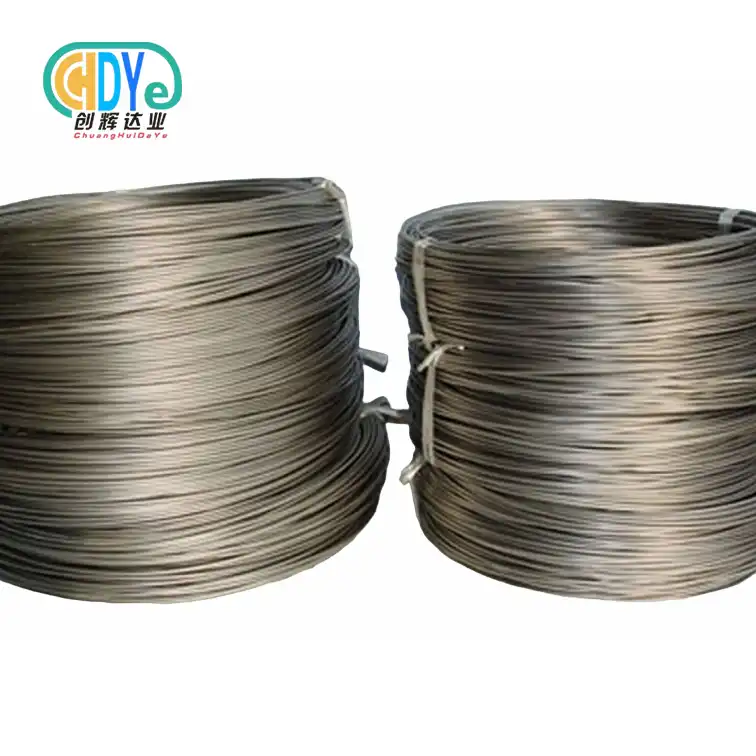
Understanding Titanium Filler Wire in Aerospace Applications
The aerospace industry operates under zero-tolerance conditions where material failure can result in catastrophic consequences. Titanium welding tools have changed the way makers do high-stakes fabrication projects because they have better metallurgical qualities than aluminum, stainless steel, or nickel-based welding materials that were used in the past.
Superior Material Properties for Critical Applications
Aviation-grade titanium filler wire is perfect for harsh settings because it has special properties that make it stand out. Its density of 4.51 g/cm³ gives it a great strength-to-weight ratio, and its freezing point of 1660°C makes it stable in very hot or very cold temperatures. The material is naturally resistant to corrosion, so it can handle chlorides, oxidizing acids, and salt spray, all of which are common in aircraft uses. These qualities directly deal with the most important problems in aircraft welding. Ultra-low interstitial element content almost completely gets rid of interstitial embrittlement, a problem where oxygen, nitrogen, and hydrogen make bond zones weaker. Premium titanium welding wire goes through acid cleaning or vacuum heating processes to make sure its sides are free of oxides. This makes it easier to feed the wire and keeps the arc stable.
Compliance with Aerospace Standards and Certifications
Materials that meet or go beyond industry standards are needed for aircraft manufacturing because of the strict requirements. Titanium welding supplies made to the standards of AWS A5.16/ASME SFA-5.16, AMS 4951, and ASTM B863 give aircraft users the traceability and uniform grain structure they need. These approvals make sure that every batch keeps the exact chemical makeup and mechanical qualities needed to keep flight-critical parts structurally sound.
Comprehensive Guide to Titanium Filler Wire Types and Grades
When procurement workers know about the different types of titanium welding materials, they can choose the best one for each aerospace purpose. Each group has its own benefits that are best for different types of performance needs and working conditions.
Commercial Purity Grades for Corrosion Resistance
ERTi-1 and ERTi-2 are commercially pure titanium types that have more than 99% titanium in them. These types work great in places where corrosion protection is very important, like in hydraulic systems and fuel lines that are exposed to harsh chemicals. The ERTi-2 grade, which has a slightly higher oxygen level, is stronger and still easy to shape for complicated weld designs. When palladium is added to ERTi-7, it makes it more resistant to crevice rust in marine and chemical processing settings. This grade is especially useful for aircraft uses that are used offshore, where saltwater exposure constantly threatens the structure's strength.
Alloyed Grades for High-Strength Applications
The popular Ti-6Al-4V base metal is similar to ERTi-5, which has 6% aluminum and 4% vanadium. It is often used in aircraft designs. With tensile strengths of more than 895 MPa, this type of titanium filler wire is perfect for load-bearing parts that are exposed to high cyclic stresses. This type is very good at resisting wear and staying stable at high temperatures, which makes it useful for jet engine compressor blades, turbine housings, and landing gear parts. A newer super-alpha titanium metal called ERTi-23 makes next-generation aircraft engines better at working at high temperatures. Its special makeup lets it work at temperatures that normal titanium grades couldn't reach before. This makes engine designs more efficient and improves fuel economy.
Titanium Filler Wire Welding Process and Best Practices
For titanium aircraft welding to go well, the process factors must be carefully watched, and contamination must be avoided at all costs. Titanium is reactive above 400°C, so special methods are needed to keep the quality of the weld and its functional features.
Gas Tungsten Arc Welding (GTAW/TIG) Optimization
GTAW is still the best way to join titanium parts precisely in aircraft applications. Ultra-high-purity argon shielding gas, usually 99.995% or higher, is needed for the process to keep the atmosphere from getting dirty. Proper gas shielding goes beyond the weld pool. To keep the hot metal from oxidizing, following screens and backup purging are necessary. Wire feeding systems need to be able to handle the special properties of titanium. Because the material tends to gall, it needs special drive rolls and inner systems made for metals that are soft and reactive. Maintaining steady wire feeds stops spark instability and makes sure that the penetration is the same all the way through the weld joint.
Contamination Prevention and Surface Preparation
The key to successful titanium welding lies in eliminating all sources of contamination before, during, and after the welding process. Base materials need to be cleaned thoroughly with the right solvents and then mechanically prepared using special tools that haven't been mixed with other metals. Titanium filler wire storage and handling protocols prevent surface oxidation and moisture absorption that can lead to porosity and embrittlement. A vacuum-sealed package keeps the quality of the wire until it is used, and using the right handling methods during the welding process keeps it from getting dirty.
Common Challenges and Solutions
Porosity represents the most frequent defect in titanium welding, which is usually caused by hydrogen poisoning or not enough shielding gas coverage. Premium titanium welding wire with a hydrogen level that is tightly controlled (often below 0.015%) significantly reduces this risk. Proper joint preparation, including gap control and fit-up tolerance, ensures consistent gas coverage throughout the weld zone. Alpha case production, which has a hard, brittle top layer, happens when oxygen is absorbed by titanium at high temperatures. This bad situation can't happen if the shielding gas flow rates are right and the torch is placed correctly. This keeps the ductility and toughness needed for aircraft use.
Advantages of Titanium Filler Wire for the Aerospace Industry
The aerospace sector's adoption of titanium welding materials stems from measurable performance improvements and cost benefits realized in real-world applications. These advantages translate directly into enhanced aircraft performance, reduced maintenance requirements, and improved operational economics.
Weight Reduction and Fuel Efficiency
Titanium's high strength-to-weight ratio means that it can be used instead of steel or nickel-based materials that are much heavier. When titanium is used in business airplanes, several hundred pounds of weight can be lost, which means that the plane will use a lot less fuel over its entire life. Over the years of service, these savings add up, making the initial material investment a strong economic case. Recent case studies from big aerospace companies show that using lighter titanium parts in engines instead of heavy ones cuts fuel use by 2 to 3 percent. These efficiency gains will save millions of dollars in running costs over the 20-year service life of a normal commercial airplane.
Extended Component Lifespans and Reduced Maintenance
The corrosion immunity of titanium filler wire welds extends component service intervals and reduces maintenance requirements. Titanium's resistance to stress corrosion cracking and fatigue crack propagation enables longer inspection intervals and fewer component replacements throughout an aircraft's operational life. Aerospace maintenance data indicates that titanium components typically achieve service lives 2-3 times longer than comparable steel components in similar applications. This longevity reduces lifecycle costs while improving aircraft availability through decreased maintenance downtime.
Performance in Extreme Environments
Titanium welding supplies make it possible to work reliably in all kinds of aircraft situations, from the cold Arctic to the hot desert. The material's mechanical features stay the same from -253°C to over 600°C, so it works the same way no matter what the conditions are. Military aerospace applications particularly benefit from titanium's electromagnetic neutrality and radar signature reduction capabilities. These characteristics prove valuable for both business and military uses, where electromagnetic pollution or being able to be found is a worry.
Procuring Titanium Filler Wire: Tips for B2B Buyers
To successfully buy titanium welding materials, you need to carefully look at the skills, quality systems, and expert help resources of the supplier. Because aircraft uses are so specific, they need partners who know both the metallurgical needs and the certification methods used by the industry.
Supplier Qualification and Quality Systems
ISO 9001:2015 approval is the bare minimum that aircraft titanium suppliers must have for their quality systems. But people who work in buying should look at more than just basic licensing. They should also look at the real quality control and testing methods. Suppliers who can do their own chemistry analysis, mechanical tests, and metallurgy examinations can be more sure that the quality of their products will stay high. In aircraft uses, where a full material pedigree must be kept up to date throughout the supply chain, traceability paperwork is very important. For each manufacturing lot, qualified providers give full mill test certificates, chemical analysis records, and mechanical property data.
Technical Support and Custom Capabilities
The complexity of aerospace welding jobs often requires special wire mixes or custom ways to package them. Suppliers who know a lot about metals and can make things in a variety of ways can create custom solutions for each purpose. This feature is very helpful for making prototypes and small amounts of products because normal grades might not work as well in those situations.
Pricing Considerations and Supply Chain Reliability
While initial material cost represents an important consideration, total cost of ownership includes factors such as weld quality, rework rates, and component longevity. Premium titanium filler wire with superior surface quality and purity often delivers lower total costs through reduced defect rates and improved weld properties. Supply chain reliability becomes critical for production scheduling and inventory management. Suppliers with adequate raw material inventory and flexible production capacity can accommodate both routine orders and urgent requirements without compromising quality or delivery performance.
Conclusion
Titanium filler wire is one of the most important technologies that helps the aircraft industry improve performance, economy, and dependability. Because it doesn't rust, is strong for its weight, and can be used in harsh environments, it is essential for important aircraft uses. Manufacturers can use this advanced material to gain a competitive edge while still meeting the strict requirements of aircraft certification standards if they know about the different types, the right way to weld them, and how to buy them.
FAQ
Q: What makes titanium filler wire suitable for aerospace welding?
A: Titanium filler wire offers exceptional corrosion resistance, a high strength-to-weight ratio, and stable performance at extreme temperatures. These properties, combined with low interstitial element content that prevents weld embrittlement, make it ideal for critical aerospace applications where failure is not acceptable.
Q: How do different titanium filler wire grades affect welding performance?
A: Different grades serve specific purposes: ERTi-1 and ERTi-2 provide maximum corrosion resistance for chemical exposure applications, while ERTi-5 offers high strength for load-bearing components. ERTi-7 with palladium added excels in marine environments, and ERTi-23 can handle high temperatures in modern engine uses.
Q: What welding processes work best with titanium filler wire?
A: Gas Tungsten Arc Welding (GTAW/TIG) gives the most accurate control for aircraft uses, while Gas Metal Arc Welding (GMAW/MIG) is more productive when the joints are set up correctly. Ultra-high-purity protective gas and special methods for keeping things from getting dirty are needed for both processes.
Contact Chuanghui Daye for Premium Titanium Filler Wire Solutions
Shaanxi Chuanghui Daye stands as your trusted titanium filler wire manufacturer, combining over 30 years of rare metal expertise with ISO 9001:2015 certified quality systems. Located in China's renowned "Titanium Capital," we specialize in aerospace-grade welding consumables that meet the most demanding application requirements. Our advanced production facilities and comprehensive testing capabilities ensure consistent product quality and reliable supply chain performance. Contact our technical team at info@chdymetal.com to discuss your specific requirements and discover how our premium titanium filler wire solutions can enhance your aerospace welding applications.
References
1. American Welding Society. "Specification for Titanium and Titanium Alloy Welding Electrodes and Rods." AWS A5.16/A5.16M-2013.
2. Boyer, R., Welsch, G., and Collings, E.W. "Materials Properties Handbook: Titanium Alloys." ASM International, 1994.
3. Donachie, Matthew J. "Titanium: A Technical Guide, 2nd Edition." ASM International, 2000.
4. Leyens, Christoph und Peters, Manfred. "Titanium and Titanium Alloys: Fundamentals and Applications." Wiley-VCH, 2003.
5. Peters, M., Kumpfert, J., Ward, C.H., and Leyens, C. "Titanium Alloys for Aerospace Applications." Advanced Engineering Materials, Vol. 5, No. 6, 2003.
6. Welding Handbook Committee. "Welding Handbook Volume 4: Materials and Applications." American Welding Society, 1998.
Learn about our latest products and discounts through SMS or email