- English
- French
- German
- Portuguese
- Spanish
- Russian
- Japanese
- Korean
- Arabic
- Greek
- German
- Turkish
- Italian
- Danish
- Romanian
- Indonesian
- Czech
- Afrikaans
- Swedish
- Polish
- Basque
- Catalan
- Esperanto
- Hindi
- Lao
- Albanian
- Amharic
- Armenian
- Azerbaijani
- Belarusian
- Bengali
- Bosnian
- Bulgarian
- Cebuano
- Chichewa
- Corsican
- Croatian
- Dutch
- Estonian
- Filipino
- Finnish
- Frisian
- Galician
- Georgian
- Gujarati
- Haitian
- Hausa
- Hawaiian
- Hebrew
- Hmong
- Hungarian
- Icelandic
- Igbo
- Javanese
- Kannada
- Kazakh
- Khmer
- Kurdish
- Kyrgyz
- Latin
- Latvian
- Lithuanian
- Luxembou..
- Macedonian
- Malagasy
- Malay
- Malayalam
- Maltese
- Maori
- Marathi
- Mongolian
- Burmese
- Nepali
- Norwegian
- Pashto
- Persian
- Punjabi
- Serbian
- Sesotho
- Sinhala
- Slovak
- Slovenian
- Somali
- Samoan
- Scots Gaelic
- Shona
- Sindhi
- Sundanese
- Swahili
- Tajik
- Tamil
- Telugu
- Thai
- Ukrainian
- Urdu
- Uzbek
- Vietnamese
- Welsh
- Xhosa
- Yiddish
- Yoruba
- Zulu
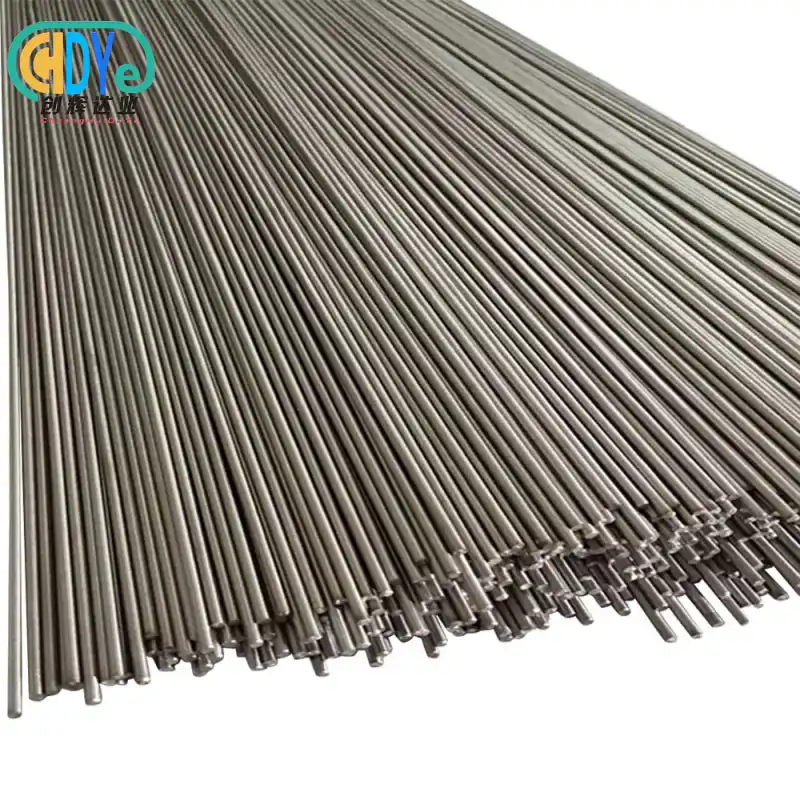
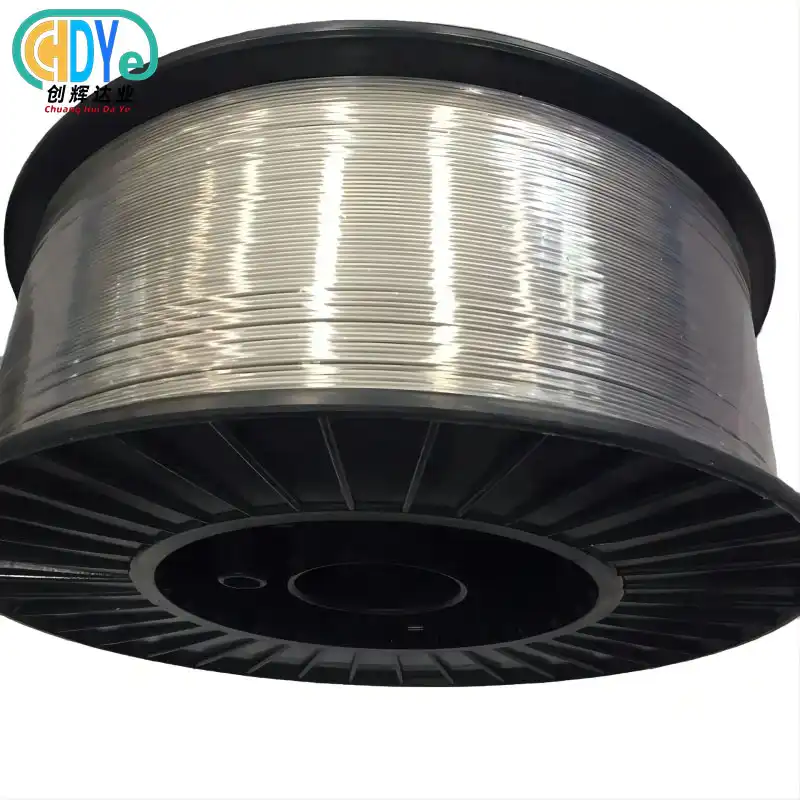
Straight Titanium Wire with Excellent Tensile Strength
When it comes to metal products, straight titanium wire is very well designed and has great mechanical strength and very accurate measurements. To get rid of coil memory and stress groups, this special wire is bent in a very advanced way. This makes a straight, stress-free material that is great for high-performance uses. High-quality straight titanium wire has a tensile strength of between 240 MPa for Grade 1 alloys and over 895 MPa for Grade 5 alloys. This makes it much stronger than aluminum and about the same as steel, but it is still very light because titanium is naturally light. Some of the steps used to make sure that each length of wire has the same mechanical properties are vacuum melting, multi-pass drawing, and controlled burning.
Understanding Straight Titanium Wire and Its Key Properties
Titanium wire represents a specialized form of titanium that has been mechanically straightened and stress-relieved to eliminate the inherent coil memory found in spooled materials. This precision engineering addresses critical manufacturing challenges, particularly in automated systems where dimensional consistency directly impacts production efficiency and component quality.
Manufacturing Process and Quality Control
The production of high-quality straight titanium wire begins with vacuum melting of titanium sponge, ensuring minimal contamination and optimal purity levels. Advanced drawing techniques progressively reduce the wire diameter while maintaining uniform microstructure throughout the material. The straightening process employs specialized machinery that mechanically eliminates curvature while applying controlled stress relief to prevent future deformation. Quality control measures during manufacturing include real-time diameter monitoring using laser measurement systems, ensuring tolerances remain within h7, h8, or h9 precision grades. Metallographic analysis verifies uniform grain structure, while tensile testing confirms mechanical properties meet specified requirements. Surface inspection eliminates any defects such as cracks, oxidation marks, or drawing die impressions that could compromise performance.
Key Mechanical Properties
The mechanical characteristics of titanium wire make it exceptional for demanding applications. Tensile strength varies significantly based on grade selection, with commercially pure grades offering excellent formability while titanium alloys provide enhanced strength-to-weight ratios. The material density of 4.54g/cm³ provides substantial weight savings compared to steel alternatives while maintaining comparable strength characteristics. Corrosion resistance stems from the natural formation of a stable titanium dioxide passive layer, providing immunity to chlorides, acids, and seawater exposure. This protective layer self-repairs when damaged, ensuring long-term reliability in harsh environments. Temperature resistance allows the material to maintain structural integrity at elevated temperatures up to 600°C, making it suitable for high-temperature applications where other materials might fail.
Comparative Analysis: Straight Titanium Wire vs Other Metal Wires
Understanding the performance differences between titanium wire and alternative materials enables informed procurement decisions based on specific application requirements and cost considerations.
Strength-to-Weight Performance Comparison
Titanium wire demonstrates superior strength-to-weight characteristics when compared to traditional metal alternatives. While stainless steel offers similar tensile strength, its density of approximately 8.0g/cm³ makes it significantly heavier than titanium's 4.54g/cm³. This weight difference becomes particularly important in aerospace and automotive applications where every gram affects fuel efficiency and performance. Aluminum wire, though lighter than titanium, provides only half the mechanical strength, requiring larger cross-sections to achieve equivalent load-bearing capacity. Copper wire excels in electrical conductivity but lacks the corrosion resistance and strength required for structural applications. Nickel alloys offer good temperature resistance but cannot match titanium's combination of strength, weight, and corrosion immunity.
Cost-Performance Analysis
While titanium wire commands a premium price compared to conventional materials, its extended service life and reduced maintenance requirements often justify the initial investment. The material's resistance to corrosion eliminates the need for protective coatings or frequent replacements, reducing the total cost of ownership over the component lifecycle. Different titanium grades offer varying cost-performance balances. Commercially pure grades provide excellent corrosion resistance at moderate strength levels, suitable for chemical processing applications. Titanium alloys like Grade 5 (Ti-6Al-4V) offer maximum strength but at higher material costs, making them ideal for aerospace and medical applications where performance justifies the expense.
Application Areas and Industry Use Cases for Straight Titanium Wire
The versatility of straight titanium wire enables its use across diverse industries where material reliability and performance directly impact operational success and safety outcomes.
Medical and Biomedical Applications
Making medical equipment is one of the hardest things that titanium wire is used for. Biocompatible means that the material can be used to make surgical equipment, orthopedic implants, and dental tools that will be in direct contact with human skin. Kirschner wires, also known as K-wires, are made from fine titanium wire. These wires are stiff enough to fix bones without being rejected by the immune system. The metal line made of titanium is not magnetic, so it can be used in MRI machines. This means that implants don't need to be taken out while doctors test them. Treatments on the surface can help permanent implants connect with the bone better, and the material's resistance to wear means it will last in the body's usual cycle of loading and unloading.
Aerospace and Defense Manufacturing
Because it is strong for its weight, titanium wire is used in aircraft to make important pins, springs, and structural parts. The material can keep its mechanical properties even at high temperatures, so it can be used in parts of engines and exhaust systems that are hot and cold all the time. Titanium wire is used by the defense industry for jobs that need to work with electromagnetic fields and not rusting in saltwater. The material doesn't spark, so it's safer to use in places where bombs are present, and it doesn't rust in saltwater, so it's stable enough to be used in the navy.
Electronics and Precision Instruments
The electronics industry benefits from titanium wire's low magnetic permeability and excellent dimensional stability. Applications include precision springs for electronic contacts, wire bonding in semiconductor packages, and components requiring long-term stability under thermal cycling conditions. High-end watch manufacturing employs titanium wire for springs and other mechanical parts because it is lighter and doesn't rust, which makes the watch last longer and work better. The material's ability to keep its shape over time makes sure that gadgets that keep time work right.
Procurement Guide: How to Buy Straight Titanium Wire with Confidence
It is important to know what the seller can do, what the material needs to be, and how to follow quality control steps that make sure the product always works well before you buy it.
Supplier Evaluation Criteria
Before you can find good companies, you should make sure they are ISO 9001:2015 approved and find out more about how they handle quality. Suppliers should show that they can make things themselves instead of only getting them from outside sources. This will help keep an eye on quality and make the supply line more stable. A factory's website will often list the items it can make and how much they cost. Being based in a well-known titanium production hub makes it easy for suppliers to get the raw materials they need and hire workers with the right skills. For technical support, you should be able to get help with program building, metalworking skills, and making changes to services so they fit the needs of each job.
Specification and Ordering Considerations
When you name a material, you should pay close attention to the grade, the largest size, and the surface finish that you need. ASTM B863 is the standard for titanium wire that is very pure, and ASTM F136 is the standard for medical-grade titanium alloys. If you want to use new metal, your welding may need to follow AWS A5.16. Dimensional standards should include limits on the width, rules for straightness, and exactness in the lengths that are cut. Cutting to any length gets rid of waste and cuts down on the work that needs to be done twice. Surface finish requirements can be anything from "as drawn" to "mirror-polished," depending on what the product needs.
Quality Assurance and Documentation
There should be a full material approval report in every box. This report should include a chemical makeup analysis, mechanical property testing, and a measurement inspection report. Traceability paperwork shows where the raw materials for the finished goods came from, so if there are problems with the quality, they can be looked into. When things come in for review, sample methods should be used to check important dimensions, surface quality, and mechanical qualities. You can get stable quality and better prices from sources if you work with them for a long time. This will also keep the supply chain open.
How to Handle and Work with Straight Titanium Wire
The performance benefits of straight titanium wire are at their best when it is treated and worked with in the right way. It is kept from getting damaged in a way that could change its mechanical properties or measurement accuracy.
Cutting and Machining Techniques
To keep the work from getting too hard and the cuts clean, cutting titanium wire needs to be done in a certain way. Sharp cutting tools don't hurt the material as much and don't leave behind burrs that could get in the way of further work. Fine-tune the cutting speeds so that they don't make too much heat, which could change the way the material feels. When you work with titanium metal, you need to use the right tools and cutting settings that are made for that metal. Cutting tools made of tungsten carbide or clay last longer and stay true to their measurements. That's enough cooling flow to stop damage from heat and keep the surface finish the same while it's being ground.
Storage and Handling Best Practices
When you store things the right way, they stay in good shape for a long time and don't get dirty or break. Store things in dry, clean places so that surfaces don't rust and get dirty, which could hurt how well they work later on in processing or other uses. Things don't break when they are being moved and handled because of protective wrapping. To stop galvanic rusting in service, people who handle materials should keep them away from metals that are not the same. By keeping storage areas and working tools separate, materials that could affect quality don't get mixed up with each other. When the stock is changed regularly, older materials are used before newer ones so that the performance of the product stays the same.
Installation and Integration Guidelines
You need to know how something works with other parts of the system and what its unique qualities are in order to install it well. Heat expansion factors must be considered when making parts that will be used in places where the temperature changes. Depending on the product, brazing, welding, or mechanical fixing may be used to join the parts. When you weld, you need inert atmosphere protection to keep the area from getting things that could lower the material's ability to fight rust or its functional properties. Making sure the joint is the right shape keeps the stress levels in a good range for the whole time it is supposed to last.
Conclusion
Straight titanium wire delivers exceptional tensile strength combined with superior corrosion resistance and lightweight properties that make it indispensable for demanding industrial applications. Its precision-engineered characteristics address critical manufacturing challenges while providing long-term reliability in harsh environments. The material's versatility spans medical devices, aerospace components, and precision instruments, where performance requirements justify premium material selection. Understanding proper specification, procurement, and handling procedures ensures successful integration into manufacturing processes while maximizing the material's inherent benefits. Investment in quality titanium wire from certified suppliers provides long-term value through reduced maintenance costs and enhanced product performance.
FAQ
Q: What tensile strength can I expect from straight titanium wire?
A: Tensile strength varies significantly based on titanium grade selection. Commercially pure Grade 1 titanium wire provides approximately 240 MPa tensile strength, while Grade 2 offers around 345 MPa. Titanium alloy Grade 5 (Ti-6Al-4V) delivers the highest strength at 895 MPa or greater, comparable to many steel alloys, while maintaining 43% weight reduction.
Q: How does corrosion resistance compare to stainless steel?
A: Titanium wire demonstrates superior corrosion resistance compared to stainless steel in most environments. The natural titanium dioxide passive layer provides immunity to chloride attack, acidic conditions, and seawater exposure, where stainless steel might suffer pitting or crevice corrosion. This advantage becomes particularly important in chemical processing and marine applications.
Q: What certifications should I verify when selecting a supplier?
A: ISO 9001:2015 certification ensures comprehensive quality management systems covering the entire production process. Material certifications should comply with ASTM B863 for commercial applications, ASTM F136 for medical devices, or AWS A5.16 for welding filler applications. Traceability documentation linking finished products to raw material sources provides additional quality assurance.
Partner with Chuanghui Daye for Premium Straight Titanium Wire Solutions
Shaanxi Chuanghui Daye leverages over 30 years of specialized experience in rare metal manufacturing to deliver precision-engineered straight titanium wire that meets the most demanding industrial requirements. Located in Baoji, China's renowned "Titanium Capital," our facility combines advanced vacuum melting, multi-pass drawing, and precision straightening technologies to produce wire with exceptional dimensional accuracy and mechanical properties. Our ISO 9001:2015 certified production processes ensure consistent quality from titanium sponge through final inspection, while our comprehensive size range from 0.5mm to 7.0mm diameter accommodates diverse application needs. Contact our technical team at info@chdymetal.com to discuss your specific requirements and experience the advantages of working with a trusted straight titanium wire manufacturer committed to delivering superior quality and competitive pricing for your critical applications.
References
1. Boyer, R., Welsch, G., & Collings, E.W. "Materials Properties Handbook: Titanium Alloys." ASM International, Materials Park, Ohio, 1994.
2. Peters, M., Kumpfert, J., Ward, C.H., & Leyens, C. "Titanium Alloys for Aerospace Applications." Advanced Engineering Materials, Vol. 5, No. 6, 2003.
3. Rack, H.J. & Qazi, J.I. "Titanium alloys for biomedical applications." Materials Science and Engineering: C, Vol. 26, No. 8, 2006.
4. American Society for Testing and Materials. "ASTM B863-14: Standard Specification for Titanium and Titanium Alloy Wire." ASTM International, West Conshohocken, PA, 2014.
5. Lutjering, G. & Williams, J.C. "Titanium: Engineering Materials and Processes." Springer-Verlag Berlin Heidelberg, Second Edition, 2007.
6. Donachie, M.J. "Titanium: A Technical Guide." ASM International, Materials Park, Ohio, Second Edition, 2000.
Learn about our latest products and discounts through SMS or email