- English
- French
- German
- Portuguese
- Spanish
- Russian
- Japanese
- Korean
- Arabic
- Greek
- German
- Turkish
- Italian
- Danish
- Romanian
- Indonesian
- Czech
- Afrikaans
- Swedish
- Polish
- Basque
- Catalan
- Esperanto
- Hindi
- Lao
- Albanian
- Amharic
- Armenian
- Azerbaijani
- Belarusian
- Bengali
- Bosnian
- Bulgarian
- Cebuano
- Chichewa
- Corsican
- Croatian
- Dutch
- Estonian
- Filipino
- Finnish
- Frisian
- Galician
- Georgian
- Gujarati
- Haitian
- Hausa
- Hawaiian
- Hebrew
- Hmong
- Hungarian
- Icelandic
- Igbo
- Javanese
- Kannada
- Kazakh
- Khmer
- Kurdish
- Kyrgyz
- Latin
- Latvian
- Lithuanian
- Luxembou..
- Macedonian
- Malagasy
- Malay
- Malayalam
- Maltese
- Maori
- Marathi
- Mongolian
- Burmese
- Nepali
- Norwegian
- Pashto
- Persian
- Punjabi
- Serbian
- Sesotho
- Sinhala
- Slovak
- Slovenian
- Somali
- Samoan
- Scots Gaelic
- Shona
- Sindhi
- Sundanese
- Swahili
- Tajik
- Tamil
- Telugu
- Thai
- Ukrainian
- Urdu
- Uzbek
- Vietnamese
- Welsh
- Xhosa
- Yiddish
- Yoruba
- Zulu
Titanium Plates for Structural Use: Are They Strong Enough?
Without a doubt, titanium plates are strong enough to be used in structures. The tensile strength of these flat-rolled metal goods is higher than 895 MPa in grade 5 alloy, and they weigh about 45% less than steel. Titanium plates are a proven choice for demanding aerospace frames, chemical processing vessels, and high-performance infrastructure where both load-bearing capacity and longevity are essential. This advantage is due to their exceptional strength-to-weight ratio and inherent corrosion resistance up to 600°C.
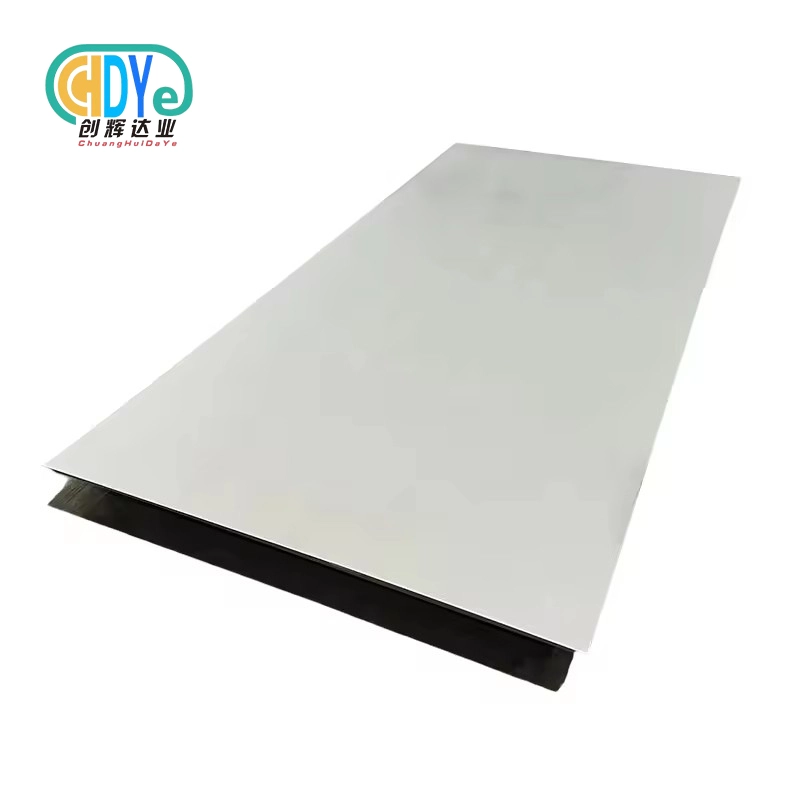
Understanding Titanium Plates: Properties and Grades
Titanium plates are a new type of construction material that can be made from pure titanium bars by carefully controlling the hot and cold rolling processes. Every day at our factory in Baoji, China's Titanium Capital, we see how these plates solve important technical problems that regular metals can't.
Physical Properties That Define Performance
Titanium's main draw comes from its very high density of 4.51 g/cm³, which puts it between steel and aluminum. This middle weight gives structures benefits that engineers are putting more and more value on. If you put a titanium plate next to a steel plate and feel them side by side, you can tell right away why aircraft engineers choose titanium for airplane parts. In widely pure grades, the metal stays the same size even when the temperature changes from cryogenics to 400°C. In alloyed mixtures, it expands up to 600°C.
Corrosion protection comes from a titanium dioxide inactive layer that forms on its own and is only a few nanometers thick. This unseen wall keeps ocean chlorides, acidic substances, and industrial atmospheres that quickly break down stainless steel at bay. Marine building projects say that these materials last three to five times longer than regular ones do.
Grade 2 and Grade 5: Choosing the Right Specification
Commercially Pure Grade 2 titanium plates have a middling tensile strength of about 345 MPa and are easy to shape and join. Chemical makers prefer this grade for reaction tanks and heat exchanges where resistance to rust is more important than final strength. The level of oxygen in the intermediate space stays below 0.25%, which lets us shape it flexibly during complex operations.
Grade 5 titanium alloy, which is also written as Ti-6Al-4V, is mostly used in aircraft and defense. When you add 6% aluminum and 4% vanadium, you get a two-phase microstructure that has tensile strengths higher than 895 MPa, which is about the same as many heat-treated steels. This grade keeps its strength at high temperatures, which is why it is essential for parts of jet engines and rocket motor cases. The addition of aluminum slightly lowers the density while increasing the resistance to rust. However, it needs to be welded with care to avoid becoming weak.
When choosing between grades, people who work in procurement should look at load estimates, working conditions, and manufacturing needs. Grade 2 is good for acidic conditions with mild stress, and Grade 5 is suitable for high-stress situations where the extra weight is worth it.
Standard Dimensions and Manufacturing Tolerances
Titanium plates are made according to ASTM B265 standards, which set the parameters for thickness, width, and length. The standard range for thickness is from 0.5 mm to 100 mm, and the standard range for width is from 2500 mm to 6000 mm. For precise tasks, our rolling mill keeps thickness limits within ±0.1 mm, which is crucial when plates are put together in ways that need very little space between them. Depending on the need for function and style, surface finishes range from hot-rolled mill scale to polished mirror finishes.
Titanium Plates vs. Other Materials: Strength and Performance Comparison
It is important to carefully consider the functional qualities, environmental longevity, and lifetime prices of a material before choosing it. The comparison below gives buying teams data-driven insights to help them make the best choices about specifications.
Strength-to-Weight Ratio Analysis
Titanium is stronger than any other construction metal when you split its tensile strength by its mass. It has a ratio of about 200 kN·m/kg, which is higher than both high-strength steel (130 kN·m/kg) and aluminum 7075 (180 kN·m/kg). This benefit directly affects how much weight an airplane can carry, how much fuel a car can use, and how much weight a building's base has to hold.
In theory, carbon fiber composites are stronger than titanium, but they don't have the metal's ability to repair itself, handle harm, or conduct heat well. When a foreign item hits a titanium airplane part, the material takes the impact energy through plastic deformation instead of catastrophic fiber breakage. This ability to bend gives important safety gaps in aircraft usage.
Corrosion Resistance Across Service Environments
When there is more than 100 parts per million of chloride in the air, the chromium oxide inactive layer in stainless steel breaks down. This causes pitting corrosion and stress corrosion cracking. Marine platforms made of 316L stainless steel need to be protected from corrosion and maintained regularly. Titanium can work in full-strength seawater forever without any protection layers, so it doesn't need to be maintained as other remote sites do.
Galvanic corrosion limits the fasteners and joint designs that can be used with aluminum alloys joined to dissimilar metals. Titanium is in the galvanic series, so it can directly touch carbon fiber materials and steel bolts without speeding up rust. This makes assembly easier and lowers the cost of ownership over time.
Long-Term Durability and Maintenance Economics
A full cost study must include more than just the original price of the materials; it must also look at how long they last and what repairs need to be done. Chemical processing plants say that titanium heat exchangers don't need to be replaced for 25 years, but stainless steel ones do need to be replaced every 7 years. Titanium is initially 300% more expensive than stainless steel, but over the facility's life, it saves over 40% by avoiding three replacements and the associated downtime.
Cutting and Fabricating Titanium Plates for Structural Use
Fabrication skills decide whether the qualities of titanium plates make it a good material for building structures. During cutting, shaping, and joining, we use special techniques to keep the metal's structure.
Precision Cutting Technologies and Best Practices
For titanium plates that require precise cutting without any heat-affected areas, waterjet cutting provides the best solution. The process of cold-cutting gets rid of heat distortion and keeps the edge's ability to bend, which is important for later shaping steps. At Mach 3, abrasive garnet suspensions wear away material along predetermined paths with kerf widths of less than 1 mm. This minimizes the waste of expensive material.
Laser cutting systems that use nitrogen as a helper gas stop rusting during processing, but the amount of heat used needs to be carefully optimized. Plasma cutting is more cost-effective for bigger pieces than 10 mm, as it can handle slightly wider kerf widths and mild edge stiffening. Straight cuts in smaller sizes can be made with mechanical shears, but the blade needs to stay sharp to keep the edge from breaking.
Picking the right tool is important for all of them. When compared to high-speed steel, carbide tools allow for longer cutting gaps. However, titanium's low thermal transfer means that cooling must be applied continuously to remove heat and avoid galling.
Welding Methods and Joint Integrity
Titanium reacts with gases in the air above 400°C, so inert gas protection must be used when welding. Gas tungsten arc welding is still the usual method, and argon protection is used on both the weld faces and the root sides. Cooling metal is protected by covers that go 150 mm beyond the arc until the temperature drops below the oxidation limits. For important aircraft parts, weld cleaning tanks keep oxygen levels below 50 ppm.
The choice of filler metal depends on the makeup of the base material. For example, ER Ti-2 wire is used for Grade 2 plates and ER Ti-5 alloys for Grade 5. Interpass temperatures need to be watched so that grains don't become bigger, which lowers their mechanical qualities. When welds are done correctly, joint efficiencies are close to 95%, and an X-ray confirms that the inside is sound, as required by the AWS D1.9 structural welding rule.
Surface Treatments Enhancing Structural Performance
Anodizing creates controlled oxide layers that make the metal more resistant to wear and provide color coding for easy identification of parts. Chemical milling takes away surface material to reduce weight. This process makes gaps and changes in thickness while keeping stress distributions smooth. Shot peening creates leftover compression stresses that make wear life 40% longer in situations where aircraft parts are loaded and unloaded many times.
Integrated production planning cuts down on lead times, as shown by aerospace projects we've helped fund. A recent contract for an airplane bulkhead called for stacked waterjet cutting, which used 87% of the material, followed by controlled-atmosphere heating to make it easier to shape before press brake operations. This kind of process merging saves money and works well technically.
Procurement Guide: Buying Titanium Plates for Structural Projects
Strategic buying of titanium plates strikes a balance between the cost, the quality of the materials, and the dependability of the suppliers. The outline below shows procurement managers how to use rating factors and choose a seller.
Supplier Qualification and Certification Verification
Certifications of materials are the basis of quality security. The ASTM B265 mill test results show the chemical makeup using optical emission spectroscopy and the mechanical qualities using normal tension testing. Full supply chain openness is possible by being able to track numbers from ingot heats to finished plate lots. For each package, we keep records that link the providers of raw materials, the conditions for processing, and the results of the final review.
ISO 9001:2015 certification shows systematic quality management, but aircraft users also need AS9100 registration. When buying materials for implants, companies that make medical devices look for ones that are ISO 13485 compliant. To avoid costly approval delays, make sure that the supplier's certifications match the legal standards for the end use.
Testing by a third party in a recognized lab gives you independent proof. A lot of buyers ask for witness testing, in which their quality agents watch as mechanical testing and non-destructive examination are done. This makes sure that the stated values are accurate reflections of how well the material actually works.
Lead Time Planning and Production Scheduling
Titanium making requires specialized tools, and the world's capacity is limited, so it takes longer to buy. Standard mill lead times for business grades are 12 to 16 weeks, and they go up to 20 weeks for aerospace standards that need stricter testing procedures. More planning space is needed for prototype numbers and unique measurements. Our center keeps a planned stock of popular sizes in Grade 2 and Grade 5, which lets us deliver within 3 weeks for jobs that need to be done quickly.
For big projects, it's important to coordinate the production schedule. We recently helped with the growth of a petroleum plant that needed 40 metric tons of corrosion-resistant plate to be sent in packages that were timed to match building milestones. Phased transport lowers the cost of keeping on-site and makes sure that the supply of materials fits the plan for production.
Pricing Structures and Cost Optimization Strategies
Titanium prices are based on the cost of the raw materials, how hard the process is, and how many orders are placed. Prices for Grade 2 plate on the market right now are between 25 and 35 USD per kilogram, and prices for Grade 5 plate are between 35 and 50 USD per kilogram, plus metal fees and measurement bonuses. Extreme thicknesses, like very thin and very thick plates, cost more to make because they need to be rolled in specific ways.
Making promises to buy in bulk can save you a lot of money. Annual supply deals with quarterly releases let makers make the best use of their production schedules. Customers benefit from these schedule improvements as a result of lower prices. Blanket sales with flexible call-offs combine the costs of keeping stockpiles with the security of material prices.
Direct connections with manufacturers cut out the middlemen and give you access to technical help and the ability to do custom processing. Our team helps with optimizing the choice of materials, reviewing specifications, and giving advice on manufacturing, all of which lower the total cost of the project in ways that go beyond just looking at unit prices.
Real-World Applications: Titanium Plates in Aerospace and Structural Engineering
Titanium plates have gone from being an unusual specialty material to a common way to build structures in many fields that need high performance. By looking at specific uses, you can see how the qualities of a material lead to working benefits.
Aerospace Structural Components
In high-stress areas where aluminum's strength is insufficient, titanium plates are used in commercial airplane fuselages. During flight, the connection parts that connect the wings to the bodies experience complex loading that includes tension, compression, and shear forces. The Grade 5 titanium plates that were made into these fittings give them extra strength to make sure they are safe for 50,000 flight runs over 30 years.
During takeoff thrust, the engine housing frames around the jet blades can handle temperatures of up to 350°C. Titanium is thermally stable, which means that its mechanical properties stay the same across temperature differences that would anneal aluminum alloys. Its low thermal expansion rate also keeps different materials from moving around too much. Weight savings from using titanium instead of other materials directly increase cargo capability. This means that each wide-body airplane has the potential to make about two million dollars a year.
Chemical Processing Infrastructure
Facilities that make chlor-alkalis need materials that can handle being exposed to chlorine gas, sodium hydroxide, and high temperatures all at the same time. Titanium plates that are made into parts of electrolytic cells work effectively for decades, while nickel alloys break down quickly. A chemical plant in Europe said that changing the heat exchanger tube sheets from nickel to titanium pushed the time between replacements from 8 years to 25 years. This meant that the plant didn't have to shut down for three unexpected shutdowns, which cost the company five million dollars in lost production.
Marine and Offshore Structures
Desalination plants for seawater deal with streams of toxic brine that are very hot, close to 90°C. Titanium plate heat exchangers are the most efficient way to transfer heat, and they don't let copper alloy rust get into the product water. Facilities in the Middle East that use titanium evaporators claim 12% higher energy efficiency compared to other materials. Within 4 years, the higher cost of the material is recovered by lower running costs.
Titanium shafts for offshore oil platforms are better at resisting wear in settings with repeated wave loads. The material is very hard to break, so cracks don't spread from areas of high stress. This means that inspections can be done more often, and repair vessels don't have to be moved as often, which saves money.
Conclusion
There is a lot of evidence that titanium plates work well as structural elements in chemical, marine, and aircraft settings where other materials fail. Their high strength-to-weight ratio, resistance to rust, and temperature stability solve important technical problems while lowering lifetime costs by extending service times and getting rid of the need for upkeep. With tensile strengths of more than 895 MPa in Grade 5 metal and weight savings of about 45% compared to steel, these materials make designs possible that weren't possible before because of the limitations of the materials. To get the most out of titanium in challenging structural uses, it is still important to choose the right grade, have the right manufacturing skills, and make sure the provider is qualified.
FAQ
Q: What thickness range is available for structural titanium plates?
A: According to ASTM B265 guidelines, structural titanium plates can be made with widths ranging from 0.5 mm to 100 mm. Skin plates for spacecraft and chemical vessels can be made from sizes that are less than 3 mm thick. On the other hand, sections that are thicker than 50 mm can hold weight for marine structure frames and pressure vessel parts. There are special rolling campaigns that can meet custom thickness needs, but the lead times are about 4 weeks longer than normal specs. Our building keeps typical grades of Grade 2 and Grade 5 metals in stock, which lets us do fast development and small-batch production for R&D purposes.
Q: How does welding affect the structural integrity of the titanium plate?
A: When done right, inert gas-shielded welding maintains the joint's 95% efficiency and preserves the power of the parent material. Gas tungsten arc welding with argon protection keeps the air from being contaminated, which would weaken the metal. As soon as the temperature drops below 400°C, oxidation limits are met by trailing gas screens that protect the cooling weld zones. Filler metals that match the base makeup make sure that the metals can be worked with. For commercially pure grades, ER Ti-2 wire is used, and for Ti-6Al-4V alloys, ER Ti-5 wire is used. Post-weld heating at 650°C for two hours to relieve stress improves the flexibility of important aircraft parts. Radiographic and ultrasound inspections in line with AWS D1.9 show that the inside is sound, with standards for accepting defects that are in line with service loading conditions.
Q: What certifications should buyers verify when procuring titanium plates?
A: Important papers have ASTM B265 mill test records that list the chemical makeup and mechanical qualities of an ingot, along with full tracking to its heat number. Getting ISO 9001:2015 certification shows that you handle quality in a planned way throughout all of your production processes. More AS9100 registration is needed for aerospace uses, and materials must meet AMS 4911 standards. For implant-grade materials to meet ASTM F67 and F136 biocompatibility guidelines, medical device makers need to make sure they comply with ISO 13485. Independent confirmation of stated qualities comes from testing by third parties in accredited labs. We give full approvals for materials and allow witness testing for customers who need direct quality control during production.
Partner with Chuanghui Daye for Premium Titanium Plate Solutions
We know that structural engineering needs accuracy, dependability, and quick expert help. Through methods that are ISO 9001:2015 certification approved, Shaanxi Chuanghui Daye Metal Material Co., Ltd. makes titanium plates that meet ASTM B265 and aircraft standards. The high-tech rolling equipment at our Baoji plant makes Grade 2 and Grade 5 plates with thicknesses ranging from 0.5 mm to 100 mm and accuracy of ±0.1 mm. We have been working with rare metals for 30 years and offer unique cutting, material certifications, and fast shipping for jobs that need to be done quickly. For more information, please email our engineering team at info@chdymetal.com. We are a reliable producer of titanium plates that is committed to offering factory-direct prices and full technical solutions.
References
1. Boyer, R., Welsch, G., & Collings, E.W. (1994). Materials Properties Handbook: Titanium Alloys. ASM International, Materials Park, Ohio.
2. Donachie, Matthew J. (2000). Titanium: A Technical Guide, 2nd Edition. ASM International.
3. Lutjering, G. & Williams, J.C. (2007). Titanium, 2nd Edition. Springer-Verlag Berlin Heidelberg.
4. American Society for Testing and Materials. (2019). ASTM B265-15: Standard Specification for Titanium and Titanium Alloy Strip, Sheet, and Plate. ASTM International, West Conshohocken, PA.
5. Schutz, R.W. & Watkins, H.B. (1998). Recent Developments in Titanium Alloy Application in the Energy Industry. Materials Science and Engineering: A, Volume 243, Issues 1-2.
6. Peters, M., Kumpfert, J., Ward, C.H., & Leyens, C. (2003). Titanium Alloys for Aerospace Applications. Advanced Engineering Materials, Volume 5, Issue 6.
Learn about our latest products and discounts through SMS or email