- English
- French
- German
- Portuguese
- Spanish
- Russian
- Japanese
- Korean
- Arabic
- Greek
- German
- Turkish
- Italian
- Danish
- Romanian
- Indonesian
- Czech
- Afrikaans
- Swedish
- Polish
- Basque
- Catalan
- Esperanto
- Hindi
- Lao
- Albanian
- Amharic
- Armenian
- Azerbaijani
- Belarusian
- Bengali
- Bosnian
- Bulgarian
- Cebuano
- Chichewa
- Corsican
- Croatian
- Dutch
- Estonian
- Filipino
- Finnish
- Frisian
- Galician
- Georgian
- Gujarati
- Haitian
- Hausa
- Hawaiian
- Hebrew
- Hmong
- Hungarian
- Icelandic
- Igbo
- Javanese
- Kannada
- Kazakh
- Khmer
- Kurdish
- Kyrgyz
- Latin
- Latvian
- Lithuanian
- Luxembou..
- Macedonian
- Malagasy
- Malay
- Malayalam
- Maltese
- Maori
- Marathi
- Mongolian
- Burmese
- Nepali
- Norwegian
- Pashto
- Persian
- Punjabi
- Serbian
- Sesotho
- Sinhala
- Slovak
- Slovenian
- Somali
- Samoan
- Scots Gaelic
- Shona
- Sindhi
- Sundanese
- Swahili
- Tajik
- Tamil
- Telugu
- Thai
- Ukrainian
- Urdu
- Uzbek
- Vietnamese
- Welsh
- Xhosa
- Yiddish
- Yoruba
- Zulu
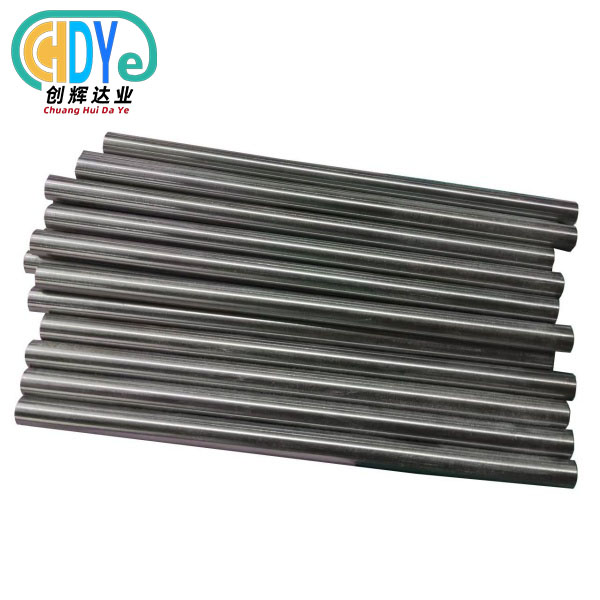
How to Choose the Right Titanium Rod Grade?
Choosing the right type of titanium rod relies on how well the material meets the technical needs, weather exposure, and cost limits of your application. To choose a titanium rod, you need to know that widely pure grades (grades 1-4) are very good at resisting rust and being shaped, while alloy grades like Ti-6Al-4V (grade 5) are stronger for uses that need to hold weight. Starting with your project's stress needs, operating temperature range, and exposure to corrosive media is a good idea. Then, compare these factors to ASTM B348 specifications to find the best grade that balances performance and cost-effectiveness for your specific industrial application.
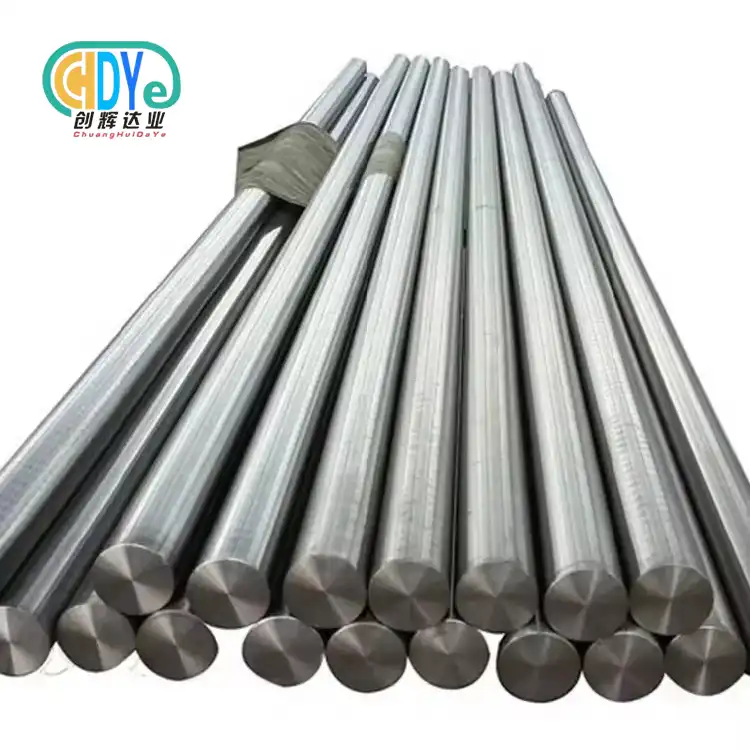
Understanding Titanium Rod Grades and Their Key Properties
The Fundamentals of Titanium Grade Classification
Titanium bars can be made from either commercially pure titanium or titanium alloys. According to ASTM B348 and ISO standards, each type of titanium is categorized into different grades. The grading system is mostly based on changes in the amount of intermediate elements present, especially oxygen, iron, and nitrogen, which have a big effect on how strong and flexible the material is. Grade 1 is the cleanest form and has the least amount of intermediate material. It is the most workable and resistant to rust, but it only has a moderate tensile strength of about 240 MPa. In contrast, Grade 4 has more oxygen, which raises the tensile strength to about 550 MPa while decreasing the flexibility.
Mechanical Properties That Define Application Suitability
Different types of titanium have completely unique ranges of mechanical strength. Many people consider grade 2 to be the workhorse of the business world. It has a balanced tensile strength of 345 MPa and 20% stretch, which means it can be used for heat exchanges and equipment used in chemical processing. Grade 5 (Ti-6Al-4V) is the most commonly used titanium alloy in the world. Its aluminum-vanadium alloying system provides it with compressive forces of over 895 MPa. This alpha-beta metal has a density of 4.43 g/cm³, which is almost half that of steel. This solves the weight-strength problem, which is very important in places like spacecraft and medical implants, where every gram counts.
Corrosion Resistance and Environmental Compatibility
Titanium's famous resistance to rust comes from the fact that it forms a steady inactive film of titanium dioxide (TiO₂). When this protective layer gets broken, it grows back right away. This makes stainless steel resistant to chloride pitting, crevice corrosion, and stress corrosion cracking, all of which happen in seawater and acidic environments. Grade 7, which has been improved by adding palladium, can do so in more acidic situations than normal grades can. For reactor tanks that handle hot hydrochloric and sulfuric acids, chemical makers choose grade 7 rods instead of steel alternatives because they don't rust and cause costly downtime like steel alternatives do.
Industry Standards and Certification Requirements
Following well-known rules is important for building trust in the procurement process for the titanium rod. For North American markets, ASTM B348 sets the standards for bars and billets, while ISO 5832-3 is only for medical-grade Ti-6Al-4V ELI (Extra Low Interstitial) products. For aerospace uses, Grade 5 rods must be certified by AMS 4928, which makes sure that they can be tracked through heat lot paperwork. We keep our ISO 9001:2015 certification up to date at our Baoji plant. For every production batch, we provide full material test records that list the chemical makeup, tensile qualities, and ultrasonic inspection results. This meets the tracking standards that are necessary for controlled industries.
Key Criteria to Consider When Choosing the Right Titanium Rod Grade
Matching Mechanical Requirements to Grade Selection
In order for something to be load-bearing, the yield strength and wear resistance must be carefully matched to the levels of operating stress. Grade 5 titanium is often used for aerospace structural parts because it has a yield strength of 828 MPa and good wear performance under repeated stress. Medical implant makers prefer Grade 23 (Ti-6Al-4V ELI) because it contains less interstitial material, making it more resistant to breaking. This keeps hip stems and oral implants from breaking after millions of load cycles. Grade 2 is often enough for marine uses like propeller shafts and bolts, where rust protection is more important than strength. It also costs a lot less than higher grades.
Environmental and Chemical Exposure Factors
The operating surroundings, like mechanical loads, strongly influence the choice of grade. Offshore oil sites that are exposed to high levels of salt in warm waters use Grade 2 or Grade 7 rods for their pipe systems, which gets rid of the problem of galvanic corrosion. Chemical companies that use oxidizing acids like nitric acid can get decades of service life from Grade 2. On the other hand, settings that require reduced acidity need the palladium to increase in grade 7. Temperature is another important factor. Grade 5 keeps its shape up to 400°C, which makes it good for parts of airplane engines where grade 2 would bend due to creep.
Total Cost of Ownership Analysis
Upfront material prices are only a small part of the total costs over the life of the product. Even though Grade 5 rods cost three to four times more per kilogram than Grade 2 rods, the extra weight saved in aircraft use results in fuel savings over many years, making the initial investment worthwhile. When chemical companies switch from stainless steel to titanium grade 2, they save money over 5 to 10 years because they don't have to shut down for upkeep, and the equipment lasts longer. We help our customers figure out the most cost-effective option by modeling these lifetime economics and comparing the costs of materials with the expected repair gaps, replacement frequency, and gains in operating efficiency.
Supply Chain and Lead Time Considerations
Material supply changes a lot depending on the grade and the supplier's abilities. Due to constant production at big mills, wait times for Grade 2 and Grade 5 rods are short, at 4 to 6 weeks. However, custom melting efforts for grades like Grade 7 or Grade 23 may take 10 to 14 weeks. When planning your buying strategy, you should also think about the minimum order numbers. Standard business sizes let you buy just one piece, but special measures often require production minimums. We keep a strategic store of common grades and sizes in Baoji's titanium industrial cluster. This lets us do fast testing and small-batch delivery, which speeds up project timelines for research centers and product development teams.
Comparative Analysis: Titanium Rod Grades Versus Alternative Materials
Titanium Versus Stainless Steel Performance
Because it's cheaper, stainless steel 316L is the most common material used in chemical processing. However, the titanium rod performs better in salt and acidic conditions where passivity breakdown causes pitting. A straight comparison shows that titanium Grade 2 stays strong in 10% hydrochloric acid that is hot, but 316L quickly corrodes at rates of more than 50 mils per year. The strength-to-weight benefit is just as strong—titanium Grade 5 is as strong as 4340 steel but 43% lighter, which directly leads to more payload in aircraft structures. Titanium is better for medical uses than stainless steel because it is biocompatible and not magnetic. Stainless steel can cause allergic reactions and MRI flaws.
Aluminum Alloy Alternatives and Trade-offs
Aluminum metals are cheaper and have a lower density (2.7 g/cm³) than titanium, which makes them a good choice for aircraft designs that aren't very important. The highest level of performance is still a lot lower—the tensile strength of aircraft aluminum 7075-T6 is only 570 MPa, while titanium Grade 5 can reach 895 MPa. In many situations, temperature limits are very important. For example, aluminum alloys lose their mechanical features above 150°C, but titanium Grade 5 keeps its structure until 400°C. Corrosion resistance varies a lot, too. In sea settings, aluminum needs protective coatings, but titanium can work without them, saving money on covering upkeep processes that add to the cost of the material over its lifetime.
Cost-Performance Optimization Strategies
In the end, the choice of material depends on the performance needs of the product and the available funds. Most of the time, hybrid methods work best. For example, using titanium Grade 5 in areas with a lot of stress and Grade 2 in areas with mild stress lowers material costs without affecting the strength of the structure. Chemical processing systems might choose treated steel for external structure supports and titanium for areas that come into contact with harmful fluids. We work together with engineering teams to find these chances to save money. We do stress analysis and rust models to find the lowest grade requirements that meet safety standards and keep material costs low.
How are titanium rods manufactured, and how does it impact grade selection?
From Sponge to Finished Rod: The Production Journey
Titanium sponge, a porous metal shape made by the Kroll process, is the first step in making titanium rods. It is vacuum arc remelted to make uniform bars. Hot forging at 900–1100°C reduces the cross-sectional area of these bars while improving the grain structure. After hot rolling and precision drawing, the final size limits are reached, and work hardening is lowered during cooling processes. At our Baoji plant, we use electron beam furnaces for specialty grade melting, forge hammers for structure consolidation, and precision lathes for made parts. This way, we can make everything from raw materials to finished products.
Quality Control and Material Traceability
For the titanium rod, tough testing procedures make sure that all output lots of the material work the same way. Optical emission spectroscopy is used to check the chemical makeup and make sure that the metal amount meets ASTM standards. Tensile testing checks the mechanical qualities by pulling test samples until they break while recording the yield strength, final tensile strength, and percent elongation. Ultrasonic inspection finds cracks inside structures that could weaken their stability. As a result, we keep full records that connect material test reports to individual heat lots. This lets us follow the rules for medical and aircraft uses where failure could have serious effects.
How Manufacturing Method Influences Grade Selection
There are times when limitations on the production method force grade choices that go beyond theoretical performance improvement. When complex shapes need a lot of cutting, Grade 2 is better than Grade 5 because it is easier to machine and costs less. Commercially pure grades are best for cold-forming operations like wire drawing. Alloy grades work harden quickly and need to be annealed often. Choosing the right grade also depends on how it will be welded. Grade 2 is easy to weld without filler metal, but Grade 5 needs controlled oxygen welding with a filler makeup that matches. By understanding these industrial facts, you can avoid specifying theoretically ideal grades that don't work well in production. This is a mistake that we help our clients avoid by working with them early on to choose materials and plan their processing strategy.
Practical Steps for Procurement: From Specification to Purchase
Defining Technical Requirements with Precision
A thorough set of specifications is the first step to a successful purchase. There should be limits for diameter (usually ±0.5 mm for normal output), length, and surface finish (hot-worked, cold-drawn, or centerless ground) in the dimensional requirements. Minimum requirements for mechanical properties must be based on well-known standards. For example, stating "ASTM B348 Grade 5, solution-treated and aged condition" makes performance goals clear. Environmental factors such as the working temperature range, the type of exposure media used, and the expected service life help choose the right grade and determine if any extra testing is needed.
Evaluating Supplier Capabilities and Credentials
Comparing prices is only one part of evaluating a supplier. You should also look at their production skills, quality systems, and shipping dependability. Check for ISO 9001:2015 approval, which confirms that structured quality management techniques are being used. Look at examples of material test reports to see how well the paperwork and testing are done. Find out what kind of production equipment they have. For example, new facilities with electron beam melting and hot isostatic pressing tools show that the technology is advanced for specific grades. Because we are in Baoji's titanium industrial center, we have access to China's most dense titanium supply chain. This includes providers of raw materials, experts in processing, and testing labs that make sure quality is always high and prices are low compared to factory-direct prices.
Navigating Customization and Volume Requirements
Common sizes from 6mm to 300mm in Grade 2 and Grade 5, offered in 3-meter or 6-meter lengths, are usually included in standard titanium rod inventories. If you need custom types, non-standard sizes, or certain heat treatment conditions, you may have to place a minimum order of 100 kg to 1000 kg, based on how unique your requirements are. Most large-scale makers have trouble getting the materials they need for small study orders and prototypes. We are experts at adjustable small-batch production, all the way down to orders for just one piece. This helps university research programs and product development cycles where small amounts of materials are needed, but exactness is required by technical standards. For correct wait time and price information, please contact our team at info@chdymetal.com to talk about your unique size and number needs.
Conclusion
To choose the right type of titanium rod, you need to carefully look at its technical performance needs, how it will be used, how it will be manufactured, and its overall cost of ownership. Commercially pure grades work best in environments with a lot of rust and don't need to be very strong. Ti-6Al-4V alloys, on the other hand, are perfect for aircraft and structures that have to hold a lot of weight. Partnering with providers who have strict quality systems, provide full traceability paperwork, and offer expert help during standard development is all-important for successful buying. By understanding how manufacturing methods affect realistic grade decisions, you can avoid making mistakes in the specifications that are too expensive to fix or that hurt performance or production.
FAQ
Q: What distinguishes Grade 2 from Grade 5 titanium rods?
A: Grade 2 titanium is fairly pure and has a tensile strength of 345 MPa, making it good for chemical processing and naval uses. It is also very resistant to rust and easy to shape. Grade 5 (Ti-6Al-4V) is a high-strength metal with a tensile strength of 895 MPa thanks to the addition of aluminum and vanadium. This makes it the best choice for aircraft structures and medical procedures that need to hold a lot of weight.
Q: How does the titanium rod's corrosion resistance compare to stainless steel?
A: In seawater, titanium forms a passive coat of titanium dioxide that protects it from chloride pitting and crevice corrosion. Stainless steel 316L, on the other hand, is attacked in specific areas. Titanium stays strong in hot, acidic places where stainless steel breaks down quickly. This means that corrosion-related upkeep is not needed in chemical processing uses.
Q: What factors influence titanium rod lead times?
A: Standard sizes of common grades like Grade 2 and Grade 5 usually ship within 4 to 6 weeks from when they are first stocked. Due to the way melting centers schedule their work, wait times may be 10 to 14 weeks for specialty grades like Grade 7 or Grade 23, custom sizes, and heat treatment needs that aren't met by standard processes. Lead times are cut down by a large amount when you work with providers and keep smart supplies.
Partner with Chuanghui Daye for Your Titanium Rod Procurement
Every time they work with a titanium rod provider, Chuanghui Daye brings more than 30 years of experience with rare metals and offers factory-direct prices along with ISO 9001:2015-approved quality management. Because we are strategically located in Baoji, which is known as the "titanium capital," we have quick access to some of China's most advanced production facilities. These include electron beam ovens and precision machining centers that can meet your unique needs from the pilot stage through production numbers. We offer fully tracked materials with full test paperwork, whether you need medical-grade Ti-6Al-4V ELI for implant uses or commercially pure Grade 2 for chemical processing equipment. Contact our engineering team at info@chdymetal.com to talk about your application needs and get a thorough technical price that takes into account your speed standards and delivery schedule.
References
1. American Society for Testing and Materials. ASTM B348-13: Standard Specification for Titanium and Titanium Alloy Bars and Billets. ASTM International, West Conshohocken, PA, 2013.
2. Boyer, R., Welsch, G., and Collings, E.W. Materials Properties Handbook: Titanium Alloys. ASM International, Materials Park, OH, 1994.
3. Donachie, Matthew J. Titanium: A Technical Guide, 2nd Edition. ASM International, Materials Park, OH, 2000.
4. International Organization for Standardization. ISO 5832-3: Implants for Surgery — Metallic Materials — Part 3: Wrought Titanium 6-Aluminum 4-Vanadium Alloy. ISO, Geneva, Switzerland, 2016.
5. Lütjering, Gerd, and Williams, James C. Titanium, 2nd Edition. Springer-Verlag, Berlin Heidelberg, 2007.
6. Schutz, R.W. and Thomas, D.E. "Corrosion of Titanium and Titanium Alloys." Corrosion: Fundamentals, Testing, and Protection, Volume 13A, ASM Handbook, ASM International, 2003, pp. 252-299.
Learn about our latest products and discounts through SMS or email