- English
- French
- German
- Portuguese
- Spanish
- Russian
- Japanese
- Korean
- Arabic
- Greek
- German
- Turkish
- Italian
- Danish
- Romanian
- Indonesian
- Czech
- Afrikaans
- Swedish
- Polish
- Basque
- Catalan
- Esperanto
- Hindi
- Lao
- Albanian
- Amharic
- Armenian
- Azerbaijani
- Belarusian
- Bengali
- Bosnian
- Bulgarian
- Cebuano
- Chichewa
- Corsican
- Croatian
- Dutch
- Estonian
- Filipino
- Finnish
- Frisian
- Galician
- Georgian
- Gujarati
- Haitian
- Hausa
- Hawaiian
- Hebrew
- Hmong
- Hungarian
- Icelandic
- Igbo
- Javanese
- Kannada
- Kazakh
- Khmer
- Kurdish
- Kyrgyz
- Latin
- Latvian
- Lithuanian
- Luxembou..
- Macedonian
- Malagasy
- Malay
- Malayalam
- Maltese
- Maori
- Marathi
- Mongolian
- Burmese
- Nepali
- Norwegian
- Pashto
- Persian
- Punjabi
- Serbian
- Sesotho
- Sinhala
- Slovak
- Slovenian
- Somali
- Samoan
- Scots Gaelic
- Shona
- Sindhi
- Sundanese
- Swahili
- Tajik
- Tamil
- Telugu
- Thai
- Ukrainian
- Urdu
- Uzbek
- Vietnamese
- Welsh
- Xhosa
- Yiddish
- Yoruba
- Zulu
Titanium Rod Corrosion Resistance: Why It Matters?
When chemical attacks, saltwater exposure, titanium rods, or acidic environments happen over and over again in commercial settings, materials fail, which costs a lot of money. This is where the function of the titanium rod becomes essential. Titanium doesn't rust because it instantly forms a passive titanium dioxide (TiO₂) layer on its surface. This layer can fix itself if it gets broken and protects against chloride-induced pitting, crevice corrosion, and stress corrosion cracking better than anything else. When procurement professionals understand this property, they can make better decisions that lower the total cost of ownership, extend the life of components, and cut down on equipment downtime in demanding fields like chemical processing, marine engineering, aerospace, and medical device manufacturing.
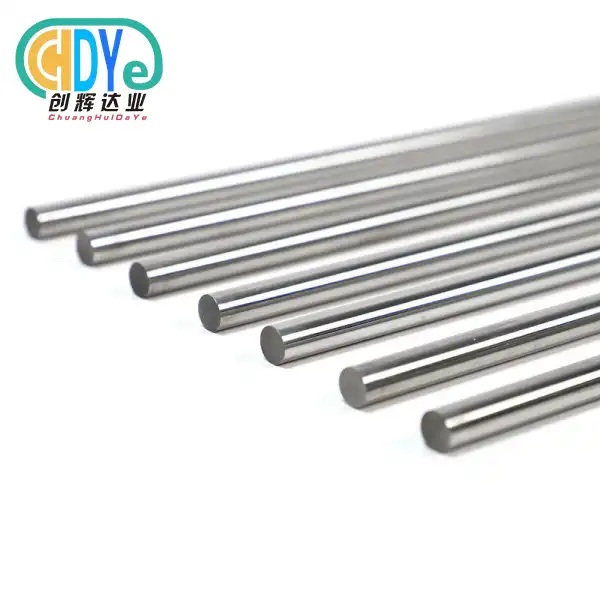
Understanding Titanium Rod Corrosion Resistance
What Makes Titanium Inherently Corrosion-Resistant?
Corrosion resistance is a material's ability to keep its chemical or electrical properties when it comes into contact with harsh media. The fact that titanium forms an oxide film on its own gives it a huge edge. As soon as it comes in contact with air or water, a thin but very stable layer of TiO₂ forms on the surface. This passive layer stays stable in pH levels from 3 to 12 and grows back right away if it is damaged mechanically. It provides long-lasting security that aluminium and stainless steel can't match in chloride-rich environments.
The Role of Titanium Grades in Corrosion Performance
Based on their chemical makeup and interstitial element content, different types of titanium have different levels of resistance to corrosion. Grade 1 titanium is the most ductile commercially pure version with the least amount of oxygen. It is very easy to shape and resists corrosion better in oxidising environments, where extreme cold-forming skills are needed. Grade 2 titanium is the workhorse of the industry. It has a modest level of strength and excellent ductility, and it is very resistant to chloride pitting and crevice corrosion in chemical processing and offshore operations. Grade 5 (Ti-6Al-4V), an alpha-beta alloy with vanadium and aluminium, has higher tensile strength than commercially pure grades, but it also has less corrosion resistance. This makes it perfect for aerospace structural parts where mechanical qualities are very important.
Key Applications Benefiting from Titanium Rod Corrosion Resistance
Aerospace and Defence Components
Aerospace companies need materials that a titanium rod can keep its structure strong even when temperatures change a lot, oxygen attacks it, and they are under a lot of mechanical stress. Titanium bars are used to make parts for the landing gear, the hydraulic system, fasteners, and turbine blades. The high strength-to-weight ratio and corrosion protection get rid of the need for extra weight while making sure that the aircraft will keep working well for a long time. Defence uses include naval ships, missile parts, and armoured vehicle parts that are exposed to seawater or are used in battle and need materials that don't break down mechanically or corrode over time.
Marine and Offshore Engineering
Because it has a lot of chloride, dissolved oxygen, and living things, seawater is one of the most aggressive and corrosive environments. Titanium rods are used to make propeller shafts, heat exchanger tubes, pump parts, structural elements for offshore platforms, and tools for desalination. Because it doesn't react with chloride pitting or crevice corrosion, the material doesn't have the catastrophic failures that are common with stainless steel in marine settings. When used offshore for oil and gas, titanium is better than other materials because it doesn't crack when exposed to sour gas conditions with hydrogen sulphide.
How Titanium Rod Corrosion Resistance Impacts Procurement Decisions
Total Cost of Ownership Analysis
Titanium is more expensive to buy than stainless steel or carbon steel, which makes procurement workers hesitant. Lifecycle cost analysis, on the other hand, shows that there are big savings to be had by extending the service life, lowering the frequency of upkeep, and getting rid of unplanned downtime. In a chemical plant, a titanium heat exchanger may cost three times as much at first as a stainless steel one, but it can last twenty years without any upkeep, while a stainless steel one only lasts five years before it needs several tube replacements. When figuring out the overall cost, you have to include the cost of the materials, the cost of making them, the cost of labour for installation, planned and unplanned maintenance, production losses during downtime, and the cost of replacements in the long run.
Selecting the Appropriate Grade for Specific Environments
For the right material, you need to match the titanium grade's properties to the needs of the product and the situations where it will be used, especially when selecting a titanium rod for industrial or structural applications. Think about these things that affect both performance and cost as you look at your options. The temperature range in which something is used changes how it works and how it corrodes. Some kinds of rust can happen faster in hot weather, while others are less likely to happen. What kind of titanium gives enough protection without using too many pricey metals depends on the chemicals that are used in the process. The amount of mechanical stress tells us if widely pure grades are strong enough or if Grade 5 alloy is needed, even though it doesn't protect against corrosion as well. When making things, like welding, cutting, and forming, the grade you choose affects your options because pure grades are easier to work with than alloy versions. Because of limited funds, performance goals have to be weighed against the cost of materials. For applications that are likely to rust, Grade 2 is usually the best value for a titanium rod.
Best Practices for Handling and Machining Titanium Rods to Preserve Corrosion Properties
Machining Considerations to Maintain Surface Integrity
When working with titanium, you need to use special titanium rod methods to keep the surface clean and avoid damage from heat and work hardening that can weaken the metal's resistance to rust. Cutting tools that are sharp and made of carbide or a covered material produce less cutting force and heat. Cutting fluids with a neutral pH and no chlorine should be used in large amounts to keep the surface from oxidising and to get rid of chips that can weld to the workpiece. When cutting aluminium, the cutting speeds are slower than when cutting steel. This keeps heat from building up and changing the surface chemistry or adding tensile residual stresses. The stability of the passive oxide layer is maintained by keeping it free of iron particles, copper tooling, and compounds that contain chloride.
Surface Treatment and Finishing Protocols
Surface treatments done after machining make parts more resistant to corrosion and get them ready for use in service settings. Using nitric-hydrofluoric acid solutions for chemical pickling gets rid of surface contamination, machining leftovers, and heat-affected layers. This leaves behind fresh titanium that quickly forms a uniform passive layer. Passivation processes in oxidising solutions make the protective oxide film thicker, which makes it harder for localised corrosion to start. Bead blasting or rolling are two types of mechanical finishing that can be used to make the surface flat without adding any contaminants. If you do the annealing heat treatment in a vacuum or inert atmosphere, the leftover stresses from cold working the titanium rod are relieved while the corrosion properties are kept.
Trusted Titanium Rod Suppliers and Quality Assurance
Evaluating Supplier Credentials and Capabilities
Getting titanium rods from a source that has quality systems that can be checked, technical know-how, and production infrastructure is important for reliability. Manufacturers who have ISO 9001:2015 certification show that they are dedicated to maintaining quality throughout the whole process, from inspecting the raw materials to inspecting and packing the finished goods after melting and forging them. There is faith in specification conformance when there is material traceability documentation that connects finished products to specific ingot heats, chemical analysis results, and mechanical property test data. Having production tools like electron beam furnaces, precision rolling mills, CNC machining centres, and non-destructive testing facilities shows that the company has the technical know-how to provide uniform quality.
Geographic Considerations for Global Sourcing
The global titanium supply chain centres on key production regions with established metallurgical expertise. China's Baoji region, known as the "Titanium Capital," hosts concentrated production infrastructure, raw material access, and technical talent that enable competitive pricing without sacrificing quality. United States domestic suppliers provide short lead times, simplified logistics, and regulatory compliance advantages for defence and medical applications requiring domestic content. European producers emphasise specialised alloys, small batch flexibility, and stringent quality documentation for aerospace and chemical processing sectors. Procurement strategies often balance primary supply sources with qualified backup suppliers to mitigate supply chain disruptions.
Ordering Logistics and Custom Processing Services
Efficient procurement workflows require suppliers who accommodate diverse order requirements and provide value-added processing. Standard stock sizes in common diameters and lengths enable rapid delivery for prototyping and small-volume production. Custom diameter specifications through precision centerless grinding meet tight tolerance requirements for machined components. Cut-to-length services reduce material waste and eliminate internal cutting operations. Value-added processing, including heat treatment, surface finishing, and certification to specific standards, streamlines manufacturing workflows and reduces total acquisition cost.
Conclusion
Titanium rod corrosion resistance fundamentally transforms equipment reliability and lifecycle economics across industries facing aggressive chemical environments, marine exposure, and demanding operational conditions. The spontaneous formation and self-healing capability of the titanium dioxide passive layer delivers protection that conventional materials cannot match, particularly in chloride-rich and oxidising media. Procurement professionals who understand grade-specific corrosion behaviour, evaluate the total cost of ownership, and partner with qualified suppliers gain competitive advantages through reduced maintenance, extended equipment life, and improved operational uptime. The material's combination of corrosion immunity, high strength-to-weight ratio, and biocompatibility continues expanding application opportunities as industries recognise that initial material cost represents a small fraction of true lifecycle value.
FAQ
1. What titanium grade offers the best corrosion resistance?
Grade 1 commercially pure titanium provides the highest corrosion resistance due to its minimal interstitial element content and maximum ductility. The low oxygen content enhances resistance to oxidising acids and chloride solutions, making it ideal for chemical processing equipment operating in highly corrosive media where mechanical strength requirements remain moderate.
2. How does titanium's corrosion resistance compare to stainless steel in seawater?
Titanium demonstrates superior performance in seawater applications compared to stainless steel alloys, including 316L. The passive titanium dioxide layer remains stable and immune to chloride-induced pitting corrosion, crevice corrosion, and stress corrosion cracking that commonly cause premature stainless steel failure in marine environments. While stainless steel may initially cost less, titanium eliminates the maintenance, repair, and replacement expenses that dominate marine equipment lifecycle costs.
3. Can machining damage titanium's corrosion resistance?
Improper machining practices can introduce surface contamination, residual stresses, or heat-affected zones that compromise corrosion protection. However, following recommended machining parameters with sharp tools, adequate coolant flow, and appropriate cutting speeds preserves surface integrity. Post-machining pickling and passivation treatments remove any affected layers and restore optimal corrosion resistance.
Partner with Chuanghui Daye for Your Titanium Rod Requirements
Industrial operations demanding exceptional corrosion resistance and reliable material performance find a trusted titanium rod supplier in Chuanghui Daye. Located in Baoji, China's renowned Titanium Capital, we combine over thirty years of rare metal expertise with ISO 9001:2015 certified quality management systems to deliver commercially pure and alloyed titanium rods meeting stringent specifications. Our production capabilities encompass electron beam melting, precision forging and rolling, and advanced machining services that provide custom diameters, cut lengths, and finished components tailored to your application requirements.
We understand that procurement professionals require more than material specifications—you need technical partnerships that solve real-world challenges. Our metallurgical team provides application consulting, material selection guidance, and titanium rod and fabrication recommendations that optimise performance while controlling costs. Complete material traceability documentation, rigorous inspection protocols, and flexible order quantities from prototype samples to production volumes support your project timelines and quality standards. Reach out to our team at info@chdymetal.com to discuss your corrosion-resistant titanium rod needs and experience the reliability that comes from partnering with dedicated specialists committed to your operational success.
References
1. American Society for Testing and Materials (ASTM). "Standard Specification for Titanium and Titanium Alloy Strip, Sheet, and Plate." ASTM B265-20a, West Conshohocken, PA, 2020.
2. Donachie, Matthew J. "Titanium: A Technical Guide, 2nd Edition." ASM International, Materials Park, Ohio, 2000.
3. Chutz, R.W. and Thomas, D.E. "Corrosion of Titanium and Titanium Alloys." ASM Handbook, Volume 13B, Corrosion: Materials, ASM International, 2005, pp. 252-299.
4. Peters, M., Kumpfert, J., Ward, C.H., and Leyens, C. "Titanium Alloys for Aerospace Applications." Advanced Engineering Materials, Vol. 5, No. 6, 2003, pp. 419-427.
5. Lutjering, Gerd and Williams, James C. "Titanium, 2nd Edition." Springer-Verlag, Berlin Heidelberg, 2007.
6. Boyer, Rodney, Welsch, Gerhard, and Collings, E.W. "Materials Properties Handbook: Titanium Alloys." ASM International, Materials Park, Ohio, 1994.
Learn about our latest products and discounts through SMS or email