- English
- French
- German
- Portuguese
- Spanish
- Russian
- Japanese
- Korean
- Arabic
- Greek
- German
- Turkish
- Italian
- Danish
- Romanian
- Indonesian
- Czech
- Afrikaans
- Swedish
- Polish
- Basque
- Catalan
- Esperanto
- Hindi
- Lao
- Albanian
- Amharic
- Armenian
- Azerbaijani
- Belarusian
- Bengali
- Bosnian
- Bulgarian
- Cebuano
- Chichewa
- Corsican
- Croatian
- Dutch
- Estonian
- Filipino
- Finnish
- Frisian
- Galician
- Georgian
- Gujarati
- Haitian
- Hausa
- Hawaiian
- Hebrew
- Hmong
- Hungarian
- Icelandic
- Igbo
- Javanese
- Kannada
- Kazakh
- Khmer
- Kurdish
- Kyrgyz
- Latin
- Latvian
- Lithuanian
- Luxembou..
- Macedonian
- Malagasy
- Malay
- Malayalam
- Maltese
- Maori
- Marathi
- Mongolian
- Burmese
- Nepali
- Norwegian
- Pashto
- Persian
- Punjabi
- Serbian
- Sesotho
- Sinhala
- Slovak
- Slovenian
- Somali
- Samoan
- Scots Gaelic
- Shona
- Sindhi
- Sundanese
- Swahili
- Tajik
- Tamil
- Telugu
- Thai
- Ukrainian
- Urdu
- Uzbek
- Vietnamese
- Welsh
- Xhosa
- Yiddish
- Yoruba
- Zulu
What Industries Need High-Quality Titanium Coil Wire?
High-quality titanium coil wire is used in many important ways in the aerospace, medical, chemical processing, electronics, titanium coil wire and car manufacturing industries. Titanium's high resistance to rust, high strength-to-weight ratio, and biocompatibility make it an important material for these fields. The titanium coil wire comes in Grade 2 and Grade 5 (Ti-6Al-4V) alloys and has diameters from 0.1 mm to 5 mm. It has tensile strengths between 345 MPa and 895 MPa and works well in harsh conditions where other metals fail.
Understanding Titanium Coil Wire and Its Key Properties
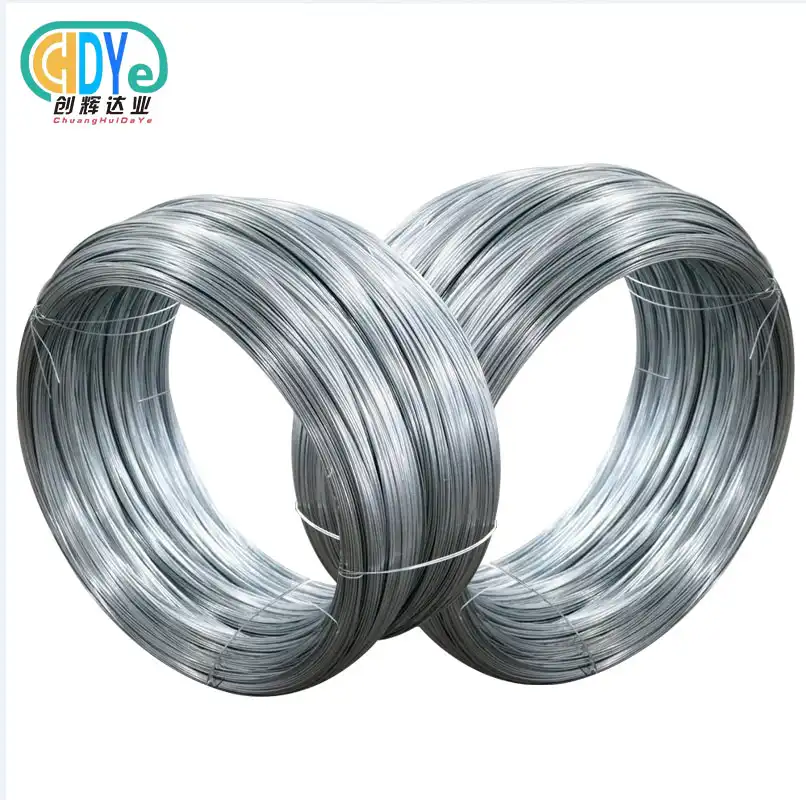
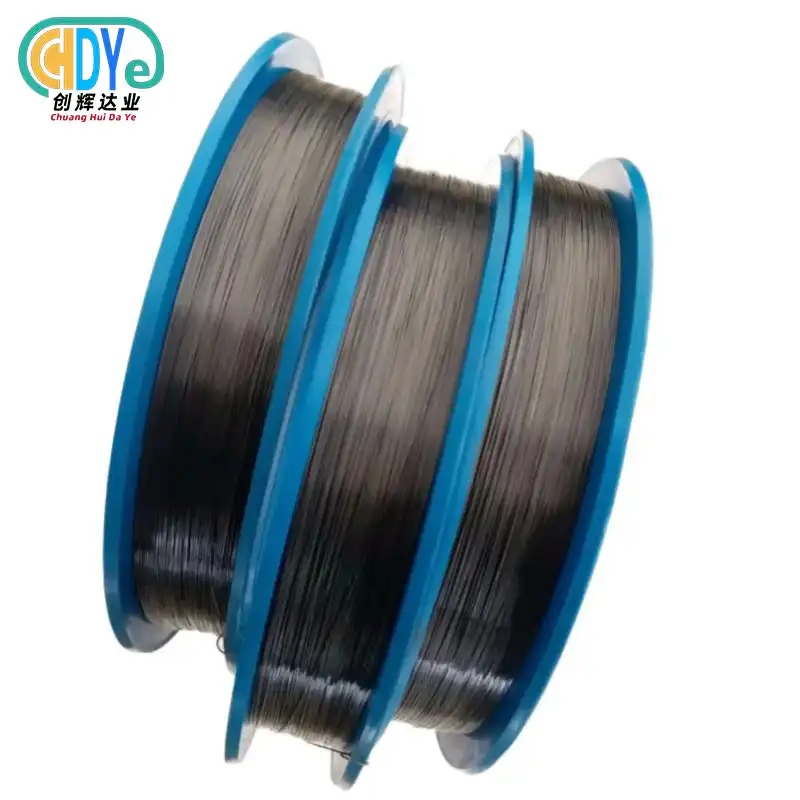
Titanium coil wire represents a continuously spooled titanium filament produced through advanced cold-drawing or hot-rolling manufacturing processes. This format addresses critical efficiency needs in automated production environments by eliminating frequent material reloading interruptions common with cut-length alternatives. The continuous coil configuration enables seamless integration into high-volume welding systems, additive manufacturing equipment, and precision weaving operations.
Defining Titanium Coil Wire and Common Manufacturing Grades
The material goes through vacuum arc remelting (VAR) from a titanium sponge and then goes through a lot of drawing steps to get the exact width it needs. Grade 2 titanium is commercially pure and has a controlled oxygen level. It is very easy to shape and has great corrosion resistance, making it perfect for general industrial uses. Grade 5 titanium metal (Ti-6Al-4V) has 6% aluminium and 4% vanadium in it. This makes an alpha-beta microstructure that improves its mechanical strength and performance at high temperatures. This useful alloy makes up about half of all titanium used in the world because it can be used in a wide range of tough situations.
Key Material Properties and Performance Characteristics
Titanium wire is very resistant to rust in places with a lot of chloride, acidic solutions, and oxidising conditions, where stainless steel breaks down quickly. The material stays structurally sound at temperatures above 300°C, which is very important for chemical processing and aircraft uses. Titanium has a density of 4.43 to 4.51 g/cm³, which means it is about 45% lighter than steel but has the same level of strength. This great amount of strength-to-weight is especially useful in designs that need to be light, where every gram counts. The material is very resistant to wear when loaded and unloaded repeatedly, which increases the service life of parts in dynamic situations. Titanium's low thermal expansion coefficient keeps tight tolerances in precision parts by reducing changes in size when temperatures change. Because the metal isn't magnetic, it's very useful in electrical devices, such as titanium coil wire and medical imaging equipment that can't handle magnetic interference.
Key Industries That Require High-Quality Titanium Coil Wire
Understanding which sectors depend on titanium wire helps procurement professionals appreciate the material's strategic value across diverse applications. Each industry faces unique technical challenges that titanium's properties specifically address.
Aerospace and Defense Manufacturing Applications
Titanium wire is used by aircraft makers in important fastening systems, hydraulic line assemblies, and structural reinforcement tasks where reducing weight directly improves fuel efficiency and payload capacity. Grade 5 titanium wire is needed for engine parts that work in high-temperature exhaust streams because it can keep its mechanical qualities above 400°C. Titanium is used by defence contractors in naval uses because it can withstand saltwater exposure and won't pit or crack over many years of use. Titanium wire is used in safety-critical parts of helicopter rotor systems where a failure of the material could be disastrous. Manufacturers of satellites use titanium's high strength-to-weight ratio to keep launch costs low and make sure that structures will hold up in the harsh weather changes of space. Titanium wire parts help unmanned aerial vehicles by lowering the weight of their airframes without affecting their structural stability.
Medical Device and Healthcare Sector Requirements
Grade 2 titanium wire is used to make surgical instruments because it is very biocompatible and doesn't cause any bad reactions in the flesh when it is implanted. Orthopaedic implant makers bend titanium wire into bone fixation devices that fuse naturally with human bones. This process is called osseointegration. When used in dentistry, titanium wire is used in orthodontic devices and implant abutments because it needs to be able to fight corrosion over time in the mouth. Fine-diameter titanium wire is used by companies that make cardiovascular devices like stents and pacemaker leads because it is strong, flexible, and biocompatible. Neurosurgical tools use titanium wire parts that can be safely put through magnetic resonance imaging (MRI) without creating artefacts or being attracted to magnets. Because the material is non-toxic, there are no worries about heavy metal leaking that could happen with copper or nickel alternatives over time.
How to Choose the Right Titanium Coil Wire for Your Industry Needs
Selecting appropriate wire specifications requires matching material properties to specific application demands while considering economic factors and supply chain logistics.
Evaluating Grade Selection and Alloy Composition
Grade 2 commercially pure titanium is best for uses that need the most corrosion protection and shapeability, but only need moderate strength. This grade is great for cold-forming, deep-drawing, and welding jobs that need the metal to be flexible. When uses need higher tensile strength, better creep resistance, or better performance at high temperatures, Grade 5 (Ti-6Al-4V) is needed. Grade 5's alloying elements make a two-phase microstructure that can be heated to improve its mechanical qualities even more. For certain uses, different mixes may be needed, like Grade 23 (Ti-6Al-4V ELI) for medical implants that need very little interstitial content, or Grade 12 titanium, which is better at resisting crevice corrosion in certain chemical conditions. Knowing these differences helps people who buy things make sure they get materials that exactly meet the needs of the purpose, titanium coil wire, without spending too much.
Wire Diameter and Dimensional Tolerance Considerations
The diameter of the wire directly affects its mechanical properties. Wires with smaller diameters have higher tensile strength because they are cold-worked more during drawing processes. For automatic welding systems to work, the diameter must be controlled consistently within ±0.02 mm to keep the arc stable and the weld beads even. To keep the fabric consistent and avoid damage to the loom, weaving operations need a smooth surface finish and uniform dimensions. The way a coil is wound affects how the payoff works in automatic feeding systems. Level-wound spools prevent problems with tangling from happening, which stops production. The specs for the purchase should include the size of the spool, the parameters for winding tension, and the limits on the inner diameter that are compatible with your equipment.
Procurement Best Practices for Buying Titanium Coil Wire
Strategic sourcing approaches optimise material costs while ensuring consistent quality and reliable delivery performance that supports production schedules.
Supplier Evaluation and Qualification Procedures
An important part of evaluating a provider is making sure they have the right tools for making things, like melting equipment, drawing machines, and quality control tools. When compared to facilities that use bought fuel, suppliers who use vacuum arc remelting furnaces make cleaner material with better compositional control. Using cold-drawing tools with in-process diameter measurement makes sure that the dimensions stay the same from one production run to the next. Spectroscopy should be used to check the composition, tensile testing should be used to check the mechanical properties, and surface inspection tools should be used to find flaws. Asking for facility checks or reading third-party assessment reports can give you more information than what the marketing says about how things are actually run. Referrals from customers in related industries can tell you a lot about how responsive a supplier is, how good their technical support is, and how well they solve problems. Checking how long a supplier's customers have been with them shows if they keep customers for a long time or if they have a lot of customers leaving, which could mean they have service problems.
Cost Analysis and Volume Purchasing Strategies
Titanium pricing reflects raw material costs, processing complexity, and order volume, with bulk purchases typically yielding 15-25% savings compared to small-quantity orders. Establishing blanket purchase agreements with scheduled releases balances inventory carrying costs against volume pricing advantages. Procurement teams should track London Metal Exchange titanium prices and industry capacity utilisation rates to identify favourable purchasing windows. Comparing total acquisition costs requires evaluating not just unit prices but also freight expenses, customs duties, payment terms, and quality-related rejection risks. Domestic suppliers may offer higher unit prices but provide faster delivery, simplified logistics, and reduced quality variation compared to distant sources. Custom sizing requests often incur premium pricing and extended lead times, making standard diameter selections more economical when application requirements allow flexibility. Collaborating with engineering teams to standardise wire specifications across multiple projects maximises purchasing leverage and simplifies inventory management.
How to Weld and Handle Titanium Coil Wire in Industrial Applications
Proper processing techniques preserve material properties and ensure reliable joint formation in welding operations while preventing contamination during storage and handling.
Welding Methods and Inert Gas Shielding Requirements
Tungsten inert gas (TIG) welding provides excellent control for joining titanium components, utilising argon or helium shielding gas that prevents atmospheric contamination during the molten weld pool stage. Proper shielding requires gas flow rates between 15 and 20 cubic feet per hour delivered through torch cups sized appropriately for joint configuration. Trailing shields extending 4-6 inches behind the welding arc prevent oxidation as metal cools through critical temperature ranges where atmospheric reaction occurs rapidly. Backing gas purging proves essential for full-penetration welds, maintaining an inert atmosphere on the weld root side, preventing atmospheric contamination that causes embrittlement. Laser welding offers advantages for high-speed production applications and situations requiring minimal heat input to avoid distortion in thin-section titanium coil wire components. Metal inert gas (MIG) welding using titanium coil wire feedstock enables automated welding in manufacturing environments, though equipment must incorporate wire cleaning systems and enhanced shielding arrangements.
Storage and Handling Best Practices
During welding, the sides of the titanium wire must stay free of oils, fingerprints, and other things that can make the wire porous and break easily. Low humidity levels (below 50%) should be kept in storage places so that wire surfaces don't absorb water. Coil packaging should stay closed until it's time to use it, and opened spools should be kept in containers with desiccant to keep them from being exposed to air. People who handle wires should wear clean cotton or nitrile gloves to keep their skin oil from getting on the wires. Wire feeding equipment needs to be cleaned on a regular basis so that built-up dirt and dust don't damage the wire surfaces and create places where germs can spread. Cutting tools need to be kept clean and sharp so that the cut ends don't become work-hardened and get in the way of feeds or welding.
Troubleshooting Common Welding Challenges
Weld discolouration ranging from straw to blue means that the shielding gas coverage isn't good enough, letting in airborne contaminants that lower the joint's ability to resist corrosion and its mechanical qualities. Most of the time, porosity is caused by surface contamination, moisture absorption, or not enough gas shielding. To fix this, cleaning methods and shielding arrangements need to be better. Cracking in heat-affected areas could mean that too much heat is being applied, the coolant is moving too quickly, or hydrogen is getting into the system, which needs changes to the process parameters and better external controls. Poor arc starting qualities are often caused by dirty wire surfaces or cut ends that have oxidised. Better ways need to be found to handle and store wire. Unreliable wire feeding leads to erratic arc behaviour and uneven bead formation, which can be fixed by adjusting the tension correctly and choosing a drive roll that matches the thickness of the wire.
Conclusion
Titanium coil wire serves as an indispensable material across aerospace, medical, chemical, electronics, and automotive industries, where conventional metals cannot deliver the required performance. The material's exceptional corrosion resistance, strength-to-weight ratio, and biocompatibility solve complex engineering challenges in demanding environments. Successful procurement requires understanding grade distinctions, evaluating supplier capabilities, and implementing proper handling techniques. Partnering with ISO 9001:2015 certified manufacturers ensures consistent quality, complete traceability, and reliable delivery, supporting your production requirements.
FAQ
1. Why choose titanium over stainless steel for aerospace applications?
Titanium provides comparable strength to stainless steel while weighing 45% less, directly improving aircraft fuel efficiency and payload capacity. The material maintains mechanical properties at temperatures exceeding 400°C, where stainless steel begins losing strength. Titanium resists corrosion in marine environments and does not suffer from stress corrosion cracking issues affecting certain stainless grades in chloride exposure.
2. How can I verify supplier certification and product quality?
Request copies of ISO 9001:2015 certificates and industry-specific accreditations such as AS9100 for aerospace or ISO 13485 for medical applications. Demand material test reports documenting chemical composition and mechanical properties for each production lot. Consider conducting initial supplier audits or reviewing third-party assessment reports. Implement receiving inspection protocols, including dimensional verification and periodic independent laboratory testing, validating supplied material meets specifications.
3. What lead times should I expect for bulk titanium wire orders?
Standard diameter wire in common grades typically ships within 10-15 days from suppliers maintaining inventory. Custom diameters, specialised compositions, or non-standard surface treatments may require 2-3weeks as material progresses through complete manufacturing cycles. Establishing blanket purchase agreements with scheduled releases helps secure priority production slots and more predictable delivery timing for ongoing requirements.
Partner with a Trusted Titanium Coil Wire Manufacturer
Shaanxi Chuanghui Daye brings over three decades of rare metal industry expertise to your titanium wire procurement needs. Our ISO 9001:2015 certified facility in Baoji's "Titanium Capital" produces Grade 2 and Grade 5 titanium coil wire meeting rigorous aerospace, medical, titanium coil wire and industrial standards. We maintain advanced melting, drawing, and inspection equipment, ensuring dimensional precision and chemical composition consistency. Available diameters from 0.1 to 5 mm with tensile strengths reaching 345-895 MPa serve diverse application requirements. Our engineering team provides technical consultation, matching wire specifications to your exact performance needs. Contact us at info@chdymetal.com to discuss your titanium coil wire requirements and receive detailed quotations from a reliable titanium coil wire supplier committed to quality and responsive service.
References
1. Donachie, M. J. (2000). Titanium: A Technical Guide, 2nd Edition. ASM International, Materials Park, Ohio.
2. Lutjering, G. & Williams, J. C. (2007). Titanium, 2nd Edition: Engineering Materials and Processes. Springer-Verlag, Berlin, Heidelberg.
3. Boyer, R., Welsch, G., & Collings, E. W. (1994). Materials Properties Handbook: Titanium Alloys. ASM International, Materials Park, Ohio.
4. Schutz, R. W. & Watkins, H. B. (1998). "Recent Developments in Titanium Alloy Application in the Energy Industry," Materials Science and Engineering A, Volume 243, Issues 1-2, Pages 305-315.
5. Peters, M., Kumpfert, J., Ward, C. H., & Leyens, C. (2003). "Titanium Alloys for Aerospace Applications," Advanced Engineering Materials, Volume 5, Issue 6, Pages 419-427.
6. American Welding Society (2014). AWS A5.16/A5.16M: Specification for Titanium and Titanium-Alloy Welding Electrodes and Rods. American Welding Society, Miami, Florida.
Learn about our latest products and discounts through SMS or email