- English
- French
- German
- Portuguese
- Spanish
- Russian
- Japanese
- Korean
- Arabic
- Greek
- German
- Turkish
- Italian
- Danish
- Romanian
- Indonesian
- Czech
- Afrikaans
- Swedish
- Polish
- Basque
- Catalan
- Esperanto
- Hindi
- Lao
- Albanian
- Amharic
- Armenian
- Azerbaijani
- Belarusian
- Bengali
- Bosnian
- Bulgarian
- Cebuano
- Chichewa
- Corsican
- Croatian
- Dutch
- Estonian
- Filipino
- Finnish
- Frisian
- Galician
- Georgian
- Gujarati
- Haitian
- Hausa
- Hawaiian
- Hebrew
- Hmong
- Hungarian
- Icelandic
- Igbo
- Javanese
- Kannada
- Kazakh
- Khmer
- Kurdish
- Kyrgyz
- Latin
- Latvian
- Lithuanian
- Luxembou..
- Macedonian
- Malagasy
- Malay
- Malayalam
- Maltese
- Maori
- Marathi
- Mongolian
- Burmese
- Nepali
- Norwegian
- Pashto
- Persian
- Punjabi
- Serbian
- Sesotho
- Sinhala
- Slovak
- Slovenian
- Somali
- Samoan
- Scots Gaelic
- Shona
- Sindhi
- Sundanese
- Swahili
- Tajik
- Tamil
- Telugu
- Thai
- Ukrainian
- Urdu
- Uzbek
- Vietnamese
- Welsh
- Xhosa
- Yiddish
- Yoruba
- Zulu
Titanium Wire Shopping Guide – What You Should Know
For successful buying, it is important to know what makes quality titanium wire for sale stand out when looking for high-performance materials for tough industrial uses. Titanium wire is a special kind of metal thread that is made by carefully drawing and heating metal sheets. It has a high strength-to-weight ratio and is very resistant to rust. This detailed shopping guide looks at the important things that make high-end titanium wire goods different from cheaper ones. This will help you make smart buying choices that meet your application needs and performance expectations.
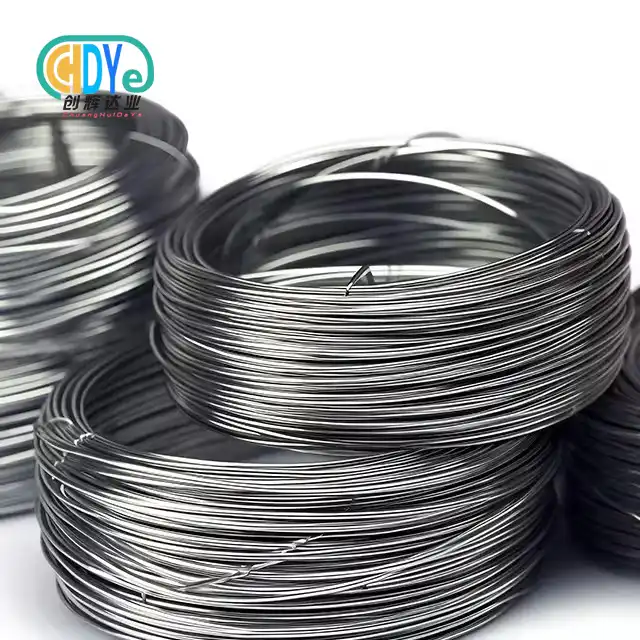
Understanding Titanium Wire – Properties and Applications
Different from other high-performance materials, titanium wire has special chemical and mechanical qualities that make it essential in many fields. This substance has an amazing strength-to-weight ratio. Titanium Grade 5 has tensile strengths of over 895 MPa but only 4.51 g/cm³ in density, which is about 45% less than steel with similar strength properties.
Exceptional Material Properties
Titanium wire works better than other wires because it has unique properties. Titanium's ability to prevent corrosion is one of its best features. When exposed to oxygen, it makes a stable oxide film that protects it from seawater, acids, and alkaline environments. Because it has a natural passivation layer, titanium wire is very useful in chemical processing and sea uses where other materials don't work. Temperature stability is another important benefit. Titanium wire stays mechanically sound at temperatures as high as 600°C. Because it works well at high temperatures and conducts electricity well, it can be used in demanding aircraft and electronics uses where a broken part could have disastrous results.
Industrial Applications Across Sectors
Titanium wire has many uses in the chemical processing, medical device manufacturing, and aircraft manufacturing businesses. In aircraft, the material is used as both structural parts and a welding filler metal for titanium assemblies. Its ability to reduce weight and prevent corrosion has a direct effect on performance and safety gaps. Biocompatible titanium wire is used by medical device makers for surgical implants, orthodontic devices, and Kirschner wires (K-wires) because it has better osseointegration qualities and a modulus of flexibility that is closer to human bone than steel wires. The full biocompatibility of the material removes the risk of immune rejection while still providing the mechanical strength needed for medical uses that need to hold weight.
Pure Titanium vs. Alloy Compositions
Knowing the difference between types of pure titanium and alloys is important for choosing the right material for the job, especially when looking for titanium wire for sale. Grades 1 and 2 are commercially pure titanium that is very resistant to corrosion and easy to shape. This makes them perfect for use in chemical processing and naval uses. Grade 5 (Ti-6Al-4V) is the best choice for aircraft and high-stress mechanical uses because it is stronger thanks to the addition of aluminum and vanadium.
How to Choose the Right Titanium Wire for Your Needs
To choose the best titanium wire, you need to carefully consider the needs of the product, such as mechanical loads, weather conditions, and processing limitations. As you make this choice, you'll need to look at a number of technical factors that have a direct effect on performance and long-term dependability in your particular working setting.
Critical Selection Parameters
The main parameter that affects both mechanical performance and processing compatibility is the wire width. Smaller diameters (0.1–1.0mm) are good for medical and precision welding uses, while bigger diameters (1.0–6.0mm) give aircraft and industry fabrication the structural power they need. Tensile strength needs to change a lot from one application to the next. For example, Grade 1 needs to be 240 MPa for corrosion-resistant uses, while Grade 5 needs to be over 895 MPa for high-stress environments. The requirements for the surface finish affect both function and cost. Pickled surfaces get rid of oxide scales and keep the chemical makeup constant, while polished surfaces are better at conducting electricity and looking good for uses that people can see. Which of these options to use depends on the needs of the final application and the work that comes after.
Performance vs. Cost Analysis
When you compare titanium wire to other materials, you can see that it has big cost-benefit benefits in tough situations. The original cost of the material is higher than that of stainless steel or copper alternatives, but the longer service life and lower upkeep needs often make up for it. Stainless steel wire may cost 60–70% less at first, but it needs to be replaced more often in places where it will rust, so the total cost of ownership is higher. When a part fails in a way that requires a lot of money or puts people in danger, the return on investment becomes even more appealing. Even though titanium wire is more expensive, aerospace makers often request it because it saves weight and doesn't rust, which means that aircraft use less fuel and need less upkeep over their entire lives.
Supplier Credibility Assessment
To establish a supplier's trustworthiness, you need to look at their quality certifications, manufacturing skills, and customer service systems. Certification to ISO 9001:2015 means that the quality management system is organized, and compliance with ASTM B863 and AWS A5.16 standards means that the material features meet international standards. Suppliers who offer full traceability paperwork and test reports for each batch show that they are committed to quality control and following the rules.
Procurement Tips – Navigating Titanium Wire Suppliers and Orders
To buy titanium wire efficiently, you need to know about seller networks, ways to check the quality of the wire, and transportation issues that affect both cost and delivery. Finding trusted sources and putting in place quality control methods that make sure the same material properties are used on all orders are both important parts of a good sourcing strategy.
Supplier Identification and Verification
To find reliable titanium wire for sale suppliers, you need to look into makers who have a history of success in your specific application area. Companies in well-known titanium production hubs, like Baoji in China's "Titanium Valley," have access to established supply lines and skilled manufacturers. These regional groups give people access to cutting-edge technologies for melting, casting, and drawing that make sure the products are more accurately sized and stronger. To check a supplier's skills, you have to look at their production methods, quality control systems, and certification compliance. Suppliers who use vacuum arc melting and multi-stage drawing methods usually make better wire with more uniform properties and fewer flaws. Certifications for quality management systems, especially ISO 9001:2015, show organized ways to keep processes under control and make improvements all the time.
Custom Orders and Bulk Purchasing
When you buy custom titanium wire, you need to be very clear about the diameter limits, length requirements, and surface finish standards. For many uses, precise size controls are needed, like h8 or h9 tolerance grades that can be reached through centerless grinding. Knowing the minimum order numbers can help you get the best deals on purchases, since custom specs often call for dedicated production runs with setup costs. Getting samples is important for making sure of the properties of the material and the supplier's skills before placing big orders. Reliable providers give you sample amounts to try and confirm, which lets you check the mechanical properties, accuracy of measurements, and surface quality against your own needs.
Quality Assurance and Documentation
Material certificates, dimensional inspection records, and chemical analysis data for each production batch are all part of the complete quality paperwork. This tracking is very important for applications that need to follow rules or pass quality checks. Suppliers who provide full paperwork packages show that they are committed to openness and quality control, which is good for building long-term partnerships.
Maintenance and Handling – Maximizing Titanium Wire Performance
When titanium wire is properly maintained and handled, its useful life is greatly increased while its unique qualities are kept. Knowing these best practices will help you get the most out of your investment and make sure that the material works well for as long as it is used.
Cleaning and Surface Maintenance
Titanium wire needs to be cleaned in a certain way so that the naturally occurring oxide layer is kept intact while contaminants that could affect performance are removed. Cleaning products that are alkaline get rid of organic leftovers well without hurting the protective oxide film. Acid treatment, on the other hand, gets rid of scale and evens out the surface when needed. Stress corrosion cracking, which could damage material integrity, can be avoided by staying away from chlorinated chemicals. Protocols for regular inspections help find problems before they affect performance. Visual inspection shows any flaws on the surface, and measurement checks make sure that the width stays the same over long periods of storage. These precautions help keep the quality of the wire high and find any damage from handling that could affect activities further down the line.
Handling Best Practices
Using the right methods for handling stops mechanical damage that could lead to stress clusters or surface flaws. Supporting wire coils evenly spreads their weight and keeps them from deforming. Also, avoiding sharp bend radii keeps the metal from hardening, which could affect its ability to be shaped. Knowing the smallest bend radius that can be used for each grade helps keep the material from cracking during the manufacturing process. The way things are stored has a big effect on how stable they are over time. Places that are clean and dry keep things from getting contaminated, and temperatures that are kept steady reduce the effects of thermal cycling. When you package something properly, the surface quality stays the same, and there is no damage during shipping or long-term keeping.
Troubleshooting Common Issues
Titanium wire often has problems like surface discoloration, differences in size, and processing problems when it is being shaped or welded. Surface discoloration is usually caused by contamination or too much warmth. To get the right look and performance back, the surface needs to be cleaned or prepared. Differences in dimensions could mean that the material has been damaged by handling or heat, which would require inspection and possibly repair. Problems with processing are often caused by work hardening or pollution that changes how the material behaves. Figuring out these connections helps find the main reasons for problems and fix them by taking steps that bring back the right working features.
Titanium Wire Market Insights and Trends
The world market for titanium wire keeps growing because more people want it in the aircraft, medical device, and new technology industries. Understanding these changes in the market helps make long-term buying choices and purchase strategies that fit with how the industry changes and how technology improves.
Market Growth Drivers
As the aerospace industry grows, so does the demand for high-grade titanium wire for sale. This is because more business airplanes are being made around the world, and space research projects need advanced materials. The markets for medical devices are continuing to grow because older people want more internal devices and surgery tools made of biocompatible titanium. New uses for additive manufacturing are changing the way wire is bought and used. For example, Wire Arc Additive Manufacturing (WAAM) processes need high-quality wire feedstock to make big parts. Compared to traditional subtractive manufacturing methods, this technology wastes less material and speeds up the production process.
Technological Innovations
As more advanced alloys are made, the qualities of titanium wire keep getting better while production costs go down. Some new combinations are stronger, easier to shape, or have special properties that make them better for certain uses. Innovations in the manufacturing process, such as better heating and drawing methods, improve the accuracy of measurements and the quality of the surface while lowering the cost of production. Automation of quality control makes things more consistent and less likely to vary between runs of production. Laser systems for measuring dimensions and automatic testing methods make sure that the mechanical qualities stay the same and the tolerances are very small so that they can meet the needs of very specific applications.
Strategic Sourcing Trends
As companies launch environmental duty programs, supply chain sustainability becomes a bigger factor in purchasing choices. Suppliers who can show that their production methods are energy-efficient and that they can recycle get an edge in long-term relationships. These things keep standard cost and quality factors in line with the sustainability goals of the company. When you have a long-term relationship with a seller, you get security and special treatment when the market changes or there aren't enough supplies. When businesses put money into supplier growth and relationship programs, they often get better prices, priority allocation, and chances to work together on development, all of which help them stand out from the competition.
Conclusion
To buy titanium wire successfully, you need to know how the material works, what the application needs, and what the provider can do. These factors affect both performance and cost. Quality titanium wire for sale is a great deal for tough jobs that need strength, rust resistance, and dependability that are worth the extra cost. When you choose, handle, and build relationships with your suppliers correctly, you can get the most out of these benefits and be sure that they meet all of your business needs. As the market changes, there are chances for strategic buying that keep up with technological progress and industry growth trends.
FAQ
Q: What grades of titanium wire are available for different applications?
A: Titanium wire comes in different grades, from Grade 1 and 2 (which are commercially pure) for uses that need to prevent corrosion to Grade 5 (Ti-6Al-4V), which is very strong and is used in aircraft and structures. Grade 7 is better at resisting rust for chemical processes, while Grade 9 is moderately strong and easy to shape. Grade 12 is good for naval uses because it is both strong and resistant to rust.
Q: How do I determine the correct wire diameter for my application?
A: The choice of wire diameter is based on the mechanical load that needs to be handled, the welding factors, and the limitations of the processes. Larger diameters (1.0–6.0mm) are better for industry production and precision welding, while smaller diameters (0.1–1.0mm) are better for medical and precision welding. When choosing a diameter, you should think about the tensile strength needs, the bend radius limits, and whether the diameter will work with other tools.
Q: What quality certifications should I expect from titanium wire suppliers?
A: Suppliers with a good reputation offer ISO 9001:2015 quality management approval, ASTM B863 material compliance, and AWS A5.16 welding wire guidelines when they apply. For each production batch, full paperwork should include material certificates, chemical analysis reports, mechanical property data, and dimensional inspection records. This will allow full tracking and make sure that all regulations are followed.
Q: What are the storage and handling requirements for titanium wire?
A: Titanium wire needs to be stored in a clean, dry place to keep the surface from getting dirty or damaged. Stay away from chlorinated chemicals because they can cause stress corrosion cracks. Support wire coils correctly to keep them from deforming, make sure they stay within the minimum bend radius requirements while being handled, and keep surfaces from mechanical damage that could cause stress clusters that hurt performance.
Q: How does the cost of titanium wire compare with alternative materials?
A: Titanium wire costs a lot more than stainless steel or copper wire at first, but in difficult situations, the total cost of ownership often works out better for titanium. Higher material costs are usually balanced out by longer service lives, less upkeep, and better performance in corrosive conditions. This is especially true in aircraft, marine, and chemical processing uses, where replacing a broken part costs a lot.
Partner with Chuanghui Daye for Premium Titanium Wire Solutions
Shaanxi Chuanghui Daye Metal Material Co., Ltd. is your go-to supplier for rare metal wire because we combine over 30 years of rare metal industry expertise with advanced manufacturing capabilities in China's famous "Titanium Valley." Our titanium wire for sale includes grades Gr1 through Gr12, manufactured using vacuum melting and precision drawing technologies that ensure superior dimensional accuracy and mechanical integrity. We are in Baoji's industrial hub and offer affordable factory-direct prices for aircraft, medical, and industrial uses. Our quality management is ISO 9001:2015 certified, and all of our paperwork can be traced back to the source. Email our technical team at info@chdymetal.com to talk about your unique needs and find out how our titanium wire options can help your project run more smoothly and reliably.
References
1. Boyer, R., Welsch, G., & Collings, E.W. "Materials Properties Handbook: Titanium Alloys." ASM International, Materials Park, Ohio, 1994.
2. American Society for Testing and Materials. "ASTM B863 - Standard Specification for Titanium and Titanium Alloy Wire." ASTM International, West Conshohocken, Pennsylvania.
3. American Welding Society. "AWS A5.16/A5.16M - Specification for Titanium and Titanium-Alloy Bare Welding Electrodes and Rods." AWS, Miami, Florida.
4. Lutjering, G. & Williams, J.C. "Titanium: Engineering Materials and Processes." Springer-Verlag, Berlin Heidelberg, 2007.
5. Donachie, Matthew J. "Titanium: A Technical Guide, Second Edition." ASM International, Materials Park, Ohio, 2000.
6. Peters, M., Kumpfert, J., Ward, C.H., & Leyens, C. "Titanium Alloys for Aerospace Applications." Advanced Engineering Materials, Volume 5, Issue 6, 2003.
Learn about our latest products and discounts through SMS or email