- English
- French
- German
- Portuguese
- Spanish
- Russian
- Japanese
- Korean
- Arabic
- Greek
- German
- Turkish
- Italian
- Danish
- Romanian
- Indonesian
- Czech
- Afrikaans
- Swedish
- Polish
- Basque
- Catalan
- Esperanto
- Hindi
- Lao
- Albanian
- Amharic
- Armenian
- Azerbaijani
- Belarusian
- Bengali
- Bosnian
- Bulgarian
- Cebuano
- Chichewa
- Corsican
- Croatian
- Dutch
- Estonian
- Filipino
- Finnish
- Frisian
- Galician
- Georgian
- Gujarati
- Haitian
- Hausa
- Hawaiian
- Hebrew
- Hmong
- Hungarian
- Icelandic
- Igbo
- Javanese
- Kannada
- Kazakh
- Khmer
- Kurdish
- Kyrgyz
- Latin
- Latvian
- Lithuanian
- Luxembou..
- Macedonian
- Malagasy
- Malay
- Malayalam
- Maltese
- Maori
- Marathi
- Mongolian
- Burmese
- Nepali
- Norwegian
- Pashto
- Persian
- Punjabi
- Serbian
- Sesotho
- Sinhala
- Slovak
- Slovenian
- Somali
- Samoan
- Scots Gaelic
- Shona
- Sindhi
- Sundanese
- Swahili
- Tajik
- Tamil
- Telugu
- Thai
- Ukrainian
- Urdu
- Uzbek
- Vietnamese
- Welsh
- Xhosa
- Yiddish
- Yoruba
- Zulu
Top 7 Industrial Uses of Niobium Wire
Niobium wire is one of the most versatile refractory metal filaments accessible to industrial purchasers today. Produced by electron beam melting and precise cold drawing from high-purity niobium (Nb >99.9%), it has a unique mix of properties: superconductivity, corrosion resistance, and ductility, unmatched by few other metals. Diameters: 0.05 mm to 5 mm; Lengths up to 1000 mm; Tensile Strength: 200–350 MPa; Density: 8.57 g/cm³. This material plays vital roles in the aerospace, electronics, medical, chemical, automotive, energy, and jewelry industries.
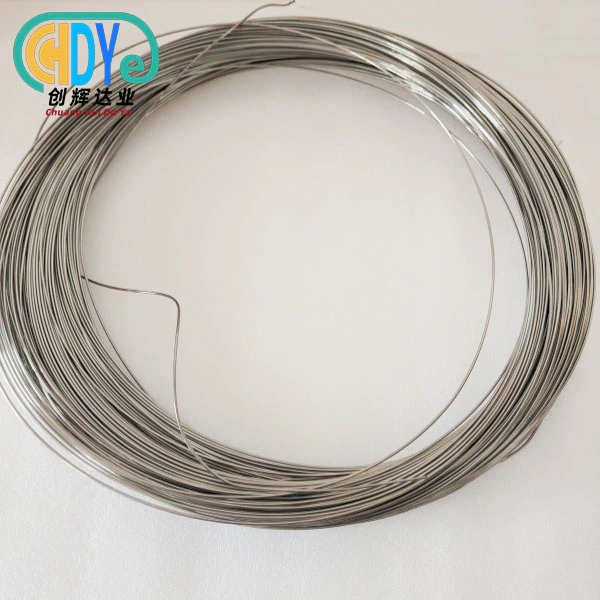
Understanding Niobium Wire: Key Properties and Benefits
Before we get to the particular uses, it is useful to know what sets this refractory filament apart from the common alternatives.
Niobium’s melting point is 2,477°C; it has a low thermal neutron absorption cross-section and is naturally biocompatible — qualities that stainless steel and even titanium can’t entirely match. The basis of cryogenic magnet technology is the type II superconducting property below 9.25 K. The natural surface passivation layer on niobium makes it highly resistant to sulfuric, hydrochloric, and nitric acids, but not to hydrofluoric acid.
Here are the core material attributes that drive procurement decisions:
- Purity: Nb >99.9%, conforming to ASTM B392 commercial grade (R04210) and reactor grade (R04200) standards, ensuring predictable performance in vacuum and high-stress environments.
- Dimensional range: Diameters of 0.05–5 mm with lengths up to 1000 mm, available with custom gauges for specialized assemblies.
- Mechanical performance: Tensile strength of 200–350 MPa combined with remarkable ductility, enabling complex forming without intermediate annealing.
- Electrical behavior: Excellent electrical conductivity at ambient temperatures, transitioning to zero-resistance superconductivity at cryogenic temperatures.
- Biocompatibility: Hypoallergenic and non-toxic, making it safe for direct human contact and implantable device applications.
These attributes collectively position niobium filament as a premium choice wherever extreme environments demand material reliability over extended service life.
Top 7 Industrial Uses of Niobium Wire
Understanding where this material performs best gives procurement engineers a practical framework for specification decisions.
Aerospace Superalloy Components
Niobium is an important alloying element in nickel-based superalloys such as Inconel 718, with around 5% niobium. As a wire, it is used as feedstock for additive manufacturing of turbine blade coatings and for precision joining applications in jet engine assembly. It maintains its shape at temperatures of more than 1000 °C when other metals would get mushy.
Superconducting Magnets and MRI Equipment
This is likely the most technically difficult application. Niobium wire is the basic precursor material for Nb-Ti and Nb3Sn composite conductors for MRI and NMR systems. These conductors operate at liquid helium temperatures ( ~ 4 K) and produce strong magnetic fields with no loss of resistive energy. A single 1.5 Tesla MRI magnet needs tens of kilometers of composite superconducting wire.
Medical Implants and Pacemaker Leads
The bio-inertness of niobium in whole overcomes a long-standing difficulty in the design of implanted devices, namely metal ion leaching and foreign body reaction. Niobium wire is utilized for pacemaker leads and neurostimulation device electrodes because it neither corrodes in saline bodily fluids nor stimulates immunological responses. Its ability to withstand multiple flexion cycles without breakage due to fatigue is important for leads subjected to heart motion.
Electronics and Semiconductor Applications
It is used in precision resistors, capacitor lead connections, and sputtering target assemblies used in the manufacture of semiconductors. Its steady electrical conductivity, resistance to oxidation in regulated atmospheres, and compatibility with vacuum processing settings make it a viable alternative for electronics producers requiring traceable, lot-consistent material.
Chemical Processing Equipment
Niobium has excellent corrosion resistance in hot, concentrated sulfuric and hydrochloric acid settings where tantalum is prohibitively expensive and stainless steel soon fails. Wire-form niobium is utilized in petrochemical processing facilities for heat exchanger baffles, electrode assemblies, and specialty filtering components. Its resistance to crevice corrosion greatly increases equipment service periods.
Automotive Exhaust and High-Temperature Systems
Niobium additives to microalloyed steels have been shown to increase the high-temperature strength and oxidation resistance of exhaust manifold components. Niobium wire is used in resistance heating components in exhaust aftertreatment systems and in welding wire compositions. Vehicles constructed using high-strength niobium-alloyed steel need roughly 50% less metal tg weight to achieve the same structural performance, says the International Niobium Association.
Energy Sector — Nuclear and Renewable Technologies
Reactor-grade niobium (R04200) wire, tightly controlled to less than 0.1% tantalum, is the material of choice for components of nuclear fuel rod unaxwhilsr and structural supports inside reactor vessels because of its low neutron absorption aszur-erodlzr. In renewable energy, niobium wire is the foundation of superconducting power transmission cables and wind turbine generator coil assemblies, where its zero-resistance conductance at cryogenic temperatures significantly cuts down transmission losses.
Together, these seven application areas exemplify why industrial customers in a number of industries repeatedly turn to niobium as a preferred material when performance margins are tight and failure is not an option.
Niobium Wire vs. Other Metals: A Procurement Decision Guide
Each metal occupies a different performance tier when evaluating niobium wire against titanium, tungsten, and stainless steel. Tungsten has a higher melting point but is brittle and hard to draw to precise gauges below 0.1 mm. Titanium is biocompatible and has a good strength-to-weight ratio, but it does not superconduct. Stainless steel is economical for ordinary usage, but it degrades fast in concentrated acid conditions where niobium is superior.
Niobium also falls in the middle price range for procurement teams that need to weigh performance against budget, below tantalum but above titanium, while providing characteristics neither metal can entirely mimic. More real cost reductions per unit are achieved by buying in bulk by spec grades, especially if the supplier is a factory with melting and drawing capabilities on site.
Procurement Insights: Sourcing Niobium Wire with Confidence
When purchasing high-purity refractory wire, a competitive price sheet is not enough. Procurement managers should look for suppliers who provide complete traceability of materials from ingot to finished wire, certifications that meet ASTM B392 requirements, and ISO 9001:2015 quality management certification when sourcing.
The flexibility to do custom orders is very important for particular applications. Whether you need 0.05 mm micro-wire for medical device leads or 5 mm diameter rod-wire for chemical electrode assemblies, a manufacturer with on-site electron beam furnaces and precise drawing tools can produce to spec without outsourcing processing.
Reliability of logistics, such as recorded lead times, secure spooled packing to minimize surface oxidation, and export compliance documents, is directly impacting production uptime in worldwide operations.
Conclusion
Niobium wire has quantifiable performance benefits in seven different industrial applications: superconducting MRI magnets, aerospace superalloys, medical implants, semiconductor manufacturing, chemical processing, automobile exhaust systems, and nuclear power plant construction. It has a purity >99.9%; a diameter range of 0.05–5 mm; a tensile strength of 200–350 MPa; and intrinsic corrosion resistance, making it a material worth defining accurately and sourcing carefully. When procurement decisions are based on confirmed supplier credentials, material traceability, and grade selection by application, the long-term results are always better than price alone.
FAQ
Q1. Is niobium wire safe for medical implant applications?
A: Yes. Niobium is fully biocompatible and hypoallergenic. It does not release ions into biological fluids, eliminating foreign body response risks. This makes it suitable for pacemaker leads, neurostimulation electrodes, and other implantable components requiring long-term stability within the human body.
Q2. How does niobium wire compare to titanium in conductivity?
A: Niobium offers higher electrical conductivity than titanium at ambient temperatures and transitions to zero-resistance superconductivity below 9.25 K — a property titanium does not exhibit. For cryogenic or superconducting applications, niobium is the technically superior choice.
Q3. What grade should I specify for nuclear or superconducting applications?
A: Reactor-grade R04200 with tantalum content below 0.1% is required for nuclear applications. For superconducting uses, specifying a high Residual Resistance Ratio (RRR >300) ensures thermal stability at cryogenic operating temperatures.
Q4. Can niobium wire be ordered in custom diameters and lengths?
A: Yes. Reputable manufacturers offer custom diameters from 0.05 mm to 5 mm and lengths up to 1000 mm, with flexible small-batch and bulk order options.
Q5. How should niobium wire be stored to maintain material integrity?
A: Store on sealed spools in dry environments with desiccant. Always handle with clean gloves — organic residues from fingerprints can carbonize during subsequent heat treatments and degrade the metal's performance properties.
Partner with Chuanghui Daye for Premium Niobium Wire Supply
Shaanxi Chuanghui Daye is a trusted niobium wire manufacturer and supplier with over 30 years of rare metal manufacturing experience, operating from Baoji — China's recognized Titanium Capital. Our ISO 9001:2015-certified production line covers electron beam melting, precision drawing, full traceability documentation, and flexible custom order fulfillment. We serve aerospace, electronics, medical, and chemical industry clients globally with competitive factory-direct pricing and reliable delivery. Send your specifications or request a sample today at info@chdymetal.com to place an inquiry.
References
1. International Niobium Association — Niobium: The Metal and Its Applications, 2021.
2. ASTM International — ASTM B392: Standard Specification for Niobium and Niobium Alloy Bar, Rod, and Wire, 2022.
3. Journal of Nuclear Materials — "Corrosion Behavior of Refractory Metals in Reactor Environments," 2020.
4. Superconductor Science and Technology — "Advances in Nb-Ti and Nb₃Sn Wire Fabrication for MRI Applications," 2019.
5. Biomaterials — "Biocompatibility Assessment of Refractory Metals for Implantable Medical Devices," 2018.
6. Materials Science and Engineering: A — "Mechanical Properties and Ductility of High-Purity Niobium Wire for Aerospace Applications," 2021.
Learn about our latest products and discounts through SMS or email