- English
- French
- German
- Portuguese
- Spanish
- Russian
- Japanese
- Korean
- Arabic
- Greek
- German
- Turkish
- Italian
- Danish
- Romanian
- Indonesian
- Czech
- Afrikaans
- Swedish
- Polish
- Basque
- Catalan
- Esperanto
- Hindi
- Lao
- Albanian
- Amharic
- Armenian
- Azerbaijani
- Belarusian
- Bengali
- Bosnian
- Bulgarian
- Cebuano
- Chichewa
- Corsican
- Croatian
- Dutch
- Estonian
- Filipino
- Finnish
- Frisian
- Galician
- Georgian
- Gujarati
- Haitian
- Hausa
- Hawaiian
- Hebrew
- Hmong
- Hungarian
- Icelandic
- Igbo
- Javanese
- Kannada
- Kazakh
- Khmer
- Kurdish
- Kyrgyz
- Latin
- Latvian
- Lithuanian
- Luxembou..
- Macedonian
- Malagasy
- Malay
- Malayalam
- Maltese
- Maori
- Marathi
- Mongolian
- Burmese
- Nepali
- Norwegian
- Pashto
- Persian
- Punjabi
- Serbian
- Sesotho
- Sinhala
- Slovak
- Slovenian
- Somali
- Samoan
- Scots Gaelic
- Shona
- Sindhi
- Sundanese
- Swahili
- Tajik
- Tamil
- Telugu
- Thai
- Ukrainian
- Urdu
- Uzbek
- Vietnamese
- Welsh
- Xhosa
- Yiddish
- Yoruba
- Zulu
Top Advantages of Using ASTM B 348 Industrial Titanium Rods
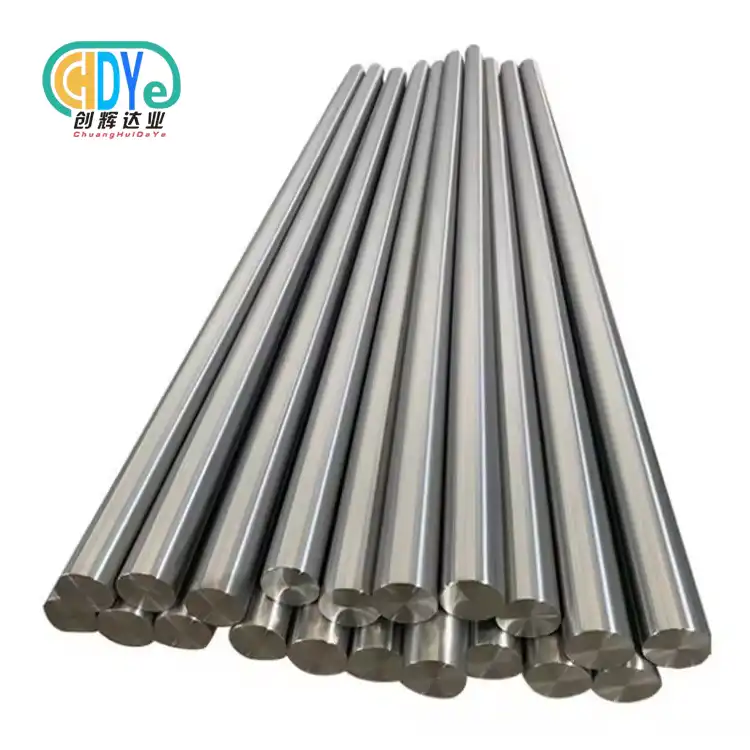
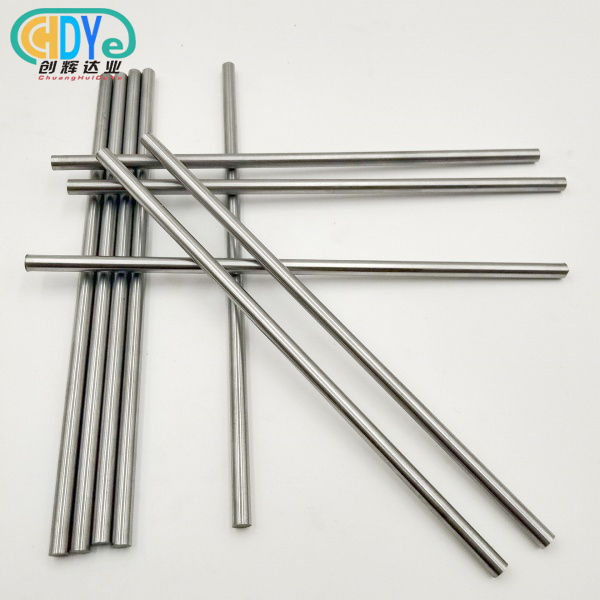
When industrial engineers and procurement professionals seek premium titanium solutions for critical applications, ASTM B348 industrial titanium rod stands as the gold standard in the metals industry. These specialized titanium rods deliver unmatched performance across aerospace, chemical processing, medical device manufacturing, and marine applications. With exceptional strength-to-weight ratios, superior corrosion resistance, and certified quality compliance, ASTM B 348 titanium rods solve complex engineering challenges while ensuring long-term operational reliability and cost-effectiveness for demanding industrial environments.
Understanding ASTM B 348 Titanium Rods: Specifications and Key Properties
Comprehensive Grade Specifications and Standards Compliance
The ASTM B 348 industrial titanium rod includes different grades made for different industrial uses. These grades range from commercially pure titanium to high-strength alloys. Grades 1 and 2 are commercially pure titanium that is very resistant to rust and easy to shape. Grade 5 (Ti-6Al-4V), on the other hand, is very strong and is best for demanding structural uses. Palladium is added to Grade 7 to make it more resistant to rust in reducing conditions. This makes it perfect for use in chemical processing.
Titanium bars that meet ASTM B348, ASTM F67, and ASTM F136 standards are made in our factory. This makes sure that they meet the needs of both industry and medicine. The diameters can be anywhere from 4mm to 350mm, and the lengths can go up to 3000mm, so they can be used for a wide range of projects. The cross-sections can be round, square, or hexagonal, and they can be made using modern forging and rolling methods.
Mechanical Properties and Chemical Composition Excellence
Titanium rods made according to ASTM B 348 standards have unique mechanical qualities that set them apart from other materials. Grade 2 titanium has a minimum tensile strength of 345 MPa and a yield strength of more than 275 MPa. It is also very flexible, with stretch values hitting 20%. Grade 5 alloy is much stronger than Grade 4 alloy; its tensile strength is over 895 MPa, and its yield strength is over 828 MPa.
Controlling the chemical makeup is an important part of making sure the quality of something, and intermediate elements like oxygen, nitrogen, carbon, and hydrogen are strictly limited. The hydrogen content stays below 0.015 percent to keep the material from becoming weak, and the iron content stays within certain limits to keep the rust resistance qualities. The exact control of alloying elements in Grade 5, such as the 5.5–6.75% aluminum and 3.5–4.5% vanadium, makes sure that all production runs have the same mechanical performance.
Advanced Manufacturing Processes and Quality Control
To make the product with better mechanical qualities and accurate measurements, vacuum arc remelting (VAR) ovens, rotary forging tools, and precision CNC machining are all used together. Quality control is very strict at every stage of production. Ultrasonic testing and eddy-current checking are used to find and fix any problems inside the product. Some heat treatment methods, like annealing and stress release, improve the microstructure so that the mechanical qualities and physical stability are better.
Top Advantages of ASTM B 348 Titanium Rods in Industrial Applications
Exceptional Strength-to-Weight Performance
Titanium bars have an amazing strength-to-weight ratio that makes them very useful in industrial settings. They have the same solid performance as steel but weigh about 45% less. This weight loss immediately leads to practical benefits in several different fields.
This is a benefit that is used in the aerospace industry for things like airplane parts, landing gear systems, and structural fasteners, where lowering weight has a direct effect on fuel economy and payload capacity. In offshore uses, lighter structures lower the cost of installation and make the station more stable. Pipe systems and equipment parts that are lighter and can keep their shape under high pressure are better for chemical processing plants.
The mix of strength and weight loss is especially useful in marine uses, making it possible to build more efficient ships and offshore buildings. The lighter weight makes it possible to carry more goods while still keeping the structural safety gaps needed in harsh aquatic settings.
Superior Corrosion Resistance Across Harsh Environments
The steady formation of a protective layer of titanium dioxide gives it unmatched corrosion resistance in harsh conditions where other materials fail quickly. This passive oxide film heals itself when it gets broken, so it protects for a long time without needing to be maintained.
This rust resistance is important for equipment in the chemical production industries that is exposed to strong acids, alkalis, and chloride solutions. Titanium is resistant to chloride-induced corrosion, so it can be used in seawater situations without the pitting and crevice rust that are common with stainless steel options. Power plants and other places with high temperatures and oxidizing atmospheres show that ASTM B 348 industrial titanium rod works better than other materials in these conditions.
Versatility Across Multiple Industrial Sectors
Titanium bars can be used in a lot of different businesses because they are flexible and have performance properties that are perfect for their needs. Aerospace companies use these pieces to make important parts that need to be strong, light, and not wear out easily when loaded and unloaded many times.
Medical device manufacturers benefit from titanium's biocompatibility and non-magnetic properties, essential for MRI-compatible instruments and surgical tools. Titanium rods are used in high-performance cars where weight reduction and corrosion protection make vehicles more efficient and last longer. Parts for geothermal systems, nuclear plants, and green energy structures are used in the energy industry, where material reliability is very important.
Comparing ASTM B 348 Titanium Rods With Alternative Materials and Grades
ASTM B 348 versus ASTM B 265 Applications
Both ASTM B 348 and ASTM B 265 cover titanium materials, but ASTM B 348 only covers titanium bars and billets, while ASTM B 265 covers titanium sheets and plates. This difference is very important when choosing materials for different manufacturing methods and final uses. For rod uses, the better mechanical qualities that come from the forging and rolling methods outlined in ASTM B 348 are usually needed. These processes improve fatigue resistance and smooth out the grain structure.
Rods can be made in ways that give you better control over their directional qualities. This means that they can be used in situations where high tensile strength along the longitudinal line is needed. Rods come in round, square, and triangular shapes that make the best use of the material for made parts. This cuts down on waste and production costs compared to plate-based options.
Grade Selection: Grade 2 versus Grade 5 Performance Characteristics
When choosing between Grade 2 and Grade 5 titanium, you have to weigh the cost of each against the performance needs. Grade 2 commercially pure titanium is less expensive and has better rust resistance and shapeability. This makes it perfect for chemical processing equipment and naval uses where strength is not the most important factor.
Grade 5 titanium alloy is much stronger than grade 4 titanium alloy, so it is the best choice for aerospace parts, high-performance car uses, and structural elements that need to be able to hold more weight. The extra cost of alloying elements and more complicated processes is worth it in situations where lowering weight and increasing strength have clear practical benefits.
Titanium versus Stainless Steel Cost-Benefit Analysis
Titanium is more expensive than stainless steel at first, but when you add up all the costs, ASTM B 348 industrial titanium rod is often the better choice for difficult uses. The longer service life caused by better corrosion protection means that stainless steel doesn't need to be replaced as often in harsh settings.
One big benefit is that upkeep costs go down because titanium parts don't need as many protection coatings or maintenance tasks. The benefits of less weight include lower costs for shipping, setting up, and supporting the structure. This is especially helpful in offshore and aerospace uses where every kilogram has a practical impact.
Streamlining Procurement of ASTM B 348 Titanium Rods: Tips for B2B Buyers
Strategic Sourcing and Supplier Evaluation
Finding suppliers who fully understand ASTM B 348 requirements and keep up with regular quality control systems is the first step to successful buying. As part of the evaluation process, you should look for ISO 9001:2015 certification, documents on how materials can be tracked, and a track record of success in working with your specific business sector.
Material test certificates, chemical makeup analyses, mechanical property verifications, and dimensional inspection reports are all examples of quality paperwork that must be kept. Suppliers should make sure that the full chain of custody is clear, from where the raw materials come from to where the finished product is delivered. This is to make sure that industry standards and customer requirements are met. Custom processing services, such as cutting, grinding, and surface treatment, make the relationship with the supplier more valuable.
Lead Time Management and Order Optimization
Knowing the average wait times for standard and custom specs helps with planning production and keeping track of inventory. Standard grades and sizes usually take between 4 and 6 weeks to deliver, while custom standards can take up to 8 to 12 weeks, based on how they need to be processed. Setting up blanket buy orders with planned releases is a good way to make sure that materials are available and to keep track of cash flow needs.
Minimum order numbers depend on the provider and the specification. Standard sizes give you more options than custom measures. A lot of the time, bulk buying deals save money and make sure that materials are always available for production. The ability to get samples lets you check the quality of the material before placing big production orders.
Quality Assurance and Certification Requirements
The requirements for material approval should match the standards and uses used in the end. As part of standard certificates, chemical makeup analysis, mechanical property testing, and dimensional proof are all done. Depending on the needs of the product, extra tests may include ultrasonic inspection, checking the surface finish, and special weather tests.
Supplier quality management systems should check arriving materials, keep an eye on process controls, and check the finished product. Documentation needs to include test papers for materials, inspection reports, and records that show how final goods can be traced back to the sources of raw materials.
Enhancing Trust: Why Choose Our ASTM B 348 Industrial Titanium Rods
Manufacturing Excellence and Quality Assurance
Running its business out of China's famous "Titanium Capital" in Baoji High-tech Development Zone, Shaanxi Chuanghui Daye Metal Material Co., Ltd. has more than 30 years of experience making rare metals. Advanced vacuum arc remelting furnaces, precision forging equipment, and state-of-the-art CNC machining are all used in our production plant to make sure that the quality and dimensions are always correct.
Our ISO 9001:2015 certification shows that we are dedicated to quality control at every stage of the production process, from checking the raw materials to shipping and packing them. To make sure it meets standards and customer needs, every ASTM B 348 industrial titanium rod goes through a full set of tests, such as ultrasonic inspection, chemical analysis, and proof of its mechanical properties.
Comprehensive Customer Support and Technical Expertise
From the first question to the finished project, our expert team is there to help with everything. They can help you choose the right materials, with application engineering, and with special processing. We've worked with the aircraft, chemical processing, medical device, and marine industries for a long time, so we know the specific problems and needs of each.
Excellent customer service includes quick responses to messages, adaptable order management, and dependable delivery schedules. Through factory-direct buying and good logistics management, our global supply chain makes sure that materials are always available at affordable prices.
Proven Track Record and Industry Recognition
Our ability to meet strict quality and delivery standards is shown by our successful agreements with global manufacturers in many different industries. Testimonials from happy customers show how reliable we are, how knowledgeable we are about technology, and how dedicated we are to always making our products and services better.
We are a preferred provider for businesses that need high-performance titanium products because we have invested in advanced production technology and quality control systems. We stay on top of titanium processing technology and application engineering by doing research and development all the time.
Conclusion
The selection of ASTM B 348 industrial titanium rod represents a strategic decision that impacts operational efficiency, maintenance costs, and product performance across multiple industries. The combination of exceptional strength-to-weight ratios, superior corrosion resistance, and verified quality compliance makes these materials essential for demanding applications in aerospace, chemical processing, marine, and medical device sectors. Successful procurement requires careful evaluation of supplier capabilities, quality systems, and technical support resources to ensure optimal material performance and project success.
FAQ
Q: What distinguishes Grade 2 from Grade 5 ASTM B 348 titanium rods?
A: Grade 2 represents commercially pure titanium, offering excellent corrosion resistance and formability with moderate strength characteristics, making it ideal for chemical processing and marine applications. Grade 5 (Ti-6Al-4V) provides significantly higher strength properties through aluminum and vanadium alloying, suited for aerospace and high-performance structural applications requiring superior load-bearing capacity.
Q: How does corrosion resistance compare between titanium and stainless steel?
A: Titanium demonstrates superior corrosion resistance through the formation of a stable, self-healing oxide layer that protects in aggressive environments where stainless steel experiences pitting and crevice corrosion. This advantage is particularly pronounced in chloride-rich environments, high-temperature applications, and reducing acid conditions.
Q: What certifications ensure product authenticity and quality?
A: Following the rules in ASTM B 348 ensures that the measurements are correct, the chemicals are under control, and the mechanical properties are checked. ISO 9001:2015 certification demonstrates quality management system compliance. Material test certificates provide chemical analysis, mechanical property verification, and traceability documentation linking finished products to raw material sources.
Partner with Chuanghui Daye for Premium ASTM B 348 Industrial Titanium Rod Solutions
Shaanxi Chuanghui Daye Metal Material Co., Ltd. stands ready to support your titanium material requirements with three decades of industry expertise and manufacturing excellence. As a leading ASTM B 348 industrial titanium rod manufacturer, we combine advanced processing capabilities with ISO 9001:2015 certified quality systems to deliver materials that exceed your performance expectations. Contact our technical team at info@chdymetal.com for personalized quotes, material samples, and custom processing solutions tailored to your specific application requirements.
References
1. American Society for Testing and Materials. "Standard Specification for Titanium and Titanium Alloy Bars and Billets." ASTM International, 2019.
2. Boyer, Rodney, Gerhard Welsch, and E.W. Collings. "Materials Properties Handbook: Titanium Alloys." ASM International, 1994.
3. Donachie, Matthew J. "Titanium: A Technical Guide, 2nd Edition." ASM International, 2000.
4. Froes, Francis H. "Titanium: Physical Metallurgy, Processing, and Applications." ASM International, 2015.
5. Lütjering, Gerd, and James C. Williams. "Titanium, 2nd Edition: Engineering Materials and Processes." Springer-Verlag, 2007.
6. Peters, Manfred, Joachim Kumpfert, Christoph H. Ward und Christoph Leyens. "Titanium Alloys for Aerospace Applications." Advanced Engineering Materials, 2003.
Learn about our latest products and discounts through SMS or email