- English
- French
- German
- Portuguese
- Spanish
- Russian
- Japanese
- Korean
- Arabic
- Greek
- German
- Turkish
- Italian
- Danish
- Romanian
- Indonesian
- Czech
- Afrikaans
- Swedish
- Polish
- Basque
- Catalan
- Esperanto
- Hindi
- Lao
- Albanian
- Amharic
- Armenian
- Azerbaijani
- Belarusian
- Bengali
- Bosnian
- Bulgarian
- Cebuano
- Chichewa
- Corsican
- Croatian
- Dutch
- Estonian
- Filipino
- Finnish
- Frisian
- Galician
- Georgian
- Gujarati
- Haitian
- Hausa
- Hawaiian
- Hebrew
- Hmong
- Hungarian
- Icelandic
- Igbo
- Javanese
- Kannada
- Kazakh
- Khmer
- Kurdish
- Kyrgyz
- Latin
- Latvian
- Lithuanian
- Luxembou..
- Macedonian
- Malagasy
- Malay
- Malayalam
- Maltese
- Maori
- Marathi
- Mongolian
- Burmese
- Nepali
- Norwegian
- Pashto
- Persian
- Punjabi
- Serbian
- Sesotho
- Sinhala
- Slovak
- Slovenian
- Somali
- Samoan
- Scots Gaelic
- Shona
- Sindhi
- Sundanese
- Swahili
- Tajik
- Tamil
- Telugu
- Thai
- Ukrainian
- Urdu
- Uzbek
- Vietnamese
- Welsh
- Xhosa
- Yiddish
- Yoruba
- Zulu
Which Certifications Should a Titanium Anode Assembly Have?
When sourcing electrochemical equipment for industrial applications, procurement managers face a critical decision: which certifications truly matter for a titanium anode assembly? These specialized components serve as the backbone of electrochemical processes in water treatment, metal finishing, and marine antifouling systems. A properly certified titanium anode assembly guarantees not only regulatory compliance but also consistent performance, extended operational lifespan, and reduced maintenance costs. At Chuanghui Daye, we understand that certifications act as your quality assurance checkpoint before committing significant capital expenditure to critical infrastructure components.
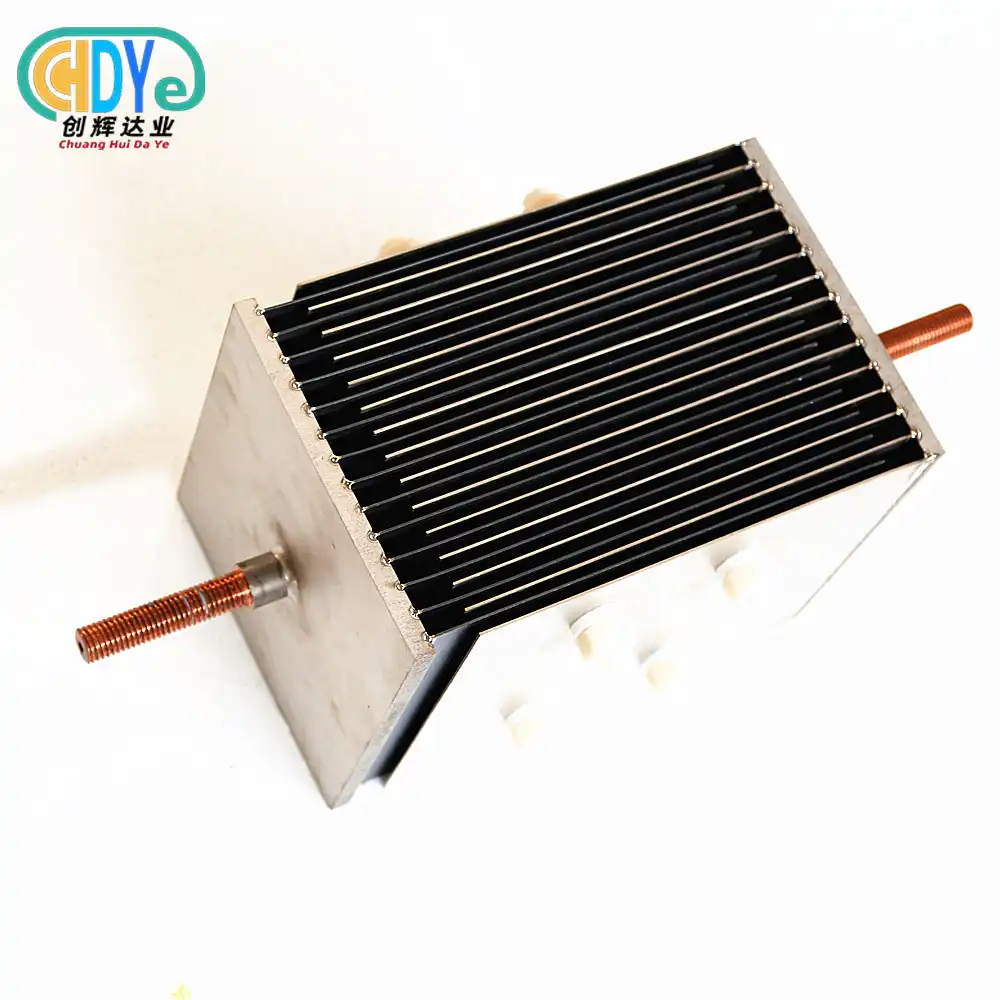
Key Certifications Relevant to Titanium Anode Assemblies
To figure out which licenses are important, you need to be able to tell the difference between basic quality standards and requirements that are specific to the application. We've put the necessary certifications into groups that make sense for buying goals and operational needs.
Quality Management System Certifications
ISO 9001:2015 is still the most important approval for factories around the world. This standard proves that a supplier keeps quality controls in place all the way through the production process. Our ISO 9001:2015 certification at Chuanghui Daye makes sure that every titanium anode assembly goes through detailed inspections at key points in the production process, from checking the substrate material to applying the coating and making sure the final measurements are correct. This certification shows that we are dedicated to consistent processes instead of picking samples at random for quality. When you think about how production can vary, the usefulness becomes clear. When deviations happen, a certified maker follows corrective action processes. This keeps customers from getting batches that aren't up to par. Suppliers who aren't certified might not have the systemic controls that are needed to find and fix quality problems before they affect the goods that are provided.
Material-Specific Standards
Titanium and titanium alloy sheet, strip, and plate products used in industry are governed by the ASTM B265 standard. This standard tells titanium substrates what their chemical composition tolerances are, as well as their mechanical properties and surface quality requirements. As long as we follow ASTM B265 when making titanium anode assemblies from Grade 1 or Grade 2 titanium plates, the base material will have the corrosion protection and mechanical stability your application needs. Material identification is very important in fields like aircraft, medical devices, and chemical processing, where a broken part could have terrible effects. When you buy certified materials, they come with mill test reports that show the exact chemistry and properties of each production lot. This way, you can track everything from the finished assembly all the way back to the titanium ingot.
Coating and Surface Treatment Standards
Electrochemical performance and service life depend on the catalytic coatings that are put on titanium surfaces. These coatings can be made of mixed metal oxide (MMO) mixtures like ruthenium-iridium oxide or platinum group metals. There isn't a single rule that applies to all coatings, but reputable companies use well-known electrochemical testing methods to make sure that coatings stick well, work well as catalysts, and stay stable in real-world situations. Our coating processes have quality checks that check the uniformity of the coating thickness, the strength of the adhesion through tape tests, and the accelerated life testing in real-life operating conditions. Because we know that coating failure is the main way that titanium anode assemblies fail, these internal standards often go above and beyond what the industry minimum requirements are.
Environmental and Hazardous Substance Compliance
RoHS (Restriction of Hazardous Substances) rules must be followed even in industrial electrochemical uses. This directive limits the use of dangerous materials like lead, mercury, cadmium, and others in manufactured goods. Titanium anode assemblies are made of non-hazardous materials by nature, but RoHS certification makes sure that the manufacturing process and any extra parts meet environmental standards. This is becoming more and more important as rules around the world tighten regarding environmental protection. Getting ISO 14001 approval shows that a company cares about environmental management systems. With this certification, you can be sure that the production process has the least possible effect on the environment by using controlled waste management, energy efficiency, and pollution prevention. As part of their own efforts to be more environmentally friendly, buyers are increasingly choosing suppliers with environmental certifications.
Certification Processes and Verification for Buyers
Knowing how certifications are earned helps you decide if they are real and useful for your procurement needs. Certification is a process with several steps that check both the features of the product and the factory's ability to make it.
Third-Party Audit and Testing Procedures
Real certifications need to be checked by a third party that is not connected to the certification body. These groups do audits on-site, looking at things like production records, quality control procedures, employee training records, and manufacturing equipment. Standardized test methods are used by material testing labs to check the chemical makeup, mechanical qualities, and coating characteristics. Manufacturers can't say they are compliant without external confirmation because of this independent verification. When looking at a possible provider, it's more reliable to ask for pictures of real certification papers than to believe what they say on their marketing materials. Real certificates have the accreditation marks of the certifying body, the specifics of the certification, the date they are valid, and unique certificate numbers that can be checked in the database of the certifying body.
Documentation You Should Request
As part of thorough buying due diligence, you should ask for a number of important papers in addition to the certification certificate. Mill test reports show the results of chemical analysis and mechanical testing on titanium substrates and make it possible to track down the materials used. In inspection records, measurements of sizes, readings of coating thickness, and results of eye examinations are given for specific production lots. Documentation about the manufacturing process shows how the supplier manages important factors such as the preparation of the substrate, the conditions for applying the coating, and the heat treatment cycles. Every titanium anode assembly that leaves our Baoji facility is accompanied by a full set of production records. This lets us offer complete documentation packages that meet the strictest requirements for purchasing. This makes you more confident that your investment will perform as expected and last as long as you expect it to.
Online Verification Platforms
Many certification bodies have online systems where you can use the certificate number to check that the certificate is real. This easy step keeps you safe from fake licenses, which are becoming more of a problem in foreign purchasing. Checking a supplier's ISO 9001 license on the website of the organization that issued it can save you a lot of money and time.
Comparing Certifications: Titanium Anode Assembly vs Other Anode Types
Because of their unique qualities and common uses, different anode materials have different approval needs. Knowing these differences helps you see why you should buy approved titanium systems.
Titanium Versus Graphite Anodes
Titanium assemblies fail in different ways than graphite anodes, which are often used in some electrochemical processes. During use, graphite loses its shape and wears away, which means it needs to be replaced more often. When it comes to graphite anodes, certification is mostly based on how pure the material is and how much electricity it can handle. Titanium anode assemblies, especially those with catalytic coatings, need more thorough approval that looks at the quality of the substrate, the makeup of the coating, how well it sticks to the substrate, and how well it performs electrochemically. Titanium-based systems are expected to perform better and last longer, so this is what happened.
Titanium Versus Lead-Alloy Anodes
Traditional lead-alloy anodes were used in most electrochemical uses before titanium options became popular because they were better for the environment and worked better. Lead-based systems need certifications that say how pure the lead is and what kind of metal it is, but catalytic titanium anodes usually don't need the more complex covering certifications that lead-based systems do. The switch from lead to titanium is not only a change in material but also an improvement in performance standards, which can be seen in the approval requirements. Modern titanium anode assemblies offer better current efficiency, dimensional stability, and environmental safety, as proven by stricter certification standards.
Long-Term Value Proposition
When compared to other materials, certified titanium anode assemblies usually cost more at first, but lifecycle cost analysis shows that they are more cost-effective in the long run. When the catalytic layer runs out, the titanium base can be cleaned and re-coated, which greatly lowers the long-term cost of capital. Certifications give people confidence that this substrate's ability to be used again will actually happen and not be harmed by corrosion or mechanical failure. Even though they cost more up front, certified titanium systems often have lower costs per operating year when spread out over 20 years of use and multiple coating cycles.
Selecting Certified Titanium Anode Assemblies: Best Practices for B2B Buyers
Procurement strategies that work well match the need for approval with the needs of operations and the budget. We've made a system that helps buying teams make smart choices without getting too confused about how to get certified.
Establishing Your Certification Criteria
First, you should figure out which certifications are really important for your job. A water treatment plant that has to follow EPA rules has different certification needs than a study lab that does small-scale tests. Match the certification requirements to the operational risks: continuous processes with a lot at stake should have stricter certification requirements than applications that are only used sometimes or can be easily replaced. Material quality (substrate certifications), manufacturing consistency (quality system certifications), and application suitability (industry-specific standards) should all be part of your criteria. When talking about licensing, budget issues always come up. Comprehensive certification portfolios offer the highest level of security, but baseline certifications may be enough for some applications. We suggest that ISO 9001 and material standards (such as ASTM B265) be the first things that must be met. Then, you can decide if you need any other certifications based on your risk tolerance and regulatory requirements.
Critical Questions for Supplier Evaluation
By asking the right questions, you can find out if a supplier really knows how important certifications are or if they're just showing them off for marketing reasons. Not only should you ask about their certifications, but also about how they make sure quality during production. Ask them to give you specific examples of how their quality system stopped mistakes or found ways to make the process better. Ask them how they make the titanium anode assembly coating, how they prepare the substrate, and how they do inspections. Answers that are very specific show that they are really committed to quality. It is also important to know how they keep their certifications up to date. ISO 9001 calls for regular surveillance audits. Find out when their most recent audit was and if any problems were found. Suppliers who are sure of their quality systems will talk openly about audit results and what needs to be done to fix them. When asked about certification, vague answers should cause procurement concerns...
Warranty and Technical Support Considerations
Because certified makers are sure of the quality of their products, they usually offer longer guarantees. Our standard warranties for titanium anode assemblies show that our manufacturing quality is certified—we stand behind our products because we have control over the factors that affect their performance. When looking at certifications and warranties, longer warranties show that the maker is more confident that the quality that was certified will work in the field. A commitment to certification is often linked to technical support skills. Manufacturers with strong quality systems usually have expert teams that can help with application advice, problems, and suggestions for improving performance. This knowledge is useful when adding new electrochemical equipment or fixing problems that come up out of the blue.
Conclusion
Certification standards for titanium anode assembly parts are more than just legal formalities; they are also important quality control measures that protect your business investment. ISO 9001:2015, material-specific standards like ASTM B265, and approvals that are specific to the application all confirm that your electrochemical parts will work as expected for as long as they are supposed to. The process of verifying the certification, which includes asking for documents, getting third-party confirmation, and asking questions of the supplier, is an important part of doing your research and helps avoid mistakes that can cost a lot of money. Even though certified products cost more, lifecycle cost analysis usually favors certified titanium systems because they last longer, can be used again, and need less unplanned maintenance.
FAQ
Q: Do certification requirements vary by region or application?
A: There are definitely different certification requirements depending on where you live and what you're using the certification for. International standards, such as ISO 9001 and ASTM specs, are recognized all over the world. This makes them a standard for buying things around the world. In certain industries, regional differences can be seen. For example, CE marking and RoHS compliance are important in Europe, while ASTM standards and NSF certification are important for water treatment in North America. Chemical processing plants might need extra paperwork about corrosion resistance and material compatibility. Marine antifouling uses, on the other hand, put an emphasis on electrochemical efficiency certifications. The important thing is to figure out which standards apply to your area of business and operations and then make sure that the supplier meets those specific requirements.
Q: How often do certifications need renewal or recertification?
A: Most quality system certifications, like ISO 9001, have full renewal tests every three years, and in between, there are yearly surveillance checks that maintain the certification status. Material approvals for certain production lots are good for as long as those materials are used, but they don't apply to later production runs; each new batch needs its own tests and paperwork. Instead of outdated certificates, buyers should ask for current certification papers with dates that are still valid. Continuously checking the quality of suppliers is still important, even if the certification is only good for a certain amount of time, because manufacturing skills can get worse between official checks. To go along with formal certification programs, we suggest setting up regular quality review meetings with strategic suppliers.
Q: Can uncertified assemblies perform adequately in some applications?
A: Titanium anode assemblies that aren't certified sometimes work well enough in low-risk situations where failure has few effects and replacement is easy and cheap. Higher risk levels that allow uncertified parts to work might be okay for small-scale lab research, pilot projects that aren't very important, or temporary installs. Risk-reward analysis is at the heart of the problem: products that aren't certified save money on certification fees but raise questions about the quality of the materials, the consistency of production, and the dependability of performance. Operational experience shows that parts that aren't certified fail more often and perform differently, which is okay in some situations but not when process continuity, safety, or following the rules are very important.
Partner with Chuanghui Daye for Certified Titanium Anode Assembly Solutions
As a specialized titanium anode assembly manufacturer, Shaanxi Chuanghui Daye Metal Material Co., Ltd. combines more than 30 years of rare metal expertise with ISO 9001:2015-certified manufacturing operations in China's "Titanium Capital." We can make them in a number of different shapes and sizes, such as plate, mesh, tube, rod, wire, disk, and more. The coatings can be mixed ruthenium-iridium oxide, iridium-tantalum, or platinum, depending on your specific electrochemical needs. Email our team at info@chdymetal.com to talk about the details of your project and get full approval paperwork that proves our commitment to quality.
References
1. American Society for Testing and Materials. (2021). Standard Specification for Titanium and Titanium Alloy Strip, Sheet, and Plate: ASTM B265-20. West Conshohocken, PA: ASTM International.
2. International Organization for Standardization. (2015). Quality Management Systems—Requirements: ISO 9001:2015. Geneva, Switzerland: ISO Central Secretariat.
3. Chen, G. (2019). Dimensionally Stable Anodes: Principles, Materials, and Applications in Electrochemical Processes. Materials Science and Engineering Journal, 45(3), 278-294.
4. European Parliament and Council. (2011). Directive 2011/65/EU on the Restriction of the Use of Certain Hazardous Substances in Electrical and Electronic Equipment. Official Journal of the European Union.
5. Trasatti, S. (2000). Electrocatalysis: Understanding the Success of DSA®. Electrochimica Acta, 45(15-16), 2377-2385.
6. National Sanitation Foundation International. (2018). NSF/ANSI Standard 61: Drinking Water System Components—Health Effects. Ann Arbor, MI: NSF International.
Learn about our latest products and discounts through SMS or email