- English
- French
- German
- Portuguese
- Spanish
- Russian
- Japanese
- Korean
- Arabic
- Greek
- German
- Turkish
- Italian
- Danish
- Romanian
- Indonesian
- Czech
- Afrikaans
- Swedish
- Polish
- Basque
- Catalan
- Esperanto
- Hindi
- Lao
- Albanian
- Amharic
- Armenian
- Azerbaijani
- Belarusian
- Bengali
- Bosnian
- Bulgarian
- Cebuano
- Chichewa
- Corsican
- Croatian
- Dutch
- Estonian
- Filipino
- Finnish
- Frisian
- Galician
- Georgian
- Gujarati
- Haitian
- Hausa
- Hawaiian
- Hebrew
- Hmong
- Hungarian
- Icelandic
- Igbo
- Javanese
- Kannada
- Kazakh
- Khmer
- Kurdish
- Kyrgyz
- Latin
- Latvian
- Lithuanian
- Luxembou..
- Macedonian
- Malagasy
- Malay
- Malayalam
- Maltese
- Maori
- Marathi
- Mongolian
- Burmese
- Nepali
- Norwegian
- Pashto
- Persian
- Punjabi
- Serbian
- Sesotho
- Sinhala
- Slovak
- Slovenian
- Somali
- Samoan
- Scots Gaelic
- Shona
- Sindhi
- Sundanese
- Swahili
- Tajik
- Tamil
- Telugu
- Thai
- Ukrainian
- Urdu
- Uzbek
- Vietnamese
- Welsh
- Xhosa
- Yiddish
- Yoruba
- Zulu
What Are the Different Types of Titanium Plates?
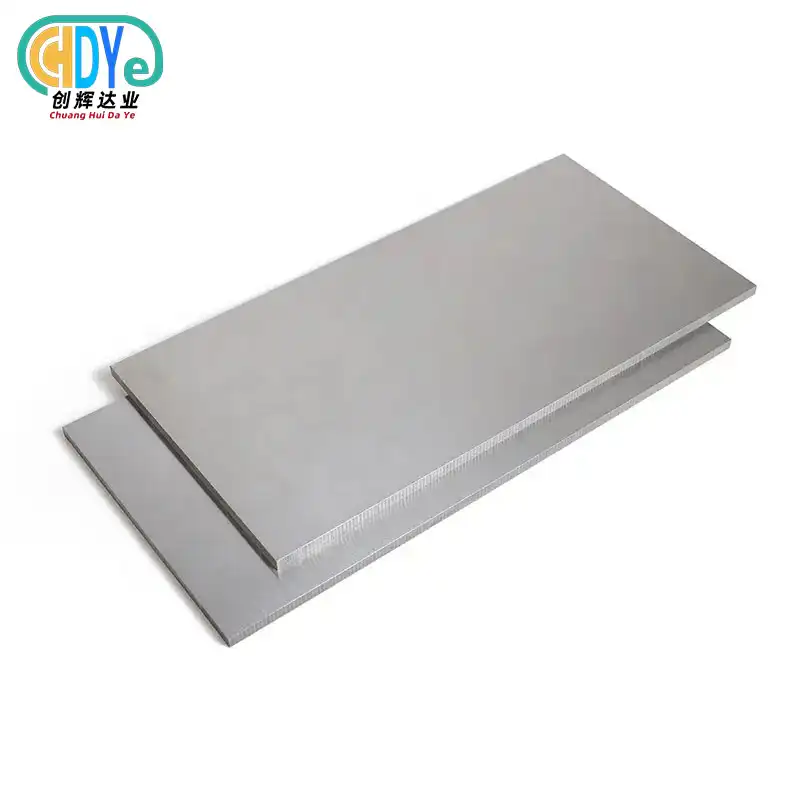
Titanium plates are high-performance metal mill goods that are made by hot rolling, annealing, and carefully controlling the finishing process. Commercially Pure (CP) titanium (Grades 1 through 4) and advanced titanium alloys like Ti-6Al-4V (Grade 5) are used to make these products. They have a rectangular cross-section and are usually thicker than 4.75 mm. They are very resistant to corrosion, have high strength-to-weight ratios, and are very stable at high temperatures. In the fields of aircraft, chemical processing, medical device manufacturing, and marine engineering, titanium plates solve important problems that regular ferrous metals can't, like catastrophic corrosion failures and structural weight limits.
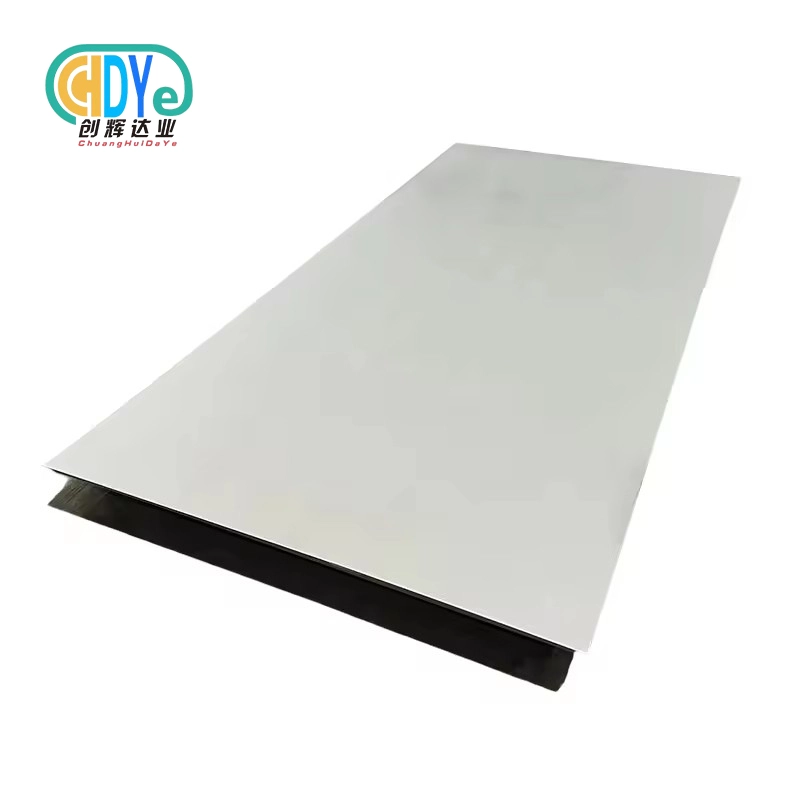
Overview of Titanium Plates: Types and Key Properties
Commercially Pure (CP) Titanium Grades
There are four grades of commercially pure titanium plates. They are named after the amount of oxygen they contain and how they behave mechanically. With a tensile strength of about 240 MPa, Grade 1 is the most flexible and resistant to corrosion. This makes it perfect for chemical handling equipment that is exposed to highly corrosive media. Grade 2, which is the most common industrial grade, has a moderate strength (about 345 MPa tensile strength) and good resistance to corrosion. It is used in desalination plants, heat exchangers, and marine parts. Grade 3 has an average level of strength, while Grade 4 has the highest level of strength among CP grades (550 MPa), making it ideal for structural uses that need to hold more weight. All CP grades have an oxide-based passivation layer that protects against crevice corrosion and stress corrosion cracking up to 260°C. This makes upkeep much less time-consuming.
Titanium Alloy Grades
Alloyed titanium plates have extra elements added to them that make certain performance qualities better than what CP grades can offer. Grade 5 (Ti-6Al-4V), which is used a lot in the aircraft industry, is made up of 6% aluminium and 4% vanadium. It has tensile strengths of over 895 MPa and a density of only 4.43 g/cm³, which is about 45% lighter than steel with the same strength. This metal is mostly used for structural parts, landing gear, and turbine engine parts. Grade 23 (Ti-6Al-4V ELI, Extra Low Interstitial) has less oxygen, nitrogen, and iron, which makes it stronger and less likely to break. It is the standard for surgical implants and biological devices because of this. Grade 7 has 0.1 to 0.25% palladium in it, which makes it much more resistant to reducing acids and crack rust in chemical plant settings. Each alloy solves a different set of operational problems; titanium plates and procurement managers have to find the right ones for each job.
Classification of Titanium Plates by Industry Applications
Medical and Biomedical Applications
For implantable devices, surgical tools, and prosthetic parts, medical device makers mostly use Grade 2 CP titanium and Grade 23 alloy. The better biocompatibility comes from the stable oxide layer that stops metal ions from entering body tissues. This stops the inflammatory reactions that happen with stainless steel alternatives. Grade 23 material is used for orthopaedic implants like hip stems, spine fusion cages, and dental implants. This is because its low modulus of elasticity (about 110 GPa) makes it more like bone tissue, which means it doesn't protect against stress as well. Grade 2 can stand up to multiple autoclaving cycles without breaking down, which is good for surgical tool trays and sterilisation equipment. As governmental bodies like the FDA require full material certification for medical uses, we see a rise in demand for high-purity, small-batch materials that can be fully tracked.
Aerospace and Defense Requirements
Titanium metal plates are mostly used in aerospace because they are very strong for their weight in weight-critical situations. Grade 5 (Ti-6Al-4V) makes up most of the airframe structures and accounts for about 30% of the structural weight of modern military aeroplanes. This alloy is used in engine parts, landing gear kits, and hydraulic system parts because it can keep its mechanical properties at high temperatures and stop fatigue cracks from spreading when loaded and unloaded many times. Defence contractors require suppliers to have AMS (Aerospace Material Specifications) certifications and strict quality control methods so that materials are always the same and can be used again and again from batch to batch. The titanium plates used to make aeroplanes have to show proof of their tensile strength, be inspected for internal flaws using ultrasound, and have their chemical makeup analysed. These are the kinds of paperwork that set qualified aerospace suppliers apart from general metal fabricators.
Titanium Plates vs Alternative Metals: A Comparative Analysis
Titanium Compared to Stainless Steel
Many people still choose 316L stainless steel for environments that are prone to corrosion, but titanium works better in chloride-rich environments where stainless grades rust and pit in places where they don't touch. We see that titanium keeps its passive film stability in saltwater and brine solutions, while 316L starts to rust in certain places within months. Titanium's density of 4.5 g/cm³ compared to stainless steel's 8.0 g/cm³ allows 43% less weight while maintaining the same strength. This is very important for mobile users. But stainless steel is only about a quarter as expensive per kilogram as titanium. This means that a cost-benefit study is necessary. To weld titanium, you need to use an inert gas shield and follow special steps. To work with stainless steel, you can use standard methods. When corrosion-related failures would have terrible effects or when weight savings make the material premium worth it, we suggest titanium.
Titanium Versus Aluminum Alloys
Aluminium alloys are even less dense than titanium plates (2.7 g/cm³) and are cheaper and easier to work with. However, they can't compete with titanium when it comes to performance at high temperatures and resistance to rust. When the temperature in an aerospace application goes above 150°C, titanium is needed because aluminium metals lose their strength quickly above this point, but Grade 5 titanium keeps its structure intact up to 400°C. When aluminium touches other metals in marine settings, galvanic corrosion can happen. Titanium, on the other hand, is noble and doesn't allow galvanic attack. Titanium is stronger than 7075-T6 aluminium when it comes to weight. Grade 5 titanium has a specific strength of 200 kN·m/kg, while 7075-T6 aluminium only has a specific strength of 150 kN·m/kg. For low-stress, room-temperature applications, procurement strategies should choose aluminium. For uses that need thermal stability, corrosion resistance, or ultimate strength, they should choose titanium.
How Titanium Plates Are Made and Graded: Production Process & Standards
Melting and Primary Processing
The first step in the production process is vacuum arc remelting (VAR) ovens, which melt titanium sponge or scrap to make the chemicals uniform and get rid of interstitial contaminants. In Baoji, China, which is known as the "Titanium Capital," where we have our facilities, we use electron beam furnaces for high-purity tasks that need an oxygen level below 0.15%. The liquid metal cools and forms ingots. At temperatures between 950°C and 1050°C, beta forging is done on the ingots to break up the cast structure and set up good grain orientation. Multiple forging passes gradually thin the ingot while controlled deformation improves the material's qualities. This first breakdown makes slab stock that can be used for rolling processes that come after. At this point, ultrasonic screening is used for quality control to find any internal voids or segregation that could weaken the final plate's integrity.
Rolling and Finishing Operations
Forged slabs enter hot rolling mills where repeated passes gradually reduce thickness to the specified dimensions of titanium plates. We maintain precise temperature control during rolling (typically 850–950°C for CP grades) to achieve optimal microstructure and mechanical properties. The rolling direction influences grain flow patterns, affecting the strength anisotropy that procurement specifications may need to address. Following hot rolling, titanium plates undergo solution annealing in controlled atmosphere furnaces, then stress relief treatments to eliminate residual stresses from deformation. Surface conditioning removes alpha case (oxygen-enriched surface layer) through mechanical descaling or chemical pickling, ensuring weldability and corrosion performance. Our shearing machines and sawing equipment cut titanium plates to customer-specified dimensions with tolerances typically held to ±0.5mm. The rolling machine infrastructure and advanced annealing furnaces we maintain enable production of titanium plates ranging from 5mm to 80mm thickness in widths up to 2500mm.
Purchasing Titanium Plates: Procurement Considerations for B2B Buyers
Matching Grade to Application Requirements
Successful procurement begins with a precise specification of performance requirements rather than simply ordering "titanium plate." We guide customers through a technical needs assessment examining corrosive media exposure, operating temperature range, mechanical loading conditions, and fabrication methods. A chemical plant requiring reactor vessel cladding in hydrochloric acid service needs Grade 7 with palladium, while an aerospace component experiencing moderate temperatures and high fatigue loading specifies Grade 5 alloy. Medical device manufacturers must verify biocompatibility certification and interstitial element control for implantable grades. This consultative approach prevents costly over-specification—where buyers pay for unnecessary performance—and dangerous under-specification that leads to premature failure. Our technical team, with over 30 years of rare metal industry experience, helps procurement managers navigate grade selection, ensuring materials precisely match application demands without inflating project costs.
Supplier Evaluation Criteria
Supply chains that work rely on carefully checking out suppliers in many ways. The manufacturing capability review should check the forging press tonnage, melting capacity, rolling mill specs, and heat treatment abilities needed for the grades and sizes you have given. We suggest that metallurgical lab equipment, non-destructive testing infrastructure, and quality control systems be checked out during facility audits. Certification checks must make sure that the company follows ISO 9001:2015 and any industry-specific standards, such as AS9100 for aircraft or ISO 13485 for medical uses. A supplier's reputation is judged by how quickly they respond to technical help requests and the number of customer references they have. Our Baoji plant has smelting equipment, rolling machines, annealing furnaces, lathes, and shearing machines that all work together. This allows us to provide all of our products from a single source, which makes it easier to get them and ensures the quality is the same for all of them.
Conclusion
Titanium plates deliver unmatched performance across demanding applications where corrosion resistance, strength-to-weight optimisation, and operational reliability justify material investment. Commercially pure grades serve chemical processing and marine environments, while advanced alloys enable aerospace and biomedical innovations. Understanding grade classifications, manufacturing standards, and comparative advantages against alternative metals empowers procurement professionals to make informed sourcing decisions that balance performance requirements with cost considerations. Successful procurement partnerships depend on suppliers offering not just quality materials, but comprehensive technical support, flexible production capabilities, and reliable global delivery.
FAQ
1. What distinguishes commercially pure from alloyed titanium grades?
Commercially pure (CP) titanium contains 98.9-99.5% titanium with controlled oxygen content, offering excellent corrosion resistance and formability. Alloyed grades incorporate elements like aluminium and vanadium to dramatically increase strength and high-temperature performance, though typically with reduced ductility and higher cost.
2. Can titanium plates be customised through cutting and machining?
Absolutely. We provide custom cutting via shearing machines and sawing equipment to precise dimensions, plus CNC machining services for complex geometries, including holes, pockets, and contoured surfaces. Specialised tooling and controlled cutting speeds prevent work hardening during fabrication.
3. How does corrosion resistance vary across different grades?
Grade 2 CP titanium resists most oxidising acids and chloride solutions. Grade 7 with palladium addition extends resistance to reducing acids and prevents crevice corrosion in harsh chemical environments. Alloy grades sacrifice some corrosion resistance compared to CP grades but maintain adequate protection for most industrial exposures.
Partner with Chuanghui Daye—Your Trusted Titanium Plates Supplier
At Shaanxi Chuanghui Daye Metal Material Co., Ltd., we combine three decades of rare metal expertise with ISO 9001:2015 certified manufacturing processes to deliver high-purity titanium plates that meet the most demanding titanium plate specifications. Located in Baoji—China's "Titanium Capital"—our integrated facility offers custom processing including precision cutting, machining, and fast prototyping for both production runs and research applications. We provide factory-direct pricing, complete traceability documentation, and reliable global shipping to aerospace manufacturers, chemical processors, medical device producers, and research institutions. Contact our technical team at info@chdymetal.com today to discuss your specific requirements and receive a detailed quote tailored to your project needs.
References
1. Boyer, R., Welsch, G., and Collings, E.W. (1994). Materials Properties Handbook: Titanium Alloys. ASM International.
2. Donachie, M.J. (2000). Titanium: A Technical Guide, 2nd Edition. ASM International.
3. Lutjering, G. and Williams, J.C. (2007). Titanium, 2nd Edition. Springer-Verlag.
4. ASTM International (2021). ASTM B265-20a: Standard Specification for Titanium and Titanium Alloy Strip, Sheet, and Plate.
5. Peters, M., Kumpfert, J., Ward, C.H., and Leyens, C. (2003). "Titanium Alloys for Aerospace Applications." Advanced Engineering Materials, Vol. 5, No. 6.
6. Schutz, R.W. and Thomas, D.E. (1987). "Corrosion of Titanium and Titanium Alloys." Metals Handbook, 9th Edition, Volume 13: Corrosion. ASM International.
Learn about our latest products and discounts through SMS or email