- English
- French
- German
- Portuguese
- Spanish
- Russian
- Japanese
- Korean
- Arabic
- Greek
- German
- Turkish
- Italian
- Danish
- Romanian
- Indonesian
- Czech
- Afrikaans
- Swedish
- Polish
- Basque
- Catalan
- Esperanto
- Hindi
- Lao
- Albanian
- Amharic
- Armenian
- Azerbaijani
- Belarusian
- Bengali
- Bosnian
- Bulgarian
- Cebuano
- Chichewa
- Corsican
- Croatian
- Dutch
- Estonian
- Filipino
- Finnish
- Frisian
- Galician
- Georgian
- Gujarati
- Haitian
- Hausa
- Hawaiian
- Hebrew
- Hmong
- Hungarian
- Icelandic
- Igbo
- Javanese
- Kannada
- Kazakh
- Khmer
- Kurdish
- Kyrgyz
- Latin
- Latvian
- Lithuanian
- Luxembou..
- Macedonian
- Malagasy
- Malay
- Malayalam
- Maltese
- Maori
- Marathi
- Mongolian
- Burmese
- Nepali
- Norwegian
- Pashto
- Persian
- Punjabi
- Serbian
- Sesotho
- Sinhala
- Slovak
- Slovenian
- Somali
- Samoan
- Scots Gaelic
- Shona
- Sindhi
- Sundanese
- Swahili
- Tajik
- Tamil
- Telugu
- Thai
- Ukrainian
- Urdu
- Uzbek
- Vietnamese
- Welsh
- Xhosa
- Yiddish
- Yoruba
- Zulu
What Certifications Should Titanium Welding Wire Have?
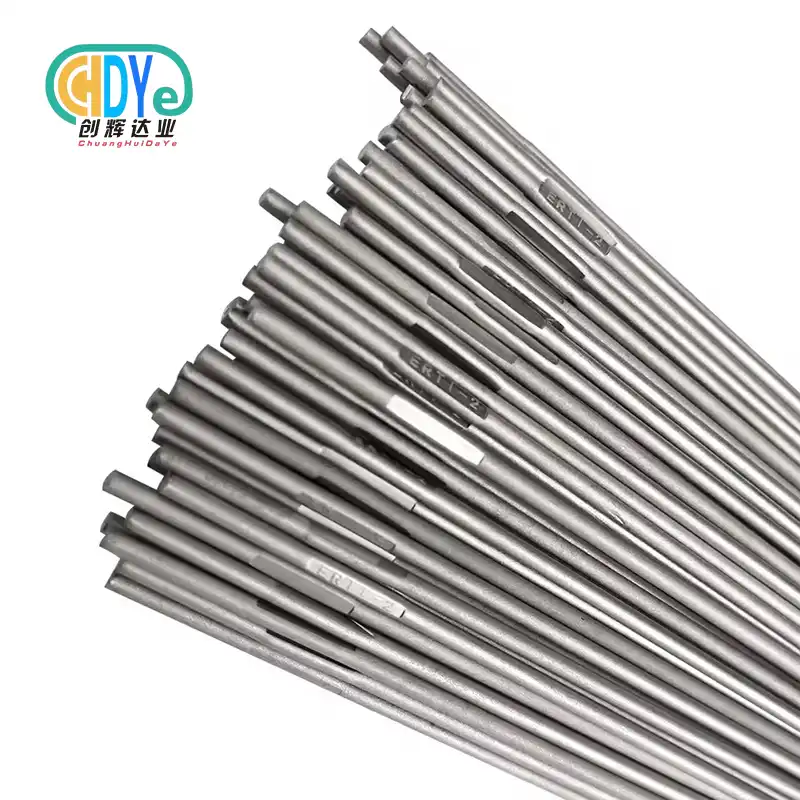
Titanium welding wire must possess specific certifications to ensure optimal performance and regulatory compliance in critical applications. Essential certifications include AWS A5.16 for American Welding Society standards, ASTM B863 for material specifications, and ISO 18274 for international compliance. These certifications validate chemical composition, mechanical properties, and manufacturing processes. Additional requirements may include AMS specifications for aerospace applications, EN standards for European markets, and ISO 9001:2015 for quality management systems, ensuring the wire meets stringent industry demands across aerospace, medical, and chemical processing sectors.
Understanding Titanium Welding Wire Certifications
Welding wire certifications represent formal validation that materials meet specific industry standards and performance requirements. These certifications serve as quality assurance mechanisms, providing B2B procurement managers with confidence that their selected materials will perform consistently under demanding operational conditions.
What Certifications Actually Mean for Your Operations
Certifications from well-known groups like the American Welding Society (AWS), ASTM International, ISO (International Organization for Standardization), and ASME prove important aspects of how well a material works. These approvals cover limits on chemical makeup, mechanical features, production methods, and quality control steps. When purchasing, teams choose approved materials; they have access to detailed records that show how the qualities of those materials have changed from the time they were raw materials to the time they were finished products.
As part of the approval process, strict testing procedures are used to check the tensile strength, elongation characteristics, chemical analysis, and surface quality standards. These tests are done by independent testing labs following set procedures. This makes sure that the approval results are fair and accurate.
Risk Mitigation Through Certified Materials
For industrial processes, certified welding wire is a big help in lowering risks. It becomes easier to predict how consistent the material will be, which lowers the variation in how the welding turns out and the number of defects. Traceability data makes it easy to quickly find specific batches of materials if there are quality problems. This lets focused fixes be made instead of large-scale product recalls.
Another important benefit of licensing is that it helps you follow the rules set by regulators. Industries like aircraft, medical device making, and pressure vessel fabrication are closely watched by the government. Certified materials provide written proof that they meet the necessary standards. This speeds up the approval process for regulators and lowers the risk of legal trouble for companies that make them.
Core Certification Standards for Titanium Welding Wire
For global buying processes to work, people need to know about the different certification systems that set the standards for titanium welding wire. These standards are different depending on where you live and what field you work in. This makes compliance very difficult for procurement pros.
ASTM Standards and Their Applications
ASTM B863 sets basic conditions for titanium and titanium alloy welding wire. It says what the chemical makeup must be, what the mechanical property limits are, and how well the wire must be made. This standard covers different types of titanium, such as commercially pure grades (Gr1, Gr2, Gr3, Gr4) and mixtures made of titanium (Gr5, Gr7, Gr9, Gr23). Each grade standard is made to meet the needs of a particular application, ranging from high-strength aircraft uses to highly corrosive chemical environments.
ASTM B348 adds more details to the requirements for titanium bar stock that is used in wire drawing. This makes sure that the quality of the source material meets strict standards. These standards set the highest amounts that interstitial elements like oxygen, nitrogen, carbon, and hydrogen can be present. These elements have a big effect on the quality of the weld and its mechanical features.
AWS Certification Requirements
The AWS A5.16 guideline sets standards for filler metals used to weld titanium and titanium alloys. It also defines classification methods for electrodes and performance requirements. This standard sets limits on the wire's makeup, the mechanical qualities of the deposited weld metal, and the qualifications needed for the welding process. The grading system lets you choose the right material based on the needs of the application and the fit of the base metal.
Welder qualification standards and welding process requirements are also part of AWS certification. These make sure that application techniques are always the same. Together with the material certifications, these procedure certifications make a full quality assurance system for titanium welding operations.
ISO and EN Standards for International Markets
ISO 18274 sets worldwide standards for welding supplies used with titanium materials. This makes sure that quality standards are the same in all places around the world. This standard makes foreign trade easier by setting performance standards and shared technical language that can be used across borders.
European EN standards go along with ISO requirements and meet the specific rules that apply to markets in the European Union. These standards usually include things like worker safety and following the rules for the environment that go beyond just technical performance factors.
How Certifications Ensure Compatibility and Performance in Key Industries
Different types of industries have different certification needs because of the risks involved, the amount of regulation, and the operating stress. Procurement teams can choose the right certified materials for their uses when they know about these sector-specific standards.
Aerospace Industry Certification Demands
Because the parts are so important to safety and the conditions of operation are so harsh, aerospace uses need the highest levels of material approval. Certification by the National Aerospace and Defense Contractors Accreditation Program (NADCAP) ensures that suppliers meet the quality standards of the aerospace industry for special processes like welding.
The flight Material Specifications (AMS) list specific requirements for materials used in flight, which are often higher than normal industry standards. As compared to general-purpose standards, AMS 4951 sets tighter composition limits and more thorough testing procedures for titanium alloy welding wire used in aircraft applications.
Aerospace OEM standards go into even more detail about the materials that are needed for different jobs. Boeing, Airbus, and other makers make their own standards that cover the special design needs and operating conditions of their aircraft platforms.
Chemical Processing Industry Requirements
When chemicals are processed, they need to be resistant to rust and last a long time in harsh environments. For these uses, titanium welding wire has to show that it can stand up to certain chemicals by following special testing procedures. The National Association of Corrosion Engineers (NACE) sets standards for choosing materials that will work well in toxic conditions.
Specialized corrosion testing data, stress corrosion cracking resistance, and crevice corrosion performance are all part of material test results for chemical processing uses. These extra testing standards make sure that materials will work reliably over long periods of time in harsh chemical conditions.
Medical Device Manufacturing Standards
In addition to meeting basic performance standards, medical devices need to be certified for biocompatibility. The ISO 10993 series of guidelines controls the biological testing of medical equipment, which includes testing the biocompatibility of materials. Specific rules are set by ASTM F67 and F136 for titanium materials that are used in medical equipment and surgical implants.
To meet FDA rules and quality system standards, companies that make medical devices must keep detailed records of where their materials come from. Certified soldering wire is proof that the material meets the necessary biocompatibility and performance standards.
Comparing Certified vs. Non-Certified Titanium Welding Wire
The decision between certified and non-certified welding materials involves careful consideration of immediate cost implications versus long-term operational risks and benefits. This research is especially important for mission-critical applications and choices about buying a lot of things.
Quality, Consistency, and Reliability
Certified materials go through strict quality control steps that make sure the chemical makeup and mechanical traits are the same from batch to batch. This stability directly leads to expected welding performance and less variation in the quality of the finished product. Less setup time, fewer changes to the welding parameters, and a lower rate of defects are all good for manufacturing.
Materials that aren't approved may vary a lot from one batch to the next, which can make welding less predictable and raise the cost of quality control. When you add in more inspections, more rework, and the chance of mistakes in the field, the cost savings that lower material prices seem to bring often go away.
Long-term Cost Analysis
A full cost study shows that approved titanium welding wire is often a better deal, even though it costs more at first. Total cost of ownership estimates are more positive when rework costs are lower, inspection standards are lower, and warranty claims are lower. Also, approved products make quality processes easier to follow, which cuts down on administrative work and speeds up production.
Risk reduction benefits add value by lowering the risk of product damage claims and problems with following the rules. Certifications provide written proof of quality, which can be used as evidence in court in case of quality disputes or governmental probes.
Documentation and Traceability Benefits
Certified materials come with complete paperwork packages that meet the needs of quality systems and meet legal compliance standards. Material test reports, chemical analysis certificates, and tracking records give full histories of materials that make it easier to solve problems quickly and meet legal reporting needs.
This paperwork is very helpful during checks by customers, government reviews, and evaluations of the quality system. Having complete records of all materials shows that a company cares about quality and follows the rules, which builds customer trust and helps with business growth.
How to Verify and Procure Certified Titanium Welding Wire
To get certified welding products that work, you need to use organized testing methods and carefully evaluate suppliers. These steps make sure that the materials are real and build trusting relationships in the supply chain that help the business succeed in the long run.
Supplier Qualification and Verification
Checking the credentials of the licensing body and the testing lab is the first step in fully qualifying a supplier. Reliable providers keep their certifications up to date from well-known groups and make quality documents easy to find. Audits of the manufacturing facility and evaluations of the provider confirm that the quality system is being used correctly.
Material traceability tools let you keep track of each output batch from the time the raw materials are sourced to the time they are delivered. Modern sellers give you electronic access to material certificates and test results, which makes it easy to check things quickly and get the paperwork you need for your quality system.
Documentation Requirements and Best Practices
Chemical analysis reports, mechanical property test results, dimensional inspection records, and surface condition proof should all be part of full material paperwork packages. These papers need to have the right signatures from the right certifying body and include references to the right design standards.
Digital paperwork systems offer better security features, such as formatting that can't be changed and electronic identification. Compared to traditional paper-based systems, these systems make it easier to view documents and store them safely while also lowering the cost of handling paperwork.
Custom Order Specifications and Bulk Purchasing
Custom order specs make it possible to get materials that are best for a certain purpose while still meeting certification requirements. Working together with reliable sources makes it easier to come up with application-specific material specs that balance cost with performance needs.
Bulk buying deals save money and make sure that materials are always available for planning production. Long-term supply contracts with certified providers allow for volume-based prices while still guaranteeing quality and delivering on time.
Conclusion
Certification requirements for titanium welding wire encompass multiple standards and regulatory frameworks that ensure material quality, performance consistency, and regulatory compliance across diverse industrial applications. Understanding these certification requirements enables procurement professionals to make informed decisions that balance short-term cost concerns with long-term business benefits. Investing in certified products pays off in a big way because they improve quality, lower organizational risks, and make it easier to follow the rules. Successful buying strategies focus on qualifying suppliers, checking all paperwork thoroughly, and building long-term relationships with qualified material providers.
FAQ
Q: What Makes Aerospace Certification Requirements More Stringent?
A: Because the parts used in aerospace are so important to safety and the working conditions are so harsh, they need more stringent approval. Achieving NADCAP accreditation ensures that providers follow specific process requirements. AMS specs, on the other hand, set tighter limits on composition and testing methods than general industry standards. These standards cover the special stress levels, temperature extremes, and fatigue loads that occur in aircraft use.
Q: How Do ASTM and AWS Certifications Differ in Scope?
A: ASTM standards are mostly about the makeup of materials, their mechanical capabilities, and the quality standards for making the base materials themselves. AWS certifications focus on welding performance traits, electrode classification methods, and the standards for the welding process. As a result, ASTM B863 controls the properties of the wire material, while AWS A5.16 controls the performance and application methods of welding. These two certification systems work hand-in-hand.
Q: What Documentation Should I Expect with Certified Materials?
A: Reports on chemical analyses, mechanical property tests, physical inspection records, and surface condition checks are all part of full certification packages. Heat treatment records, tracking certificates, and compliance statements that refer to relevant standards may be needed as extra proof. Digital versions often have better security features and are easier to reach for quality system needs.
Partner with Chuanghui Daye for Certified Titanium Welding Wire Solutions
To get qualified welding materials, you need to work with well-known makers who know how to meet strict quality standards and understand the complicated certification requirements. As the "Titanium Capital" of China, Baoji, home of Chuanghui Daye, this company offers full certification support, including AWS A5.16, ASTM B863, and ISO 9001:2015 compliance paperwork. Our titanium welding wire manufacturer capabilities encompass grades Gr1 through Gr23, and we can provide full material test results and traceability. Get in touch with our expert team at info@chdymetal.com to talk about your unique certification needs and get quotes for certified materials that meet your practical needs.
References
1. American Welding Society. "Specification for Titanium and Titanium Alloy Welding Electrodes and Rods." AWS A5.16/A5.16M, 2013.
2. ASTM International. "Standard Specification for Titanium and Titanium Alloy Wire." ASTM B863-22, 2022.
3. International Organization for Standardization. "Welding Consumables - Wire Electrodes, Wires and Rods for Welding of Titanium and Titanium Alloys." ISO 18274, 2010.
4. National Aerospace and Defense Contractors Accreditation Program. "Welding Accreditation Criteria." NADCAP AC7004/7, 2023.
5. Aerospace Material Specifications. "Titanium Alloy Welding Wire 6Al-4V." AMS 4951K, 2019.
6. European Committee for Standardization. "Welding - Quality Requirements for Welding - Metallic Materials." EN ISO 3834-2, 2021.
Learn about our latest products and discounts through SMS or email