- English
- French
- German
- Portuguese
- Spanish
- Russian
- Japanese
- Korean
- Arabic
- Greek
- German
- Turkish
- Italian
- Danish
- Romanian
- Indonesian
- Czech
- Afrikaans
- Swedish
- Polish
- Basque
- Catalan
- Esperanto
- Hindi
- Lao
- Albanian
- Amharic
- Armenian
- Azerbaijani
- Belarusian
- Bengali
- Bosnian
- Bulgarian
- Cebuano
- Chichewa
- Corsican
- Croatian
- Dutch
- Estonian
- Filipino
- Finnish
- Frisian
- Galician
- Georgian
- Gujarati
- Haitian
- Hausa
- Hawaiian
- Hebrew
- Hmong
- Hungarian
- Icelandic
- Igbo
- Javanese
- Kannada
- Kazakh
- Khmer
- Kurdish
- Kyrgyz
- Latin
- Latvian
- Lithuanian
- Luxembou..
- Macedonian
- Malagasy
- Malay
- Malayalam
- Maltese
- Maori
- Marathi
- Mongolian
- Burmese
- Nepali
- Norwegian
- Pashto
- Persian
- Punjabi
- Serbian
- Sesotho
- Sinhala
- Slovak
- Slovenian
- Somali
- Samoan
- Scots Gaelic
- Shona
- Sindhi
- Sundanese
- Swahili
- Tajik
- Tamil
- Telugu
- Thai
- Ukrainian
- Urdu
- Uzbek
- Vietnamese
- Welsh
- Xhosa
- Yiddish
- Yoruba
- Zulu
What Makes Titanium Rod Ideal for Aerospace Design?
Today, aircraft engineering is built around titanium rods, which have a unique mix of strength, lightness, and resiliency that makes them ideal for the toughest tasks. The basic weight-strength problem that aircraft designers face every day is solved by these cylinder-shaped mill products made from widely pure titanium or specialized alloys like Ti-6Al-4V. A titanium rod has the same tensile strength as steel but weighs about 45% less. This means that planes can carry more cargo while using less fuel. These materials not only save weight, but they also don't rust in harsh weather, can handle temperature changes from -250°C to 600°C, and keep their shape through millions of stress cycles. To choose the correct titanium rod, you need to know about the different types of material, the quality of the production process, and how to buy it in a way that balances performance needs with long-term costs. This process is done to keep airplanes safe and operations running smoothly.
Understanding Titanium Rods: Properties and Grades Relevant to Aerospace
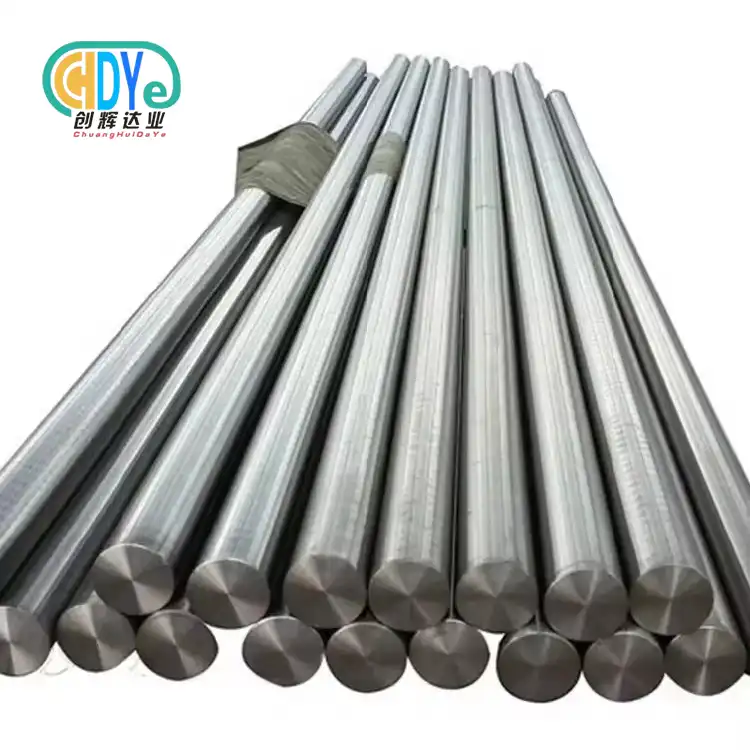
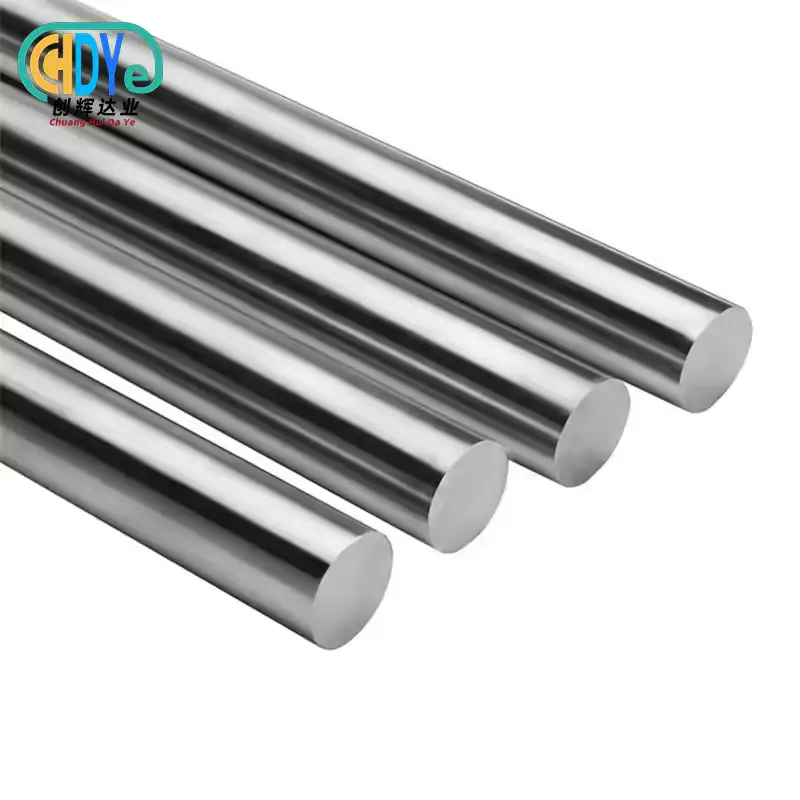
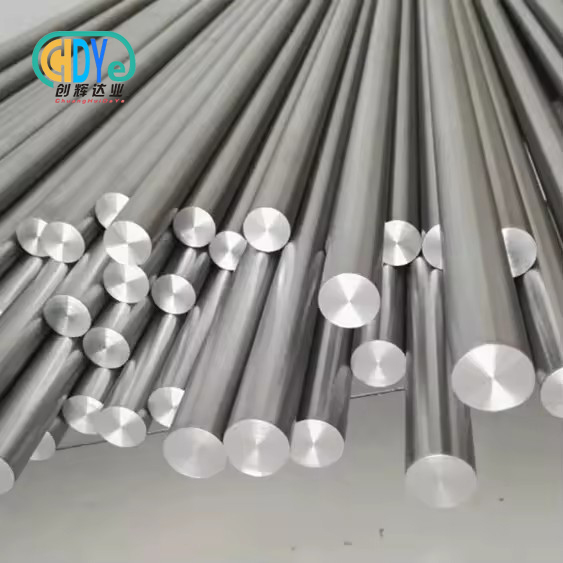
Rods made of titanium are precisely built cylinder products that are made by casting, rolling, or drawing titanium sponge or ingot into high-performance structural parts. The aircraft business mostly uses certain grades that have to meet strict technical and environmental standards.
Defining Titanium Rod Characteristics
Titanium rods are very popular because they are extremely dense (about 4.51 g/cm³), which provides them a high specific strength that aluminum can't match at high temperatures. These rods make oxide sheets (TiO₂) on their own, which protect them from rusting without any coats or treatments. Aerospace-grade materials have tensile strengths that range from 240 MPa for relatively pure grades to over 950 MPa for advanced alloys. They also have stretch values that are usually between 10 and 15 percent, which ensures that they can bend easily under different loading conditions.
Critical Aerospace Grades and Their Applications
Grade 5 Ti-6Al-4V is the most common type of titanium used in aerospace applications, making up about half of all titanium used in airplane construction. With a tensile strength of about 895 MPa and a yield strength of 828 MPa, this alpha-beta metal is made up of 6% aluminum and 4% vanadium. Grade 5 is what aerospace engineers use for parts of the airframe, landing gear systems, and engine mounts that need to keep their power at 300°C. Extra Low Interstitials in Grade 23 (Ti-6Al-4V ELI) lower the oxygen content to below 0.13%, making the material harder to break for safety-critical bolts and high-cycle wear parts. Grades 1-4 are commercially pure and are used for hydraulic pipes and ducts where formability and weldability are more important than total strength.
Heat Treatment Effects on Performance
Solution treatment and age processes change the mechanical qualities of titanium rods in big ways. When you anneal something at 700–900°C, you get rid of any leftover stresses from cutting while keeping the right mix of strength and flexibility. Aging methods bring out the alpha phase within the beta matrices, which raises the yield strength by 15–20% while slightly lowering the extension. When aerospace makers use our materials, they get thorough mill test results that include the details of the heat treatment, measures of the grain size, and the mechanical qualities that were achieved. This is done to make sure that the materials meet the design requirements.
Why Do Titanium Rods Outperform Alternatives in Aerospace Design?
The choice of material has a direct effect on an airplane's range, carrying capacity, repair times, and overall operating costs. When you compare different metals, you can see that titanium rods have clear benefits that make them the best choice.
Strength-to-Weight Ratio Superiority
Aluminum metals like 7075-T6 have a lower density (2.81 g/cm³), but they lose their strength above 150°C, so makers have to accept that they won't work as well or add cooling systems. At temperatures where aluminum softens, titanium rods keep their structure strong, so heat control doesn't add weight. The 300-series stainless steel doesn't rust, but it weighs 7.9 g/cm³, which is almost 75% more than titanium at the same strength levels. Coatings that cover carbon steel rods make them heavier and more complicated, and need more upkeep. Nickel metals work great at very high or very low temperatures, but they are much more expensive and don't help with weight. When aerospace projects move from steel to titanium for landing gear parts, the weight is reduced by 30 to 40 percent. This directly leads to better fuel economy over the life of the airplane.
Corrosion Resistance in Harsh Environments
Aircraft fly in acidic environments with salt spray, industrial pollutants, and quick changes in temperature. Titanium rods don't rust or pit in coastal operations, which are problems that happen to stainless steel parts when they come into contact with salt. When the inactive oxide layer gets broken, it heals itself automatically, so there is no need for checking or upkeep. Aluminum buildings need to be checked for intergranular rust and flaking on a regular basis, which raises the costs over their whole life. According to data from commercial flight companies, titanium parts last 25 to 30 years, while aluminum parts last only 10 to 15 years in the same situations. This means that repair costs are lower and airplanes are more available.
Fatigue Life and Total Cost of Ownership
High-cycle wear resistance tells you how often to change parts and how much room there is for error. Titanium rods have failure strengths that are about 50–55 percent of their final tensile strength, which is higher than that of aluminum, 35–40 percent. Because of this longevity feature, designers can lower safety factors and component weight without affecting reliability. Even though the cost of the raw material is 5 to 8 times higher per kilogram than that of aluminum, the benefits of lower weight, longer service life, and less upkeep make the lifecycle economics beneficial. Our buying team helps aircraft buyers do total cost studies that take these long-term value factors into account, in addition to the original purchase prices.
Manufacturing and Quality Standards That Ensure Titanium Rod Reliability
For aerospace uses, you need materials that have no flaws, can be fully tracked, and have been proven to meet international standards. The manufacturing methods and quality control systems used to make titanium rods determine if they meet these strict requirements.
End-to-End Production Control
The production of titanium rods in our factory in Baoji, China, which is known as the "Titanium Capital," has combined production skills that cover the whole manufacturing chain. In our electron beam furnaces, we use vacuum arc remelting to turn raw titanium waste into ingots with controlled chemistry and uniform microstructures. Forging in several steps at controlled temperatures breaks down cast structures and makes grain run better. As hot rolling goes on, cross-sections get smaller and smaller, while temperature windows keep unwanted phase changes from happening. Intermediate annealing processes between rolling passes slow down work hardening and make sure that the mechanical properties of rods of all lengths are the same. When you do cold drawing, you can achieve finished measurement limits of within ±0.05 mm and obtain nice surface finishes.
ASTM and ISO Certification Compliance
We have a quality management system that is ISO 9001:2015 approved and has controls that are in line with ASTM B348 (Standard Specification for Titanium and Titanium Alloy Bars and Billets) and AMS 4928 (Titanium Alloy Bars, Wire, and Rings 6Al-4V). Optical emission spectroscopy is used to check the chemical makeup of each production lot to make sure that the amounts of aluminum, vanadium, iron, oxygen, and minor elements meet the grade requirements. Samples cut from production pieces are put through tensile testing to find out their final strength, yield strength, and stretch values. Ultrasonic testing can find internal cracks bigger than 1 mm in diameter. Testing for hardness shows that heat treatment works. We keep full tracking by connecting final goods to the heat numbers of raw materials, processing factors, and test results. We provide paperwork packages that meet the needs of aircraft checks.
Material Testing and Inspection Protocols
Customers in the aircraft industry often need more than just basic approval tests. Low-cycle wear testing figures out how long spinning parts can safely last. Measurements of fracture toughness show that safety-critical objects are not easily cracked. Performance in sea settings is confirmed by corrosion tests in salt spray tanks. Our lab is able to meet these specific needs because we work directly with customer tech teams to create test sets that address application issues. We keep test items for five years so that we can look at them again if problems happen in the field.
Selecting the Right Titanium Rod for Aerospace Projects: A Decision Support Approach
To match titanium grades and specs to application needs, mechanical demands, environmental factors, and supply chain issues must be carefully looked at.
Evaluating Load Capacity and Environmental Exposure
When choosing titanium rods, aerospace engineers have to weigh different needs. When static structural parts handle steady loads, they care most about yield strength and elasticity. Dynamic parts that are vibrating and being loaded and unloaded over and over again need wear strength and crack toughness. Depending on the temperature, commercially pure grades may be enough, or alpha-beta metals may be needed. Corrosion from hydraulic fluids, fuel contact, or exposure to air affects the choice of grade and the type of surface treatment that needs to be done. We offer expert advice to help customers connect these application factors to the best material specs.
Comparing Supplier Quality and Service Capabilities
When buying aerospace goods, sellers must give more than just standard items. For key measurements, manufacturers should show statistical process control with Cpk values higher than 1.33. Instead of general mill sheets, material approvals need to include real test findings. Custom cutting services get rid of waste and cut down on the time customers spend making them. Rapid prototyping helps with development projects that need to make a small number of items with lead times of two to three weeks. Because we've been working with rare metals for 30 years, we can be scientific partners instead of just suppliers, providing materials knowledge during the planning process.
Strategic Lead Time and Logistics Considerations
Aerospace projects have tight plans, and delays in materials can affect many stages of production. From our factory in Shaanxi, standard titanium rods are sent to major foreign ports within 7–10 business days. Depending on the number of items ordered, custom specs that need special melting or heat processes can add 4 to 6 weeks to the lead time. We keep a safety stock of popular grades and sizes as a backup inventory to keep customers' plans from getting messed up when there are supply problems. Throughout the order process, buying teams can see what's going on by communicating openly about the state of production, quality stop points, and shipping plans.
Procurement Strategies for Titanium Rods in Aerospace Supply Chains
To successfully source materials for flight projects, you need to find ways to balance quality control, cost control, and building relationships with suppliers.
Sourcing from Reliable Manufacturers
The titanium supply base is made up of main makers who control the whole process from raw materials to produced goods, expert processors who offer services that add value, and trade middlemen. Buyers in the aerospace industry gain from working closely with makers who have a wide range of skills and knowledge. Because we are in Baoji, we can get in touch with local companies that make titanium sponge, which cuts down on the length and cost of the supply chain. Vertical integration from heating to cutting makes it easier to control quality and cuts down on wait times compared to supply lines with more than one level. When aerospace customers work directly with manufacturers, they avoid broker markups and make sure they always have access to the same material sources throughout the lifecycle of a program.
Price Structures and Volume Considerations
The cost of raw materials, the difficulty of processing, the number of rods ordered, and the state of the market all affect the price of titanium rods. On the market right now, Grade 5 titanium rods cost based on their thickness, length, and accuracy requirements. By making production more efficient and giving you more power when buying materials, volume agreements allow for better prices. We have different levels of prices because we know that aircraft projects often need to make prototypes first and then place orders for mass production. Small test amounts are shipped at normal prices, but production contracts get savings of 10 to 15 percent based on the volume. Quotes that are clear include the base cost of materials, handling fees, testing fees, and transportation costs. This way, there are no secret fees that make budgeting harder.
Custom Fabrication Services
Titanium rods treated beyond normal mill forms are frequently needed for aerospace components. At our building, we have CNC lathes, sawing machines, and slicing tools that can cut precisely to customer plans. Turned blanks come ready to be finished machined, which cuts down on setup time and waste for the customer. During production, threaded rod ends, punched holes, and cut flats can be added, which combine steps in the supply chain. Heat treatment services, such as solution cleaning, aging, and stress easing, help customers who don't have their own furnaces. With these value-added services, we go from being a seller of materials to a production partner. This makes buying easier and speeds up the project timeline.
Conclusion
Because they are so strong for their weight, don't rust, and don't break down easily, titanium rods are the best choice for aircraft use. The success of a project depends on choosing the right types, such as Ti-6Al-4V, making sure that manufacturing meets ASTM and ISO standards, and working with reliable sources. Aerospace engineers and procurement workers have to compare the qualities of materials to the needs of specific applications, as well as total lifetime costs that go beyond the initial buy price. When you focus on quality assurance, expert support, and the dependability of the supply chain, and when you source materials strategically, you can gain a competitive edge in a field where material performance directly affects safety and practical efficiency. This guide gives you information that helps you make smart choices that improve the design and buying of aircraft parts.
FAQ
Q: Which titanium grade works best for aerospace structural components?
A: Ti-6Al-4V (Grade 5) is the standard material for aircraft construction. It has a tensile strength of about 895 MPa and a density of 4.43 g/cm³. This alpha-beta metal keeps its mechanical qualities up to 300°C, which makes it perfect for parts of the aircraft, engine mounts, and landing gear. Grade 23 (Ti-6Al-4V ELI) makes safety-critical screws more difficult to break because it has less intermediate material.
Q: How does corrosion resistance benefit aerospace applications?
A: Titanium rods form inactive oxide layers that protect them from rusting in salt water, industrial environments, and changing temperatures without the need for coats or upkeep. This resistance makes parts last two to three times longer than those made of aluminum or stainless steel. This lowers the cost of replacements, increases the availability of airplanes, and gets rid of the need for inspections for intergranular rust.
Q: Can suppliers provide custom cutting and fabrication services?
A: Manufacturers of titanium rods with a lot of experience can cut, turn, thread, and heat-treat parts so that they are ready to be put together. These features cut down on the time customers spend on cutting, cut down on material waste, and connect supply lines. We can make anything to order, and we can keep the limits on the sizes to within 0.05 mm. This means that we can help with everything from testing to production.
Partner with Chuanghui Daye for Aerospace-Grade Titanium Rod Supply
Aerospace projects need more than just standard materials. They need to be able to trust the makers they work with to provide them with scientific knowledge, quality processes, and on-time delivery. Chuanghui Daye is based in Baoji, which is known as China's Titanium Capital. They have been in the rare metals business for over 30 years and are ISO 9001:2015 certified to make sure their products are always of high quality. Our production methods include vacuum arc melting, precise casting, controlled rolling, and custom cutting. The titanium rods we make meet the standards set by ASTM B348 and AMS 4928. We keep popular aircraft grades like Ti-6Al-4V in stock, with sizes ranging from 6 mm to 300 mm, enabling 7–10 day delivery for standard requirements. Custom heat processes, precise cutting, and small numbers of prototypes help development programs that need to be flexible and quick to respond. As a company that makes titanium rods with quality and customer satisfaction as our top priorities, we offer full traceability paperwork, expert support, and cheap factory-direct pricing. Email our team at info@chdymetal.com to talk about your needs for aircraft titanium rods and get a full quote that fits your needs. We give your projects the resources, knowledge, and dependability they need.
References
1. Boyer, R., Welsch, G., and Collings, E.W. (1994). Materials Properties Handbook: Titanium Alloys. ASM International, Materials Park, Ohio.
2. Donachie, Matthew J. (2000). Titanium: A Technical Guide, 2nd Edition. ASM International, Materials Park, Ohio.
3. Lütjering, G. and Williams, J.C. (2007). Titanium, 2nd Edition. Springer-Verlag, Berlin Heidelberg.
4. Peters, M., Kumpfert, J., Ward, C.H., and Leyens, C. (2003). "Titanium Alloys for Aerospace Applications." Advanced Engineering Materials, Volume 5, Issue 6, pages 419-427.
5. ASTM International (2021). ASTM B348-21: Standard Specification for Titanium and Titanium Alloy Bars and Billets. West Conshohocken, Pennsylvania.
6. SAE International (2020). AMS 4928R: Titanium Alloy Bars, Wire, Forgings, and Rings 6Al-4V Annealed d. Warrendale, Pennsylvania.
Learn about our latest products and discounts through SMS or email