- English
- French
- German
- Portuguese
- Spanish
- Russian
- Japanese
- Korean
- Arabic
- Greek
- German
- Turkish
- Italian
- Danish
- Romanian
- Indonesian
- Czech
- Afrikaans
- Swedish
- Polish
- Basque
- Catalan
- Esperanto
- Hindi
- Lao
- Albanian
- Amharic
- Armenian
- Azerbaijani
- Belarusian
- Bengali
- Bosnian
- Bulgarian
- Cebuano
- Chichewa
- Corsican
- Croatian
- Dutch
- Estonian
- Filipino
- Finnish
- Frisian
- Galician
- Georgian
- Gujarati
- Haitian
- Hausa
- Hawaiian
- Hebrew
- Hmong
- Hungarian
- Icelandic
- Igbo
- Javanese
- Kannada
- Kazakh
- Khmer
- Kurdish
- Kyrgyz
- Latin
- Latvian
- Lithuanian
- Luxembou..
- Macedonian
- Malagasy
- Malay
- Malayalam
- Maltese
- Maori
- Marathi
- Mongolian
- Burmese
- Nepali
- Norwegian
- Pashto
- Persian
- Punjabi
- Serbian
- Sesotho
- Sinhala
- Slovak
- Slovenian
- Somali
- Samoan
- Scots Gaelic
- Shona
- Sindhi
- Sundanese
- Swahili
- Tajik
- Tamil
- Telugu
- Thai
- Ukrainian
- Urdu
- Uzbek
- Vietnamese
- Welsh
- Xhosa
- Yiddish
- Yoruba
- Zulu
Why Are Tantalum Rods Used in Vacuum Furnace Systems?
Tantalum rods are crucial parts of vacuum furnace systems because they can withstand temperatures over 2,000°C without breaking. These rods can be used safely as heating elements, structural supports, and electrical connections in oxygen-free settings because they have an extremely high melting point of 2,996°C, a density of 16.65 g/cm³, and excellent corrosion resistance. The naturally occurring pentoxide layer on tantalum surfaces keeps the vacuum atmosphere from getting contaminated during operation. This maintains consistent thermal performance and process purity, which has a direct effect on the quality of heat-treated parts used in aerospace, semiconductors, and advanced manufacturing.
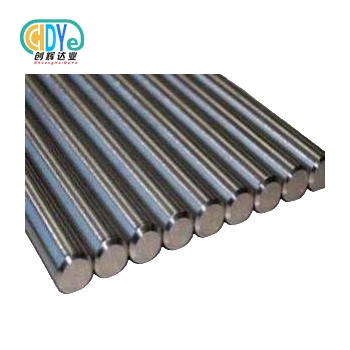
Understanding the Role of Tantalum Rods in Vacuum Furnace Systems
Exceptional Thermal Performance Under Extreme Conditions
Most normal materials would fail horribly in vacuum furnaces because they don't work in those conditions. The material we sell exceeds 99.95% pure Ta, and it has amazing heat resistance. It keeps its mechanical qualities even after being heated and cooled many times. In uses that need uniform physical steadiness over long periods of time, this property is critical. These refractory metal rods have a high thermal conductivity, which means they spread heat evenly throughout the furnace room. This feature gets rid of any hot spots that might affect the quality of the product during the sintering, brazing, or heating processes.
Superior Corrosion Resistance in Reactive Environments
Vacuum furnaces keep oxidation to a minimum, but process vapors and leftover volatile gases can still interact with furnace parts. The self-healing oxide film that forms on the surface of our tantalum rods protects them from most acids and organic compounds that are below 150°C. This security makes parts last a lot longer than parts made of other materials, which cuts down on unexpected repairs and expensive production stops. When working with materials that give off strong fumes at high temperatures, the resistance to corrosion is especially useful.
Contamination-Free Operation for Critical Applications
In the fields that make computer chips, medical implants, and aircraft parts, purity is very important. Tantalum heating elements with sizes between 2 and 100 mm keep the vacuum intact without adding metal contaminants or releasing impurities that would make the product not meet the standards. At working temperatures, the material has a low gas pressure, which means that evaporation losses are very small. This keeps the controlled atmosphere that is needed for precise heat treatment processes.
Advantages of Tantalum Rods Over Alternative Materials in Vacuum Furnaces
Comparative Performance Against Tungsten and Molybdenum
Tungsten is also good at high temperatures, but it is very weak at room temperature, which makes it harder to handle and install. Molybdenum is more flexible than tungsten, but it oxidizes quickly if vacuum conditions are broken during startup or shutdown. Our tantalum rods get around these problems by being both easy to machine and resistant to corrosion. This makes it safer for techs to work on parts during repair procedures. Tantalum's mechanical strength and sturdiness stay the same over a wider range of temperatures. This makes it less likely that something will break catastrophically during temperature changes.
Influence of Purity and Material Grades
Chemical makeup is directly related to how well a material works. Aerospace-grade tantalum that is purer than 99.95% gives defense companies and satellite makers the high level of dependability they need, since a broken part could put missions worth millions of dollars at risk. The grain-stabilized versions we make with powder metallurgy have better wear resistance, which means they can last longer before they need to be replaced. Procurement managers like how fully recorded material certifications and tracking processes make it easier to follow strict industry standards like ASTM B365 and AMS specs.
Real-World Performance in Demanding Applications
Companies that make semiconductors say that their heating elements last 40% longer after moving to high-purity tantalum designs for their diffusion furnaces. Aerospace companies use these rods in vacuum brazing systems to join titanium structural parts together. If the joints got dirty, they would become weak and more likely to break from wear and tear. These recorded results show that the choice of material has a direct effect on working efficiency and total cost of ownership. This is why tantalum is the best choice, even though it costs more to buy at first than other metals.
How are tantalum rods manufactured and machined for vacuum furnace use?
Advanced Production Processes for Consistent Quality
At our factory in the Baoji High-tech Development Zone, we use vacuum arc melting and electron beam melting to make tantalum rods that are all the same chemically. Powder metallurgy creates small, well-controlled grain structures that make things more resistant to creep at high temperatures. After hot working by forging and rolling, the process fine-tunes the grain and reaches the exact measurements needed for furnace uses. Rods made by cold drawing have a smooth surface and a tight circle tolerance, so they don't need as much extra cutting that could cause stress concentrations.
Machining Considerations and Quality Control
When machining tantalum rods to work with hard metals, you need to have special skills. When we machine tantalum, we use carbide tools and controlled cutting settings to keep the work from stiffening and the surface from breaking, which can happen when the metal is not treated properly. Between processing steps, annealing processes recover flexibility, which lets complicated shapes like threaded links and precision-ground surfaces be made. For each production batch, measurements are checked, chemicals are analyzed, and the surface quality is checked before it gets ISO 9001:2015 approval paperwork. This strict method gives buying managers faith that the parts they receive will work as expected for the whole time they are in use.
Certification Standards and Traceability
Material pedigrees must be able to be checked for global supply lines. We keep full records of every step of the process, from buying the raw materials to doing the final check. This is possible because we keep records for each batch. Following the ASTM B365 standards for tantalum rod and wire ensures that the sizes are always the same and that the mechanical features meet international standards. Every package comes with a material test record that lists the chemicals used, the tensile strength, and the hardness. These are important for buying offices in the aerospace, medical, and defense industries to follow quality control rules and follow the law.
Procurement Considerations for Tantalum Rods in Vacuum Furnace Systems
Evaluating Supplier Capabilities and Reliability
There's more to choosing the right production partner than just comparing prices. Check to see if possible sellers keep enough supplies on hand to meet tight project deadlines without lowering the quality of the goods. Standard widths are kept in stock at our plant, and special sizes can be made quickly using well-established production processes that balance freedom with efficiency. It lowers buying risk to be able to try small batches of prototypes before placing large orders, especially when designing new furnaces or making sure that new materials will work with current systems.
Understanding Pricing Factors and Market Dynamics
The price of materials changes depending on their purity level, measurement requirements, and order number. Due to the extra steps needed to refine them, high-purity types are more expensive, but the performance benefits often make up for the cost by making parts last longer. Working directly with makers in well-known production areas like Shaanxi Province cuts out middlemen and gives you access to technical knowledge when making specifications. Clear pricing that separates the cost of materials from the cost of processing helps procurement teams get the best deal on total buying costs while still meeting performance standards.
Customization Services for Specialized Applications
Standard rod sizes are useful for many things, but vacuum furnace designs need custom solutions more and more. We offer custom cutting services that can make threaded ends, precision-ground surfaces, and non-standard lengths that work well with other machines. Universities and small research institutions can use our flexible minimum order amounts to run experiments without having to waste too much material. When paired with fast prototyping support, this ability to customize speeds up development cycles and cuts down on the time it takes to bring new heat treatment processes to market for tantalum rods.
Maximizing Performance and Longevity of Vacuum Furnace Systems Using Tantalum Rods
Installation Best Practices and Maintenance Protocols
Damage that could affect performance can be avoided by being careful during installation. Avoid putting too much force on tantalum rods with a smaller diameter, and make sure that electrical links stay low in resistance to keep localized burning to a minimum. Visual checks done on a regular basis find early signs of grain growth or surface corrosion that show the vacuum quality is getting worse, or there are sources of contamination. Using temperature cycle counts instead of random time intervals for preventive maintenance plans helps find the best time to change parts while also meeting reliability standards.
Monitoring for Wear Indicators and Service Life Extension
Modern vacuum furnaces have temperature monitors and power tracking that show how the resistance of the heated element changes over time. Slowly building up resistance causes smaller grains to grow and leads to cross-sectional reduction due to evaporation losses. This gives an early warning before a catastrophic failure stops production. Keeping the pressure level below 10⁻⁴ torr during operation cuts down on corrosion and makes tantalum parts last a lot longer. By writing down practical factors, you build a set of data that can be used to support predictive repair plans and efforts to improve processes all the time.
Future Trends in Vacuum Furnace Materials
Sustainability and circular economy ideas are becoming more and more important in business. Tantalum can be recycled, which is beneficial for producers who want to lower their impact on the environment while still meeting performance standards. More work is being done on grain-stabilized metals and hybrid structures that will make next-generation vacuum systems even better at working at high temperatures. Working with material sources to stay up to date on these changes makes sure that buying strategies stay in line with technology breakthroughs. This provides companies with a competitive edge by letting them have better processes.
Conclusion
Tantalum rods are still the best material for vacuum furnace systems because they don't change temperature, don't rust, and don't let contaminants get inside. High-purity tantalum has unique qualities that make it work reliably in aircraft, electronics, and advanced manufacturing settings where failure of a material would have terrible results. Strategic choices about what to buy that focus on the skills of the seller, the approval of the materials, and the ability to customize the product will pay off in the long run by making parts last longer and lowering the cost of upkeep. As vacuum processing technologies change, tantalum will still be useful in difficult heating uses because it has natural benefits and can be recycled.
FAQ
Q: What purity level is required for vacuum furnace tantalum rods?
A: Most vacuum furnace users need tantalum rods that are purer than 99.95% to keep outgassing and pollution to a minimum. Higher pure grades above 99.99% are good for making semiconductors and medical devices, where small amounts of impurities could change the specs of the finished product.
Q: How does tantalum compare to tungsten for heating elements?
A: Tantalum is more flexible and resistant to corrosion than tungsten, which makes it easier to place and handle. Tungsten can work at slightly higher temperatures, but it needs more careful vacuum upkeep to keep it from breaking because it is so weak.
Q: Can tantalum rods be recycled after service?
A: Recycling keeps the chemical qualities of tantalum the same, which makes used parts useful for making new things. A lot of companies have take-back programs that help the earth and cut down on the cost of materials.
Q: What diameter should I specify for my furnace design?
A: The choice of diameter relies on the present needs, the length of the span, and the motor support requirements. For low-power uses, smaller widths work best, while bigger cross-sections can handle higher currents and longer suspended spans without sagging too much at working temperatures.
Partner with Chuanghui Daye for Reliable Tantalum Rod Supply
Shaanxi Chuanghui Daye is an expert at making high-purity tantalum rods that are made to work in vacuum furnaces in the aircraft, electronics, and advanced manufacturing industries. We are in China's Titanium Capital and have been working with rare metals for over 30 years. The materials we sell are confirmed to be >99.95% pure and come in sizes from 2 to 100 mm. They also come with full tracking data that meets ASTM and ISO standards. Our ISO 9001:2015-certified facility offers quick development, open modification, and low factory-direct prices that work for both large-scale production and small-batch research projects. Contact our technical team at info@chdymetal.com to talk about your needs with a tantalum rods provider who has a lot of experience and knows how important it is for your vacuum processing systems to work well.
References
1. Buckman, R. W. (2005). "Tantalum and Niobium Applications in the Chemical Process Industries." International Journal of Refractory Metals and Hard Materials, 23(3), 187-193.
2. Cardonne, S. M., Kumar, P., Michaluk, C. A., & Schwartz, H. D. (1995). "Tantalum and Its Alloys." International Journal of Refractory Metals and Hard Materials, 13(1-3), 187-194.
3. Miller, G. L., & Holden, F. R. (1961). "Fabrication and Properties of Tantalum." Journal of Metals, 13(1), 27-33.
4. Schwartz, M. M. (2003). Brazing: For the Engineering Technologist. ASM International Materials Park.
5. Sims, C. T., Stoloff, N. S., & Hagel, W. C. (1987). Superalloys II: High-Temperature Materials for Aerospace and Industrial Power. John Wiley & Sons.
6. Tietz, T. E., & Wilson, J. W. (1965). "Behavior and Properties of Refractory Metals." Stanford University Press, Stanford, California.
Learn about our latest products and discounts through SMS or email