- English
- French
- German
- Portuguese
- Spanish
- Russian
- Japanese
- Korean
- Arabic
- Greek
- German
- Turkish
- Italian
- Danish
- Romanian
- Indonesian
- Czech
- Afrikaans
- Swedish
- Polish
- Basque
- Catalan
- Esperanto
- Hindi
- Lao
- Albanian
- Amharic
- Armenian
- Azerbaijani
- Belarusian
- Bengali
- Bosnian
- Bulgarian
- Cebuano
- Chichewa
- Corsican
- Croatian
- Dutch
- Estonian
- Filipino
- Finnish
- Frisian
- Galician
- Georgian
- Gujarati
- Haitian
- Hausa
- Hawaiian
- Hebrew
- Hmong
- Hungarian
- Icelandic
- Igbo
- Javanese
- Kannada
- Kazakh
- Khmer
- Kurdish
- Kyrgyz
- Latin
- Latvian
- Lithuanian
- Luxembou..
- Macedonian
- Malagasy
- Malay
- Malayalam
- Maltese
- Maori
- Marathi
- Mongolian
- Burmese
- Nepali
- Norwegian
- Pashto
- Persian
- Punjabi
- Serbian
- Sesotho
- Sinhala
- Slovak
- Slovenian
- Somali
- Samoan
- Scots Gaelic
- Shona
- Sindhi
- Sundanese
- Swahili
- Tajik
- Tamil
- Telugu
- Thai
- Ukrainian
- Urdu
- Uzbek
- Vietnamese
- Welsh
- Xhosa
- Yiddish
- Yoruba
- Zulu
What standards apply to high purity niobium bar rod production?
It is very important to understand the production standards when looking for high purity niobium bar rods for mission-critical uses. ASTM B392 is the main standard that controls the production of niobium bars and rods. It sets limits for chemical makeup, mechanical qualities, and size variations. For high-purity grades, like RO4200 and RO4210, the niobium content is higher than 99.9%, and there are strict rules on elements like oxygen, nitrogen, carbon, and hydrogen that are in the gaps. ISO 9001:2015 approval makes sure that companies use full quality management systems at all stages of the production process, from choosing the raw materials to checking the finished product.
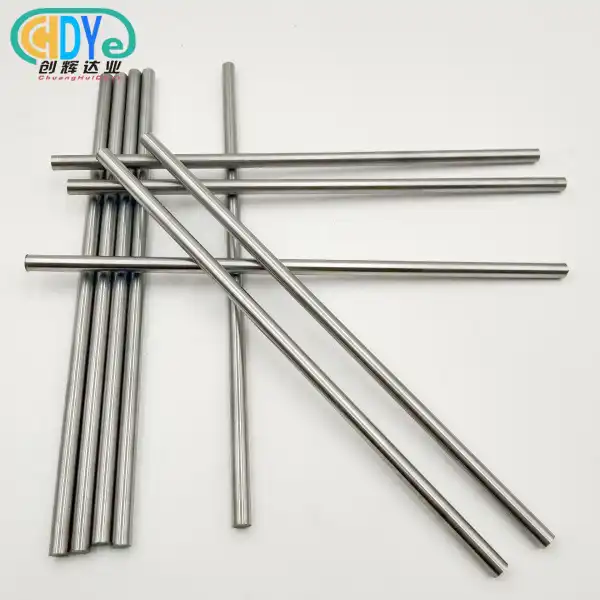
Understanding High Purity Niobium Bar Rod and Its Production Standards
High purity niobium bar rods are different because they have very few impurities and great physical qualities that make them ideal for tough uses. The first part of the classification is chemical purity. Materials with more than 99.9% niobium content are considered high purity, though many specific uses need 99.95% (3N5) or higher. The Residual Resistivity Ratio (RRR), which can be anywhere from 300 to over 400, is another important sign that measures thermal conductivity at very low temperatures, which is necessary for superconducting uses.
Defining Chemical Composition Standards
The chemical makeup has a direct effect on how well an object works. The ASTM B392 standard sets the highest levels of certain elements that are allowed. For example, tantalum levels should be kept below 300 ppm and tungsten levels should be kept below 100 ppm. Important interstitials like oxygen, nitrogen, carbon, and hydrogen must also be closely monitored. In high vacuum uses, these limits stop breakdowns caused by inclusions, and in particle reactors, they stop thermal runaways. Through modern electron beam melting and vacuum arc remelting methods, Chuanghui Daye is able to make niobium bars that are 99.99% pure and meet the requirements for RO4200 and RO4210 grades.
Physical Properties and Mechanical Attributes
Niobium is very flexible at room temperature because it has a body-centered cubic crystal structure. This lets it be worked cold for a long time without having to be heated first. These bars are strong even in harsh situations because they have a density of 8.57 g/cm³ and a melting point of 2,477°C. The material is very easy to shape, which lets it be used to make complicated shapes for aircraft engine parts and heat shields that need to work well at high temperatures.
International Standards Framework
Following international production standards ensures that quality, resistance to corrosion, and electricity performance are the same all along the world's supply lines. ASTM guidelines give exact information about chemical makeup and how to do mechanical tests. ISO approvals show that manufacturing processes have built-in quality controls and ways to keep getting better. The ASME codes guide materials used in pressure vessels and nuclear uses, while the AMS standards cover the needs of the defense and aerospace industries. Harmonizing production standards through these models makes cross-border purchasing easier and lowers the risk of noncompliance for buyers from other countries.
Chemical Composition and Quality Testing Standards
High purity niobium bars can be distinguished from market grades by their exact chemical makeup. To get the performance needed in advanced uses, the standards call for tight control over both metallic and interstitial impurities.
Interstitial Element Control
Oxygen levels should usually stay below 150 ppm because higher levels make things less flexible and more rigid. Limits on nitrogen are usually kept below 100 ppm to keep the material from becoming too weak, and carbon limits are usually kept below 50 ppm to keep it malleable. Hydrogen is only found in very small amounts, but it is closely watched because it can cause cracks to form later than expected. These close tolerances make sure that materials work effectively in chemically aggressive settings and stay stable during thermal cycles in aircraft use.
Advanced Testing Methodologies
To check the elemental makeup of high purity niobium bar rod, you need to use complex scientific methods. ICP-MS, or Inductively Coupled Plasma Mass Spectrometry, can find impurities at levels as low as parts per billion, which is very accurate and needed for materials used in semiconductors. Spectrochemical study using optical emission spectroscopy confirms the quantities of major elements and finds small amounts of contaminants. Both ways are used at Chuanghui Daye as part of our ISO 9001:2015-certified quality system to make sure that every batch meets the requirements before it is sent out.
Comprehensive Quality Control Protocols
Quality assurance includes more than just chemical research. It also includes checking the dimensions and the soundness of the surface. We use ultrasound testing to find holes or other things inside structures that could affect how well they work. Using standardized tools to check the dimensions ensures that the diameter, length, and straightness are all within the allowed ranges. Surface finish inspection finds flaws like scratches, pits, or contamination that could affect how well the next step of processing or application works. Mechanical testing, including harmful methods like tensile testing and non-destructive methods like eddy current examination, shows that every production lot meets or beats industry standards, which is important for dependable and repeatable performance.
Mechanical and Physical Property Standards
The mechanical needs for high purity niobium bars are the same as those in precision industries, where failure of a material has very bad results. Knowing about these factors helps buying teams choose the right grades for different uses.
Strength Parameters and Elongation
Tensile strength for heated niobium is usually between 275 and 415 MPa, which is strong enough to hold structures while still being easy to shape. Values of yield strength between 205 and 345 MPa show the stress level at which lasting distortion doesn't happen. Elongation rates often go over 30%, which shows how flexible the material is and makes cold working and shaping easier. These traits are especially useful in aircraft, where parts need to be able to handle pressure and heat stress without breaking, and in medical device production, where biocompatible implants need to be shaped precisely.
Thermal Standards and Heat Treatment
The melting point of the material is 2,477°C, which lets it work in places where normal metals would fail. Protocols for heat treatment improve the structure of the grains and ease pressures that were introduced during cold working. To keep the surface from oxidizing, annealing temperatures are usually between 800°C and 1,200°C in vacuum or neutral atmospheres. When we make things at Chuanghui Daye, we use controlled cooling rates to make microstructures that are all the same. This makes the materials last longer and work better even when they are under a lot of stress, like when they are used in chemical processing equipment or nuclear reactor parts.
Surface Finish and Dimensional Tolerances
Surface quality has a big effect on how well an application works, especially in vacuum systems and thin-film manufacturing methods. Surface roughness values below 0.8 µm Ra are often required by specifications to keep particle generation to a minimum and make sure that coatings stick evenly. Dimensional tolerances are based on ASTM standards, and for precise uses, diameter differences are usually kept to within ±0.13 mm. Requirements for straightness keep installations from going wrong and make sure that parts fit together correctly. Because of these strict rules, niobium bars can be used in precision-critical industrial settings, such as as blasting targets for making semiconductors and in optical coating applications where flaws on the surface can cause products to fail.
Comparative Standards and Industry-Specific Applications
There are different standard structures for each refractory metal that are based on its specific features and uses. When procurement workers compare these standards, it helps them understand the trade-offs that come with choosing materials and the rules that must be followed.
Niobium versus Tantalum and Titanium Standards
High purity niobium bar rod standards put a lot of weight on RRR values and interstitial content for superconducting uses, while tantalum standards put a lot of weight on corrosion protection in harsh chemical conditions. Tantalum standards allow higher amounts of impurity because it is mostly used in tools for chemical processing rather than in cold electronics. Titanium standards, mostly set by ASTM B348, put biocompatibility and strength-to-weight ratios at the top of the list for uses in space and medicine. Knowing these differences helps choose the right material: niobium works best in superconducting magnets and particle accelerators, tantalum is best for chemical service that is corrosive, and titanium is best for structural uses that need to be light.
Aerospace Certification Requirements
Aviation and defense makers need materials that meet AMS standards, which check that the structure stays strong in harsh circumstances. As part of the AMS standards for niobium components, minimum mechanical qualities, grain size limits, and traceability paperwork that connects each piece to production batch records are all spelled out. Niobium's high temperature stability is used in jet engine parts, where materials have to be able to handle going from room temperature to working temperatures over 1,400°C. Because Chuanghui Daye has been working with rare metals for 30 years, we can give you full mill test results and material certifications that meet aircraft quality standards.
Electronics and Semiconductor Industry Standards
For making capacitors and superconducting devices, electronics makers need materials that are very pure and carry electricity well. Low ferromagnetic particles and controlled grain structures are emphasized by standards to keep flaws from happening during thin-film sputtering. Microelectronic parts can get short circuits or signal loss from pollution as small as a few parts per billion. To make sure that the deposition rates and film quality are the same across the surfaces of semiconductor wafers, high purity niobium bars that are made into sputtering targets must have the same makeup all the way through.
Medical Device and OEM Customization Standards
Biocompatibility must be proven through cytotoxicity testing, and all materials must be fully traceable from where they come from to where they are delivered as a finished product. Along with ASTM material specs, ISO 13485 medical device quality control standards make sure that implant materials don't react with body fluids and don't corrode. When an OEM customizes a product, they need the provider to be able to make it in non-standard sizes, with special surface treatments, or with different compositions, all while following strict quality management and certification audit rules. We can meet the needs of medical device makers for fast prototyping and research institutions for small-batch custom orders. This way, we can support innovation without lowering quality standards.
Procurement Considerations and Trusted Supplier Standards
It's not enough to just compare technical datasheets when looking for a trusted provider of high purity niobium bars. You should also look at their manufacturing skills, quality systems, and how open their supply chain is.
Supplier Certification and Quality Management
Having ISO 9001:2015 approval shows that a company has strict quality controls in place, which include checking the raw materials, keeping an eye on the production process, and checking the finished product. For each output lot, suppliers should give mill test certificates that show the results of chemical analyses, measurements of mechanical properties, and checks of dimensions. Third-party testing by accredited labs adds trustworthiness by proving that the data given by the seller is a true reflection of the material's properties. The results of a factory audit show how clean the production area is, how often the equipment is calibrated, and how employees are trained. All of these things affect how consistent the product is.
Verifying Compliance and Traceability
Professionals in the purchasing of high purity niobium bar rod should ask for proof that the product meets ASTM B392 standards. This could include spectrographic analysis reports that show the amount of impurities and tensile test results that show the product's material qualities. Traceability systems that connect finished goods to specific melting points make it easy to fix problems quickly if they appear related to quality. Distributor relationships with well-known manufacturers make the supply chain clear, which lowers the risk of low-quality materials getting into important uses. As the "Titanium Capital" of China, Baoji is home to Chuanghui Daye. The company benefits from good infrastructure in the area that helps make rare metals and easy access to high quality raw materials that support our quality pledge.
Practical Ordering and Logistics Considerations
Different suppliers have different minimum order amounts. For example, for specialized high purity grades, bigger pledges are sometimes needed to support production runs. Knowing the lead time helps make sure that the shipping of materials doesn't clash with the plan for the project. For example, standard grades may ship within weeks, but custom specs may need months to be made and tested. Shipping rules protect things while they're being shipped. For example, niobium bars are usually sent in wooden boxes that have protective wraps around them to keep the surface from getting damaged. Our global shipping options make sure that goods arrive in one piece and on time for clients. We also provide all the paperwork needed to clear customs and make sure that materials are properly inspected upon arrival.
Conclusion
Understanding ASTM B392 specifications, ISO quality control requirements, and industry-specific certifications for aerospace, electronics, and medical uses is important for making it through the standards landscape for high purity niobium bar rod production. Controlling the chemical makeup, checking the mechanical properties, and making sure the dimensions are exact all work together to make sure that materials work well in tough conditions. When procurement teams choose qualified providers with proven compliance, strong traceability systems, and the ability to customize materials in a variety of ways, they can find materials that meet both present needs and changing application needs. Suppliers who can regularly deliver materials that meet strict international standards are different from those who can't because they lack the technical know-how and quality assurance infrastructure.
FAQ
Q: What chemical composition standards should I look for in high purity niobium bars?
A: Look for products that meet the requirements of ASTM B392 for grades RO4200 or RO4210 and have a niobium level of more than 99.9%. There should be no more than 150 parts per million of oxygen, 100 parts per million of nitrogen, 50 parts per million of carbon, and limited amounts of tantalum and tungsten. Ask for mill test records that show these numbers were found using ICP-MS or spectrochemical analysis.
Q: How can I be sure that my provider is following international rules for production?
A: Check for ISO 9001:2015 certifications and ask for audit reports from third-party auditors of the business. Check the mill test certificates to make sure they meet ASTM standards, and ask for paperwork that shows how goods can be traced back to specific production batches. You might want to look at the manufacturing processes, how the equipment is calibrated, and the quality control procedures in person by visiting the site.
Q: What distinguishes aerospace-grade niobium from electronics-grade material?
A: For aerospace uses, mechanical strength, stability at high temperatures, and structural integrity are very important. AMS standards and tensile tests can confirm these things. For superconducting and thin-film uses, electronics-grade material has to be very pure chemically, have few ferromagnetic impurities, and have RRR values higher than 300. Both need detailed documentation, but the testing methods are different depending on the speed needs of the program.
Partner with Chuanghui Daye—Your Trusted High Purity Niobium Bar Rod Supplier
With a 99.99% purity guarantee and ISO 9001:2015 approval, Shaanxi Chuanghui Daye provides precision-engineered high purity niobium bar rod made to ASTM B392 standards in grades RO4200 and RO4210. Our Baoji plant uses advanced electron beam melting and vacuum arc remelting technology, along with 30 years of experience working with rare metals, to make materials for use in aircraft, semiconductors, medicine, and chemical processing. We offer full mill test certificates, open design for study and OEM needs, and dependable global shipping that guarantees on-time delivery. You can talk to our technical team about your project requirements, get full quotes, or set up a quality system check by emailing info@chdymetal.com. Find out what a difference consistent quality and quick service can make in your important material buying needs.
References
1. ASTM International. (2020). "ASTM B392-20: Standard Specification for Niobium and Niobium Alloy Ingots." ASTM Volume 02.04 Nonferrous Metals.
2. Davis, J.R. (Editor). (1998). "Metals Handbook: Properties and Selection of Nonferrous Alloys and Special-Purpose Materials." ASM International, Materials Park, Ohio.
3. Cardonne, S.M., Kumar, P., Michaluk, C.A., & Schwartz, H.D. (1995). "Tantalum and Its Alloys." International Journal of Refractory Metals and Hard Materials, Volume 13, Issue 4, pp. 187-194.
4. Schultz, J.M. (2002). "The Processing and Mechanical Properties of Commercial Niobium." Journal of the Minerals, Metals and Materials Society, Volume 54, Issue 6, pp. 23-28.
5. International Organization for Standardization. (2015). "ISO 9001:2015 Quality Management Systems—Requirements." International Standard for Quality Assurance.
6. Boyer, R., Welsch, G., & Collings, E.W. (Editors). (1994). "Materials Properties Handbook: Refractory Metals and Alloys." ASM International, Materials Park, Ohio.
Learn about our latest products and discounts through SMS or email