- English
- French
- German
- Portuguese
- Spanish
- Russian
- Japanese
- Korean
- Arabic
- Greek
- German
- Turkish
- Italian
- Danish
- Romanian
- Indonesian
- Czech
- Afrikaans
- Swedish
- Polish
- Basque
- Catalan
- Esperanto
- Hindi
- Lao
- Albanian
- Amharic
- Armenian
- Azerbaijani
- Belarusian
- Bengali
- Bosnian
- Bulgarian
- Cebuano
- Chichewa
- Corsican
- Croatian
- Dutch
- Estonian
- Filipino
- Finnish
- Frisian
- Galician
- Georgian
- Gujarati
- Haitian
- Hausa
- Hawaiian
- Hebrew
- Hmong
- Hungarian
- Icelandic
- Igbo
- Javanese
- Kannada
- Kazakh
- Khmer
- Kurdish
- Kyrgyz
- Latin
- Latvian
- Lithuanian
- Luxembou..
- Macedonian
- Malagasy
- Malay
- Malayalam
- Maltese
- Maori
- Marathi
- Mongolian
- Burmese
- Nepali
- Norwegian
- Pashto
- Persian
- Punjabi
- Serbian
- Sesotho
- Sinhala
- Slovak
- Slovenian
- Somali
- Samoan
- Scots Gaelic
- Shona
- Sindhi
- Sundanese
- Swahili
- Tajik
- Tamil
- Telugu
- Thai
- Ukrainian
- Urdu
- Uzbek
- Vietnamese
- Welsh
- Xhosa
- Yiddish
- Yoruba
- Zulu
Where Can You Source Certified Pure Niobium Round Bars?
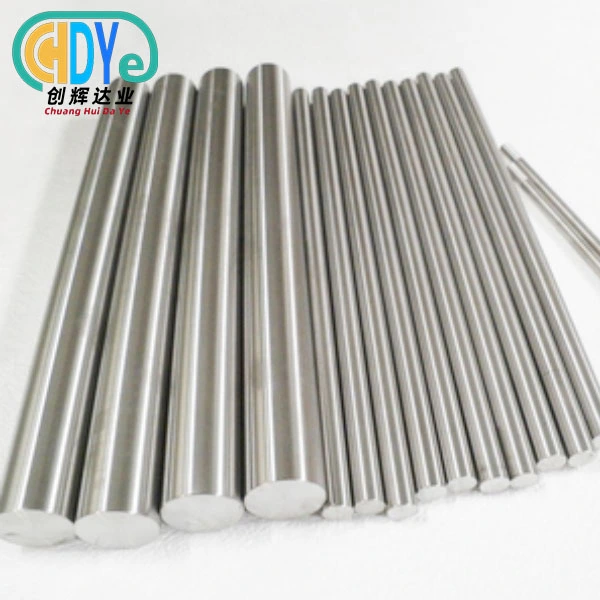
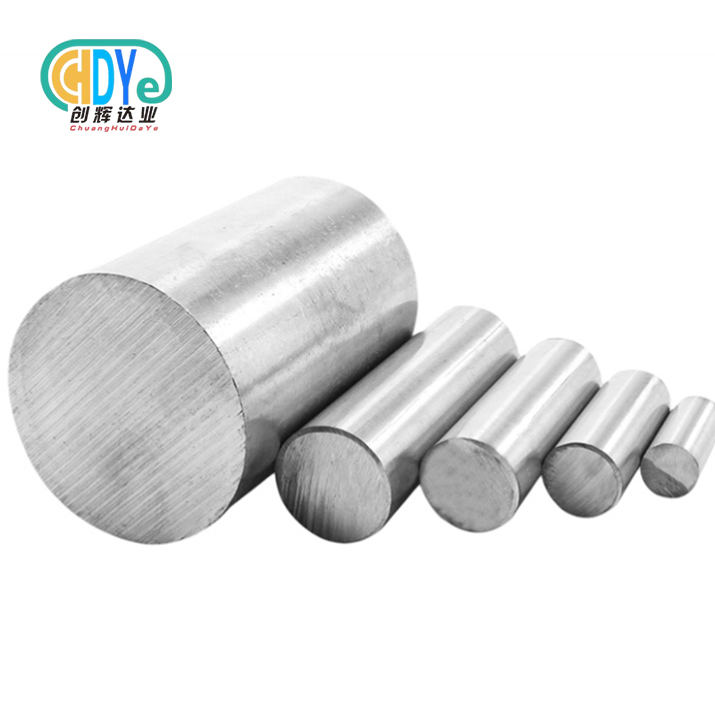
If you want to buy pure niobium round bars from a reliable supplier, Shaanxi Chuanghui Daye Metal Material Co., Ltd. is a factory-direct manufacturer located in Baoji, China, which is well known as the "Titanium Capital" of China. We sell certified niobium round bars with purity Nb>99.9%, diameters from 1 to 50 mm, and lengths up to 1000 mm. All bars are produced to ASTM B392 specifications with complete traceability documentation and ISO 9001:2015 certification. We are a reliable source for the aerospace, electronics, chemical processing, and medical device sectors globally.
Understanding Certified Pure Niobium Round Bars
Certified niobium round bars are not only metal rods of round shape but a carefully designed substance to function where other metals fail. To get the correct product, it’s important to understand what certification means and why it matters to your application.
What Defines "Certified" Niobium Bars?
The certified niobium bar conforms to known standards such as ASTM B392 for composition, mechanical properties, and dimensional tolerances. Our bars are delivered with a mill test certificate: Nb >99.9% purity, density 8.57 g/cm3 and tensile strength 200-350 MPa. The surfaces are offered polished or as-rolled depending on your downstream processing needs. What distinguishes a certified bar from a commodity rod is the traceability from raw material to completed product.
Key Properties That Make Niobium Indispensable
Niobium’s anodic oxide coating offers superior chemical passivity against nitric, hydrochloric, and sulfuric acids, media that attack stainless steel in weeks. The ductility permits cold working and precise machining without intermediate annealing processes, which decreases manufacturing lead times. It is important for superconducting and medical imaging applications because it retains its structural integrity at cryogenic temperatures when many alloys become brittle. The only way to dependably offer these features is to maintain purity and processing controls closely throughout the production chain.
Comparison of Niobium Round Bars With Alternative Materials
Procurement professionals often wonder how niobium compares to titanium, tantalum, or niobium alloys such as Nb-1Zr. Each material has its own performance niche. Choosing the incorrect material increases both costs and risks. Pure niobium has a density of 8.57 g/cm³ (almost half that of tantalum) and provides similar corrosion resistance in many acidic conditions.
Titanium is less inert than niobium in severely oxidizing acid combinations, yet it is lighter. Tantalum is better than niobium in certain ultra-aggressive media, but at a far higher price range. Niobium alloys such as C-103 increase strength for aircraft structural components, but at the expense of the ductility and machinability of pure-grade bars for precision electronic and chemical parts. The physical form also plays a role in the buying choice.
Round bars have better machinability and dimensional stability than sheets or wires, and pure niobium round bars are the feedstock of choice for turned parts, valve stems, heat exchanger fittings, and capacitor substrates. If your application requires precise tolerances and structural integrity, a high-purity niobium round bar is often the most economical starting shape.
How to Evaluate and Select Reliable Niobium Round Bar Suppliers
The market for the rare metal comprises accredited makers and re-packagers of material that do not have complete traceability. Knowing what to check means protecting your supply chain from expensive material non-conformances.
Certification and Quality Assurance Credentials
Any good supplier of niobium round bars should be ISO 9001:2015 certified and able to offer mill test certifications in accordance with ASTM B392 for each batch. Establish whether the supplier does chemical analysis, hardness testing, and dimensional inspection in-house, or depends entirely on third-party data. Chuanghui Daye has a complete manufacturing chain, from raw materials inspection, electron beam melting, forging, rolling, machining, and final packing. This vertical integration reduces traceability gaps that exist when the substance is handled by several parties.
Evaluating Customization Capability and Lead Times
A good provider can meet your particular diameter, length, and surface treatment needs without forcing you to use conventional catalog sizes. We have diameters from 1 to 50 mm, lengths up to 1000 mm, and polished or as-rolled surfaces. Custom order lead times are a function of batch size and complexity of specs. Transparency in scheduling is needed for both small-batch R&D orders and big OEM runs. If you are going to place a buy order, ask for a formal production schedule – and ask if they can accelerate if you are on a tight project schedule.
Procurement Best Practices for Certified Pure Niobium Round Bars
Strategic procurement of refractory metals is more than a comparison of price-per-kilogram. There are many elements that impact the real landed cost and supply continuity of your niobium sourcing program. Here are the key techniques that experienced procurement managers use when obtaining certified niobium bars:
- Kindly include purity and standard clearly on your RFQ. Ordering a "niobium bar" without the specification of Nb >99.9% and ASTM B392 permits replacement with lower quality or unverified material. Accurate specs protect you legally and technically.
- Include a material traceability package with each shipment. This should contain a mill test certificate, heat number, chemical composition report, and dimensional inspection record. Complete documentation helps your internal quality audits and customer compliance needs.
- Include technical assistance in the agreement. A skilled supplier may provide advice on machining settings, surface preparation for vacuum use, and storage protocols—niobium starts to visibly oxidize at 200°C, thus packaging is important in transport and storage.
Together, these procedures lower the chance of obtaining non-conforming material and increase your influence during supplier performance assessments. Additionally, a direct connection with a supplier at the factory level, rather than numerous layers of middlemen, may shorten lead times and reduce per-unit costs for pure niobium round bars throughout the life of the contract.
Why Choose Our Certified Pure Niobium Round Bars?
Chuanghui Daye is located in the Baoji existing rare metal industrial park, which gives us direct access to high-quality raw niobium feedstock, as well as a mature processing equipment network comprising electron beam furnaces, rolling machines, annealing furnaces, and precision lathes.
Our quality management system is ISO 9001:2015 accredited, which guarantees the control of every step of manufacturing, from incoming raw material check to final packing. Our customers include aircraft component makers, chemical equipment producers, electronics companies, and research institutes in North America, Europe, and Asia.
Our niobium round bars are used in capacitor manufacture, corrosion-resistant pipe systems, and in specialty vacuum applications where material inconsistency is a significant danger to operations. “Our lead times are competitive, our documentation is complete, our technical team understands the downstream implications of material variance, and that’s why customers come back to us.”
Conclusion
Finding a provider with stock is only part of the equation when sourcing certified niobium round bars. It needs a provider with proven production controls, open documentation, and the technical depth to support your particular application. The end result is dictated by the process integrity of the supplier, whether you need conventional diameters for chemical processing components or custom-machined pure niobium round bars for semiconductor equipment. Chuanghui Daye integrates factory-direct manufacture, ISO 9001:2015 certification, and over 30 years of rare metal experience to provide you with niobium bars you can rely on from certificate to component.
FAQ
Q: What purity level should I require for electronic-grade niobium round bars?
A: For capacitor substrates and sputtering-related components, specify Nb >99.9% minimum. Our standard grade meets this threshold. Superconducting applications requiring high RRR values should be discussed directly with our technical team, as additional processing controls may apply.
Q: Can you supply small batches for R&D or prototyping?
A: Yes. We accommodate flexible small-batch orders alongside full production runs. Research institutions and engineering teams regularly order custom dimensions for testing before scaling to volume production.
Q: What certifications should I request from any niobium bar supplier?
A: At minimum, request ISO 9001:2015 certification, ASTM B392 compliance, and a mill test certificate with chemical composition and mechanical test data for each heat lot.
Q: How should niobium bars be stored to prevent oxidation?
A: Store bars in a dry, temperature-controlled environment below 200°C. For long-term storage, vacuum-sealed or inert-gas packaging is recommended. Niobium oxidizes rapidly above 400°C, so any elevated-temperature handling requires a protective atmosphere.
Q: What surface finishes do you offer?
A: We supply niobium round bars in polished and as-rolled surface conditions. Polished surfaces with Ra <0.8 µm are suitable for vacuum and semiconductor environments where outgassing must be minimized.
Request a Quote from Chuanghui Daye — Your Trusted Pure Niobium Round Bar Supplier
Shaanxi Chuanghui Daye delivers factory-direct pricing, ISO 9001:2015 certified quality, and complete material traceability for every order. Whether you need standard pure niobium round bars or custom-dimensioned parts, our technical team is ready to support your procurement process from specification to delivery. Contact us today at info@chdymetal.com or visit www.chdymetal.com to request a personalized quote and discover why global manufacturers choose us.
References
1. ASTM International. ASTM B392: Standard Specification for Niobium and Niobium Alloy Bar, Rod, and Wire. ASTM International, 2021.
2. Lindroos, V. K., et al. Handbook of Mechanical Alloy Design. Marcel Dekker, 2004.
3. Sims, C. T., Stoloff, N. S., & Hagel, W. C. Superalloys II: High-Temperature Materials for Aerospace and Industrial Power. Wiley-Interscience, 1987.
4. Hampel, C. A. Rare Metals Handbook. Reinhold Publishing Corporation, 1961.
5. International Organization for Standardization. ISO 9001:2015 Quality Management Systems—Requirements. ISO, 2015.
6. Savitzky, B. H., et al. "Superconducting Niobium: Material Properties and SRF Cavity Performance." Journal of Applied Physics, 2019.
Learn about our latest products and discounts through SMS or email