- English
- French
- German
- Portuguese
- Spanish
- Russian
- Japanese
- Korean
- Arabic
- Greek
- German
- Turkish
- Italian
- Danish
- Romanian
- Indonesian
- Czech
- Afrikaans
- Swedish
- Polish
- Basque
- Catalan
- Esperanto
- Hindi
- Lao
- Albanian
- Amharic
- Armenian
- Azerbaijani
- Belarusian
- Bengali
- Bosnian
- Bulgarian
- Cebuano
- Chichewa
- Corsican
- Croatian
- Dutch
- Estonian
- Filipino
- Finnish
- Frisian
- Galician
- Georgian
- Gujarati
- Haitian
- Hausa
- Hawaiian
- Hebrew
- Hmong
- Hungarian
- Icelandic
- Igbo
- Javanese
- Kannada
- Kazakh
- Khmer
- Kurdish
- Kyrgyz
- Latin
- Latvian
- Lithuanian
- Luxembou..
- Macedonian
- Malagasy
- Malay
- Malayalam
- Maltese
- Maori
- Marathi
- Mongolian
- Burmese
- Nepali
- Norwegian
- Pashto
- Persian
- Punjabi
- Serbian
- Sesotho
- Sinhala
- Slovak
- Slovenian
- Somali
- Samoan
- Scots Gaelic
- Shona
- Sindhi
- Sundanese
- Swahili
- Tajik
- Tamil
- Telugu
- Thai
- Ukrainian
- Urdu
- Uzbek
- Vietnamese
- Welsh
- Xhosa
- Yiddish
- Yoruba
- Zulu
Where to Buy Certified Titanium Alloy Wire With COA?
Procurement professionals usually look to specialised metal suppliers with a track record in aerospace, medical, and industrial uses when they need to buy certified titanium alloy wire with a Certificate of Analysis (COA) document. Shaanxi Chuanghui Daye Metal Material Co., Ltd. is a leading supplier based in Baoji, China's famous "Titanium Capital." They offer full COA documentation, ISO 9001:2015 certification, and instant availability of standard grades with delivery times of 1-3 days for stock items.
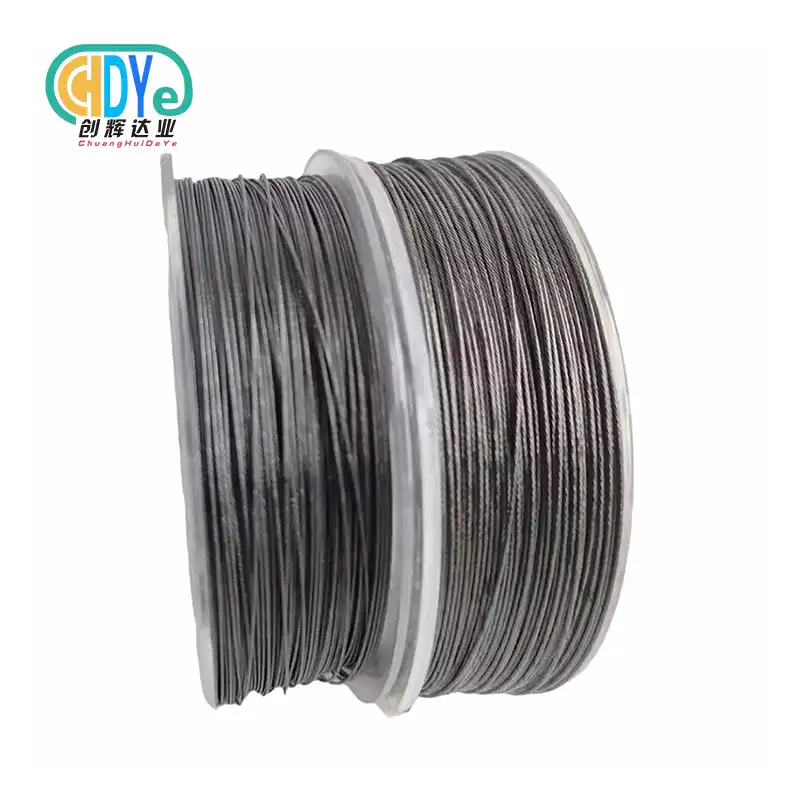
Understanding Certified Titanium Alloy Wire and Its Importance
Certified titanium alloy wire is important for many reasons, not just meeting basic material requirements. It is also important for meeting important safety, performance, and regulatory compliance requirements that set current industrial standards. Numerous fields, from aerospace manufacturing to medical device manufacturing, rely on materials that have consistent quality, can be traced back to their source, and perform well under tough operational conditions.
What Makes Titanium Wire Certification Essential
Certificate of Analysis paperwork is the most important part of buying titanium wire because it confirms in great detail the mechanical properties, chemical makeup, and manufacturing methods. This detailed paperwork has to meet strict industry standards like ASTM B863, AMS 4954, and ISO compliance needs. It has to include readings of tensile strength, yield strength, elongation percentages, and purity levels.
Certified titanium wire has great strength-to-weight ratios, great resistance to corrosion in acidic and salty environments, and safe properties that are necessary for medical uses. Because they are not magnetic and work the same at temperatures ranging from -250°C to +400°C, these materials are essential for precise tasks that must be reliable at all times.
Industry Standards and Compliance Requirements
Modern certification for titanium wire follows widely recognised standards like ASTM B348, ASTM F67, and ASTM F136. These standards set standards for material quality, testing methods, and paperwork needs. These standards make sure that materials that have been approved meet the strict safety rules that aerospace manufacturers, medical device makers, and chemical processing plants need.
In order to get certified, a lot of tests must be done to make sure that the dimensions are accurate within ±0.01 mm, the surface is smooth, and the structure stays stable under repeated stress. Ultrasonic inspection, chemistry analysis, and checking the mechanical properties are some of the more advanced testing methods that are used to provide the proof needed for quality assurance and regulatory compliance.
How to Choose the Right Supplier for Certified Titanium Alloy Wire?
To find the right supplier for certified titanium materials, you need to carefully look at their manufacturing skills, quality control systems, and supply chain reliability. These factors have a direct effect on the success of the project and the efficiency of operations. Because making titanium wire is so complicated, suppliers need to have a lot of advanced metalworking knowledge, high-tech testing tools, and a history of working with difficult industrial uses.
Evaluating Supplier Capabilities and Certifications
Leading titanium wire suppliers show their dedication to quality by getting ISO 9001:2015 certification. This sets up thorough quality management systems that cover choosing raw materials, production processes, and final inspection steps. Suppliers who have electron beam and vacuum arc furnaces can get very low levels of inclusions and better metal homogenization, which means that the mechanical properties stay the same and the performance is more reliable.
Advanced processing tools, such as multi-pass wire drawing, vacuum annealing systems, and automatic dimensional measurement equipment, show that the company is good at making things. With these skills, suppliers can keep tolerances low, produce high-quality surfaces, and provide the consistent quality needed for important uses in the medical, aircraft, and electronics industries.
Geographic Considerations and Supply Chain Advantages
Logistics costs, delivery times, and the stability of the supply chain are all affected by where suppliers of titanium wire are located. This is especially true for companies that run multiple production sites or foreign operations. Suppliers in areas where titanium is already made can take advantage of a lot of industry knowledge, specialised infrastructure, and stable access to raw materials, all of which make quality and cost more competitive.
It is known all over the world as China's "Titanium Capital," and Baoji has a lot to offer thanks to its centralised titanium industry ecosystem, advanced transportation facilities, and established supplier networks. Companies that buy from this area get reasonable prices, full technical support, and access to the world's largest manufacturing capacity for titanium, all while keeping quality standards that are on par with those of the best international suppliers.
Procurement Process and Practical Tips for Buying Certified Titanium Alloy Wire
To buy titanium wire successfully, you need to plan in a way that balances quality standards, delivery times, and budget limits. You also need to make sure that there is full documentation and that you can trust the seller throughout the whole process. Procurement professionals can make better sourcing choices and build lasting relationships with suppliers if they understand how markets work, how prices are set, and how to negotiate.
Understanding Pricing Dynamics and Market Factors
Titanium wire prices depend on a lot of factors, such as the type of alloy used, the size requirements, the amount needed, and the state of the market. These factors can have a big effect on the total cost of procurement. Standard grades like Grade 1, Grade 2, and Grade 5 usually have lower prices because they are made in larger quantities. Speciality alloys like Ti-6Al-7Nb for medical uses, on the other hand, have higher prices because they have to be processed in a certain way and are only made in small quantities.
Quantity is a very important factor in negotiating prices, as suppliers often offer big discounts for bigger orders that support dedicated production runs and lower setup costs. Custom specs, such as exact size tolerances, surface finishes, or packaging needs, may come with extra costs, but they can save a lot of money by cutting down on secondary processing and making production more efficient.
Managing Lead Times and Quality Verification
To handle lead times well, you need to know about the production schedules of suppliers, the availability of inventory, and the quality control processes that decide delivery times and the planning needs of the project. Standard grade materials that are kept in stock can usually be shipped within one to three days. Custom specs, on the other hand, may need seven to fifteen days to finish production and go through quality control steps.
As part of the quality assurance process, the COA should be carefully read, the dimensions should be checked, and third-party testing should be done if needed by industry rules or internal quality standards. Setting clear acceptance criteria, inspection processes, and documentation needs before placing an order stops delays and makes sure that materials delivered meet all requirements.
Titanium Alloy Wire Grades and Comparisons for Informed Buying Decisions
To choose the right titanium wire grades, you need to know about the different alloys' mechanical properties, chemical makeups, and performance traits that make them suitable for different uses. Different grades have different combinations of strength, ductility, resistance to corrosion, and other qualities that need to be matched to the needs of the project and the conditions of use.
Common Titanium Wire Grades and Applications
Grade 1 titanium alloy wire is the purest form of titanium that can be bought in stores. It has the best corrosion resistance and can be shaped easily for uses that need better chemical compatibility. This grade works great in chemical processing equipment, marine uses, and other places where strong corrosive environments need materials to be very stable and last a long time.
Grade 2 titanium is the most commonly used grade for general industrial uses because it has the best mix of strength, ductility, and resistance to corrosion. As a result of being easy to weld and having a moderate level of strength, it is perfect for structural parts, heat exchangers, and other uses that need to be stable and cost-effective.
Titanium alloy Grade 5 (Ti-6Al-4V) is the workhorse of them all. It has high strength-to-weight ratios and great mechanical properties that make it ideal for demanding aircraft and automotive uses. Because it is better at resisting fatigue, can be heat-treated, and is mechanically stable, this alpha-beta metal is essential for high-performance and important structural parts.
Specialised Medical and Aerospace Grades
The Ti-6Al-7Nb alloy meets certain needs for medical devices by getting rid of the vanadium content while keeping good biocompatibility and mechanical properties that make it ideal for orthopaedic implants and surgical instruments. For long-term implantation uses, this special grade meets ASTM F1267 standards and has the right mix of strength, rust resistance, and biological compatibility.
Small amounts of palladium are added to grade 7 titanium to make it more resistant to corrosion in reducing acid settings. This makes it very useful for chemical processing tasks where standard titanium grades might rust. While this specialised alloy is more expensive, it is well worth it in situations where its better corrosion resistance makes up for it.
Our Commitment to Quality Titanium Alloy Wire Supply
Shaanxi Chuanghui Daye Metal Material Co., Ltd. offers precision-engineered titanium wire solutions. They have been in the rare metals business for over 30 years and have a wide range of manufacturing capabilities. They are based in China's best titanium production region. Our dedication to quality greatness covers every step of the production process, from choosing the raw materials to the final inspection and delivery.
Advanced Manufacturing and Quality Control
Modern machines like electron beam furnaces, vacuum arc remelting systems, and precision wire drawing machines help us make sure that the qualities of the materials we use are always the same and that the sizes of the parts we make are accurate. There are several quality checks in the production process, such as checking the raw materials, keeping an eye on the work as it's being done, and a full final inspection that makes sure it meets foreign standards.
Quality control systems that are approved to ISO 9001:2015 standards provide a lot of information that can be used to track things back to the source. This information includes material certifications, process records, and test results that help meet customer quality standards and government regulations. Each shipment of wire comes with a Certificate of Analysis that lists the chemical makeup, mechanical properties, and results of dimensional verification.
Product Range and Delivery Capabilities
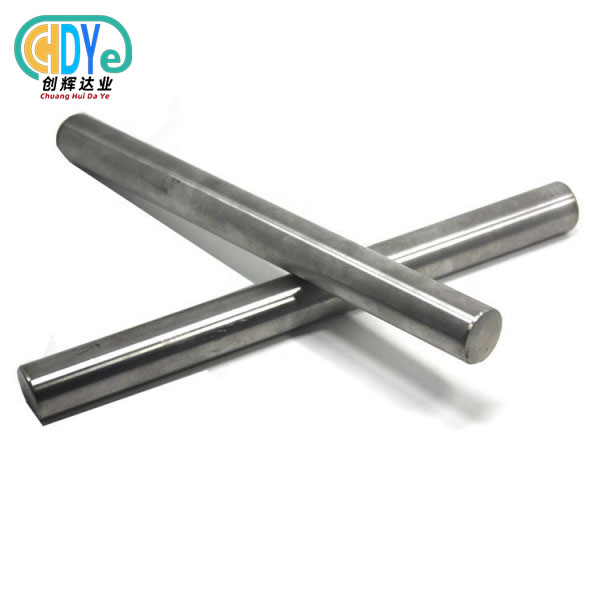
We keep a large stock of standard titanium wire grades in both straight and coiled forms, so we can send quickly (within 1 to 3 days) for urgent needs. Our product line includes different grades, such as GR1, GR2, GR5, GR7, and medical alloys. The diameters run from 0.5mm to 4.0mm to meet the needs of a wide range of applications.
Custom making can meet specific needs like alloy compositions that aren't found in other products, tight tolerances for size, and custom surface finishes. Customers can get free samples of the material to check its properties and make sure it's right for them before committing to large numbers. Minimum order quantities are also flexible, so they can be used for both prototype development and large-scale production.
Conclusion
Finding certified titanium alloy wire with the right COA paperwork means picking a provider carefully based on their ability to make the wire, their quality certifications, and how reliable their supply chain is. A good buying process strikes a balance between technical needs, delivery dates, and cost, all while making sure that all the necessary paperwork is completed and all the rules are followed. Shaanxi Chuanghui Daye Metal Material Co., Ltd. has the knowledge, quality processes, and manufacturing skills to provide reliable, certified titanium wire solutions for demanding industrial uses.
FAQ
Q: How can I verify the authenticity of a titanium wire Certificate of Analysis?
A: Authentic COA documentation should include detailed chemical composition analysis, mechanical property test results, and dimensional verification data performed by accredited testing laboratories. Verification involves checking certificate numbering systems, laboratory accreditation status, and ensuring test methods align with specified standards such as ASTM or ISO requirements. Reputable suppliers provide traceable documentation with clear identification of testing procedures and equipment calibration records.
Q: What are typical lead times for custom titanium wire manufacturing?
A: Standard grade titanium wire maintained in inventory can typically ship within 1-3 days, while custom specifications requiring specialised processing may require 7-15 days for production completion. Lead times depend on alloy complexity, dimensional requirements, quantity specifications, and current production schedules. Custom alloys or specialised surface treatments may extend lead times to 3-4 weeks, depending on material availability and processing requirements.
Q: What minimum order quantities should I expect for certified titanium wire?
A: Minimum order quantities vary significantly based on wire diameter, alloy grade, and supplier capabilities, typically ranging from 1-10 kilograms for standard grades to larger minimums for specialised alloys. Many suppliers offer flexible minimums for sample evaluation and prototype development, while production quantities often provide better pricing and delivery terms. Custom specifications may require larger minimums to justify specialised production setup costs.
Partner with Chuanghui Daye for Premium Titanium Alloy Wire Solutions
Shaanxi Chuanghui Daye stands ready to support your titanium wire requirements with comprehensive technical expertise, certified quality systems, and reliable supply chain capabilities. Our titanium alloy wire manufacturer credentials include ISO 9001:2015 certification, advanced manufacturing facilities, and extensive experience serving aerospace, medical, and industrial customers worldwide. Contact info@chdymetal.com to discuss your specific requirements, request free samples, and receive detailed quotations tailored to your project needs.
References
1. American Society for Testing and Materials. "Standard Specification for Titanium and Titanium Alloy Wire." ASTM B863-17. West Conshohocken: ASTM International, 2017.
2. Boyer, R., Welsch, G., and Collings, E.W. "Materials Properties Handbook: Titanium Alloys." 2nd Edition. Materials Park: ASM International, 2007.
3. Donachie, Matthew J. "Titanium: A Technical Guide." 2nd Edition. Materials Park: ASM International, 2000.
4. International Organisation for Standardisation. "Quality Management Systems - Requirements." ISO 9001:2015. Geneva: ISO, 2015.
5. Leyens, Christoph und Peters, Manfred. "Titanium and Titanium Alloys: Fundamentals and Applications." Weinheim: Wiley-VCH, 2003.
6. Society of Automotive Engineers. "Titanium Alloy Wire - Welding." AMS 4954K. Warrendale: SAE International, 2019.
Learn about our latest products and discounts through SMS or email