- English
- French
- German
- Portuguese
- Spanish
- Russian
- Japanese
- Korean
- Arabic
- Greek
- German
- Turkish
- Italian
- Danish
- Romanian
- Indonesian
- Czech
- Afrikaans
- Swedish
- Polish
- Basque
- Catalan
- Esperanto
- Hindi
- Lao
- Albanian
- Amharic
- Armenian
- Azerbaijani
- Belarusian
- Bengali
- Bosnian
- Bulgarian
- Cebuano
- Chichewa
- Corsican
- Croatian
- Dutch
- Estonian
- Filipino
- Finnish
- Frisian
- Galician
- Georgian
- Gujarati
- Haitian
- Hausa
- Hawaiian
- Hebrew
- Hmong
- Hungarian
- Icelandic
- Igbo
- Javanese
- Kannada
- Kazakh
- Khmer
- Kurdish
- Kyrgyz
- Latin
- Latvian
- Lithuanian
- Luxembou..
- Macedonian
- Malagasy
- Malay
- Malayalam
- Maltese
- Maori
- Marathi
- Mongolian
- Burmese
- Nepali
- Norwegian
- Pashto
- Persian
- Punjabi
- Serbian
- Sesotho
- Sinhala
- Slovak
- Slovenian
- Somali
- Samoan
- Scots Gaelic
- Shona
- Sindhi
- Sundanese
- Swahili
- Tajik
- Tamil
- Telugu
- Thai
- Ukrainian
- Urdu
- Uzbek
- Vietnamese
- Welsh
- Xhosa
- Yiddish
- Yoruba
- Zulu
What Sizes of Titanium Alloy Wire Are Available?
Understanding size ranges is essential when buying titanium alloy wire for industrial use. Titanium alloy wire comes in straight and coil shapes and has a diameter of 0.5mm to 4.0mm. Aerospace, medical device, chemical processing, and electronics sectors use precision-engineered materials because dimensional accuracy affects performance and dependability in demanding operational settings.
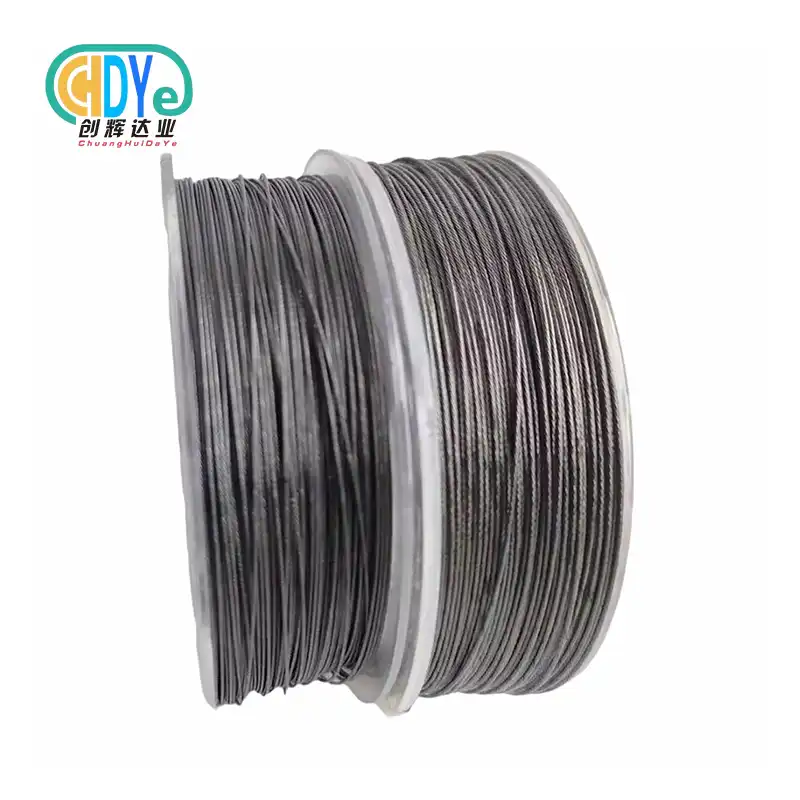
Understanding Titanium Alloy Wire Sizes: Standards and Specifications
Industrial procurement nowadays relies on standardized dimensions for global compatibility and performance. Titanium alloy wire diameters follow ASTM B863 and AMS 4954, which control dimensional tolerances and material qualities. These standards define wire diameter, surface finish, and mechanical properties for smooth manufacturing process integration.
Custom dimensions are available for particular industrial applications, although 0.5mm to 4.0mm covers most. Wire diameter varies with use, mechanical stress, and manufacturing process compatibility. In precision electronics and medical applications, smaller diameters are better for compact solutions, whereas bigger diameters are stronger for structural components and heavy-duty welding.
Standard Diameter Specifications
Most titanium alloy wire vendors provide millimeter-based dimensions data for global uniformity in metric and imperial measuring systems. From tiny electronics to strong industrial components, the 0.5mm to 4.0mm range (0.020" to 0.157" in imperial measurements) covers many applications. Precision drawing and automated measurement methods often maintain ±0.01mm dimensional tolerances.
Manufacturing requirements maintain wire diameter throughout coil lengths, preventing dimensional deviations that could impair crucial application performance. Quality control systems ensure dimensional accuracy from drawing to packaging, adhering to tolerances.
Grade Classifications and Size Relationships
Titanium grades affect size and manufacturing feasibility. Grade 1 and Grade 2 commercially pure titanium wires are appropriate for chemical processing and medicine because of their formability and corrosion resistance. Ti-6Al-4V (Grade 5) is strong but requires special processing that may limit diameter alternatives.
Grade 7 titanium contains palladium for corrosion resistance in severe chemical conditions, while Ti-6Al-7Nb is used in vanadium-free medical applications. Each grade is compatible with common size ranges, mechanical property needs and manufacturing process optimization may dictate diameter selection.
Key Factors Influencing Titanium Alloy Wire Size Selection
Performance and manufacturing feasibility must be considered while choosing wire diameter for industrial applications. Wire diameter affects mechanical qualities like tensile strength, fatigue resistance, and flexibility, causing size selection trade-offs. Understanding these linkages helps procurement professionals optimize material specifications for specific applications.
Wire diameter affects production handling, with smaller diameters improving flexibility for complex shaping operations and bigger diameters improving structural integrity for load-bearing applications. In aircraft components, weight optimization must balance strength requirements, and in medical devices, biocompatibility and exact dimensional control are crucial.
Application-Specific Size Requirements
Aerospace applications choose titanium alloy wire in the 1.0mm to 3.0mm range for its strength, weight optimization, and high performance. These sizes provide enough cross-sectional area for welding while maintaining aviation and spacecraft components. Marine situations, where seawater threatens component integrity, benefit from corrosion resistance.
Precision and biocompatibility are prioritized over raw strength in medical device manufacture, which uses dimensions from 0.5mm to 2.0mm. Titanium alloys are ideal for surgical equipment, orthodontic wires, and implanted devices because they are dimensionally stable and biologically compatible.
Electrical conductivity, thermal management, and non-magnetic qualities make wire diameters between 0.5mm and 1.5mm popular in electronics and semiconductors. These applications benefit from titanium's stability at high temperatures and electromagnetic interference resistance.
Mechanical Property Correlations
Larger wire widths increase tensile strength and load-bearing capability. For maximum performance, cross-sectional area, manufacturing process impacts, and material microstructure interact in complex ways that must be carefully evaluated.
Fatigue resistance is sensitive to diameter selection since larger cross-sections perform better under cyclic loads. In applications like springs, fasteners, and vibration-sensitive components, fatigue resistance is essential for long-term reliability.
Comparing Titanium Alloy Wire Sizes with Other Metal Wires
Market analysis shows considerable titanium alloy wire availability from conventional metal alternatives, affecting procurement strategy and cost optimization. Stainless steel wires are more flexible for particular applications but lack titanium's strength, corrosion resistance, and biocompatibility.
Aluminum wires are cheaper but less effective than titanium in high-temperature or corrosive situations. Copper wires perform well in electrical applications but lack load-bearing strength. These comparisons demonstrate the titanium alloy wire's premium status based on performance rather than cost.
Material Property Advantages
In chlorides, acids, and high-temperature oxidation conditions, titanium alloy wire outperforms stainless steel. This resistance extends operational life and reduces maintenance, compensating for greater initial material costs with better long-term value.
Titanium alloys have a higher strength-to-weight ratio than other materials, allowing weight reduction in aerospace and automotive applications where every gram improves fuel efficiency and performance. Electronics and medicine benefit from non-magnetic qualities to eliminate magnetic interference.
Supply Chain Considerations
Titanium alloy wire procurement has fewer global sources and longer lead times for specialty grades and sizes than conventional metals. However, reputable suppliers like Chuanghui Daye stock typical sizes and can supply within 1-3 days for regular requirements and custom sizes for unique applications.
Despite greater absolute costs, titanium alloys are more price stable than base metals, vulnerable to commodity market swings. Long-term supplier agreements can estimate costs and ensure crucial application quality and availability.
Purchasing Titanium Alloy Wire: Size-Based Procurement Considerations
Effective procurement methods must include how wire diameter affects ordering, pricing, and supplier capabilities. Minimum order quantities vary by diameter since smaller diameters involve more complex manufacturing methods and may require bigger production runs for economic efficiency. Understanding these relationships helps buyers optimize order volumes and timing for cost-effective procurement.
Multiple drawing passes and precision control systems raise manufacturing costs for smaller diameters, which affects pricing. Due to restricted demand and specific uses, bigger diameters may fetch premium pricing, creating complex cost dynamics that necessitate careful supplier selection.
Custom Sizing and Lead Times
Standard sizes have faster lead times and better costs due to established manufacturing methods and inventory availability. Custom diameters require specialist equipment and process optimization, which can increase lead times to 7-15 days and per-unit prices based on order volume and dimensions.
Custom sizes may require additional testing and verification to meet application requirements, making quality certification crucial. Suppliers with complete quality management systems can provide mechanical, chemical, and dimensional test results for regulatory compliance and performance verification.
Supplier Evaluation Criteria
Leading suppliers maintain ±0.01mm tolerances in dimensions, a crucial assessment criterion, using automated measuring systems and process control technologies. Surface finish quality influences aesthetics and performance, especially in welding, where oxide-free surfaces perform best.
Certification with ISO 9001:2015 quality management systems ensures consistent manufacturing and documentation. Suppliers with technical help can optimize size selection and provide application-specific advice to boost project success.
Chuanghui Daye: Your Trusted Titanium Alloy Wire Supplier
Shaanxi Chuanghui Daye Metal Material Co., Ltd. is a leading manufacturer and global supplier of precision titanium alloy wire, offering wide size ranges and customization for various industrial applications. Our company, based in Baoji, China's "Titanium Capital," has 30 years of experience, excellent metallurgical capabilities, and contemporary manufacturing facilities.
Our titanium alloy wire comes in straight lengths and coils from 0.5mm to 4.0mm. High-tech manufacturing techniques include electron beam melting, precision drawing, and vacuum annealing guarantee ±0.01mm dimensional accuracy, outstanding surface finish, and mechanical characteristics. Complete traceability and compliance verification are achieved by testing and documenting each production lot.
Comprehensive Product Capabilities
Excellence in manufacturing starts with carefully selected raw materials and advanced processing processes that maximize grain structure and mechanical qualities. Our electron beam and vacuum arc furnaces provide ultra-low inclusion levels, and precise drafting ensures dimensional control and surface perfection. Vacuum annealing reduces internal tensions and increases ductility for better shaping.
ISO 9001:2015-certified quality management systems oversee manufacturing from raw material inspection to packaging and shipment. The complete testing methodology includes mechanical property verification, chemical analysis, and dimensional inspection to ensure material performance and uniformity.
Common sizes are in stock and can be delivered in 1-3 days for urgent needs, while bespoke sizing takes 7-15 days for specific uses. Free sample programs let customers test material qualities and dimensional correctness before placing bigger purchases, eliminating procurement risks and optimizing material selection.
Technical Support and Global Service
Our technical staff provides size selection optimization, application-specific recommendations, and quality assurance guidance to boost project success. Global distribution ensures reliable international delivery at competitive factory-direct prices that maximize client value.
Custom alloy creation allows for corrosion resistance, temperature performance, and mechanical property optimization of Ti-Al-V, Ti-Pd, Ti-Mo, and Ti-Fe systems. Flexible processing supports structural and functional applications where performance reliability is crucial for operational success.
Conclusion
Titanium alloy wire widths from 0.5mm to 4.0mm cover most industrial applications, with careful size selection permitting best performance in aircraft, medical, chemical, and electronics. Understanding the links between diameter, mechanical characteristics, and application requirements helps make procurement decisions and ensures material performance satisfies stringent operational requirements. Supplier selection should focus on dimensional correctness, quality certification, and technical support for project success and long-term value.
FAQ
Q: What diameter ranges are typically available for titanium alloy wire?
A: Standard titanium alloy wire diameters range from 0.5mm to 4.0mm, covering most industrial applications from precision electronics to structural components. Custom diameters outside this range can be manufactured with appropriate lead times and minimum order quantities, though standard sizes offer advantages in availability and pricing.
Q: How does wire diameter affect corrosion resistance properties?
A: Wire diameter does not directly influence the inherent corrosion resistance of titanium alloys, as this property depends on alloy composition and surface condition rather than cross-sectional dimensions. However, larger diameters may provide increased service life in wear applications due to greater material volume available for gradual material loss over time.
Q: What lead times should I expect for custom wire sizes?
A: Custom titanium alloy wire sizes typically require 7-15 days for production and delivery, depending on diameter specifications and order quantity. Standard sizes from stock inventory can ship within 1-3 days, making them preferable for urgent requirements or prototype applications where quick turnaround is essential.
Q: Do different titanium grades affect available wire sizes?
A: All major titanium grades, including commercially pure grades and Ti-6Al-4V alloys, are available in the standard 0.5mm to 4.0mm diameter range. Manufacturing feasibility may vary slightly between grades due to different mechanical properties and processing requirements, but size availability remains consistent across most industrial applications.
Q: How does wire size impact minimum order quantities?
A: Smaller diameters often require larger minimum order quantities due to increased processing complexity and setup requirements. Standard sizes typically offer more flexible ordering options with lower minimum quantities, while custom sizes may require larger commitments to justify specialized tooling and process optimization.
Ready to Source Premium Titanium Alloy Wire for Your Applications?
Shaanxi Chuanghui Daye delivers precision-engineered titanium alloy wire solutions with comprehensive size ranges from 0.5mm to 4.0mm, backed by ISO 9001:2015 certification and over 30 years of metallurgical expertise. Our stock inventory enables 1-3 day delivery for standard sizes, while custom dimensions accommodate specialized requirements with competitive factory-direct pricing. Contact our technical team at info@chdymetal.com to discuss your specific size requirements, request free samples, or obtain detailed quotations for your next project.
References
1. ASTM International. "Standard Specification for Titanium and Titanium Alloy Wire." ASTM B863-18, 2018.
2. Boyer, R.R., Welsch, G., and Collings, E.W. "Materials Properties Handbook: Titanium Alloys." ASM International, Materials Park, OH, 1994.
3. Leyens, C. and Peters, M. "Titanium and Titanium Alloys: Fundamentals and Applications." Wiley-VCH Verlag GmbH & Co. KGaA, Weinheim, Germany, 2003.
4. Donachie, Matthew J. "Titanium: A Technical Guide, 2nd Edition." ASM International, Materials Park, OH, 2000.
5. Peters, M., Kumpfert, J., Ward, C.H., and Leyens, C. "Titanium Alloys for Aerospace Applications." Advanced Engineering Materials, Volume 5, Issue 6, 2003.
6. Froes, F.H. and Qian, M. "Titanium: Physical Metallurgy, Processing, and Applications." ASM International, Materials Park, OH, 2015.
Learn about our latest products and discounts through SMS or email