- English
- French
- German
- Portuguese
- Spanish
- Russian
- Japanese
- Korean
- Arabic
- Greek
- German
- Turkish
- Italian
- Danish
- Romanian
- Indonesian
- Czech
- Afrikaans
- Swedish
- Polish
- Basque
- Catalan
- Esperanto
- Hindi
- Lao
- Albanian
- Amharic
- Armenian
- Azerbaijani
- Belarusian
- Bengali
- Bosnian
- Bulgarian
- Cebuano
- Chichewa
- Corsican
- Croatian
- Dutch
- Estonian
- Filipino
- Finnish
- Frisian
- Galician
- Georgian
- Gujarati
- Haitian
- Hausa
- Hawaiian
- Hebrew
- Hmong
- Hungarian
- Icelandic
- Igbo
- Javanese
- Kannada
- Kazakh
- Khmer
- Kurdish
- Kyrgyz
- Latin
- Latvian
- Lithuanian
- Luxembou..
- Macedonian
- Malagasy
- Malay
- Malayalam
- Maltese
- Maori
- Marathi
- Mongolian
- Burmese
- Nepali
- Norwegian
- Pashto
- Persian
- Punjabi
- Serbian
- Sesotho
- Sinhala
- Slovak
- Slovenian
- Somali
- Samoan
- Scots Gaelic
- Shona
- Sindhi
- Sundanese
- Swahili
- Tajik
- Tamil
- Telugu
- Thai
- Ukrainian
- Urdu
- Uzbek
- Vietnamese
- Welsh
- Xhosa
- Yiddish
- Yoruba
- Zulu
Where to Buy High Purity Niobium Bar Rod from a Reliable Supplier
If you want a high purity niobium bar rod for use in aerospace, electronics, medical devices, or advanced research, it is very essential that you get it from an experienced and certified producer. The material fails, regulatory compliance is not met, and project delays are expensive, all because of low purity levels. The worldwide market for niobium is worth more than USD 3.5 billion and is rising gradually, driven by demand from the superconducting, semiconductor, and biomedical industries. From material qualities to supplier assessment criteria, procurement channels, and quality verification – this book covers it all so you can make a well-informed purchase choice with confidence every time.
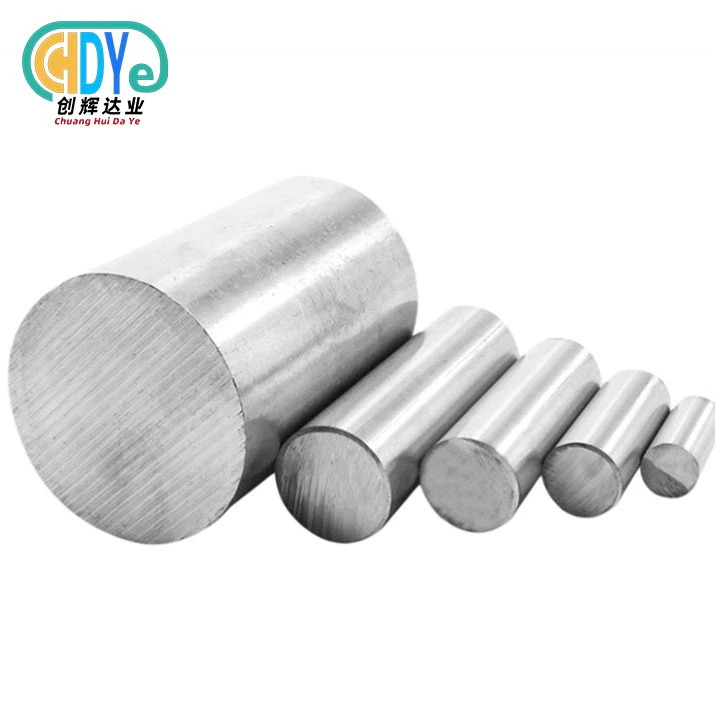
Understanding High Purity Niobium Bar Rods: Properties and Applications
What Defines "High Purity" in Niobium Rods?
The "high purity" of a niobium bar rod is defined as a niobium content of 99.95 % or more, and the most refined grades are 99.99 % (4N). At this purity level, interstitial impurities like as oxygen, nitrogen, hydrogen, and carbon are reduced to parts per million levels. This directly regulates lattice flaws, which in turn impacts both cryogenic electrical performance and mechanical ductility. ASTM B392-95 is a recognized standard that defines grain uniformity (usually ASTM No. 5 or finer) and chemical composition standards, which may be used as a guideline for procurement to qualify suppliers.
Mechanical and Chemical Profile
Niobium has a density of 8.57 g/cm3 and a melting point of 2,477°C, putting it squarely in the category of the refractory metals. The body-centered cubic (BCC) structure of the metal provides exceptional ductility at room temperature and a low work-hardening rate relative to other refractory metals. Chemically, niobium is resistant to attack by nitric, hydrochloric, and sulfuric acids, but is attacked by hydrofluoric acid. These qualities together make it especially suitable for settings that need the coexistence of structural integrity with chemical passivity.
Industrial Applications Across Critical Sectors
High-purity niobium rods are used in a number of demanding commercial applications. In the aerospace industry, niobium’s thermal resilience at severe temperatures is used in engine components and heat shields. In electronics, niobium is used in superconducting radio frequency (SRF) cavities and thin-film sputtering targets, where ppb-level control of impurities helps to avoid short-circuits and signal deterioration. Biocompatibility is desired by medical device makers for implants and surgical tools. For uses of nuclear energy, a low neutron capture cross-section is used for reactor components. Research facilities frequently purchase small-batch high purity niobium bar rods for materials science and cryogenic studies.
How to Choose the Right Niobium Bar Rod Supplier: Criteria and Considerations
Certification, Grade, and Documentation Standards
Choose the grade specification R04200 (commercial pure niobium) or R04210 (controlled oxygen niobium) that meets the performance limits of your application. ISO 9001:2015 certified suppliers provide systematic quality control from receipt of raw material to melting, machining, and final inspection. Request comprehensive material traceability paperwork, in addition to certification, including heat batch records, CoA’s for chemical analysis, and dimensional inspection reports. These papers are not administrative formalities; they are your proof trail for quality audits and regulatory compliance filings.
Evaluating Pricing, Lead Times, and Support
The rarity of raw materials and the difficulty of processing have an impact on the price of high-purity niobium rods. The prices and lead times are always better when buying directly from the manufacturers, not middleman wholesalers. Assess the supplier’s production capability to ensure they can handle your order volume. Verify that the minimum order quantities (MOQs) fit the scope of your project and inquire about their ability to accommodate flexible small-batch or prototype runs. Providing after-sale technical assistance like machining advice and application consulting indicates that the supplier is more interested in building long-term partnerships than just making sales.
Comparing High Purity Niobium Bar Rod with Alternatives: Making an Informed Decision
There are significant performance and economic ramifications to the choice between material grades and metal alternatives. Here is a side-by-side assessment of the most relevant alternatives available to procurement teams:
- Standard Grade (99.9%) vs. High Purity (99.99%) Niobium Rods: The 99.99% quality gives much better superconducting performance, critical for the manufacture of SRF cavities and for precise sputtering targets. Standard 99.9% grade is suitable for common corrosion-resistant or structural applications not requiring cryogenic or electronic accuracy, and has a lower cost per unit.
- Niobium Rod Vs Tantalum Rod: Tantalum has somewhat better corrosion resistance in certain acids and a greater density (16.69 g/cm³), but it is much more expensive. Niobium rod has similar thermal stability and high corrosion resistance at about half the weight of tantalum, making it a better choice for weight-sensitive aerospace and medical applications.
- Niobium Rod vs. Niobium Wire: Wire forms are best suited for thin film deposition, winding applications, and delicate coating operations. High purity niobium bar rod and bar forms are preferred if machining into complicated shapes such as crucibles, targets, or precise components is needed.
These differences are important since choosing the incorrect form or grade means over-specification waste or underperformance failure. For aeronautical and medical mission-critical usage, the norm is still R04200 or R04210 grades under ASTM B392-95, the industry-recognized standard.
Where and How to Buy High Purity Niobium Bar Rod: Supplier Channels and Procurement Tips
Direct Manufacturer vs. Online Platforms
Online B2B marketplaces such as Alibaba or ThomasNet give wide exposure of suppliers but also bring variation in the level of quality verification and communication. Buyers may visit the facility to see the manufacturing plant, the machinery, ask for specific sizes, or get price breaks on bulk orders. Most of these benefits cannot be duplicated by any middlemen on the marketplace. Procurement teams handling essential material requirements may greatly decrease their risk by dealing directly with manufacturers.
Chuanghui Daye: A Factory-Direct Niobium Rod Supplier
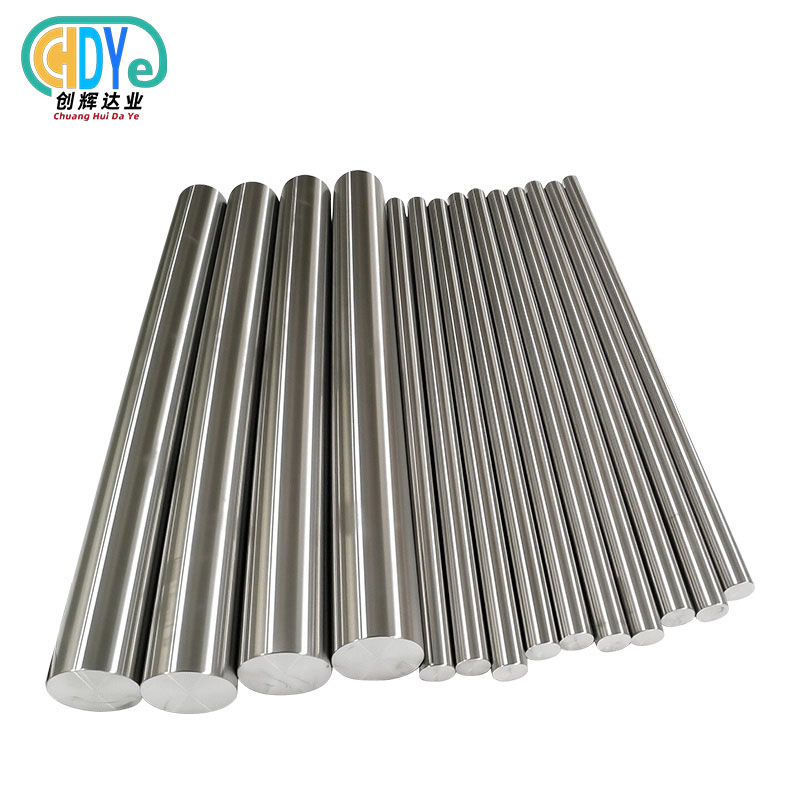
Shaanxi Chuanghui Daye Metal Material Co., Ltd. is located in Baoji, the “Titanium Capital” of China. We produce high-purity niobium rods to ASTM B392-95, R04200, and R04210, up to 99.99%. The firm is owned by an industry professional with over 30 years of expertise in rare metals and is ISO 9001:2015 certified. Production equipment includes electron beam furnaces, annealing furnaces, vacuum melting systems, and precision machining tools. This infrastructure handles both large-volume industrial orders as well as small-batch bespoke runs for R&D customers. Chuanghui Daye is a reputable worldwide procurement team’s niobium bar rod supplier with factory-direct pricing, comprehensive traceability paperwork, and technical assistance.
Ensuring Quality and Trust: How to Verify Your Niobium Bar Rod Supplier
Certifications and Third-Party Validation
You may check for certifications like ASTM compliance papers, ISO 9001:2015 quality management certificates, and, if they are selling globally, material declarations that follow REACH, to verify that reliable high-purity niobium suppliers are reliable. Don't believe anyone who says anything is certified. Get the certificate numbers and check with the issuing agency yourself. Sample batches are independently tested at third-party laboratories for purity by ICP-MS (Inductively Coupled Plasma Mass Spectrometry), providing objective validation of metal content and levels of impurities.
Traceability and Supply Chain Transparency
Responsible sourcing relies on batch-level traceability as its operational backbone. Each bar rod must be accompanied by documentation that can be traced to the initial melt batch, chemical analysis, heat treating, and dimensional inspection data. Mature quality management systems are indicated when suppliers voluntarily give this paperwork without prodding. The integrity of the packaging is also a concern: high-purity niobium bars are chemically cleaned, vacuum packaged in double-layer polyethylene, and sent in reinforced hardwood boxes to avoid surface oxidation and physical damage during shipment.
Conclusion
Looking for a dependable provider of high purity niobium bar rod is not just about comparing price lists. Purity grade, ASTM and ISO certification, traceability documents, manufacturing capabilities, and technical assistance all indicate if a supplier can really satisfy your project needs. Chuanghui Daye provides 99.99% pure niobium rod in R04200 and R04210 grades. 30 years of rare metal experience, ISO 9001:2015 certified,d and factory-direct manufacturing in Baoji. Whether it’s aerospace, electronics, nuclear, or medical – whatever your application may be, the basis of every successful vital component is proven material quality from an experienced manufacturer.
FAQ
1. How is niobium purity measured in bar rods?
Purity measurement relies primarily on ICP-MS (Inductively Coupled Plasma Mass Spectrometry), which detects metallic and interstitial impurities at parts-per-million and parts-per-billion levels. For superconducting applications, the Residual Resistivity Ratio (RRR)—the ratio of electrical resistivity at 293K to resistivity at 4.2K—serves as a practical indicator of purity quality.
2. What are the typical minimum order quantities for niobium rods?
MOQs vary by supplier and grade. Factory-direct manufacturers like Chuanghui Daye accommodate both small-batch R&D orders and large industrial volumes, offering flexibility that standard distributors rarely match.
3. Can niobium bar rods be customized to specific dimensions?
Yes. Custom diameters, lengths, and surface finishes are standard offerings among experienced manufacturers. Chuanghui Daye provides tailored machining services to meet precise dimensional and surface requirements for specialized applications.
4. How should high-purity niobium rods be stored?
Store rods in a dry, clean environment, away from oxidizing agents. Vacuum packaging maintained until the point of use preserves surface integrity and prevents contamination that could compromise performance in sensitive applications.
Partner with Chuanghui Daye for Certified Niobium Bar Rod Supply
Shaanxi Chuanghui Daye delivers factory-direct high-purity niobium bar rods—grades R04200 and R04210, ASTM B392-95 compliant, ISO 9001:2015 certified, 99.99% purity—backed by complete traceability documentation and three decades of rare metal expertise. As a trusted high purity niobium bar rod manufacturer, we support aerospace, electronics, medical, and research procurement teams worldwide with competitive pricing, flexible batch sizes, and responsive technical consultation. Contact our team today at info@chdymetal.com to request a quote and explore our full product catalog.
References
1. ASTM International. ASTM B392-95: Standard Specification for Niobium and Niobium Alloy Bar, Rod, and Wire. ASTM International, 2010.
2. Padamsee, H., Knobloch, J., & Hays, T. RF Superconductivity for Accelerators. Wiley-VCH, 2008.
3. Savitzky, B. H., et al. "Interstitial Impurity Effects on Niobium Superconducting Cavity Performance." Journal of Applied Physics, 2017.
4. ASM International. Properties and Selection: Nonferrous Alloys and Special-Purpose Materials, ASM Handbook Vol. 2. ASM International, 1990.
5. European Chemicals Agency (ECHA). REACH Regulation: Guidance on Information Requirements and Chemical Safety Assessment. ECHA, 2022.
6. Cardarelli, F. Materials Handbook: A Concise Desktop Reference, 3rd ed. Springer, 2018.
Learn about our latest products and discounts through SMS or email