- English
- French
- German
- Portuguese
- Spanish
- Russian
- Japanese
- Korean
- Arabic
- Greek
- German
- Turkish
- Italian
- Danish
- Romanian
- Indonesian
- Czech
- Afrikaans
- Swedish
- Polish
- Basque
- Catalan
- Esperanto
- Hindi
- Lao
- Albanian
- Amharic
- Armenian
- Azerbaijani
- Belarusian
- Bengali
- Bosnian
- Bulgarian
- Cebuano
- Chichewa
- Corsican
- Croatian
- Dutch
- Estonian
- Filipino
- Finnish
- Frisian
- Galician
- Georgian
- Gujarati
- Haitian
- Hausa
- Hawaiian
- Hebrew
- Hmong
- Hungarian
- Icelandic
- Igbo
- Javanese
- Kannada
- Kazakh
- Khmer
- Kurdish
- Kyrgyz
- Latin
- Latvian
- Lithuanian
- Luxembou..
- Macedonian
- Malagasy
- Malay
- Malayalam
- Maltese
- Maori
- Marathi
- Mongolian
- Burmese
- Nepali
- Norwegian
- Pashto
- Persian
- Punjabi
- Serbian
- Sesotho
- Sinhala
- Slovak
- Slovenian
- Somali
- Samoan
- Scots Gaelic
- Shona
- Sindhi
- Sundanese
- Swahili
- Tajik
- Tamil
- Telugu
- Thai
- Ukrainian
- Urdu
- Uzbek
- Vietnamese
- Welsh
- Xhosa
- Yiddish
- Yoruba
- Zulu
Where to buy high-quality titanium sheets online?
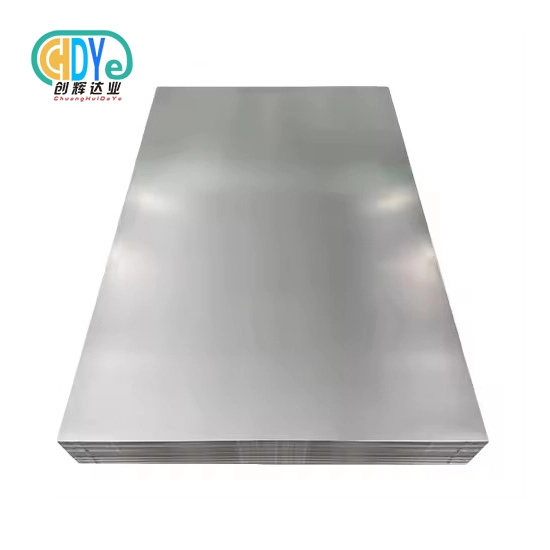
You can buy high-quality titanium sheets online from specialized metal providers that offer direct factory prices and keep up with strict quality certifications. Reliable companies, like Shaanxi Chuanghui Daye Metal Material Co., Ltd., which is based in Baoji, China's "Titanium Capital," have been making rare metals for 30 years and are ISO 9001:2015 certified. These suppliers have a wide range of products, such as 2mm thick sheets in Grade 2 and Grade 5 that come in widths from 500mm to 2000mm and lengths from 1000mm to 3000mm. These sheets are designed for use in military, medical, and industrial settings that need materials that are resistant to rust, light, and long-lasting.
Understanding Titanium Sheets: Essential Knowledge for B2B Buyers
What Defines a Titanium Sheet
These titanium sheets are flat-rolled mill goods that are made by vacuum arc remelting and then hot and cold rolling. The thickness of these goods is usually between 0.5mm and 4.75mm, with 2mm being the most useful for production and structural uses. The hexagonal close-packed crystal structure of the material helps explain why it has a low density (about 4.51 g/cm³, or about 60% that of steel) and a high tensile strength that ranges from 240 MPa to over 895 MPa depending on the grade.
Industrial Grades Explained
Commercially Pure (CP) titanium grades, which are listed in ASTM B265 as Grade 1 through Grade 4, get stronger as they go along while becoming less flexible. Grade 2 is the worker of the industrial world. It has a yield strength of about 345 MPa and is very easy to shape, and doesn't rust. This grade works really well in places like deep draws, chemical tanks, and the ocean, where resistance to rust is more important than strength.
Grade 5, which is also written as Ti-6Al-4V, is the most common titanium metal used around the world. This alpha-beta metal has yield strengths higher than 828 MPa because it has 6% aluminum and 4% vanadium in it. Aerospace companies like Grade 5 for structural load-bearing parts, engine parts, and structural elements because it has a higher strength-to-weight ratio, which directly affects how much fuel an airplane uses and how much it can carry. The trade-off is that it is harder to shape at room temperature than generally pure grades, so high-temperature shaping methods are often needed.
Critical Material Properties
Titanium is very resistant to weathering because it forms a solid titanium dioxide (TiO2) film on its surface when it is exposed to air. When this adherent oxide layer gets broken, it grows back right away. This protects the steel from pitting and crevice corrosion in salt environments up to 260°C, which are very hot and quickly destroy stainless steel. Titanium is useful for precise tools and medical devices that can be used with MRIs because it has a low thermal expansion rate and is not magnetic. With a melting point of about 1668°C, the material keeps its shape at very high and very low temperatures. However, its thermal conductivity is only about a fifth that of steel, which changes how it is welded and heated.
Comparing Titanium Sheets with Other Metals: Making the Right Material Choice
Performance Against Aluminum and Stainless Steel
Aluminum alloys have lower starting material costs and are very easy to machine, but their strength drops greatly above 150°C, and they corrode when mixed with metals that are not the same. titanium sheets keep their mechanical qualities even at high temperatures and have a very high resistance to fatigue. This is a very important property for aerospace uses that go through millions of stress cycles. Titanium is 4.51 g/cm³ denser than aluminum, which is about 2.7 g/cm³. However, Grade 5 titanium has a higher specific strength (strength-to-weight ratio) than most aluminum metals, which makes up for the extra weight in high-stress situations.
In many situations, stainless steel is better than titanium at resisting rust, and it costs a lot less. However, austenitic stainless steels still fail through stress corrosion cracking caused by salt in marine and chemical processing settings. Titanium completely gets rid of this risk. There is a big difference in density: titanium weighs about half as much as stainless steel, which weighs about 8.0 g/cm³. For aircraft and mobile equipment, where every kilogram affects fuel use, titanium's lighter weight saves money over the life of the equipment.
Grade Selection Strategy
The choice between Grade 2 and Grade 5 depends on the needs of the program. Grade 2 is good for jobs that need a lot of cold forming, deep drawing, or complicated shapes. It can be easily shaped and is strong enough to be used in chemical processing equipment, building panels, and naval gear. When mechanical loads get close to what commercially pure titanium can handle or when temperatures go over 300°C, Grade 5 becomes necessary. Grade 5 is usually used for aerospace structure parts, high-performance sports goods, and medical items that are put under biomechanical stress. Understanding the difference between steel's ~200 GPa and titanium's ~110 GPa modulus of elasticity is important for spring and fastener uses where movement properties matter.
Long-Term Economic Considerations
The initial prices of titanium sheets are much higher than those of aluminum and stainless steel. The total cost of ownership, not just the buying price, is what procurement pros need to look at. Titanium doesn't rust, so you don't have to pay for protection coatings. It also has a much longer service life in harsh settings. Less frequent upkeep, no more breakdowns caused by corrosion, and less weight mean that the higher cost is often worth it because it lowers operating costs. When aerospace companies use titanium instead of heavy materials in fuel-sensitive uses, they usually see a return on their investment within the first year of operation.
Where and How to Buy High-Quality Titanium Sheets Online – Procurement Strategies
Identifying Credible Suppliers
Verifying the seller is the first step to successful online buying. Getting certified in ISO 9001:2015 shows that you are dedicated to quality management systems and process control. Compliance with ASTM B265 makes sure that rules for size and chemistry make-up are met. Titanium is made in places like Baoji, China; the Ural area of Russia; or specialized facilities in the United States. Suppliers who work from these places benefit from a concentration of technical knowledge and supply chain infrastructure.
The trustworthy seller profile is shown by Shaanxi Chuanghui Daye Metal Material Co., Ltd. The company is in the Baoji High-tech Development Zone and has been making rare metals for more than 30 years. Their building has state-of-the-art working tools, such as electron beam ovens, precise rolling machines, and full testing facilities. The ISO 9001:2015 license proves that they have good quality control, from checking the raw materials to packing them up at the end.
Evaluation Criteria for Online Suppliers
Professional makers can be told apart from middlemen by how clear the documentation is. Mill Test Certificates (MTCs) from legitimate sources show the chemical makeup, mechanical qualities, and heat treatment settings for each production lot. You can ask for samples of the materials before placing a big order, and real makers will gladly do so. Read customer reviews, but if you can, check with people who work in the same field. Aerospace and medical equipment companies have strict lists of approved vendors. If a seller meets these quality standards, it means they can be trusted.
The ability to provide technical help shows how deep the production goes. Can the seller talk about how the material behaves unevenly when it is being formed? Do they know how to compensate for springback in bend tools? Can they tell me what methods to use for welding certain grades? When asked these questions, manufacturers with real engineering teams firmly give answers, while dealers usually avoid them.
Practical Procurement Considerations
Minimum order amounts (MOQ) are very different from one provider to the next. Large-scale makers may need several hundred kilograms or many sheets to make a production run worthwhile. Specialized makers that work with research institutions and concept development can often handle smaller orders, but the price per unit goes up as a result. Lead times range from having standard sizes and shapes in stock right away to 8 to 12 weeks for unique sizes or alloys that need their own production schedules.
Being able to customize sets production partners apart from commodity providers. Can the seller give me sheets with sizes other than 500mm to 2000mm? Do they offer choices for precision tolerances that are tighter than normal mill tolerances? Will they do extra work like precision cutting, surface treatments, or testing that doesn't damage the object? Payment terms depend on how old the business is. Manufacturers that have been around for a while usually offer net-30 or net-60 terms to approved buyers, while newer businesses may need prepayment or lines of credit.
How to Ensure Quality and Correct Specifications When Purchasing Titanium Sheets
Quality Verification Methods
A visual study of titanium sheets shows surface factors that affect how well it works and how it is made. If you look closely, you should see a smooth, even surface that doesn't have any large-scale, deep scratches or trapped dirt. Surface flaws deeper than 0.5mm may need to be removed, which lowers the width that can be used. A descaled and pickled finish gives metals a standard matte gray look that is used in industry. On the other hand, bright annealed finishes are better for medical or beauty uses that need a smoother surface.
Verification of dimensional precision ensures efficient manufacturing. Use calibrated micrometers to measure the width of the sheet at several different places across it. For precise tasks, the difference should not be more than ±0.1mm. For normal tolerances, the width and length measures should be within ±5mm of each other. The state of the edge affects the next steps in the process; edges that are cleanly cut and don't have any burrs or microcracks make welding and making easier.
Material Certification and Testing
Ask for material test results (MTRs) that confirm the chemical makeup and mechanical qualities. These papers should list exact heat numbers that can be used to find the original ingot. Oxygen and nitrogen levels in commercially pure grades have a big impact on how flexible they are, so make sure these intermediate elements stay within certain limits. The results of the tensile tests should show that the yield strength, maximum tensile strength, and elongation numbers meet or go beyond the minimums set by ASTM B265 for that grade.
Different applications need different ways to test for corrosion resistance. In chemical processes, real exposure tests in service fluids may be needed. Biocompatibility approval according to ISO 10993 norms is needed for medical uses. Traceability paperwork that meets AS9100 standards is needed for aerospace parts. Reliable providers either do their own testing or work with approved labs to provide validation for particular applications.
Handling and Fabrication Considerations
Because titanium has a low amount of elasticity, it often has 50–70% more springback when it is bent than steel. To reduce leftover stress as little as possible, tooling must either compensate by having larger over-bend angles or use hot forming methods above 400°C. Sharp bend radii can cause cracks; for Grade 2, the minimum radius is usually two to three times the thickness of the material, and for Grade 5, it's four to six times.
Inert gas protection must be present on both sides of the weld zone when titanium is being welded. Polluted air during welding makes parts that are brittle, discolored, and have very poor qualities. Argon following shields and covering purges are used correctly to keep hot materials safe until they cool below 400°C. Titanium's low thermal conductivity focuses heat at the cutting edge, which means that speeds need to be slowed down, feeds need to be raised, and flood coolant needs to be used.
Benefits and Applications of High-Quality Titanium Sheets in Industrial Sectors
Aerospace Applications and Advantages
For structural reinforcements, engine nacelles, firewall assemblies, and airplane skin panels, aerospace engineers require titanium sheets. The material's strength-to-weight ratio makes it possible for airframes to be lighter, which means they use less fuel and can carry more. When business planes use titanium parts instead of steel ones, the structure loses hundreds of kilograms of weight, which directly leads to lower running costs and a longer range. Titanium's resistance to wear makes it an important material for parts that will be stressed millions of times over the course of an airplane's life.
Titanium's ability to withstand high temperatures is used in engines. Aluminum metals lose their structural stability in temperatures above 500°C, which is where compressor blades, casings, and exhaust parts work. The low thermal expansion of the material keeps clearance changes to a minimum during thermal cycles, which makes the engine more reliable and efficient. Defense companies like titanium because it doesn't conduct radar and isn't magnetic, which makes it useful for making stealth airplanes and sensitive electrical housing.
Medical Device Manufacturing
Titanium is used to make medical devices because it is biocompatible and doesn't rust in body fluids. Grade 5 is used in orthopedic devices like hip stems, knee parts, and spine fixation hardware because it is very strong and can support biomechanical loads. Titanium can't be damaged by chemical disinfectants, steam autoclaves, or gamma radiation, which makes it a good material for dental implants, surgery tools, and diagnostic equipment housings.
The osseointegration features of the material allow direct bone bonding without fibrous tissue formation first. This is something that no other industrial metal can do. Porous titanium surfaces help bone grow, which makes it possible for joint replacement devices to stay in place permanently. MRI support lets you get pictures after surgery without any artifacts getting in the way, unlike stainless steel options that affect images.
Chemical Processing and Marine Industries
For reactor tanks, heat exchangers, and pipe systems that handle corrosive media, chemical processing centers use titanium sheets. Chlorine, chlorides, sulfuric acid (in small to modest amounts), and organic acids that quickly eat away at stainless steel don't affect this material. Titanium is used on offshore oil platforms for riser parts, valve bodies, and important bolts that are exposed to high-stress seawater, which would destroy most other metals.
The heat exchanger tubes and covering materials used in desalination plants to turn seawater into drinkable water are made of titanium. Titanium is economically possible even though it costs more at first because it is resistant to chlorides and has enough thermal conductivity for heat transfer. Having a service life of more than 30 years without replacement more than makes up for the higher cost of the material compared to copper-nickel alloys that need to be replaced every 7–10 years.
Conclusion
To find high-quality titanium sheets online, you need to carefully evaluate suppliers, communicate clear specifications, and make sure that suppliers have the right quality qualifications. The material's great qualities—its resistance to rust, high strength-to-weight ratio, and biocompatibility—make it a good choice for important uses in the chemical, marine, aircraft, and medical fields. Knowing the changes in grade between commercially pure titanium and titanium alloys helps you choose the best material for your needs and budget. Purchasing risks can be reduced by working with ISO-certified companies that offer full technical help, the ability to customize products, and documented quality control methods. Investing in high-quality titanium materials pays off in the long run because they last longer, need less upkeep, and work better in harsh conditions where other metals fail.
FAQ
Q: What certifications should I verify before purchasing titanium sheets?
A: Ask for an ISO 9001:2015 quality management certificate that proves you have structured process control throughout the manufacturing process. Compliance with ASTM B265 makes sure that standards for size and chemistry make-up are met in industry settings. People who buy aerospace parts should make sure the supplier has AS9100 certification. Companies that make medical devices need ISO 13485 certification and material biocompatibility approval according to ISO 10993. Material test records (MTRs) for each production lot should include chemistry analysis and mechanical property tests that can be linked to specific heat numbers.
Q: How long are typical lead times for bulk titanium sheet orders?
A: Standard specifications that are kept in stock by makers ship within one to two weeks of receiving payment proof. It usually takes 8 to 12 weeks from the time an order is confirmed until it is delivered for custom sizes, thicknesses that aren't standard, or specialty alloys that need to be made in limited quantities. Depending on production plans, rush orders may be able to be filled with extra fees. During the Lunar New Year holidays, from late January to mid-February, Chinese makers often set longer lead times. During the summer, from June to August, when demand is lower overall, lead times can be shorter for certain titanium sheets.
Q: Can I order custom dimensions for specific project requirements?
A: Reliable makers can handle custom widths from 500mm to 2000mm and lengths from 1000mm to 3000mm, but for non-standard sizes, there may be a minimum order quantity. It is possible to meet precision tolerance needs that are tighter than normal mill tolerances (+0.1mm/-0mm for thickness) with more work and higher costs. Production can include secondary operations like precisely sawing to the final size, edge treatment, and surface finishing. Talk about custom needs early on in the buying process to make sure that the product can be made and that delivery dates are reasonable.
Partner with a Trusted Titanium Sheet Manufacturer
When procurement workers need trusted titanium sheets that meet strict aerospace, medical, and industry standards, Shaanxi Chuanghui Daye is the best place to go. Our 2mm thick Grade 2 and Grade 5 products come in widths ranging from 500mm to 2000mm and lengths ranging from 1000mm to 3000mm. They are resistant to rust and lightweight, and they will last for as long as your important projects need them to. Our ISO 9001:2015-certified facility is in Baoji, which is known as China's Titanium Capital. It blends 30 years of experience making rare metals with cutting-edge electron beam melting and precision rolling tools. We keep full paperwork for tracking, can work with custom sizes, and can do both small-batch testing and large-scale production runs. Our engineering team gives detailed advice on choosing the right grade, the best way to make something, and how to solve problems that are unique to each application. Please email our team at info@chdymetal.com to talk about your needs with a provider of titanium sheets who has a lot of experience and knows how to meet the performance needs of your business. Ask for material test certificates, technical specs, and competitive factory-direct quotes that show we put quality first and client satisfaction first.
References
1. Boyer, R., Welsch, G., & Collings, E.W. (1994). Materials Properties Handbook: Titanium Alloys. ASM International.
2. Donachie, M.J. (2000). Titanium: A Technical Guide, 2nd Edition. ASM International.
3. Peters, M., Kumpfert, J., Ward, C.H., & Leyens, C. (2003). Titanium Alloys for Aerospace Applications. Advanced Engineering Materials, 5(6), 419-427.
4. Schutz, R.W. & Watkins, H.B. (1998). Recent Developments in Titanium Alloy Application in the Energy Industry. Materials Science and Engineering A, 243(1-2), 305-315.
5. ASTM International. (2020). ASTM B265-20: Standard Specification for Titanium and Titanium Alloy Strip, Sheet, and Plate. West Conshohocken, PA.
6. Veiga, C., Davim, J.P., & Loureiro, A.J.R. (2012). Properties and Applications of Titanium Alloys: A Brief Review. Reviews on Advanced Materials Science, 32(2), 133-148.
Learn about our latest products and discounts through SMS or email