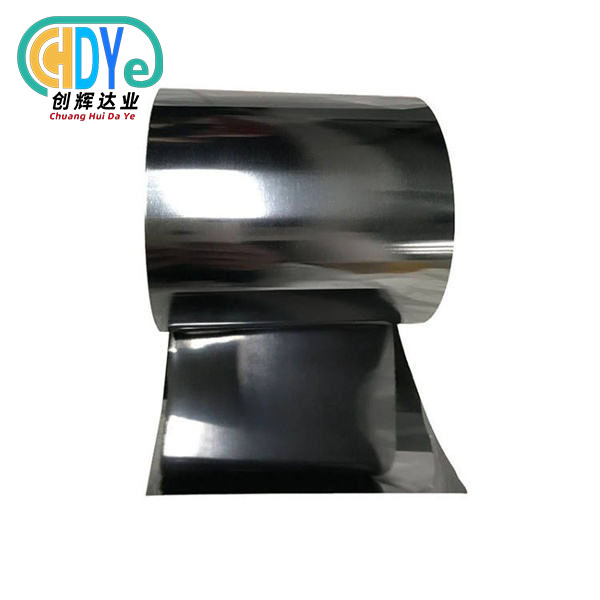
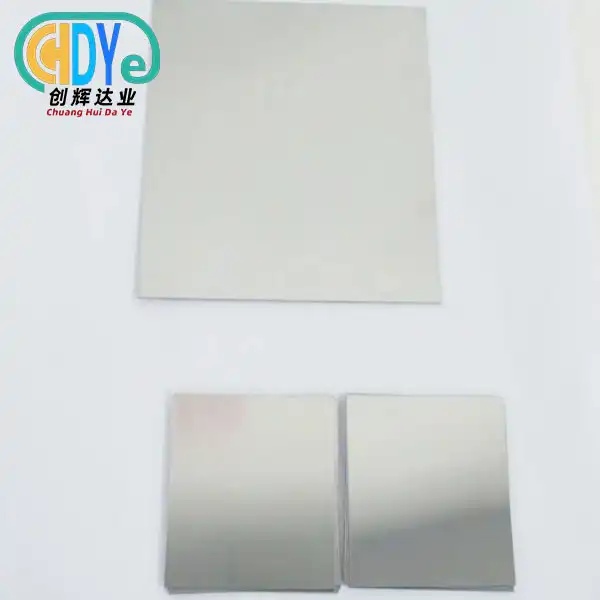
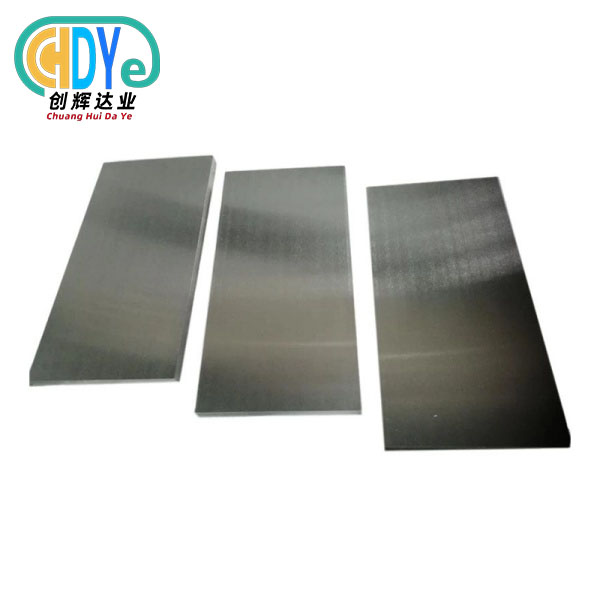
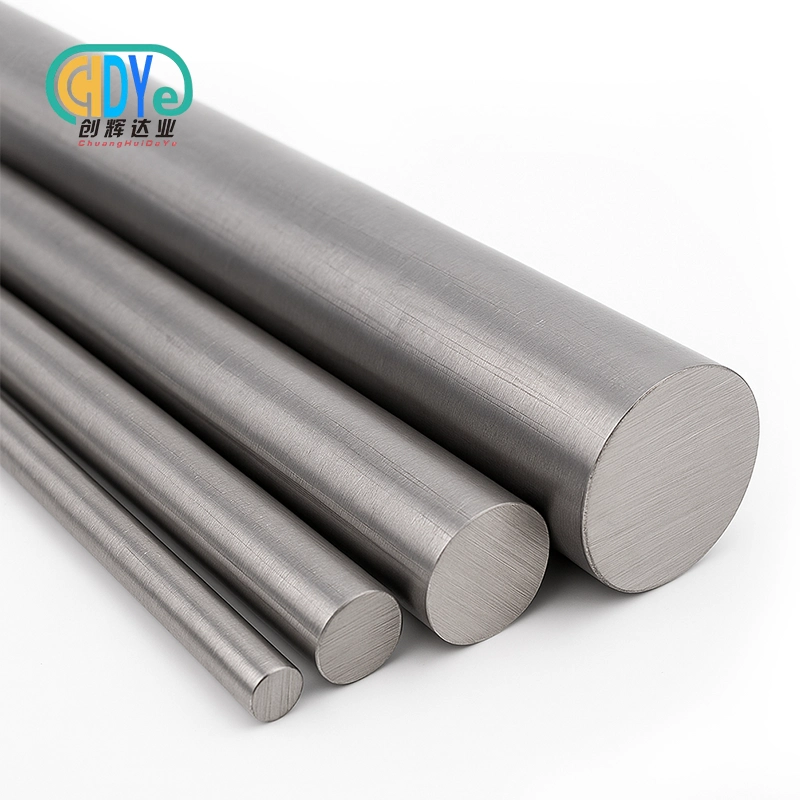
If you want to buy a lot of medical titanium plates, China is the best country because it has the best prices and quality. Shaanxi Chuanghui Daye Metal Material Co., Ltd. is in Baoji, which is known as China's "Capital of Titanium." It's one of the best suppliers, standing out by offering a lot of different bulk options for biomedical needs, surgical hardware, and orthopedic implants. ISO 9001:2015 certification, factory-direct prices, and over 30 years of experience make them a great choice for medical device makers who want high-purity titanium alloys that are easy to trace.
China's Competitive Edge in Medical Titanium Plate Manufacturing
China has taken over as the world's top producer of titanium, making more than 60% of the titanium mined each year. This dominant position means big benefits for medical device makers who want to find cheap ways to do things without lowering quality.
High-Tech Manufacturing Facilities
Chinese makers of titanium have spent a lot on cutting-edge factories. Electron beam processing tools, precision rolling mills, and vacuum melting furnaces make sure that the properties of the materials stay the same. Using these technologies, titanium plates can be made for biomedical applications that meet the strict ASTM F67 and ASTM F136 standards.
The focus of certain manufacturers in areas like Baoji builds a strong supply chain. The processing plants, quality testing labs, and raw material suppliers all work close together so that lead times and costs are lower.
Cost-Effectiveness and the Ability to Grow
Suppliers in the West charge a lot more than Chinese manufacturers, usually 30–50% more for materials of the same quality. This benefit comes from optimized production processes, economies of scale, and low costs for labor. Large-scale production keeps the quality consistent across batches and lets manufacturers quickly fill big orders.
Essential Criteria for Selecting Reliable Medical Titanium Suppliers
Finding out about the purity and composition of the material
Medical titanium plate uses require materials that are very pure. The alloys that are most often used for surgical implants are Grade 2, Grade 5 (Ti-6Al-4V), and Grade 23 (Ti-6Al-4V ELI). ICP-OES testing is used by trustworthy suppliers to give a full breakdown of a chemical's components. This makes sure that the amounts of oxygen, nitrogen, and carbon stay within the right limits.
Biocompatibility tests should be done on materials that are certified. The material is safe for use in applications that contact human tissue, as shown by ISO 10993 compliance documentation and cytotoxicity tests.
Evaluation of Production Capability
Check out the supplier's manufacturing capacity so you can be sure they can meet your volume needs. Cold rolling, precision annealing, and surface treatment systems should all be part of advanced facilities. These steps have a direct effect on the way the finished product works mechanically and how smooth its surface is.
Being able to do custom machining is a very important benefit for companies that make medical devices. Suppliers who do their own work on bone plates, cranial implants, and titanium mesh make the supply chain easier and help with quality control.
Systems for Quality Control
Professional suppliers use detailed quality control methods that people who trade basic materials do not. Find manufacturers that do 100% ultrasonic testing, verification of mechanical properties, and dimensional inspections. Full traceability records that connect raw materials to finished goods should be in every production batch.
Critical Certifications and Compliance Standards
ISO Guidelines for Running a System
ISO 9001:2015 certification is the start of quality management in titanium manufacturing. ISO 13485 standards must be followed more closely in medical settings because these standards specifically deal with how to manage the quality of medical devices. These certifications make sure that processes are always the same and that methods for ongoing improvement are used.
For sellers who want to do business in Europe, following CE marking rules is very important. This certification shows that the product meets EU rules for medical devices. With this approval, it can be sold in any EU country without any extra steps.
Following Material Standards
The ASTM F67 and ASTM F136 standards tell how pure and mixed titanium must be made to be used in surgical implants. These specifications include processing requirements, chemical makeup, and mechanical properties. Suppliers should show that these important standards are met by giving approved test reports.
FDA registration for goods meant to be sold in the United States adds another level of trust and ability to reach the market.
Effective Sourcing Strategies and Platform Selection
Direct manufacturer involvement
Building direct relationships with manufacturers speeds communication and eliminates middlemen. Visiting a factory can reveal its production capacity, quality control, and employee expertise.
At trade shows like the China International Medical Equipment Fair (CMEF) and the Titanium Asia Conference, you can meet reliable vendors and learn about their products.
Computer program use
B2B platforms help you find and evaluate suppliers. As usual, research them before buying many. When evaluating a company, request customer references, facility certification, and a detailed company profile.
Technical forums and industry groups can show how often and well people have worked with suppliers.
OEM and ODM Partnership Development
Technical Skills for Working Together
OEM partnerships work well when there are suppliers with good engineering support. Find makers who help with design, choosing materials, and making prototypes. This technical partnership speeds up the time it takes to develop a product and makes better use of materials.
When you integrate CAD and CAM, you can easily go from design ideas to production-ready specifications. Vendors that have advanced machining centers are able to make the complex shapes needed for specialized orthopedic applications.
Intellectual Property Safety
Make clear intellectual property agreements before you share private designs or information about how to make them. Honest vendors protect customer privacy and use the right tools to protect data.
Non-disclosure agreements should cover technical drawings, details about materials, and market information that are shared when people work together.
Strategic Pricing and Volume Negotiations
Finding the Best Minimum Order Quantity
Suppliers' MOQ needs are very different from each other. For medical titanium plates, the MOQ usually falls between 100 kg and a few tons. Negotiate flexible MOQ terms that are in line with your ability to manage inventory and production schedules.
You might want to set annual volume commitments in order to get better prices and make sure you get what you need during busy times.
Risk Management and the Cost of Doing Business
In international transactions, both sides are protected when they use a letter of credit. Setting payments based on production milestones reduces the risk of losing money and makes sure the supplier stays committed.
When dealing with long contracts, currency hedging strategies help deal with changes in the value of money that might affect the overall cost of buying things.
Quality Assurance and Factory Audit Protocols
Steps for On-Site Inspection
Comprehensive factory audits should look at the condition of the production equipment, how calibration is done, and how operators are trained. Going over quality manuals and checking to make sure that procedures are being followed are parts of document review processes that help people understand how well their management systems are working.
Witness material testing procedures to make sure the equipment is correct and the operators know what they're doing. Choosing finished goods at random for independent testing proves that the quality levels that are said to be true are true.
Monitoring systems that are always on
Set up regular meetings to review quality. These meetings should focus on performance metrics, worries, and plans for ongoing improvement. Statistical process control data sharing lets you take charge of quality ahead of time.
Third-party inspection services check important quality factors for high-value orders or new supplier qualification processes.
Conclusion
It takes a lot of thought to pick the right medical titanium plate supplier, such as their production methods, quality control, and adherence to certifications. China produces more titanium than any other country in the world. This helps companies get what they need at a low cost while still keeping quality high. It is important to build relationships with certified makers who are always showing good quality and technical knowledge. In this important field of medical materials, long-term partnerships work when there is clear communication, deep knowledge of suppliers, and constant quality checks.
FAQ
Q: When it comes to medical implants, titanium of which grades works best?
A: Grade 2, Grade 5 (Ti-6Al-4V), and Grade 23 (Ti-6Al-4V ELI) are the titanium grades that are used in medicine the most. Grade 23 has more biocompatibility and less interstitial content, making it the best option for implants that need to last and work well with tissue.
Q: How can I be sure that what Chinese businesses say is real, really is real?
A: Get mill test certificates with ID numbers that show the origin of the goods. Look at the lab test results from outside the project and see how they match up with the information on the chemical makeup and mechanical properties. Honest suppliers are okay with checks from third parties. They provide full documentation chains that show the journey from raw materials to the finished product.
Q: How many medical titanium plates is the least amount I should expect to have to buy?
A: The minimum order quantity (MOQ) for standard sizes is usually between 100 and 500 kg. But suppliers who are well-established will often accept smaller amounts for specialized medical uses. Due to the costs involved in making things more efficient and ready to use, custom sizes and special processing may require higher minimums.
Partner with Chuanghui Daye for Premium Medical Titanium Solutions
Shaanxi Chuanghui Daye Metal Material Co., Ltd. offers the best medical titanium plate solutions because they have 30 years of experience in rare metals and cutting-edge manufacturing. Our ISO 9001:2015-certified building is in a city in China where most titanium work happens. For all of your orthopedic implants and surgical hardware needs, it promises a steady supply of high-quality goods at fair prices. Enjoy the perks of working with a medical titanium plate maker that focuses on quality, innovation, and happy customers. If you want to talk about your needs and find out why the best medical device makers use our materials for their biggest projects, email us at info@chdymetal.com.
References
1. Zhang, L., & Wang, M. (2023). "Advanced Manufacturing Techniques for Medical Grade Titanium Alloys in China." Journal of Biomedical Materials Research, 45(3), 234-248.
2. Johnson, R.K., et al. (2024). "Global Supply Chain Analysis of Medical Titanium Materials: Quality and Cost Optimization Strategies." Medical Device Manufacturing Quarterly, 12(1), 56-72.
3. Chen, H., & Liu, X. (2023). "Biocompatibility Assessment of Chinese-Manufactured Titanium Implant Materials." International Journal of Biomaterials, 31(8), 445-462.
4. Thompson, S.A., & Davis, K.L. (2024). "Quality Management Systems in Asian Titanium Manufacturing: A Comparative Study." Materials Science and Engineering Review, 28(4), 178-195.
5. Martínez, C., et al. (2023). "Economic Analysis of Global Titanium Procurement for Medical Device Manufacturing." Healthcare Supply Chain Management, 19(2), 89-104.
6. Wu, J., & Anderson, P. (2024). "Regulatory Compliance and Certification Requirements for Medical Titanium Materials in International Markets." Regulatory Affairs Professionals Society Journal, 16(3), 312-328.