- English
- French
- German
- Portuguese
- Spanish
- Russian
- Japanese
- Korean
- Arabic
- Greek
- German
- Turkish
- Italian
- Danish
- Romanian
- Indonesian
- Czech
- Afrikaans
- Swedish
- Polish
- Basque
- Catalan
- Esperanto
- Hindi
- Lao
- Albanian
- Amharic
- Armenian
- Azerbaijani
- Belarusian
- Bengali
- Bosnian
- Bulgarian
- Cebuano
- Chichewa
- Corsican
- Croatian
- Dutch
- Estonian
- Filipino
- Finnish
- Frisian
- Galician
- Georgian
- Gujarati
- Haitian
- Hausa
- Hawaiian
- Hebrew
- Hmong
- Hungarian
- Icelandic
- Igbo
- Javanese
- Kannada
- Kazakh
- Khmer
- Kurdish
- Kyrgyz
- Latin
- Latvian
- Lithuanian
- Luxembou..
- Macedonian
- Malagasy
- Malay
- Malayalam
- Maltese
- Maori
- Marathi
- Mongolian
- Burmese
- Nepali
- Norwegian
- Pashto
- Persian
- Punjabi
- Serbian
- Sesotho
- Sinhala
- Slovak
- Slovenian
- Somali
- Samoan
- Scots Gaelic
- Shona
- Sindhi
- Sundanese
- Swahili
- Tajik
- Tamil
- Telugu
- Thai
- Ukrainian
- Urdu
- Uzbek
- Vietnamese
- Welsh
- Xhosa
- Yiddish
- Yoruba
- Zulu
High Purity Niobium Bar Rod OEM Guide for Custom Components
It's seldom easy to choose the correct refractory metal for precise OEM work. If your application needs total material integrity—be it within a particle accelerator, a jet engine or an implanted medical device—a high purity niobium bar rod is often the material that bridges the performance gap. This book leads procurement managers, design engineers and manufacturing teams through all they need to know – from material qualities and production standards to selection criteria, procurement strategy and where the market is moving next.
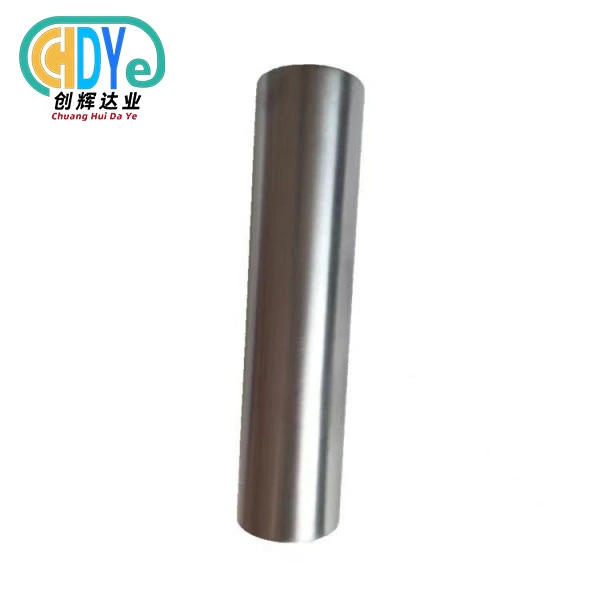
Understanding High Purity Niobium Bar Rods: Properties and Applications
What Sets High Purity Niobium Apart
Niobium is a refractory metal having a body-centered cubic (BCC) crystal structure, a melting point of 2,477°C and a density of 8.57 g/cm³. At purities of 99.99% – the standard we operate to at Chuanghui Daye – interstitial pollutants such as oxygen, nitrogen, hydrogen and carbon are suppressed to parts-per-million or less. This cleanliness level directly affects two important performance parameters: the Residual Resistivity Ratio, which has to be > 300 for superconducting radio-frequency (SRF) cavity applications, and the grain uniformity (ASTM No. 5 or finer), which determines the forming behavior during downstream machining.
Where Niobium Rods Deliver Real Results
Demand for precise niobium rod stock is being driven by three application clusters:
- Aerospace and military components: Niobium’s thermal resilience at high temperatures makes it a perfect master alloy additive for nickel superalloys, safeguarding turbine blades against heat creep. It also has a low density-to-strength ratio, which is beneficial for structural components and heat shields.
- Electronics and superconducting devices — The standard for SRF cavities utilized at places like Fermilab is high-RRR niobium bar feedstock. Semiconductor makers mill niobium into sputtering targets, where even ppb-level metallic impurities may cause flaws in thin films.
- Medical implants and surgical equipment – Niobium is physiologically inert, non-cytotoxic, and resistant to bodily fluids assault. This biocompatibility, along with its ductility, makes it very helpful for MRI components and precision implants where titanium alloys are unsatisfactory.
All these application areas have one thing in common: they all want materials that function, batch after batch, with complete chemical traceability.
Manufacturing Process and Quality Standards for High Purity Niobium Bar Rods
From Raw Material to Certified Rod
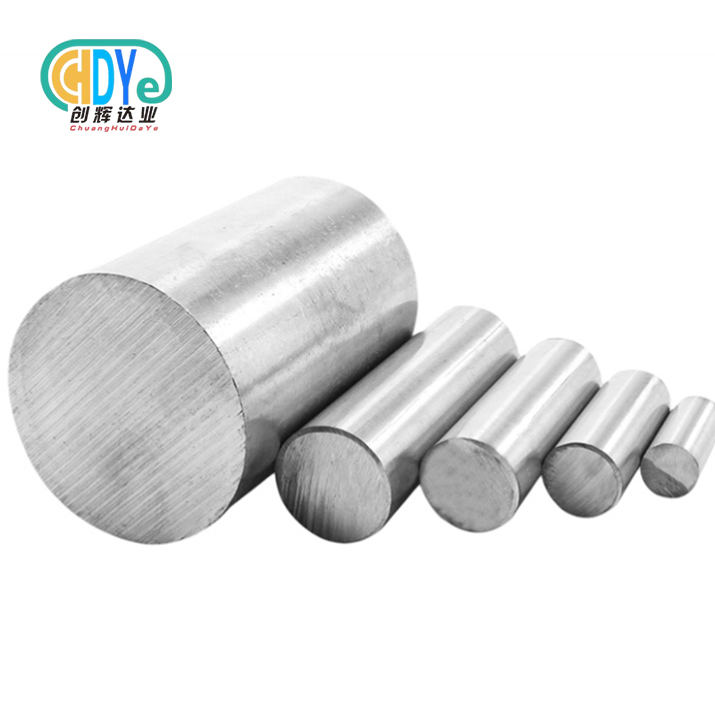
Our niobium raw material is of premium quality and is reprocessed via vacuum arc remelting (VAR) or electron beam melting (EBM), which allows for the removal of volatile impurities without ambient contamination. The consolidated ingot is next subjected to controlled forging and rolling steps to improve the grain structure and achieve dimensional precision. Cold working and specific heat treating cycles improve ductility and tensile qualities, after which precise surface finishing is performed to bring each high purity niobium bar rod to final tolerance. All batches manufactured at Chuanghui Daye are made to ASTM B392-95 with comprehensive material test reports (MTRs) for chemical composition, mechanical characteristics, and dimensional inspection. Our ISO 9001:2015 accreditation covers the full manufacturing chain, from incoming raw material inspection, melting, forging, machining, to final packing. Independent third-party testing is available upon request, providing an extra layer of verification for procurement teams managing crucial supply chains.
Grades We Supply
We produce two major grades identified by ASTM:
- R04200 (Commercial Pure Niobium). — Optimized for general high purity applications requiring the highest corrosion resistance and ductility. Niobium purity may be as high as 99.99%.
- R04210 (Controlled Oxygen Content) – Designed for applications where a controlled amount of interstitial oxygen impacts certain mechanical properties yet maintains high overall purity.
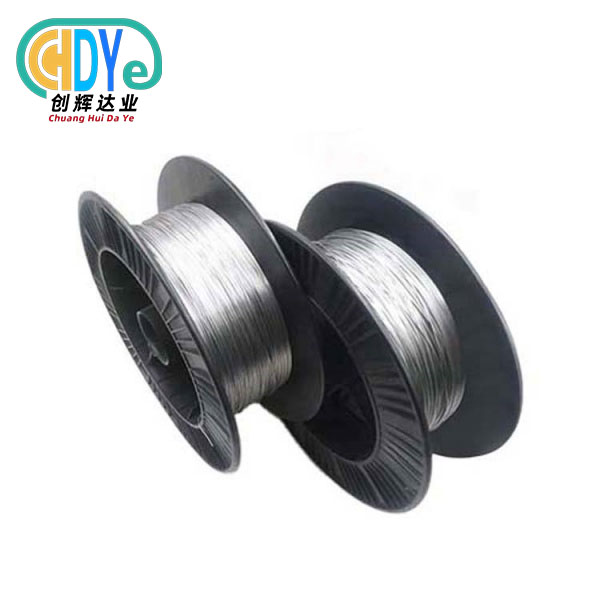
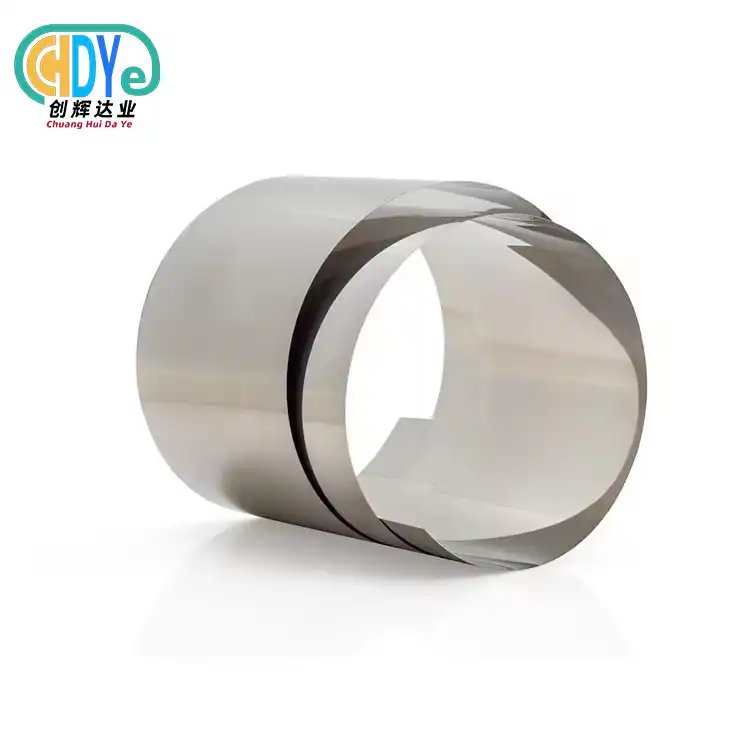
We also have the ability to provide unique alloy compositions for customers with unusual performance needs not covered by conventional specs.
How to Choose the Best High Purity Niobium Bar Rod for Your Custom Components
Matching Material to Application
The first step in deciding between R04200 and R04210 is to understand the requirements of your end component. RRR value is the determining factor in whether your part is in a cryogenic superconducting environment. Grain homogeneity and work-hardening behavior are especially important when the material is subjected to cyclic mechanical loads at increasing temperatures. For chemical process equipment, heat exchangers, and corrosion-resistant pipe fittings, the near immunity of high purity niobium bar rod to nitric, hydrochloric, and sulfuric acids (note: hydrofluoric acid is an exception) is the determining factor. A typical procurement issue is to compare niobium to tantalum. Tantalum has somewhat better corrosion resistance in certain acid conditions but is almost twice as dense as niobium and costs more per kilogram. Its lower density (8.57 g/cm 3 vs. 16.65 g/cm 3 for tantalum) and similar corrosion profile frequently make niobium the more feasible option for weight-sensitive aeronautical or medical components. Don’t judge vendors on price alone. Confirm ASTM B392 compliance Ask for MTRs at the batch level Check lead times for both standard and custom sizes Check flexibility in minimum order quantities — especially if your idea needs quick prototyping with small-batch delivery before scaling up to scale production.
Procurement Best Practices for High Purity Niobium Bar Rod OEM Orders
Good OEM buying of refractory metal bar stock begins with good technical communication at the inquiry stage. Specify diameter tolerance, length, surface condition (as machined, centerless-ground, or chemically cleaned), purity grade necessary, and any downstream processing your team will do. This information removes uncertainty, speeds quotation, and reduces the likelihood of obtaining content that has to be reworked. Logistics are as important as the specification of the material. For the chemical cleaning of high purity niobium rods, they are vacuum-packed in double-layer polyethylene bags and placed in reinforced timber boxes to minimize surface oxidation and physical damage during shipment.
If you’re shipping to the U.S., it’s best to verify the HS code classification in advance and make sure your supplier has a compliant Certificate of Origin along with comprehensive documents for customs clearance. Unit cost savings and priority scheduling are both most often unlocked via bulk buying when project timeframes allow. If your quality system requires batch-to-batch traceability, establishing a standing relationship with a certified supplier (instead of spot-purchasing from several vendors) can guarantee uniformity in the grain structure and chemical composition from run to run, which is very important.
Future Outlook and Trends in High Purity Niobium Bar Rod Manufacturing
Demand for precise niobium products is growing in three converging industries. The ongoing worldwide efforts to develop next-generation particle accelerators and quantum computing infrastructure are fueling continued demand for ultra-high-RRR niobium bar feedstock. The growth of hypersonic projects and advanced turbine development in aerospace is pushing out the specification envelope for refractory metal components.
Demand for niobium rods with smaller, tighter-tolerance diameters suitable for implanted hardware is driven by continued downsizing of medical devices. On the production front, developments in electron beam melting are allowing finer control of interstitial impurity profiles, pushing possible purity ceilings higher while increasing batch-to-batch reproducibility. This implies the ceiling is increasing for material performance for OEM customers, and early alignment with a technically proficient supplier allows your business to take advantage of enhanced requirements without disturbing current certification procedures.
Conclusion
High purity niobium bar rod is a precise material best purchased by those who take care in their choice, supplier qualification, and procurement communication. Whether your application is in aerospace, semiconductor fabrication, nuclear engineering, or medical device manufacture, the road to repeatable performance is paved with confirmed purity, certified manufacturing, and a supplier with documented process control. Chuanghui Daye ticks all three boxes, with three decades of rare metal knowledge, ISO 9001:2015 certification, and complete ASTM B392-95 compliance for R04200 and R04210 grades at 99.99% purity.
FAQ
Q: What purity grade is recommended for SRF cavity or superconducting applications?
A: For superconducting radio-frequency cavities, you need a Residual Resistivity Ratio exceeding 300, which corresponds to niobium purity at or above 99.99%. Our R04200 grade meets this requirement.
Q: What are typical lead times for custom-dimension niobium rods?
A: Standard dimensions generally ship within 2–3 weeks. Custom diameters or lengths with specific surface finishing typically require 3–6 weeks depending on order volume. We accommodate urgent prototyping requests — contact us directly for expedited scheduling.
Q: Which certifications should I require from a niobium rod supplier?
A: At minimum, require ISO 9001:2015 certification, ASTM B392-95 compliance, batch-level MTRs with chemical analysis, and dimensional inspection reports. Third-party test reports add an independent verification layer for critical procurement decisions.
Q: Can niobium rods be machined in-house by our manufacturing team?
A: Niobium is ductile but tends to gall against cutting tools. Carbide or high-speed steel tooling with water-soluble coolant and appropriate rake angles minimizes material buildup. We can also supply rods in a precision-ground condition to reduce your internal machining requirements.
Q: How are rods packaged to prevent contamination during shipping?
A: Each rod is chemically cleaned, vacuum-sealed in double-layer polyethylene bags, and packed in reinforced wooden crates. This prevents surface oxidation and physical damage during international transit.
Partner with Shaanxi Chuanghui Daye — Your Trusted High Purity Niobium Bar Rod Supplier
Shaanxi Chuanghui Daye combines factory-direct pricing with ISO 9001:2015-certified production and three decades of refractory metal expertise. As a dedicated high purity niobium bar rod manufacturer, we supply R04200 and R04210 grades at 99.99% purity with full ASTM B392-95 compliance, complete MTRs, and flexible MOQ for both prototyping and volume orders. Reach our technical team at info@chdymetal.com or visit www.chdymetal.com to request a tailored quotation today.
References
1. ASTM International. ASTM B392-95: Standard Specification for Niobium and Niobium Alloy Bar, Rod, and Wire. ASTM International, 2010.
2. Padamsee, Hasan, Jens Knobloch, and Tom Hays. RF Superconductivity for Accelerators. Wiley-VCH, 2008.
3. Smallman, R. E., and A. H. W. Ngan. Modern Physical Metallurgy. 8th ed. Butterworth-Heinemann, 2014.
4. Donachie, Matthew J. Superalloys: A Technical Guide. 2nd ed. ASM International, 2002.
5. Savitsky, E. M., and V. F. Terekhova. Physical Metallurgy of Refractory Metals and Alloys. Consultants Bureau, 1970.
6. Black, Jonathan, and Garth Hastings, eds. Handbook of Biomaterial Properties. Chapman & Hall, 1998.
Learn about our latest products and discounts through SMS or email