- English
- French
- German
- Portuguese
- Spanish
- Russian
- Japanese
- Korean
- Arabic
- Greek
- German
- Turkish
- Italian
- Danish
- Romanian
- Indonesian
- Czech
- Afrikaans
- Swedish
- Polish
- Basque
- Catalan
- Esperanto
- Hindi
- Lao
- Albanian
- Amharic
- Armenian
- Azerbaijani
- Belarusian
- Bengali
- Bosnian
- Bulgarian
- Cebuano
- Chichewa
- Corsican
- Croatian
- Dutch
- Estonian
- Filipino
- Finnish
- Frisian
- Galician
- Georgian
- Gujarati
- Haitian
- Hausa
- Hawaiian
- Hebrew
- Hmong
- Hungarian
- Icelandic
- Igbo
- Javanese
- Kannada
- Kazakh
- Khmer
- Kurdish
- Kyrgyz
- Latin
- Latvian
- Lithuanian
- Luxembou..
- Macedonian
- Malagasy
- Malay
- Malayalam
- Maltese
- Maori
- Marathi
- Mongolian
- Burmese
- Nepali
- Norwegian
- Pashto
- Persian
- Punjabi
- Serbian
- Sesotho
- Sinhala
- Slovak
- Slovenian
- Somali
- Samoan
- Scots Gaelic
- Shona
- Sindhi
- Sundanese
- Swahili
- Tajik
- Tamil
- Telugu
- Thai
- Ukrainian
- Urdu
- Uzbek
- Vietnamese
- Welsh
- Xhosa
- Yiddish
- Yoruba
- Zulu
How Is pure niobium plate Made for Corrosion Resistance?
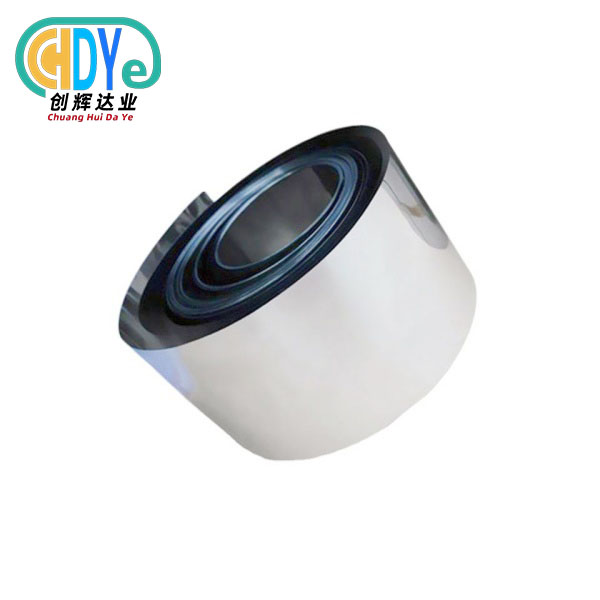
A pure niobium plate is a flat-rolled niobium product manufactured from high-purity niobium and processed through controlled hot and cold rolling operations to achieve the required thickness, surface finish, and mechanical properties. Niobium is known for its excellent corrosion resistance, high-temperature stability, and good ductility, making it suitable for demanding applications in chemical processing, electronics, superconducting equipment, and other specialized industries. During manufacturing, careful control of melting, rolling, annealing, and surface treatment helps maintain the material’s purity and ensure consistent performance in corrosive and high-temperature environments.

Understanding the Importance of Corrosion Resistance in Pure Niobium Plate
Corrosion resistance is one of the main reasons pure niobium plate is selected for applications where conventional metals may not provide sufficient durability. Niobium naturally forms a thin, stable oxide layer when exposed to air or oxygen. This protective layer helps prevent further chemical attack and contributes to the metal’s good resistance to many corrosive environments.
For chemical processing applications, this property can be particularly useful when niobium plate is exposed to acids and other aggressive media. Unlike metals that can gradually lose material through surface corrosion, niobium can maintain a stable surface under many service conditions. This helps extend component life and reduces the need for frequent replacement or maintenance.
Corrosion resistance is also important when pure niobium plate is used in equipment that operates at elevated temperatures. Niobium has a high melting point and maintains useful mechanical and physical properties at high temperatures, although the actual service performance depends on the surrounding atmosphere and operating conditions.
The combination of corrosion resistance, high-temperature capability, and good ductility makes pure niobium plate suitable for a range of specialized applications, including chemical processing equipment, laboratory components, electronics, and high-temperature applications.
When selecting niobium plate, factors such as niobium purity, plate thickness, surface condition, temperature, and the specific chemical environment should all be considered. These factors can have a direct effect on the expected service life and performance of the material.
The Manufacturing Process of Pure Niobium plate Focused on Corrosion Resistance
Raw Material Selection and Melting
The corrosion performance begins before any shaping. Electron beam melting or vacuum arc remelting of high-purity tantalum and niobium powders or bars. The intermediate impurity levels (O, N, C, and H) are controlled to parts-per-million levels per ASTM B708. At Chuanghui Daye, we employ an electron beam furnace to produce a controlled environment that minimizes the occurrence of oxide particles that might cause rusting.
Hot Rolling, Cold Rolling, and Annealing
The ingot is then passed through many hot-rolling operations at regulated temperatures to refine the grain structure of the billet. Finer grains, more regularly spaced, provide a more uniform oxide coating and reduce the chance of intergranular corrosion. Thickness is then brought to specific limits (typically ±0.05 mm) by cold rolling. Vacuum annealing halfway through prevents work-hardening and adds flexibility, without introducing air. This order impacts the mechanical properties and regularity of the microstructure that make something resistant to rust.
Surface Treatment and Quality Certification
The surface isn’t like this for appearances; it has a function. Plates are chemically cleaned after rolling by a controlled acid wash to remove drawing greases and surface oxides. Electropolishing may be used for semiconductor-grade operations when a very smooth surface is required (Ra ≤ 0.4 µm). Before every manufacturing lot is released, it is checked for dimensions, its chemical composition is verified by ICP-OES, and it is mechanically tested (tensile strength, elongation). Aircraft and medical purchasing teams need to see complete traceability documentation, and only organizations that have ASTM B708 and ISO 9001:2015 certifications can supply this.
Comparing Pure Niobium Plate with Other Metals in Corrosion Resistance
When selecting materials for corrosive environments, procurement and engineering teams often compare pure niobium plate with stainless steel, titanium, tantalum, and other corrosion-resistant metals. Each material has its own strengths, and the right choice depends on the chemical medium, temperature, purity requirements, and operating conditions.
Here is a general comparison of pure niobium with several commonly considered materials:
vs. Stainless Steel: Stainless steel such as 316L provides good corrosion resistance in many industrial applications and is widely used because of its availability and relatively low cost. However, its performance can be limited in highly aggressive chemical environments. Pure niobium provides stronger resistance to many acidic and corrosive media and can be considered when standard stainless steel is not sufficient.
vs. Titanium: Titanium Grade 2 has excellent corrosion resistance and is widely used in chemical processing and marine applications. However, titanium has limitations in certain reducing acids and environments containing hydrofluoric acid. Pure niobium offers strong resistance to a range of aggressive chemical conditions and can be selected for applications where higher chemical stability is required.
vs. Tantalum: Tantalum is well known for its exceptional resistance to chemical attack and is often selected for the most severe corrosive environments. Pure niobium can provide a useful alternative where its combination of corrosion resistance, lower density, good ductility, and material properties meets the application requirements.
vs. Niobium Alloys: Pure niobium offers the advantage of high niobium content without the addition of alloying elements. For applications where the specific properties of niobium itself are required, a pure niobium plate can be preferable to an alloyed grade.
Procurement Considerations for Pure Niobium Plate
Evaluating Suppliers and Certifications
When sourcing pure niobium plate, buyers should consider the supplier's quality management system, production capabilities, material traceability, and ability to meet the required specifications. Depending on the application, customers may require compliance with relevant ASTM specifications, along with a mill test certificate (MTC), chemical composition report, mechanical test results, and heat or lot number traceability.
For critical applications, it is also important to understand how the pure niobium plate is manufactured. Buyers can ask whether melting, rolling, annealing, and surface finishing are carried out in-house or through qualified production partners. Good process control is particularly important for maintaining consistent niobium purity, thickness, surface condition, and mechanical properties from batch to batch.
Customization, Pricing, and Lead Times
Industrial buyers may require pure niobium plate in specific thicknesses, widths, lengths, and surface conditions rather than standard stock sizes. Depending on the supplier's production capabilities, custom dimensions can be discussed for both trial quantities and larger production orders.
The price of pure niobium plate is mainly affected by niobium purity, plate dimensions, thickness, surface condition, order quantity, and raw material costs. Larger quantities may offer better pricing, while smaller quantities can be suitable for prototype production, laboratory testing, or urgent replacement requirements.
Before placing an order, buyers should also confirm the available production lead time, packaging requirements, inspection documents, and shipping arrangements. Clear communication of these requirements helps avoid delays during material approval and subsequent production.
Future Trends in Pure Niobium Plate Manufacturing and Applications
The use of pure niobium plate continues to be linked to applications where material purity, corrosion resistance, high-temperature performance, and other specialized properties are important. Advances in melting and rolling technology are helping manufacturers improve thickness control, surface quality, and consistency in high-purity niobium products.
Manufacturing processes are also becoming more precise. Improved vacuum melting and refining technologies can help reduce unwanted impurities, while controlled rolling and heat treatment allow manufacturers to produce pure niobium plate with more consistent mechanical and dimensional properties.
In addition, niobium is attracting continued interest in areas such as chemical processing, electronics, superconducting equipment, high-temperature components, and other advanced technologies. As these applications develop, demand may increase for niobium materials with tighter purity, dimensional, and surface requirements.
For B2B buyers, choosing a supplier with reliable quality control, material traceability, flexible production capabilities, and experience with pure niobium plate can help ensure that the material meets both current project requirements and future production needs.
Conclusion
Producing high-quality pure niobium plate requires careful control throughout the manufacturing process, from high-purity raw material selection and vacuum melting to precision rolling, heat treatment, and surface finishing. The combination of good corrosion resistance, high-temperature stability, ductility, and material purity makes pure niobium plate suitable for a range of specialized industrial applications.
For procurement teams, understanding the manufacturing process and material requirements can help when selecting specifications and evaluating suppliers. Important factors include niobium purity, plate dimensions, thickness tolerance, surface condition, mechanical properties, inspection requirements, and material traceability. Working with a supplier that can provide consistent quality and the required documentation also helps reduce problems during material approval and production.
FAQ
Q: What makes pure niobium plate resistant to corrosion?
A: Pure niobium naturally forms a thin and stable oxide layer when exposed to air or oxygen. This protective surface helps limit further chemical attack and gives niobium good resistance to many corrosive environments. Actual corrosion performance depends on the chemical medium, concentration, temperature, and operating conditions.
Q: What specifications are available for pure niobium plate?
A: Pure niobium plate can be supplied in different thicknesses, widths, lengths, purity levels, and surface conditions depending on the manufacturing capability and customer requirements. Custom dimensions can also be discussed for specific industrial or research applications.
Q: Which documents should I request when purchasing pure niobium plate?
A: Depending on the application, buyers may request a mill test certificate (MTC), chemical composition report, mechanical test data, dimensional inspection report, and material traceability information. The required documentation should be confirmed before placing the order, particularly for projects with strict material approval procedures.
Q: Can pure niobium plate be welded?
A: Yes. Pure niobium can be welded using suitable processes such as gas tungsten arc welding (GTAW/TIG). Because niobium is highly reactive with oxygen, nitrogen, and other atmospheric gases at elevated temperatures, proper inert-gas shielding and controlled welding conditions are important to protect the weld and heat-affected areas from contamination.
Q: What should I consider when selecting a pure niobium plate supplier?
A: Key factors include niobium purity, manufacturing capabilities, dimensional control, surface quality, quality management, material traceability, inspection documentation, minimum order quantity, and lead time. For long-term supply, buyers should also confirm whether the supplier can maintain consistent quality between different production batches.
Partner with Chuanghui Daye for Your Tantalum Niobium Plate Supply
Shaanxi Chuanghui Daye, located in China's Titanium Capital—Baoji, Shaanxi Province—delivers ISO 9001:2015-certified pure niobium plate directly from our own melting, rolling, and finishing lines. Whether you need small-batch prototypes or consistent bulk supply, our team provides full traceability documentation, competitive factory-direct pricing, and rapid turnaround. Reach our technical team today at info@chdymetal.com to request a quote tailored to your exact specifications.
References
1. NACE International. Corrosion Costs and Preventive Strategies in the United States. NACE International, 2002.
2. American Society for Testing and Materials. ASTM B708: Standard Specification for Tantalum and Tantalum Alloy Plate, Sheet, and Strip. ASTM International, 2021.
3. Schulson, E. M., & Briggs, J. Z. "Mechanical and Corrosion Properties of Refractory Metal Alloys." Journal of the Less-Common Metals, 1985.
4. Savchenko, N. L., et al. "Oxidation Behavior of Ta-Nb Alloys at Elevated Temperatures." Oxidation of Metals, 2018.
5. MarketsandMarkets Research. Refractory Metals Market — Global Forecast to 2030. MarketsandMarkets, 2023.
6. Wang, Y., & Liu, H. "Microstructure and Corrosion Resistance of Cold-Rolled Ta-40Nb Sheets." Materials Science and Engineering: A, 2020.
Learn about our latest products and discounts through SMS or email