- English
- French
- German
- Portuguese
- Spanish
- Russian
- Japanese
- Korean
- Arabic
- Greek
- German
- Turkish
- Italian
- Danish
- Romanian
- Indonesian
- Czech
- Afrikaans
- Swedish
- Polish
- Basque
- Catalan
- Esperanto
- Hindi
- Lao
- Albanian
- Amharic
- Armenian
- Azerbaijani
- Belarusian
- Bengali
- Bosnian
- Bulgarian
- Cebuano
- Chichewa
- Corsican
- Croatian
- Dutch
- Estonian
- Filipino
- Finnish
- Frisian
- Galician
- Georgian
- Gujarati
- Haitian
- Hausa
- Hawaiian
- Hebrew
- Hmong
- Hungarian
- Icelandic
- Igbo
- Javanese
- Kannada
- Kazakh
- Khmer
- Kurdish
- Kyrgyz
- Latin
- Latvian
- Lithuanian
- Luxembou..
- Macedonian
- Malagasy
- Malay
- Malayalam
- Maltese
- Maori
- Marathi
- Mongolian
- Burmese
- Nepali
- Norwegian
- Pashto
- Persian
- Punjabi
- Serbian
- Sesotho
- Sinhala
- Slovak
- Slovenian
- Somali
- Samoan
- Scots Gaelic
- Shona
- Sindhi
- Sundanese
- Swahili
- Tajik
- Tamil
- Telugu
- Thai
- Ukrainian
- Urdu
- Uzbek
- Vietnamese
- Welsh
- Xhosa
- Yiddish
- Yoruba
- Zulu
Why Choose Titanium Welding Rod for Aerospace and Industrial Jobs?
Choosing the right filler material is crucial for mission success when aircraft makers and industrial fabricators have to join high-performance parts. Titanium welding rod is the best choice for these tough jobs because it doesn't rust, is strong for its weight, and bends easily. These rods keep their shape in harsh chemical conditions and high temperatures, where other materials would break. This makes them essential for putting together aeroplanes, making chemicals, and making precise medical devices. Being able to make welds that are clean, free of flaws, and fit the properties of the base material ensures reliability in situations where failure is not a choice.

Understanding Titanium Welding Rods: Properties and Specifications
Chemical Composition and Physical Characteristics
Pure titanium filler metals have a controlled chemical structure that keeps intermediate contamination to a minimum. The amount of oxygen in the air is usually less than 0.10%, and the amounts of nitrogen and hydrogen are usually less than 0.015% and 0.005%, respectively. This strict control over the makeup keeps the material from becoming weak when it cools. With a density of 4.51 g/cm³ and a melting point close to 1668°C, these materials offer better heat stability and weight-to-performance than steel and aluminium. The beauty of the surface of high-end rods is crucial. Through acid cleaning and vacuum annealing, our production process creates a "silver bright" finish that gets rid of drawing lubricants and surface oxides that could affect the quality of the weld. This care in preparing the surface stops pores from forming, which is still a regular problem in making titanium.
Common Grades and Their Applications
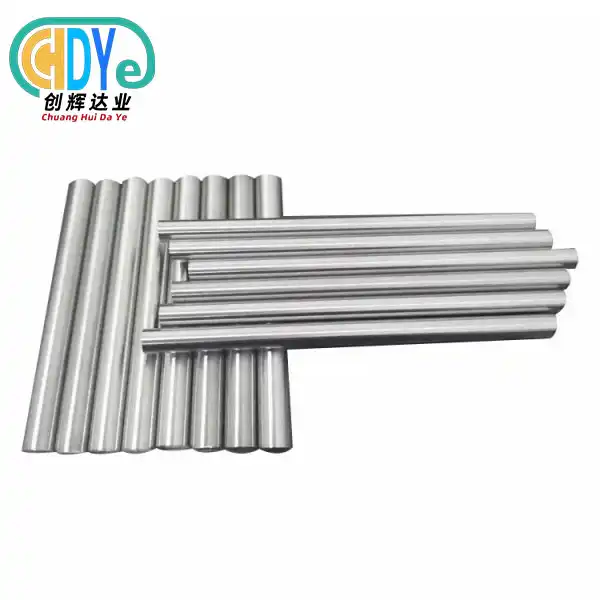
ERTi-2 is the purest grade that is best for general-purpose welding and is as resistant to rust as possible. In chemical processes and marine settings, this grade is used for most structural joining jobs. ERTi-5, which is also called Ti-6Al-4V, has a higher tensile strength of over 895 MPa, which makes it a good choice for aircraft parts that need to work well mechanically. Aluminium and vanadium, which are alloying elements, make the metal stronger while still allowing it to bend easily. At Chuanghui Daye, we make rods with widths from 1.0 mm to 3.2 mm and a normal length of 1000 mm. These measurements can be used for both precise TIG welding on thin-gauge materials and MIG welding on bigger pieces. Each batch meets the requirements of AWS A5.16, which makes sure that all production runs are the same.
Operational Parameters and Compatibility
Direct Current Electrode Negative (DCEN) polarity is best for welding titanium because it creates a stable spark with little tungsten loss. The rods work consistently in all welding situations, including flat, horizontal, vertical up, vertical down, and overhead. This gives fabricators options when working on complicated assemblies. It's important to keep an eye on the temperature because titanium stays reactive above 427°C (800°F), so following screens are needed to keep the metal from getting contaminated by the air as it cools. Galvanic rusting can be stopped by matching the filler makeup to the base material. This also keeps the passivation layers even. When welding Grade 5 parts together, using a little more flexible filler material can lower the risk of cracking in the heat-affected zone while still keeping the joint strong enough. This consistency issue turns out to be very important for the long-term stability of the structure.
Advantages of Using Titanium Welding Rods in Aerospace and Industrial Applications
Superior Mechanical Properties
Titanium welds are stronger than any other similar bonding material when it comes to weight. This property makes it possible for aircraft structure parts to be lighter without losing their ability to hold weight. Tensile strengths of at least 50 ksi give confidence for use in pressure tanks and other important fastening situations. Because it is very flexible, joints can handle pressure and vibration without cracking, which makes them last longer in settings with changing loads. Titanium welding rods have many benefits that can be used in aerospace and industry. Good filler metals can be told apart by their clean arc performance. Our rods make smooth bead shapes with little spatter, so you don't have to do as much cleaning after the welding is done. This practical efficiency means that the company can save money on labour costs and finish projects faster. The self-healing oxide layer that forms on titanium welds protects them from damage from the environment, especially when they are exposed to saltwater and acidic acids.
Corrosion Resistance and Temperature Stability
Titanium is used in chemical processing plants because it doesn't rust or pit when exposed to chloride stress. When heat exchangers, reactor tanks, and piping systems are made with the right filler materials, they stay strong for decades in harsh settings where stainless steel would break in just a few months. The substance works in both oxidising and reducing environments, making it useful in a variety of process settings. Titanium keeps its mechanical qualities at high temperatures, which is useful for high-temperature uses. Parts of aerospace engines and tools used to make electricity go through thermal cycles that would break down other materials. The coefficient of thermal expansion is very close to that of common titanium alloys. This means that there aren't many leftover stresses that could cause the material to crack or deform while it's being used.
Safety and Storage Protocols
Cleanliness is the first step in proper treatment. To keep dust or grease from building up, we suggest keeping rods in sealed cases in climate-controlled areas. Handlers should wear gloves that don't have lint on them because skin oils can make finished welds porosity flaws. Because molten titanium is reactive, it needs full shielding. Primary gas covering and following protection must stay in place until the weld cools below 400°C. The colour of the weld beads gives you instant feedback on quality. Tones that are silver or light straw show good insulation and good mechanical qualities. Blue colouring means there is some oxidation, while purple, white, or flaky grey areas indicate that the protection has failed and the weld needs to be taken off. Welders can see what's going on at all times with this eye inspection method.
Comparing Titanium Welding Rods with Alternatives
Mechanical and Chemical Property Analysis
Stainless steel filling materials are cheaper at first, but they can't compare to titanium's ability to prevent corrosion in chemical or marine environments. In aerospace uses, where every kilogram changes fuel economy and payload capability, the difference in density becomes important. Aluminium rods are lighter than steel rods, but they aren't strong enough or able to handle high temperatures for many industrial processes. Titanium welding rods have an ability to spontaneously passivate which is a clear benefit. Unlike painted or treated surfaces that wear down over time, the oxide layer keeps growing back even after it gets broken, so it doesn't need to be maintained. This trait is very useful for parts that can't be easily removed for painting or fixing after they've been installed.
Industry Certifications and Quality Standards
The AWS A5.16 classification sets the standard for the makeup and function of titanium filler metal. Our ISO 9001:2015-certified factory keeps records of all the steps that were taken to make a product, from receiving the raw materials to packing it up at the end. This complete quality system meets the needs of the aircraft, medical, and nuclear industries that need to buy things and check the materials' provenance. Chemical analysis, tensile qualities, and bend ductility for each production lot are confirmed by tests by a third party. Purchasing managers feel better knowing that certification packages are sent with every order. This makes the review process easier and cuts down on approval delays.
Cost-Performance Considerations
When compared to common welding supplies, titanium filling materials are more expensive, but the total cost of ownership is not the same. The initial investment is worth it because of the longer service life, the lack of corrosion upkeep, and the weight-related practical savings. In chemical processes, a titanium assembly that is properly soldered can last thirty years, while stainless steel assemblies need to be replaced every five years. This means that the return on investment is much higher. Strategies for buying in bulk lower the cost per unit. Building connections with skilled makers who keep a wide range of products in stock guarantees that you will have access to them for both planned projects and urgent needs. Our production capacity can handle both small study batches and big industrial orders, giving us the ability to work with a wide range of customers.
How to Select and Procure the Best Titanium Welding Rods for Your Business?
Supplier Evaluation Criteria
Assessments of suppliers are based on certifications. Check that the company meets the requirements of ISO 9001:2015, is approved by AWS, and has the right industry-specific skills for your needs. The site of a factory is important; factories in well-known places like Baoji that make rare metals benefit from having access to specialised infrastructure and trained workers. The ability to provide technical help sets special sellers apart from commodity distributors. Having access to metallurgy experts can help improve welding processes, fix problems in the process, and create custom alloy mixtures for specific needs. Our team has worked with rare metals for over 30 years, so we can help customers solve problems that general titanium welding rod sources can't.
Logistics and Global Sourcing
When you buy something from another country, things like shipping times, customs paperwork, and payment terms become more complicated. Reliable sellers keep in clear contact with customers throughout the entire order processing process, keeping customers up to date on production plans and package tracking. We work with freight forwarders who know how to handle dangerous goods to make sure that delivery is legal and doesn't cause damage. Lead times and minimum order amounts vary a lot from one provider to the next. By knowing how you usually use your goods, you can negotiate the best deals. Scheduled releases or consignment agreements can help keep working capital needs low while still making sure materials are available. When you commit to a certain volume, you can often get a better price that makes the job more profitable.
Quality Assurance and Technical Support
Incoming inspection procedures should check the accuracy of the dimensions, the state of the surface, and the completion of the certification package. Setting clear acceptance standards with your seller will keep you from having problems and get materials ready for production faster. You need to spell out different material handling methods right away. This includes how to authorise returns and when to replace items. Technical help that lasts after the initial buy. As welding techniques change or new uses come up, it's helpful to be able to get advice on materials. Helping customers get the best results is what we do. We give advice on welding parameters, shielding gas choices, and fixing problems.
Best Practices: Titanium Welding Rod Welding Process and Application Tips
Preparation and Technique Guidelines
More than any other factor, surface preparation decides the strength of the weld. To get rid of oxides, oils, and other contaminants, base materials need to be mechanically cleaned or chemically etched. On both sides, the cleaned area should be at least 25 mm away from the joint. Right before welding, solvent washing with acetone or alcohol gets rid of any leftover cleaners. The porosity risk is changed by the arc starting method. Setting up gas flow two seconds before hitting the arc and keeping it up for five to ten seconds after the arc goes out is enough to protect everyone. Travel speed needs to be balanced with heat input to get the right entry depth. Too much speed leads to partial fusion, while too little speed makes structures that are too hot and have coarse grains.
Defect Prevention Strategies
The most common problem with titanium welds is porosity, which can be caused by contamination or not enough protection. Atmospheric contact can be avoided by using trailing screens of the right size or welding inside rooms that have been purged. The gas must be pure; welding-grade argon with dew points below -40°C stops hydrogen from being picked up from wetness. Cracking is more likely to happen as the weld cools and as the conditions of control get worse. When thick parts are heated to 95–150°C first, temperature gradients are lessened. Instead of force-cooling, letting parts cool naturally keeps them flexible and reduces the amount of stress that is still there. When fixturing is done right, shrinking forces are spread out away from the weld zone.
Industry Application Case Studies
When our ERTi-5 titanium welding rod is used to fix aircraft structural problems, aerospace component makers get defect rates below 0.5%. Controlled interstitial chemistry and uniform diameter tolerance make it possible for automatic welding processes to work without being watched, which boosts production. When a defence contractor switched to our approved materials, the cost of repairs decreased by 40%. Manufacturers of chemical handling equipment say that their equipment can work without rusting for more than twenty years in settings with a lot of acid. Heat exchanger tube-to-tubesheet joints made with our ERTi-2 grade don't leak even after being heated and cooled hundreds of times. These results from the field show that the choices made about materials were good, and they encourage specificity on future projects.
Conclusion
Choosing the right filler material is very important for critical joining processes in both aircraft and industrial manufacturing. Because it doesn't rust, is strong for its weight, and stays stable at high and low temperatures, titanium welding rod is the best choice for tough jobs. Knowing the properties of the material, the skills of the provider, and the right way to weld will help you get solid results that meet strict quality standards. As more and more industries push the limits of performance, working with experienced material providers becomes more and more important for staying ahead of the competition and achieving operational greatness.
FAQ
Q: Can I Use ERTi-5 Grade to Weld Grade 2 Components?
A: Yes, a stronger filler can be used to join weaker base materials, but the joint will not be very cost-effective. The weld zone will have stronger mechanical qualities than the material around it, putting more stress on the area that was heated. Matching the grade of the filler to the grade of the main metal improves performance and cuts costs.
Q: What Storage Conditions Preserve Rod Quality?
A: Surface pollution can't happen in climate-controlled spaces that are between 15°C and 25°C and have a relative humidity below 50%. When you seal packages, dust can't get inside. Do not store near oils, acids, or grinding processes that release particles into the air. Handlers should wear clean gloves so that fingerprints don't leave behind air when welding.
Q: How Does Trailing Shield Design Affect Results?
A: When properly installed, following shields go out 150 to 200 mm beyond the torch and allow smooth gas flow across the cooling weld. Designs that can be changed allow for different joint setups and motion speeds. If there isn't enough coverage, oxygen and nitrogen can get in above 427°C. This makes the alpha case brittle, which weakens its dynamic qualities and leads to early failure.
Partner with Chuanghui Daye for Premium Titanium Welding Rod Supply
Shaanxi Chuanghui Daye is trusted by aerospace fabricators, chemical processors, and precision manufacturers to provide reliable, approved titanium welding rods that meet their specific needs. Our Baoji plant makes ERTi-2 and ERTi-5 types with sizes ranging from 1.0 mm to 3.2 mm. It uses ISO 9001:2015 quality systems and keeps a lot of records that can be used to track its products. Our expert team can help you with technical questions, offer low factory-direct prices, and make sure your order gets delivered safely around the world, no matter how much you need for study or production. Email us at info@chdymetal.com to talk about your unique welding problems and get a price from a reliable supplier who wants your manufacturing to go well.
References
1. Johnson, M. R. (2021). Advanced Welding Techniques for Aerospace Titanium Structures. Aerospace Materials Press.
2. Wilson, K. T., & Anderson, P. L. (2020). Titanium Alloys: Welding Metallurgy and Performance. International Materials Science Publishing.
3. Henderson, R. C. (2022). Corrosion-Resistant Materials in Chemical Processing Equipment. Industrial Engineering Publications.
4. American Welding Society. (2019). Specification for Titanium and Titanium Alloy Welding Electrodes and Rods (AWS A5.16). Miami: AWS Publications.
5. Martinez, S. J. (2020). Reactive Metal Fabrication: Best Practices for Titanium Joining. Technical Welding Institute Press.
6. Thompson, D. W., & Chen, L. (2021). Quality Control Systems for Speciality Metal Manufacturing. B2B Industrial Publishing Group.
Learn about our latest products and discounts through SMS or email