- English
- French
- German
- Portuguese
- Spanish
- Russian
- Japanese
- Korean
- Arabic
- Greek
- German
- Turkish
- Italian
- Danish
- Romanian
- Indonesian
- Czech
- Afrikaans
- Swedish
- Polish
- Basque
- Catalan
- Esperanto
- Hindi
- Lao
- Albanian
- Amharic
- Armenian
- Azerbaijani
- Belarusian
- Bengali
- Bosnian
- Bulgarian
- Cebuano
- Chichewa
- Corsican
- Croatian
- Dutch
- Estonian
- Filipino
- Finnish
- Frisian
- Galician
- Georgian
- Gujarati
- Haitian
- Hausa
- Hawaiian
- Hebrew
- Hmong
- Hungarian
- Icelandic
- Igbo
- Javanese
- Kannada
- Kazakh
- Khmer
- Kurdish
- Kyrgyz
- Latin
- Latvian
- Lithuanian
- Luxembou..
- Macedonian
- Malagasy
- Malay
- Malayalam
- Maltese
- Maori
- Marathi
- Mongolian
- Burmese
- Nepali
- Norwegian
- Pashto
- Persian
- Punjabi
- Serbian
- Sesotho
- Sinhala
- Slovak
- Slovenian
- Somali
- Samoan
- Scots Gaelic
- Shona
- Sindhi
- Sundanese
- Swahili
- Tajik
- Tamil
- Telugu
- Thai
- Ukrainian
- Urdu
- Uzbek
- Vietnamese
- Welsh
- Xhosa
- Yiddish
- Yoruba
- Zulu
Why Invest in Hexagonal titanium screws for Long-Term Performance?
Investing in hexagonal titanium screws represents a strategic decision for industries where performance, reliability, and longevity define operational success. There is no better way to protect against rust than with these precision-engineered screws, and they are also the strongest for their weight. They save money because the machines last longer and need to be fixed less often. While steel or stainless steel screws can break in harsh chemical environments, at sea, or in high or low temperatures, titanium hex screws can hold weight without any problems. The initial investment pays off because there is less downtime, the equipment is more reliable, and it works better in tough environments like aeroplanes, chemical processing, medical device manufacturing, and defence. For buying managers who care about more than just the unit price, hexagonal titanium screws have been shown to be useful.
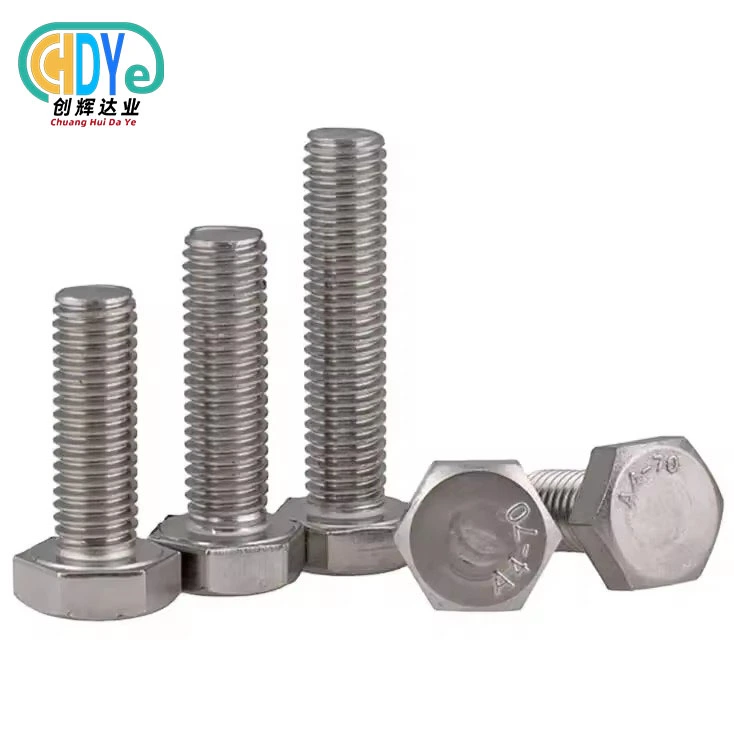
Advantages of Hexagonal Titanium Screws Over Alternative Fasteners
When Hexagonal titanium screws are compared to stainless steel and other metal fasteners, they show clear performance advantages that make the extra cost worth it. These fasteners are being used more and more in industries that need absolute stability because they have better lifetime value.
Corrosion Resistance in Aggressive Environments
Titanium creates a strong passive oxide layer when it comes into contact with oxygen. This layer is very resistant to corrosive substances like seawater, acids, alkalis, and chloride solutions. This oxide layer covers the base metal even when it is scratched, which is different from coatings that can fail where there are flaws. This natural resistance to corrosion makes it perfect for chemical processing equipment, naval gear, and desalination plants. It keeps stainless steel from breaking down too quickly in chloride-rich environments. Offshore platform owners have found that Hexagonal titanium screws last 20 to 30 years in saltwater spray zones where stainless steel fasteners need to be replaced every 3 to 5 years.
Weight Reduction and System Efficiency
Aerospace companies know that removing even a small amount of weight from an airplane's frame saves fuel and makes it possible to carry more. Hexagonal titanium screws are 40% lighter than steel ones of the same size and strength, which lets large weight reductions happen in aircraft parts. Titanium can help a commercial plane with thousands of fasteners lose hundreds of pounds of weight, which has a direct effect on the cost of operations and the impact on the environment. Unmanned aerial vehicles (UAVs) and race cars both benefit from having less mass without losing their strength when they are subjected to vibrations and dynamic loads.
Fatigue Resistance Under Cyclic Loading
Parts that are stressed over and over, like those in spinning machines, suspension systems, and equipment that shakes, need hexagonal titanium screws that last a long time. If you load and unload a building made of titanium millions of times, it will never break because it is so strong. In places where a broken bolt could be very bad, like on jet landing gear, car suspension, and industrial processing equipment, this trait is very important. Hexagonal titanium screws can handle cycle stress levels that would break hardened steel nuts if they are put in the right place. The longer the time between maintenance, the fewer extra parts that are needed, and the less unwanted downtime there is, the more money you save. It costs 60 to 70% less to change screws in a chemical plant over ten years when they switch from using stainless steel to titanium in acidic process streams.
Selecting the Right Hexagonal Titanium Screw for Your Industry Needs
When specifying Hexagonal titanium screws for important applications, procurement professionals have to make hard choices. Knowing the needs of your business and combining them with the right titanium grades, sizes, and certifications guarantees top performance and compliance with regulations.
Aerospace and Defense Applications
Aerospace makers need Hexagonal titanium screws that meet strict standards, such as AMS 4928 for Ti-6Al-4V bar stock and NAS, MS, or custom OEM standards for size and shape. Traceability paperwork that keeps track of materials from the time they are certified at the mill until they are inspected for quality assurance is very important. To keep things from becoming weak, defence applications often need extra tests like non-destructive examination (NDE) and hydrogen content verification. Our production processes are ISO 9001:2015 certified to make sure they fully meet these strict requirements. Each shipment also comes with a full paperwork package to back this up.
Medical Device Manufacturing
For medical applications, biocompatibility is the most important thing. Titanium grades 2 and 5 both meet the ASTM F67 and F136 standards for medical implants. They are both non-toxic and non-allergenic, which is important for devices that will be in the body for a long time. Titanium's ability to fuse with bone and work with MRIs makes it useful for orthopaedic implants, dental prosthetics, and surgical instrument assemblies. In order to keep surface treatments from getting contaminated in a way that could hurt biocompatibility, they need to be handled and packed in a certain way throughout the production process.
Chemical Processing and Marine Industries
In corrosive settings, you need to be very careful when choosing a grade based on the chemicals that will be present. Hexagonal titanium screws and tools lined with tantalum make corrosion-resistant systems that can handle concentrated acids and chlorine chemicals. Titanium is resistant to galvanic corrosion when combined with aluminium or carbon fibre structures. This makes it useful for marine uses that are subject to saltwater spray, immersion, and biological fouling. Our technical team offers advice to engineers on the right grades and surface treatments based on the specific needs of the application and the conditions of the environment.
Customization and OEM Solutions
A lot of the time, complex assemblies need Hexagonal titanium screws that don't come in standard catalogue sizes, head configurations, or thread profiles. Our machining tools, such as CNC lathes, electron beam welding, and precise threading machines, let us make unique parts in any quantity, from small prototypes to large production runs. Minimum order numbers are still open to allow for R&D projects and specialised small-batch uses. On the other hand, production at a high volume level benefits from economies of scale and shorter lead times.
Procurement Insights: How to Buy Hexagonal Titanium Screws Confidently
Building relationships with dependable providers can help you avoid problems with quality, delivery, and following the rules that could delay production and damage the quality of your products.
Supplier Qualification and Certification
Getting ISO 9001:2015 certification shows that you are dedicated to quality management systems that include design control, process validation, and constant improvement. Chuanghui Daye keeps this certification along with other, more specific certifications for medical and aerospace uses. This makes sure that our manufacturing processes meet international standards. We are based in Baoji, China, which is known as the "Titanium Capital." With 30 years of experience working with rare metals and advantages in the regional supply chain, we can offer consistent quality and low prices.
Quality Verification and Testing
Suppliers you can trust give you material test reports (MTRs) that show the chemical makeup through spectrometric analysis, the mechanical properties through tensile testing, and the sizes using calibrated measuring tools. X-ray fluorescence (XRF) analysis confirms the alloy content, tells the difference between Grade 2 and Grade 5, and ffindspossible material substitutions. Using Go/No-Go gauges for thread measurement makes sure that the parts that fit together properly, which avoids fitting problems and galling. Before committing to a production order, buyers can figure out how good a supplier is by asking for sample inspection reports and learning how tests are done.
Pricing Transparency and MOQ Considerations
With factory-direct prices, there are no markups for distributors, and quality control is still in place. Knowing the minimum order amounts helps you make sensible budgets and plans for your inventory, especially when it comes to special sizes or configurations that need specific production runs. We keep a lot of popular sizes and grades in stock so that we can quickly meet urgent needs. For bigger orders, we schedule production so that wait times are as short as possible. Clear communication about pricing, payment terms, and shipping options helps build trust and makes it easier to form long-term partnerships.
Supply Chain Reliability
Global buying makes transportation more complicated, so you need to be very careful when choosing a provider. Checking the shipping options, packing requirements, and accuracy of the paperwork helps keep things running smoothly at customs and keeps the goods safe while they're in transit. We have good working relationships with foreign freight forwarders and know how to fill out export paperwork, so we can send your goods easily to places in North America, Europe, and Asia. Keeping a safety stock of high-demand configurations protects against problems in the supply chain and helps meet the needs of just-in-time manufacturing.
Installation Best Practices and Long-Term Maintenance Tips
Hexagonal titanium screws work best and last the longest when they are installed correctly and maintained regularly. By following these best practices, you can protect your investment.
Torque Specifications and Installation Tools
Because titanium has a lower modulus of elasticity than steel, the torque values need to be changed to get the right clamping force without going over the yield strength. The usual torque range for Grade 5 M6 Hexagonal titanium screws is 8 to 12 Nm, though the exact range depends on the length of the thread contact, the needs of the application, and the surface treatments. Using calibrated torque wrenches makes sure that the installation is done correctly, without over-tightening, which could damage the threads, or under-tightening, which could cause the joint to come loose when the machine shakes. Galling, which is when cold welding occurs between threads, could happen when Hexagonal titanium screws are being installed. Thread seizure can be avoided by using a nickel-based anti-seize lube or choosing screws with PVD/DLC coats that lower friction coefficients.
Inspection and Maintenance Schedules
Regular checks make sure that Hexagonal titanium screws are still in good shape in important places where they may be exposed to vibrations, changes in temperature, or corrosives. A visual inspection can find surface irregularities, corrosion products, or mechanical damage that need to be fixed. Checking the torque at regular maintenance times makes sure that joints keep the right holding force, and re-torquing must be done correctly to avoid building up stress. Keeping records of what was found during inspections and maintenance tasks helps predictive maintenance programs and meets legal compliance requirements. Monitoring chemical exposure helps predict what might go wrong in harsh environments. Knowing the conditions of exposure that are specific to an application lets you replace parts before they stop working as well.
Conclusion
Hexagonal titanium screws have the best long-term performance because they are highly resistant to rust, have great strength-to-weight ratios, and don't wear down easily. By extending maintenance intervals, stopping premature failures, and supporting operational reliability in aerospace, chemical processing, marine, medical, and defence applications, these precision-engineered fasteners lower the total cost of ownership. You can get the most out of your investment by choosing the right grades, working with ISO-certified providers, and following the right construction steps. When you combine high-quality materials with skilled manufacturing, you get fastening solutions that protect important assemblies for decades of tough use.
FAQ
Q: What makes galling happen when installing a Hexagonal titanium screw, and how can it be avoided?
A: Titanium's reactive oxide layer on the surface makes it more likely to be cold-welded. Nickel-based anti-seize lubricants or PVD/DLC surface coats that lower friction coefficients and stop thread seizing are required by best practices in the industry. Controlled installation torque and choosing the right tools can also help lower the risk of galling.
Q: How are Grade 2 and Grade 5 Hexagonal titanium screws different in terms of what they can be used for?
A: Commercially pure titanium grade 2 is very good at resisting corrosion and being able to be shaped, making it perfect for chemical processing equipment and marine hardware. Grade 5 (Ti-6Al-4V) alloy has twice the tensile strength and is best for aircraft structural systems, high-performance car parts, and load-bearing medical implants that need the highest strength-to-weight ratios.
Q: Can Hexagonal titanium screws be used with carbon fiber composite structures?
A: Titanium doesn't corrode quickly through galvanic reaction, but aluminium does. Titanium is galvanically compatible with carbon fibre reinforced polymers. Because of this, Hexagonal titanium screws are the best material for fastening CFRP aircraft structures, sports equipment, and car parts where different materials touch.
Partner with a Trusted Hexagonal Titanium Screws Supplier
Shaanxi Chuanghui Daye has been working with rare metals for more than 30 years and uses ISO 9001:2015 certified manufacturing methods to make high-quality Hexagonal titanium screws that meet the strictest requirements. Our Baoji factory keeps a lot of stock in a lot of different grades and sizes so that it can meet the needs of both rapid prototyping and large-scale production. We offer custom solutions backed by detailed quality paperwork and expert support thanks to our advanced melting, forging, rolling, and precise machining skills. Hexagonal titanium screws for sale can be purchased by contacting our team at info@chdymetal.com to discuss your specific application needs. Working with a well-known manufacturer guarantees a steady supply of goods, high quality, and the technical know-how needed for long-term success in tough fastening situations.
References
1. Boyer, R., Welsch, G., and Collings, E.W. (1994). Materials Properties Handbook: Titanium Alloys. ASM International.
2. Donachie, M.J. (2000). Titanium: A Technical Guide, 2nd Edition. ASM International.
3. Schutz, R.W. and Thomas, D.E. (1987). "Corrosion of Titanium and Titanium Alloys." Metals Handbook, Volume 13: Corrosion, ASM International.
4. ASTM International (2021). ASTM F468-21: Standard Specification for Nonferrous Bolts, Hex Cap Screws, and Studs for General Use.
5. Lutjering, G. and Williams, J.C. (2007). Titanium, 2nd Edition. Springer-Verlag.
6. Peters, M., Kumpfert, J., Ward, C.H., and Leyens, C. (2003). "Titanium Alloys for Aerospace Applications." Advanced Engineering Materials, Volume 5, Issue 6.
Learn about our latest products and discounts through SMS or email