- English
- French
- German
- Portuguese
- Spanish
- Russian
- Japanese
- Korean
- Arabic
- Greek
- German
- Turkish
- Italian
- Danish
- Romanian
- Indonesian
- Czech
- Afrikaans
- Swedish
- Polish
- Basque
- Catalan
- Esperanto
- Hindi
- Lao
- Albanian
- Amharic
- Armenian
- Azerbaijani
- Belarusian
- Bengali
- Bosnian
- Bulgarian
- Cebuano
- Chichewa
- Corsican
- Croatian
- Dutch
- Estonian
- Filipino
- Finnish
- Frisian
- Galician
- Georgian
- Gujarati
- Haitian
- Hausa
- Hawaiian
- Hebrew
- Hmong
- Hungarian
- Icelandic
- Igbo
- Javanese
- Kannada
- Kazakh
- Khmer
- Kurdish
- Kyrgyz
- Latin
- Latvian
- Lithuanian
- Luxembou..
- Macedonian
- Malagasy
- Malay
- Malayalam
- Maltese
- Maori
- Marathi
- Mongolian
- Burmese
- Nepali
- Norwegian
- Pashto
- Persian
- Punjabi
- Serbian
- Sesotho
- Sinhala
- Slovak
- Slovenian
- Somali
- Samoan
- Scots Gaelic
- Shona
- Sindhi
- Sundanese
- Swahili
- Tajik
- Tamil
- Telugu
- Thai
- Ukrainian
- Urdu
- Uzbek
- Vietnamese
- Welsh
- Xhosa
- Yiddish
- Yoruba
- Zulu
Why Titanium Rod Is Popular in Medical Surgery Tools?
Titanium rods have changed the way surgical tools and medical devices are made. They are now used in all hospitals and operating rooms around the world. It's very famous for three great qualities: it's biocompatible, so it doesn't cause bad immune reactions; it's rust-resistant, so it can be sterilized repeatedly; and it's strong for its weight, so surgeons don't tire during long treatments. Medical device makers are choosing titanium rods more and more for equipment like hip implants and precision surgery tools. This is because stainless steel and aluminum just can't meet the performance and patient safety standards.
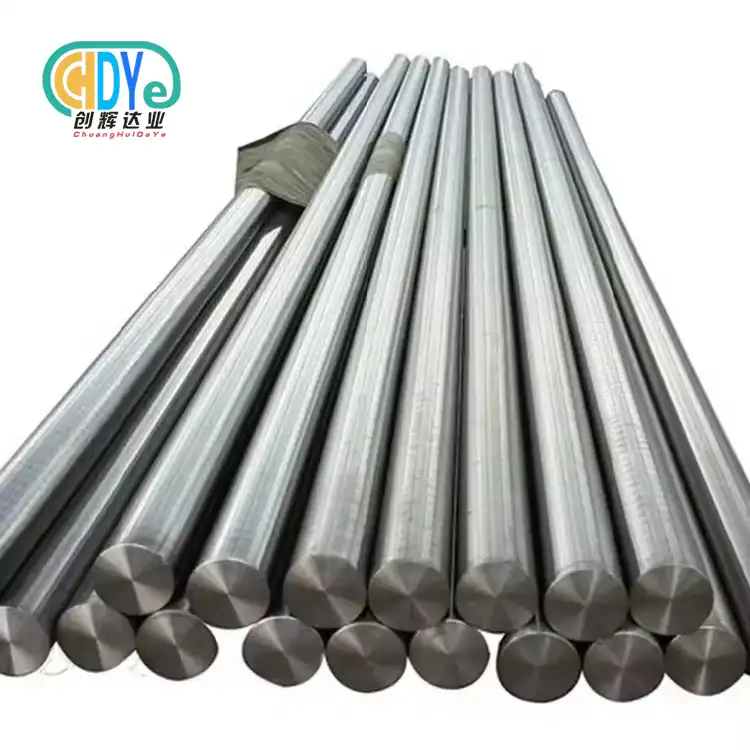
Understanding Titanium Rods and Their Key Properties for Medical Use
To use titanium rods in medicine, you need to know about their main properties. Medical-grade titanium rods are cylinder-shaped mill products that are carefully designed and made from commercially pure titanium or special titanium alloys. These materials are used as building blocks to make medical tools, orthopedic implants, and dental parts that have to work perfectly in the body's complex biological environment.
What Makes Medical-Grade Titanium Different?
There are two main types of titanium used in the medical field: commercially pure Grade 2 titanium and Grade 5 alloy, which is more modern and is known as Ti-6Al-4V. Grade 2 is excellent for many surgical tools because it is flexible and corrosion-resistant, while Grade 5 is better for load-bearing orthopedic implants because it is stronger. The ASTM F136 and ISO 5832-3 guidelines rule the Extra Low Interstitial (ELI) version of Grade 5. It has tightly controlled decreases in the amounts of oxygen, carbon, and nitrogen. This improvement greatly enhances flexibility and fracture toughness, two important properties that keep hip replacements and spinal fusion devices from failing catastrophically after millions of loading cycles over the course of a patient's lifetime.
Chemical Composition and Mechanical Performance
The chemicals that make up medical titanium alloys have a direct effect on how well they work in the body. Grade 5 ELI usually has between 5.5 and 6.5% aluminum, 3.5 to 4.5% vanadium, and less than 0.13% oxygen and less than 0.25% iron. This mix has a minimum tensile strength of 860 MPa and a minimum yield strength of 795 MPa. It also keeps its stretch above 10%. With a density of 4.43 g/cm³, it is almost half as dense as cobalt-chromium alloys, which are usually used to replace joints. During long procedures, surgeons especially appreciate this weight reduction because lighter tools mean less hand fatigue and better accuracy when making small movements.
Sterilization, Stability, and Long-Term Reliability
Operating room rules say that surgery tools must be able to withstand being sterilized over and over in an autoclave at 134°C and being exposed to strong chemical disinfectants without breaking down. A steady titanium dioxide (TiO₂)-passive film forms naturally on the surfaces of titanium rods, protecting them from rusting in these harsh conditions. Stainless steel tools can get surface pitting after years of cleaning processes, but titanium instruments that are made correctly will always have a smooth surface. This makes the instruments last longer and prevents metal ions from getting into surgery sites, which is a concern that has made regulators look more closely at other materials.
Why Do Titanium Rods Excel Over Alternatives in Medical Surgery Instruments?
When choosing materials for surgery tools, medical device makers are always under pressure to find the best mix between cost, patient safety, and material performance. By comparing titanium to options like stainless steel or aluminum, we can see why it is always the best choice, even though it costs more to make.
Superior Strength-to-Weight Performance
Creating surgical instruments that are both strong enough to do their job and light enough that the surgeon doesn't get tired is a difficult engineering problem. Titanium solves this problem by having the same tensile strength as low-carbon steel but being about 45% lighter. This difference in weight becomes clinically important during a four-hour orthopedic surgery. Studies on surgical ergonomics show that lighter tools reduce hand pain and improve fine motor control during important steps in the procedure. Titanium alloy retractors, bone saws, and cutting tools help doctors keep their hands steady during difficult treatments where accuracy affects patient results.
Unmatched Corrosion Resistance in Biological Environments
For building materials, the human body is one of the most corrosive environments they can be in. There are chloride ions, proteins, and different pH levels in blood, interstitial fluids, and cellular liquids that target many metals very strongly. Stainless steel tools can get crevice corrosion in their joints and connection points, which can release nickel ions that can make people with allergies react. When scratched, titanium's passive oxide layer grows back on its own, protecting itself from further damage. This quality is especially useful for internal devices, such as intramedullary rods used to fix broken bones, because material breakdown during the healing process could weaken the structure.
Biocompatibility and Patient Safety Advantages
About 10 to 15 percent of people are sensitive to nickel, which can cause problems when surgical implants or tools made of stainless steel touch tissue. Titanium doesn't cause allergies and is very biocompatible, with almost no cases of immune rejection ever being recorded. The material can also osseointegrate, which means that bone cells can easily grow onto titanium surfaces. This makes strong mechanical bonds in dental implants and joint replacements. Another practical benefit of titanium is that it is non-ferromagnetic. This means that people with titanium implants can safely go through magnetic resonance imaging (MRI) scans without worrying about the implants moving or imaging artifacts that lower the quality of the diagnosis.
Production and Quality Control of Titanium Rods for Medical Instruments
When making medical-grade titanium rods, process controls have to be much stricter than when making industrial-grade materials. From melting the titanium sponge to the final review, the whole production process has to follow international standards that make sure the material is pure and consistent enough for use in life-critical situations.
Advanced Manufacturing Processes
The first step in production is vacuum arc remelting (VAR) of titanium sponge or scrap, which makes ingots with a uniform makeup and few impurities. Hot forging these bars at temperatures between 900°C and 1000°C refines the grain structure and makes the metal stronger. After that, the cylindrical rod is hot-rolled or extruded to a specific diameter, ranging from 3 mm rods for small tools to 200 mm diameter stock for making large orthopedic parts. Precision cold drawing is used to get the very close dimensional tolerances needed for threaded fasteners and instrument parts that fit perfectly. To keep quality high during production, specialized factories like Shaanxi Chuanghui Daye Metal Material Co., Ltd. use electron beam furnaces, controlled atmosphere annealing furnaces, and precision machining equipment.
Certification and Regulatory Compliance
Manufacturers of medical devices are not allowed to sell their goods without showing that they meet relevant standards. ASTM F67 sets the standards for commercially pure titanium used in medical implants, and ASTM F136 lays out the requirements for the Ti-6Al-4V ELI alloy. The ISO 5832 set of standards ensures that titanium materials used in implants are the same all over the world. In addition to material requirements, factories must keep their ISO 9001:2015 quality management certification up to date and often also try to get ISO 13485 certification for making medical devices. Regulatory bodies like the FDA need full proof of tracking. Every titanium rod used in medical applications must have material certificates that show how its composition was derived from the original melt batch, letting companies act quickly if a quality problem arises in the field.
Customization for Specific Medical Applications
Original equipment manufacturers (OEMs) of medical devices need titanium rod specifications that can be changed to fit their individual design needs. For press-fit joint parts, you may need tolerances in diameter as small as ±0.01 mm. Surface finish options range from rough-machined to mirror-polished to meet different functional needs. Some surgical tools can be identified by colored bands that are anodized on their surfaces. Implantable devices, on the other hand, may need special surface texturing that promotes bone growth. Small-batch development is an option from reputable providers that lets medical device engineers test ideas before committing to production tools. This ability to be customized, along with expert advice on choosing the right material and working settings, sets real medical-grade titanium rod providers apart from vendors of generic materials.
Practical Considerations When Procuring Titanium Rods for Medical Surgery Tools
When looking for titanium rod materials, people who work in procurement in the medical device business face unique challenges. The stakes are much higher than in normal industrial buying. Material flaws or inconsistent suppliers can lead to product recalls, enforcement measures by regulators, and harm to patients, which hurts the company's image and bottom line.
Evaluating Supplier Qualifications
To find a trustworthy medical-grade titanium rod provider, you need to do more than just compare prices. Verification of ISO 9001:2015 certification is the bare minimum. ISO 13485 certification shows a stronger dedication to medical device quality systems. If you ask for proof that the materials meet ASTM and ISO standards, like test results instead of just certifications of approval, you can tell if the sellers really test the quality of the materials or just sign off on the paperwork. Audit rights clauses in supply deals let you check in on supplier facilities on a regular basis to see how well they make things and how they control quality. In Baoji, China's "Titanium Capital," Shaanxi Chuanghui Daye Metal Material Co., Ltd. has been in the rare metals business for more than 30 years and keeps up-to-date quality documentation systems that help with medical device regulatory files.
Understanding Pricing Dynamics and Lead Times
Titanium raw material costs fluctuate based on global titanium sponge production capacity and demand cycles in the aerospace industry. Manufacturers of medical devices should expect prices to change by 15 to 25 percent every year and should think about framework agreements that include price adjustment terms linked to public titanium indices. Different suppliers have very different minimum order quantities. Large-scale manufacturers may only allow multi-ton purchases that are cost-effective for making a lot of devices, while specialized suppliers are more open to prototype quantities and small-batch production. Lead times for medical-grade titanium rods are usually between 6 and 12 weeks, depending on specification complexity. For urgent projects, faster production is possible at an extra cost. Building relationships with providers who can both provide regular supplies and help in an emergency is a good way to protect against production problems.
Logistics and Technical Support Considerations
International sourcing of titanium rods adds a layer of complexity to the processes that buying teams have to deal with. Proper packaging prevents surface damage during shipping, as scratches or contamination can make medical-grade materials unusable. To avoid customs delays, materials must be correctly classified under harmonized tariff codes on the paperwork sent with the goods. In addition to transactional supply, the best supplier agreements include expert help for choosing materials, making recommendations for machining, and fixing problems that come up during processing. Suppliers with metallurgical expertise can help you choose the right types of titanium for your device, the best way to heat treat it to get the mechanical properties you want, and different ways to treat the surface to make it more biocompatible or resistant to wear.
Future Trends and Innovations in Titanium Rod Applications for Medical Surgery
The medical device business keeps pushing the limits of titanium materials by coming up with new technologies and ways to handle them. If procurement workers and product development teams know about new trends, they can put their companies in a position to take advantage of possibilities in the next generation.
Additive Manufacturing and 3D Printing Integration
Additive manufacturing techniques like selective laser melting (SLM) and electron beam melting (EBM) make it possible to make complex titanium parts directly from powder material. At the moment, these methods are mostly used to make finished devices. However, mixed approaches are starting to appear in which titanium rods that were made in the usual way are used as the base material for secondary additive processes that make complex features that could not be made in the usual way. Standard titanium rod stock is cut to a close shape and then additively modified with custom surface structures drawn from each patient's CT scans. This is becoming more common for patient-specific orthopedic implants. This mix lets you make customized parts while keeping the same material consistency and regulatory familiarity of well-known titanium rod products.
Enhanced Surface Treatments and Coatings
The goal of research into surface modification methods is to make titanium even more biocompatible. Nano-textured surfaces made by acid etching or plasma treatment show better osseointegration, which means that orthopedic implants heal faster. Bioactive coatings with hydroxyapatite or growth factors can be applied to devices made from titanium rods to help the bones join faster. Using silver nanoparticles or copper ions for antimicrobial surface treatments can help with the problem of surgical site infections, which is especially important for external fixation devices. As these technologies move from research labs to mass production, companies that make medical devices will need providers that can give them both raw titanium rod material and integrated surface treatment services.
Market Growth and Demographic Drivers
The world's population is getting older, which is driving up demand for orthopedic procedures and dental implants, both of which are both uses where titanium is the most common material choice. The World Health Organization says that by 2050, there will be 2 billion people aged 60 and up, which is more than twice as many as there are now. Replacement treatments for hips and knees, spinal fusions, and dental restorations are all closely linked to aging populations. At the same time, minimally invasive surgery methods are making more people suitable for treatments. This is leading to new tool designs that use titanium's strength and ability to be machined with great accuracy. Medical device procurement teams should plan for titanium rod demand to keep going up and build ties with suppliers that can grow with the market.
Conclusion
Titanium rods are the most popular option for surgical tools because they are biocompatible, work well mechanically, and last a long time. Other materials just can't compare. Because of the strict rules and zero-tolerance policy for patient safety in the medical device business, choosing the right material is very important. Titanium consistently meets the performance and safety requirements of challenging applications. Titanium will play a bigger role in surgery tools and implants as new ways of making them and treating their surfaces come out. When procurement professionals form effective relationships with qualified, experienced sellers, they set their companies up to succeed in this growing market.
FAQ
Q: What titanium grades are most commonly used for surgical instruments?
A: Most medical surgery tools are made of commercially pure Grade 2 titanium or Grade 5 titanium alloy. Grade 2 steel is great for basic surgery tools because it doesn't rust and is easy to shape. Grade 5 is better for instruments that are put under a lot of mechanical stress because it is stronger. The Grade 5 ELI (Extra Low Interstitial) version meets the ASTM F136 standards that are needed for implants and tools that will be in contact with tissue for a long time.
Q: How does titanium compare to stainless steel for medical applications?
A: Titanium is better for biocompatibility than stainless steel because it doesn't contain nickel, which causes allergic reactions in 10-15% of people. Titanium is about half the weight of steel and has the same level of strength, so surgeons don't get as tired during long treatments. Titanium is much more resistant to corrosion than stainless steel in biological settings, so it doesn't break down or release ions over time. Titanium is safe for MRI scans because it is not magnetic. Some types of stainless steel, on the other hand, cause image artifacts.
Q: What certifications should I verify when sourcing medical-grade titanium rods?
A: As a minimum, make sure that providers maintain ISO 9001:2015 quality management certification. Medical products that have ISO 13485 certification show that they have advanced quality systems. The material should meet the standards set by ASTM F67 for commercially pure titanium or ASTM F136 for Ti-6Al-4V ELI alloy. The ISO 5832 series provides international equivalents. Ask for actual material test reports that show their chemical composition and mechanical properties, along with traceability records that link the materials back to specific production batches.
Why Choose Chuanghui Daye for Your Medical-Grade Titanium Rod Requirements?
The wide range of services that Shaanxi Chuanghui Daye Metal Material Co., Ltd. offers should be considered by medical device makers looking for a reliable titanium rod provider. With ISO 9001:2015 approval, our site in Baoji's High-tech Development Zone meets international quality standards and gives us access to China's concentrated titanium industry infrastructure. We make medical-grade titanium rods out of commercially pure Grade 2 titanium and Grade 5 Ti-6Al-4V ELI alloy. We provide full traceability documentation to support regulatory compliance. Our customization options allow for specific diameter needs, surface finish requirements, and the creation of small batches of prototypes that are necessary for developing medical devices. Get in touch with our expert team at info@chdymetal.com to talk about your medical titanium rod needs and enjoy the benefits of working with a well-known company that cares about quality, dependability, and customer service.
References
1. American Society for Testing and Materials. (2013). ASTM F136-13: Standard Specification for Wrought Titanium-6Aluminum-4Vanadium ELI (Extra Low Interstitial) Alloy for Surgical Implant Applications. ASTM International, West Conshohocken, PA.
2. International Organization for Standardization. (2016). ISO 5832-3:2016 - Implants for Surgery - Metallic Materials - Part 3: Wrought Titanium 6-Aluminum 4-Vanadium Alloy. ISO, Geneva, Switzerland.
3. Niinomi, M. (2008). Mechanical Biocompatibilities of Titanium Alloys for Biomedical Applications. Journal of the Mechanical Behavior of Biomedical Materials, 1(1), 30-42.
4. Geetha, M., Singh, A.K., Asokamani, R., & Gogia, A.K. (2009). Ti-Based Biomaterials: The Ultimate Choice for Orthopedic Implants - A Review. Progress in Materials Science, 54(3), 397-425.
5. Liu, X., Chu, P.K., & Ding, C. (2004). Surface Modification of Titanium, Titanium Alloys, and Related Materials for Biomedical Applications. Materials Science and Engineering: R: Reports, 47(3-4), 49-121.
6. Long, M., & Rack, H.J. (1998). Titanium Alloys in Total Joint Replacement - A Materials Science Perspective. Biomaterials, 19(18), 1621-1639.

Learn about our latest products and discounts through SMS or email