- English
- French
- German
- Portuguese
- Spanish
- Russian
- Japanese
- Korean
- Arabic
- Greek
- German
- Turkish
- Italian
- Danish
- Romanian
- Indonesian
- Czech
- Afrikaans
- Swedish
- Polish
- Basque
- Catalan
- Esperanto
- Hindi
- Lao
- Albanian
- Amharic
- Armenian
- Azerbaijani
- Belarusian
- Bengali
- Bosnian
- Bulgarian
- Cebuano
- Chichewa
- Corsican
- Croatian
- Dutch
- Estonian
- Filipino
- Finnish
- Frisian
- Galician
- Georgian
- Gujarati
- Haitian
- Hausa
- Hawaiian
- Hebrew
- Hmong
- Hungarian
- Icelandic
- Igbo
- Javanese
- Kannada
- Kazakh
- Khmer
- Kurdish
- Kyrgyz
- Latin
- Latvian
- Lithuanian
- Luxembou..
- Macedonian
- Malagasy
- Malay
- Malayalam
- Maltese
- Maori
- Marathi
- Mongolian
- Burmese
- Nepali
- Norwegian
- Pashto
- Persian
- Punjabi
- Serbian
- Sesotho
- Sinhala
- Slovak
- Slovenian
- Somali
- Samoan
- Scots Gaelic
- Shona
- Sindhi
- Sundanese
- Swahili
- Tajik
- Tamil
- Telugu
- Thai
- Ukrainian
- Urdu
- Uzbek
- Vietnamese
- Welsh
- Xhosa
- Yiddish
- Yoruba
- Zulu
Best Titanium Anode Basket for Nickel and Zinc Plating Lines
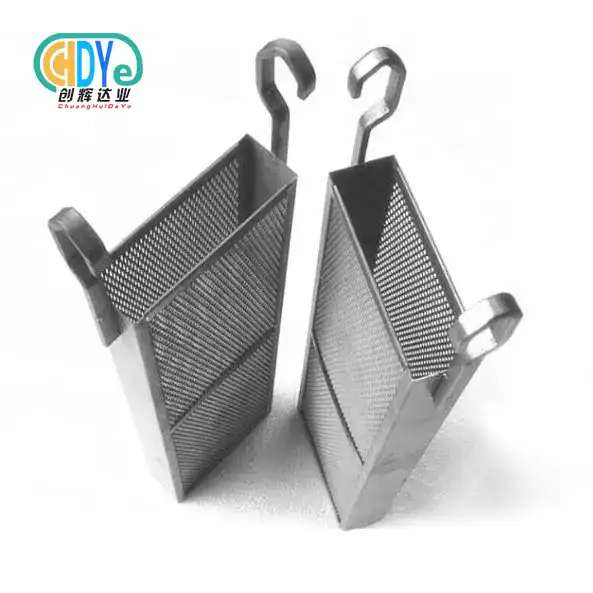
Picking the correct Titanium Anode Basket for high-performance nickel and zinc plating lines has a direct effect on the regularity of the covering, the cost of operation, and the amount of time that the line is up and running. A Titanium Anode Basket made from commercially pure titanium (usually Grade 1 or Grade 2) acts as a support that doesn't dissolve and holds anode materials that do dissolve, like zinc slugs or nickel rounds. Titanium anode baskets keep the anode surface area the same, unlike most solid anodes that change form as they dissolve. This keeps the current flowing smoothly, and almost all of the anode material is used up. This basic benefit lowers the amount of scrap that is made, stops sludge from forming, and creates the stable electrochemical environment needed for precise surface finishing in metalworking, electronics manufacturing, and painting automobile parts.
Understanding Titanium Anode Baskets for Nickel and Zinc Plating
What Defines a Titanium Anode Basket
An electroplating device called a Titanium Anode Basket is made to hold used anode materials and move electricity through the coating circuit. Because titanium naturally forms a thin, stable titanium dioxide (TiO₂) passive film on its surface, the Titanium Anode Basket doesn't break apart during plating. In acidic solutions like nickel sulphate, Watts nickel, and acid zinc baths, this oxide layer keeps the metal from rusting. The titanium anode basket's mesh or open design lets the electrolyte flow, making sure that ions hit the cathode evenly across the plating area. These titanium anode baskets are made by our company using high-purity titanium plates that are more than 99.5% pure and meet ASTM B265 Grade 1 and Grade 2 standards. Because the material is both light and strong, it is perfect for long plating processes with constant current loads.
Working Principles in Electroplating Circuits
In an electrochemical cell, the anode contact point is made up of titanium anode baskets. From the converter, electricity runs through the busbar and into the hook of the titanium anode basket. It then goes through the titanium mesh and to the anode material inside, which could be zinc nuggets, nickel balls, or other metals that dissolve. As the current flows, metal ions leave the anodes that are no longer useful and move through the liquid to the cathode object. The shape of the box is very important for keeping the current flow even. When titanium anode baskets are made correctly, they place the anode material at the right distance from the cathode. This keeps the edges from burning or the middle from not getting enough power. Mesh holes are usually between 6×3 mm and 12.5×4.5 mm, which is a good balance between structural strength and fluid flow. This design makes sure that the quantity of ions stays the same throughout the bath. This leads to better plating quality and uniform coating thickness.
Material Composition and Design Features
As the core base material, we use pure titanium from the market in Grades 1 and 2. Because Grade 2 is stronger, it can handle heavy-duty uses, while Grade 1 is slightly better at resisting rust in very acidic conditions. Both types work very well in sulphuric acid, hydrochloric acid, and alkaline plating baths, which are popular in nickel and zinc electroplating. Precision mechanical processing, such as cutting, drilling, and bending, is used to make titanium sheets into cylindrical or rectangular Titanium Anode Basket shapes during the production process. All joints are welded with TIG (Tungsten Inert Gas) under argon protection to keep the welds from oxidising and make sure they are the same strength as the parent material. Hook designs change depending on how much current is needed. Titanium bars that are rectangular or square reduce voltage drop at the busbar interface, keeping energy economy high during high-current plating processes. Individual versions are made to fit different tank sizes, anode load limits, and coating chemistry needs.
Comparing Titanium Anode Baskets with Other Anode Types
Performance Against Graphite and MMO Anodes
Graphite anodes are a cheap choice, but they wear away slowly in strong plating baths, so they need to be replaced often and cause carbon to get into the electrolyte. MMO (Mixed Metal Oxide) covered anodes are more stable in size, but they cost more at first and lose their catalyst over time, especially in high-current-density uses. Titanium anode baskets that hold anode materials that dissolve bring together the best parts of both systems. The titanium structure keeps its shape over its service life, which is usually 5 to 10 years in nickel and zinc baths. The anode material inside replaces metal ions efficiently as it wears down. This setup gets rid of the stub waste that comes with solid anodes and cuts down on the time needed to change the anodes.
Cost-Benefit Analysis for Plating Operations
Titanium anode baskets are more cost-effective than other options when you look at their total cost of ownership. The original cost is higher than for graphite or basic steel baskets, but the longer life and low upkeep more than make up for it. Titanium Anode Baskets use almost all of the anode material, so they don't produce the 10-15% stub trash that is usual with solid anodes. Filtration costs go down, and bath life goes up when sludge production goes down, and reject rates from uneven plate thickness go down when current distribution stays the same. The only thing that needs to be done to keep up with it is cleaning the Titanium Anode Basket every so often with a weak acid solution and replacing the hooks when they wear out. This predictable repair routine helps purchasing teams plan their spare parts inventory well and avoid breaks in production that come up out of the blue.
When Titanium Baskets Are the Optimal Choice
Titanium anode baskets work great for tasks that need uniform finishing quality over long production runs. Titanium anode baskets are used in industries like PCB production, car decorative plating, and rotogravure cylinder production to keep the tight standards needed for precise surface finishes. Titanium anode baskets make it possible for better current distribution, which lowers the number of rejects in operations that work with high-value parts.
How to Choose the Best Titanium Anode Basket for Your Nickel and Zinc Plating Line?
Evaluating Technical Specifications
Before choosing the right titanium anode basket, you should look at the technical specs of your finishing line. The size of the tank determines the shape of the titanium anode basket. Cylindrical titanium anode baskets work with round tanks that are popular in barrel plating, while rectangular titanium anode baskets work with automatic rack plating lines. Current density affects both the design of the hook and the cross-section of the wire. For example, high-amperage operations need bigger hooks or designs that combine the better conductivity of copper with the better corrosion resistance of titanium. The size of the mesh hole must keep the anode material from leaving as it breaks down. For nickel balls, standard 10x5mm mesh works fine, but for smaller zinc bits, you might need 6x3mm micro-mesh pieces. The anode capacity and titanium anode basket depth should match your replenishment plan. For example, deeper titanium anode baskets require less frequent refilling but hold more starting material.
Assessing Supplier Credentials and Certifications
Professionals in procurement must check the quality systems of suppliers to make sure that products always work well. ISO 9001:2015 certification means that quality control procedures have been set up and cover checking raw materials, production methods, and testing the finished product. Documentation that can be used to track materials, like mill test papers that prove the grade and chemical makeup of titanium, keeps you safe from low-quality materials that might break too soon in corrosive plating settings. Manufacturers with a lot of experience offer expert help in addition to just delivering products. Consulting an engineer can help you get the best titanium anode basket design for your plating chemicals, current levels, and tank shapes. When trying to increase production capacity or quickly replace broken equipment, lead time agreements become very important.
Considering Custom Design Options
There are many situations where standard titanium anode basket layouts work well, but there are also times when unique designs work better. Titanium anode baskets with built-in shields may be needed for automotive trim plates to keep certain places safe from too much current intensity. The custom titanium anode basket shape lets you exactly control the anode-to-cathode spacing, which is useful for PCB via-filling applications. We can make titanium anode baskets that exactly match your specs if you send us CAD or PDF models. Custom designs are made to solve specific problems, like tanks with odd forms, anode materials of odd sizes, or problems with connecting to automatic handling systems. This adaptability makes sure that the titanium anode basket works well with current production systems and improves the performance of plating.
Operational and Maintenance Best Practices for Titanium Anode Baskets
Routine Cleaning and Inspection Protocols
To keep the titanium anode basket working at its best, it needs to be cleaned on a regular basis to get rid of scale buildup and passive oxide films that stop conductivity. Immersion in a solution of 10-15% sulphuric acid for 30 to 60 minutes removes calcium crystals and brings back the electrical connection between the anode material and the titanium anode basket. After treating with acid, rinse well with deionised water to keep contamination from moving to the coating bath. A visual review should be done once a month to look for cracks or splits in the weld, damage to the mesh, and uneven hooks that don't make full contact with the busbar. The hook is the most important electrical connection. Even small bending can cause hot spots that waste current and put the wire at risk of thermal damage. By measuring the resistance at the point where the titanium anode basket meets the busbar, contact problems can be found before they affect production.
Troubleshooting Common Plating Line Issues
Uneven coating thickness is often caused by not setting the titanium anode basket correctly or running out of anode. The active breakdown zone stays in the middle of the cathode as long as the amounts of the anode material stay the same. An uneven coating distribution could mean that the titanium anode basket mesh is blocked. When holes get clogged with sludge or anode pieces, electrolyte flow patterns change, which changes the local current density. When the working voltage goes over the breakdown potential of the titanium oxide film or when the titanium anode basket is in a bath with fluoride, passivation events happen, and the titanium anode basket stops conducting current. In chemically problematic situations, passivation can be stopped by adding controlled amounts of chloride to the electrolyte or covering the titanium anode basket surface with MMO.
Extending Service Life Through Proper Operation
Working within the recommended current density ranges stops wear from speeding up. When there is too much power, it heats the contact places, which weakens weld joints and hooks over time. Keeping the electrolyte at the right temperature, concentration, and pH level stops violent rust that could damage the titanium anode basket. The choice of anode material affects how the titanium anode basket wears. Zinc slugs with sharp edges may wear down mesh surfaces faster than nickel balls with a smooth surface. Using anode materials that are the right size keeps the Titanium Anode Basket structure from being overloaded with mechanical stress. These operating factors, along with regular maintenance, make Titanium Anode Baskets reliable over the course of their many-year service life, increasing return on investment.
Where and How to Buy Quality Titanium Anode Baskets?
Identifying Reputable Manufacturers
Within the global titanium anode basket market, there are producers from the US, Europe, and Asia. The "Titanium Capital" of China, the Baoji area, has a lot of production capacity. This is a good place for Shaanxi Chuanghui Daye Metal Material Co., Ltd. to be because it has access to established supply lines for high-purity titanium raw materials and specialised processing tools. To rate manufacturers, you have to look at their output skills and quality control systems. Advanced facilities should have electron beam ovens for melting titanium, precise rolling equipment for making sheets, and automatic TIG welding systems that make sure the quality of the joints stays the same. With ISO 9001:2015 approval, you can be sure that the whole manufacturing process, from choosing the substrate to the final packing, is governed by structured quality controls.
Understanding Procurement Logistics
Lead times depend on how complicated the order is and how much customisation is needed. Standard titanium anode basket designs usually ship in three to four weeks, but custom-designed units may need six to eight weeks for engineering, making the tools, and manufacturing. Bulk sales often get better prices, but procurement teams have to weigh volume savings against the costs of keeping goods and the space needed to store them. Standards for packaging keep titanium anode baskets safe while shippers transport them across borders. Using the right crating keeps delicate mesh structures and hooks from getting damaged by moving parts. Each package comes with paperwork like material certificates, dimensional inspection reports, and handling directions. This helps with getting inspection routines and meeting traceability requirements.
Leveraging OEM Customisation Services
Original equipment maker (OEM) agreements make solutions that are specifically designed to solve operational problems. Collaborative engineering creates titanium anode basket shapes that work best with specific coating chemicals, tank layouts, or needs for automating the process. Prototyping lets you try and improve things before committing to large amounts for production, which lowers the risks of implementation. Long-term supply deals keep prices stable and make sure that capacity is allocated during times of high demand. Forming relationships with manufacturers who have strong technical skills and adaptable production systems guarantees a steady supply of important finishing line parts that keep operations running smoothly.
Conclusion
Titanium anode baskets are an important investment for nickel and zinc plating lines that want to improve the quality of their electroplating and make their operations run more smoothly. Their ability to keep their shape, fight corrosion, and make the best use of anode materials has a direct effect on the regularity of the coating, the cost of production, and the uptime of the equipment. To choose the right titanium anode basket, you need to carefully look at the technical details, the credibility of the provider, and the customisation options that meet your unique business needs. Regular upkeep increases your equipment's lifespan and keeps it working well for years. Partnering with experienced makers that offer engineering support and reliable supply chains will help your plating operations stay ahead of the competition in today's world of precision manufacturing.
FAQ
Q: How long do titanium anode baskets usually last in processes that plate nickel and zinc?
A: Titanium anode baskets that are not treated and work in normal nickel sulphate or zinc sulphate baths usually last between 5 and 10 years. How long something lasts depends on the current density, the type of electrolytes used, and how well it is maintained. The structure of the titanium anode basket doesn't usually break; instead, the hooks usually need to be replaced or fixed before the mesh body breaks down because of rust or damage from handling.
Q: What kind of repair plan should we follow to ensure the basket works at its best?
A: Visual inspections once a month check the weld strength, mesh condition, and hook smoothness to find problems before they worsen. Cleaning with acid every three months gets rid of scale buildup and returns electricity. Every year, resistance testing at key electrical points finds contacts that are wearing out and need fixing. This preventative method stops breakdowns before they happen and keeps the quality of the plating stable over the titanium anode basket's service life.
Q: Can titanium anode baskets work in both nickel and zinc plating baths?
A: The chemical safety of titanium means that the same titanium anode basket can be used for both nickel and zinc treatment. Cross-contamination can be avoided by cleaning well between coating chemicals. Some businesses keep separate titanium anode baskets for each chemistry to cut down on switching time and the chance of contamination, while others use the same titanium anode baskets for more than one plating process as long as they follow the right cleaning procedures.
Partner with Chuanghui Daye for Premium Titanium Anode Basket Solutions
Shaanxi Chuanghui Daye Metal Material Co., Ltd. has been working with rare metals for more than 30 years and can help you with your nickel and zinc processing needs. We are an ISO 9001:2015-certified titanium anode basket seller in China's Titanium Capital. We use high-purity Grade 1 and Grade 2 titanium substrates to make both unique and standard titanium anode baskets. Our high-tech TIG welding methods and thorough quality control make sure that every titanium anode basket works well and lasts a long time. Our tech team works together to make sure that you get exactly what you need, whether it's cylinder-shaped titanium anode baskets for barrel plating or custom-shaped rectangles for automatic rack lines. Get in touch with our technical experts at info@chdymetal.com to talk about your finishing line needs and get detailed quotes on titanium anode baskets for sale at low factory-direct prices and on your preferred delivery schedule.
References
1. Smith, J.R., Electroplating: Basic Principles, Processes and Practice, Eugen G. Leuze Verlag, 2019.
2. Zhang, W., Titanium and Titanium Alloys: Fundamentals and Applications, Wiley-VCH, 2018.
3. American Society for Testing and Materials, ASTM B265: Standard Specification for Titanium and Titanium Alloy Strip, Sheet, and Plate, ASTM International, 2020.
4. Chen, L., Surface Finishing Technology for the Metal Industry, Springer, 2021.
5. Johnson, M.K., Corrosion Resistance of Titanium in Industrial Applications, Materials Science Forum, 2020.
6. Williams, R.T., Advanced Electroplating Techniques for Modern Manufacturing, CRC Press, 2022.
Learn about our latest products and discounts through SMS or email