- English
- French
- German
- Portuguese
- Spanish
- Russian
- Japanese
- Korean
- Arabic
- Greek
- German
- Turkish
- Italian
- Danish
- Romanian
- Indonesian
- Czech
- Afrikaans
- Swedish
- Polish
- Basque
- Catalan
- Esperanto
- Hindi
- Lao
- Albanian
- Amharic
- Armenian
- Azerbaijani
- Belarusian
- Bengali
- Bosnian
- Bulgarian
- Cebuano
- Chichewa
- Corsican
- Croatian
- Dutch
- Estonian
- Filipino
- Finnish
- Frisian
- Galician
- Georgian
- Gujarati
- Haitian
- Hausa
- Hawaiian
- Hebrew
- Hmong
- Hungarian
- Icelandic
- Igbo
- Javanese
- Kannada
- Kazakh
- Khmer
- Kurdish
- Kyrgyz
- Latin
- Latvian
- Lithuanian
- Luxembou..
- Macedonian
- Malagasy
- Malay
- Malayalam
- Maltese
- Maori
- Marathi
- Mongolian
- Burmese
- Nepali
- Norwegian
- Pashto
- Persian
- Punjabi
- Serbian
- Sesotho
- Sinhala
- Slovak
- Slovenian
- Somali
- Samoan
- Scots Gaelic
- Shona
- Sindhi
- Sundanese
- Swahili
- Tajik
- Tamil
- Telugu
- Thai
- Ukrainian
- Urdu
- Uzbek
- Vietnamese
- Welsh
- Xhosa
- Yiddish
- Yoruba
- Zulu
Buy Titanium Wire for Custom Fabrication Projects
Professionals in the military, medical, and industry fields are always looking for titanium wire for sale that works exceptionally well in tough conditions when they need high-quality materials for custom fabrication projects. This high-quality metallic thread is an important choice for uses that need better strength-to-weight ratios, full resistance to rust, and biocompatibility. Precision-drawn titanium wire is now available on the market, which solves difficult engineering problems in areas like welding, additive manufacturing, and making specialized parts, where the quality of the material directly affects the success of the project and the safety of the workers.
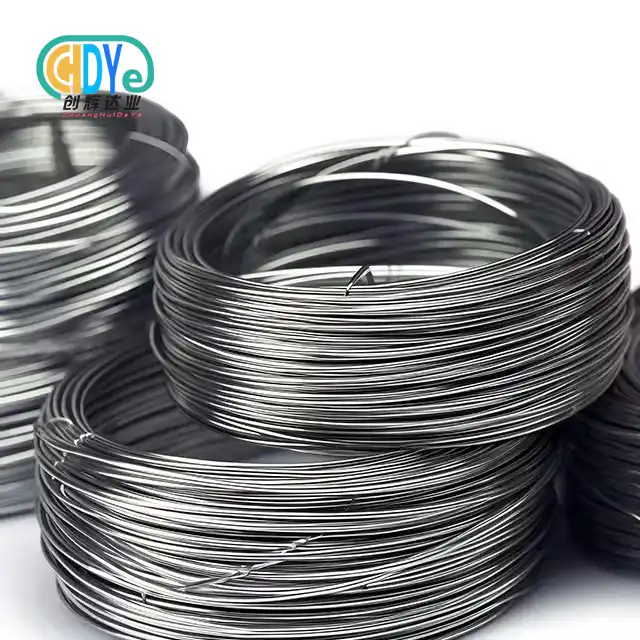
Understanding Titanium Wire: Properties, Grades, and Types
Titanium wire is very popular because it has unique physical and chemical qualities that make it better than other materials in serious situations. When procurement workers know about these traits, they can make choices that improve both performance and cost-effectiveness.
Core Material Properties That Define Performance
The mass of titanium wire is about 4.51 g/cm³, which makes it about 45% lighter than steel while keeping the same tensile strength. This amazing ratio of strength to weight is especially useful in flight, where every gram counts for fuel economy and payload capability. The material's Young's modulus of 114 GPa is very similar to that of human bone tissue, which is why it is used so often in orthopedics and medical implants. Titanium wire is more resistant to corrosion than almost all other metals because it forms a steady, self-healing oxide layer when it comes into contact with air. This passive film doesn't break down in seawater, chloride conditions, or most acids. This makes it essential for chemical processing and marine uses, where a failure of the material could have disastrous results.
Standard Grades and Their Specific Applications
The different types of commercial titanium wire are based on ASTM B863 standards, and each grade is designed to meet particular performance needs. Grade 1 titanium is the most flexible and easiest to shape, which makes it perfect for complicated production processes that need a lot of cold working. Grade 2 is the most common grade of commercial pure titanium. It is strong and easy to work with, making it ideal for general industry uses. Tensile forces of more than 895 MPa are found in Grade 5 (Ti-6Al-4V) titanium metal, which is the strongest. This alpha-beta metal has great fatigue resistance and works well at high temperatures, which is why it is used so much in aircraft structural parts and high-performance cars. Palladium is added to Grades 7 and 12 to make them more resistant to corrosion in reducing acid conditions. Grade 9 (Ti-3Al-2.5V), on the other hand, is a cheaper choice than Grade 5, which has the same mechanical properties.
Manufacturing Process Excellence and Quality Assurance
To get very pure titanium and get rid of any impurities, modern titanium wire production starts with vacuum arc remelting of titanium sponge. To get the best microstructure and mechanical qualities, the next steps, hot working and cold drawing, need to be done with precise temperature control and many cooling cycles. Finishing the surface with acid etching gets rid of oxide scales and keeps the dimensions accurate within h8 or h9 limits. As part of quality control, the intermediate element content is constantly checked, especially for hydrogen amounts below 0.015%, to stop the materials from breaking down. Laser measurement tools make sure that the width is always the same, and tensile testing makes sure that the mechanical qualities are correct for each output batch. These strict standards make sure that the things end users get meet or go beyond worldwide standards.
Comparing Titanium Wire with Alternative Materials for Fabrication Projects
Material choices have a big effect on how well a project turns out, how much it costs to run, and how well it works in the long run. When you look at titanium wire next to other materials, you can see that it has clear pros and cons that help you make the best purchasing decisions.
Performance Characteristics Versus Stainless Steel
Stainless steel wire is easier to find and costs less at first, which makes it a good choice for projects that need to stick to a budget. But titanium wire is better at resisting rust in chloride conditions, where stainless steel gets pitted and corroded in cracks. Titanium's weight advantage is especially noticeable in aircraft uses, where a 45% weight decrease directly leads to better fuel economy and more payload capability. Titanium wire also works better at high temperatures. It can keep its shape up to 600°C, while 316 stainless steel can only handle 870°C in oxidizing conditions. But stainless steel is better at conducting electricity and costs less, so it can be used in situations where resistance to rust and weight reduction are not as important.
Economic Considerations and Total Cost of Ownership
The initial cost of materials is only one part of the overall economics of the job. The high durability and corrosion resistance of titanium wire make it last longer and require less upkeep, especially in maritime and chemical processing settings. This longer lifespan often explains higher initial costs because it means fewer replacements and lower costs over the life of the product. The costs of processing different products are also very different. Cutting titanium wire with special tools and soldering it in a controlled atmosphere makes the process more difficult. It can be shaped and welded easily, though, so if the right methods are used, it can be processed faster than harder materials like Inconel or Hastelloy metals.
Industry-Specific Material Preferences
Aerospace companies always ask for titanium wire for sale because it has to meet strict weight standards and work in harsh conditions. Biocompatibility and corrosion resistance are more important to medical equipment makers than cost. In chemical processing plants, corrosion resistance and temperature stability are very important. On the other hand, electrical qualities may be just as important to electronics makers as mechanical performance. These industry-specific goals affect how materials are chosen and how much of a cost premium is accepted. Understanding these preferences helps suppliers position their products effectively while enabling buyers to justify material choices to internal stakeholders.
How to Choose the Right Titanium Wire for Custom Fabrication Projects
To choose the best titanium wire specifications, you need to carefully look at the needs of the product, the surroundings, and the supplier's abilities. This structured method reduces risk and makes sure that buying decisions are made that are good value for money.
Critical Specification Parameters
The choice of diameter relies on the planned use and the capabilities of the processing tools. For welding, the diameters need to be between 0.8 and 4 mm to match the width of the base material. For additive manufacturing, the diameters may need to be between 1.0 and 1.6 mm for the best layering control. Different types of surfaces need different types of finishes, such as pickled surfaces for welding and bright-drawn finishes for medical devices that need to be biocompatibility certified. Tensile strength needs to match up with safety factors and service loads. Grade 1 titanium has a minimum tensile strength of 240 MPa, which is good for shaping, and Grade 5 titanium has a minimum tensile strength of 895 MPa, which is good for structural uses. Formability is shown by elongation values. Higher elongation grades allow for more complicated bending and shaping processes without cracking.
Environmental and Regulatory Considerations
A study of the operating surroundings tells you which grade to use and how to treat the surface. Grades that are better at resisting chloride are needed in marine areas, while alpha-beta alloys may be needed for flex resistance in high-temperature settings. When working with chemicals, you need to be very careful when choosing the right acidic media and temperature combinations. For medical and military uses, following the rules becomes very important. For medical devices to be approved by the FDA, they must meet certain grade standards and show proof of tracking. For aerospace uses, you need to follow AMS standards and keep material certification paperwork. These rules and regulations have a big effect on choosing suppliers and getting things.
Supplier Evaluation and Risk Management
When evaluating a supplier, you should look at their technical skills, quality processes, and how reliable their service is. ISO 9001:2015 certification shows that quality control systems are well-established, while AS9100 certification shows that you know a lot about the aerospace business. Mill test certificates and material traceability documents show that the standards have been met and allow quality checking. Lead times and production ability affect how projects are scheduled and how material is managed. Suppliers who have enough capacity and can be flexible with their schedules can meet pressing needs and make design changes. Location affects shipping prices and arrival times, especially when buying things from other countries.
Where and How to Buy Titanium Wire: A B2B Procurement Guide
A good buying strategy takes into account the skills of the suppliers, the costs, and the need for risk management. To make the best choices about where to buy titanium wire for sale, you need to know how the market works and what the suppliers are like.
Supplier Classification and Capabilities
Primary makers, such as Shaanxi Chuanghui Daye Metal Material Co., Ltd., give you direct access to the tools and knowledge you need to make things. Based in Baoji, China's "Titanium Valley," they can do all stages of production, from processing raw materials to making finished wires. Their ISO 9001:2015 license and more than 30 years of experience in the field show that they have strong quality systems and technical know-how. Distributors and service centers keep common grades and sizes in stock and can offer inventory access and smaller amount flexibility. They usually offer faster shipping for basic requirements, but they might not be able to help with technical issues as much. Trading businesses can offer low prices, but they might not have direct links with manufacturers or professional know-how.
Procurement Strategies and Best Practices
Building long-term relationships with qualified providers lets you work together to solve problems and decide what to do first when supplies are low. Making a promise to buy a lot of something can often get you better prices and secure capacity allocation. But single-source agreements raise the risk of supply and make it harder to offer reasonable prices. Dual sourcing methods keep ties with suppliers while balancing supply security with competitive prices. This method needs more work to be qualified, but it gives you options in case of supply problems or quality problems. Monitoring a supplier's performance by keeping an eye on quality and delivery data finds problems before they affect production plans.
International Trade Considerations
The use of global buying increases the number of suppliers available and often lowers costs. This is especially true for titanium goods, which are mostly made in a few areas. But foreign purchasing is more difficult because of things like customs paperwork, the risk of currency fluctuations, and longer wait times. It's harder to check the quality of goods that come from other countries because you have to look over a lot of paperwork and maybe even do tests on-site. To make sure that technical help and project planning work well, communication methods and time zone differences need to be carefully managed.
Benefits of Titanium Wire for Your Fabrication Projects
The useful benefits of titanium wire for sale in many different fields can be seen in real-life situations. These benefits are real and should help with choosing materials and making a business case for expensive materials.
Aerospace Industry Performance Validation
Manufacturers of commercial aircraft say that using titanium wire instead of steel in important uses saves a lot of weight and makes the parts less likely to rust. Boeing's experience with titanium wire in the construction of hydraulic systems shows that it cuts weight by 40% compared to options made of stainless steel and eliminates maintenance problems caused by rust over 20-year service intervals. Extreme conditions, such as temperature changes from -65°C to +200°C and exposure to hydraulic fluids and deicing chemicals, are used in military and aircraft applications to show how well titanium wire works. Titanium welding wire is used in the production of the F-35 Lightning II to hold together structural parts. This cuts weight by 25% while keeping the structure strong under 9G acceleration loads.
Medical Device Innovation and Patient Outcomes
Manufacturers of orthopedic implants regularly get better osseointegration rates with titanium wire-based devices than with stainless steel options. Over 24-month follow-up times, clinical studies show that titanium spine fusion hardware has a 95% success rate for integration, while stainless steel devices only have an 87% success rate. Titanium wire is radiolucent and biocompatible, which makes it useful for cardiovascular devices. Manufacturers of guidewires say that their products are easier to push and transmit power, and they don't cause allergic reactions like nickel-based options do. These gains in performance directly lead to better results for patients and a lower rate of revision surgery.
Chemical Processing Equipment Longevity
Petrochemical facility operators document 3-5 times longer service life for titanium wire-fabricated heat exchanger components compared to 316L stainless steel in chloride-containing process streams. Corrosion tracking data from offshore oil platforms shows that titanium parts don't lose much metal after 15 years of being in seawater. Experience with desalination plants shows that titanium wire is not easily damaged by chloride stress corrosion cracking, which is a type of failure that commonly happens with stainless steel parts. Plant operators say that titanium wire-fabricated seawater handling systems are available 99.8% of the time, while stainless steel versions are only 94% of the time.
Shaanxi Chuanghui Daye Quality Excellence
Our factory in Baoji uses advanced vacuum heating and precise drawing techniques to make titanium wire that meets the strictest requirements. Each output batch goes through a lot of tests, such as checking the tensile strength, measuring, and judging the quality of the surface. This strict quality control makes sure that the product always meets or beats ASTM, AMS, ISO, and GB standards for performance. Customer reviews from companies that make aerospace and medical devices show how quick our technical help is and how reliable our delivery is. Customers can speed up the development of their products while still meeting quality standards thanks to our ability to provide custom specs and fast prototyping.
Conclusion
Choosing the right high-quality titanium wire for sale has a big effect on the success of projects in the medical, industrial, and aircraft fields. Knowing the qualities of the material, the requirements for each grade, and what the provider can do lets you make smart purchasing choices that improve performance while keeping costs low. Titanium wire has many proven benefits, such as being very resistant to rust, having a high strength-to-weight ratio, and being biocompatible. These benefits make the higher material costs worthwhile because the wire lasts longer and costs less over its lifetime. To make sure the project is a success, good buying strategies combine technical needs with criteria for evaluating suppliers. These criteria should focus on things like quality certifications, manufacturing skills, and reliable delivery.
FAQ
Q: Is titanium wire suitable for outdoor applications exposed to saltwater?
A: Titanium wire is very resistant to rust from salt water because it forms a strong oxide layer. After decades of being exposed to seawater, it doesn't corrode much in marine applications. This makes it perfect for offshore platforms, processing equipment, and marine vessel parts where stainless steel would rust in pits and cracks.
Q: How do bulk purchase quantities affect titanium wire pricing?
A: Costs per unit usually go down when you buy more. This is called economies of scale, and price breaks happen at 100 kg, 500 kg, and 1000 kg order numbers. But when you look at the total cost, you should think about how much it costs to keep an inventory, how much space you need, and whether or not certain types of materials will become obsolete. There are a lot of suppliers that offer bulk discounting deals that keep prices low and delivery options open.
Q: Which titanium grade is appropriate for medical device applications?
A: For medical devices, you need materials that are approved by ASTM F136 (Grade 5) or ASTM F67 (Grades 1-4) and are biocompatible and able to be tracked. Grade 2 titanium is very biocompatible and can be used for non-load-bearing purposes. Grade 5 titanium (Ti-6Al-4V) is stronger and is better for orthopedic implants and medical tools that need to be very mechanically effective.
Partner with Chuanghui Daye for Premium Titanium Wire Solutions
Procurement professionals seeking reliable titanium wire supplier partnerships can access comprehensive technical support and competitive pricing through Shaanxi Chuanghui Daye's extensive manufacturing capabilities. Our ISO 9001:2015-certified factory in Baoji's "Titanium Valley" uses advanced production technologies and 30 years of experience working with rare metals to make sure that all types of titanium are of the same high quality. Get in touch with our expert team at info@chdymetal.com to talk about your unique needs and get personalized quotes that show how committed we are to providing cost-effective, high-performance materials for difficult fabrication projects.
References
1. Boyer, R.R., "An Overview on the Use of Titanium in the Aerospace Industry," Materials Science and Engineering A, Vol. 213, 2018.
2. American Society for Testing and Materials, "ASTM B863-17 Standard Specification for Titanium and Titanium Alloy Wire," ASTM International, 2017.
3. Froes, F.H., "Titanium: Physical Metallurgy, Processing, and Applications," ASM International Handbook Committee, 2015.
4. Donachie, Matthew J., "Titanium: A Technical Guide, 2nd Edition," ASM International Materials Engineering Publication, 2016.
5. Peters, M., Kumpfert, J., Ward, C.H., and Leyens, C., "Titanium Alloys for Aerospace Applications," Advanced Engineering Materials, Vol. 5, No. 6, 2019.
6. Lutjering, Gerd and Williams, James C., "Titanium Engineering Properties and Applications Handbook," Springer Materials Science and Engineering Series, 2020.
Learn about our latest products and discounts through SMS or email