- English
- French
- German
- Portuguese
- Spanish
- Russian
- Japanese
- Korean
- Arabic
- Greek
- German
- Turkish
- Italian
- Danish
- Romanian
- Indonesian
- Czech
- Afrikaans
- Swedish
- Polish
- Basque
- Catalan
- Esperanto
- Hindi
- Lao
- Albanian
- Amharic
- Armenian
- Azerbaijani
- Belarusian
- Bengali
- Bosnian
- Bulgarian
- Cebuano
- Chichewa
- Corsican
- Croatian
- Dutch
- Estonian
- Filipino
- Finnish
- Frisian
- Galician
- Georgian
- Gujarati
- Haitian
- Hausa
- Hawaiian
- Hebrew
- Hmong
- Hungarian
- Icelandic
- Igbo
- Javanese
- Kannada
- Kazakh
- Khmer
- Kurdish
- Kyrgyz
- Latin
- Latvian
- Lithuanian
- Luxembou..
- Macedonian
- Malagasy
- Malay
- Malayalam
- Maltese
- Maori
- Marathi
- Mongolian
- Burmese
- Nepali
- Norwegian
- Pashto
- Persian
- Punjabi
- Serbian
- Sesotho
- Sinhala
- Slovak
- Slovenian
- Somali
- Samoan
- Scots Gaelic
- Shona
- Sindhi
- Sundanese
- Swahili
- Tajik
- Tamil
- Telugu
- Thai
- Ukrainian
- Urdu
- Uzbek
- Vietnamese
- Welsh
- Xhosa
- Yiddish
- Yoruba
- Zulu
Can Titanium Anode Basket Extend Electroplating Bath Life?
Titanium anode baskets make electroplating baths last a lot longer by keeping chemicals stable and stopping leakage. Titanium forms an inactive oxide layer that doesn't break down, unlike other anode materials that break down and add impurities to the plating solution. This inactive quality keeps the bath clean, reduces how often you need to change the solution, and prevents sludge from forming. As a safe carrier for anode materials that dissolve, like nickel balls or copper bits, these baskets keep the current flowing evenly and stop the geometric changes that hurt plating quality over time.
Understanding Titanium Anode Baskets and Their Role in Electroplating
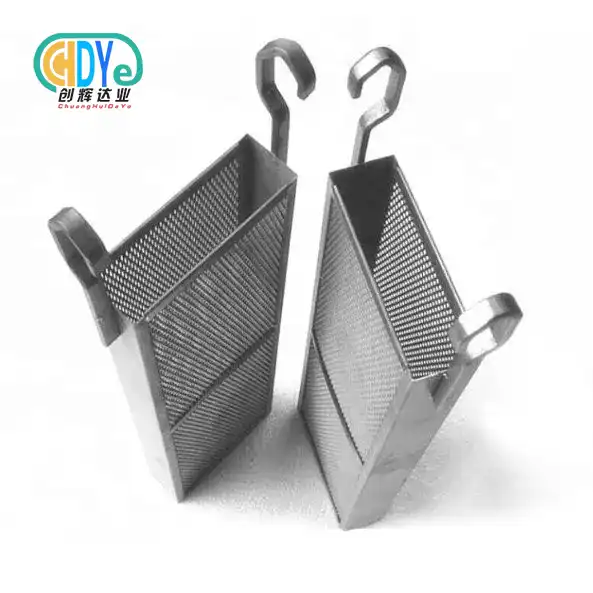
Titanium anode baskets are special parts of electroplating systems that hold anode materials that dissolve while electrical current flows through them during the plating process. These baskets are made from commercially pure titanium, usually Grade 1 or Grade 2 (ASTM B265). They are very resistant to rust and can conduct electricity well enough for large-scale activities.
What Makes Titanium Anode Baskets Different
The main benefit comes from the way titanium reacts with electricity. Titanium forms a thin, solid film of titanium dioxide (TiO₂) on its surface when it comes into contact with electrolytes. This inactive layer works as a barrier to keep the basket material from dissolving into the bath. It still lets electrons move to the anode material inside, though. The basket turns into a carrier that can't be broken down, which fixes some of the most important problems with standard solid rock anodes. We make these baskets with high-purity titanium that is at least 99.5% pure at our plant in Baoji, which is known as China's Titanium Capital. To get the shape that is wanted, the material is carefully mechanically processed by cutting, drilling, and bending. Standard forms are cylindrical and rectangular, but if the client asks, we can also make shapes that aren't listed here. Each basket has carefully thought-out hooks (with different current values) that make sure of the best electrical contact with the busbar.
Construction and Manufacturing Excellence
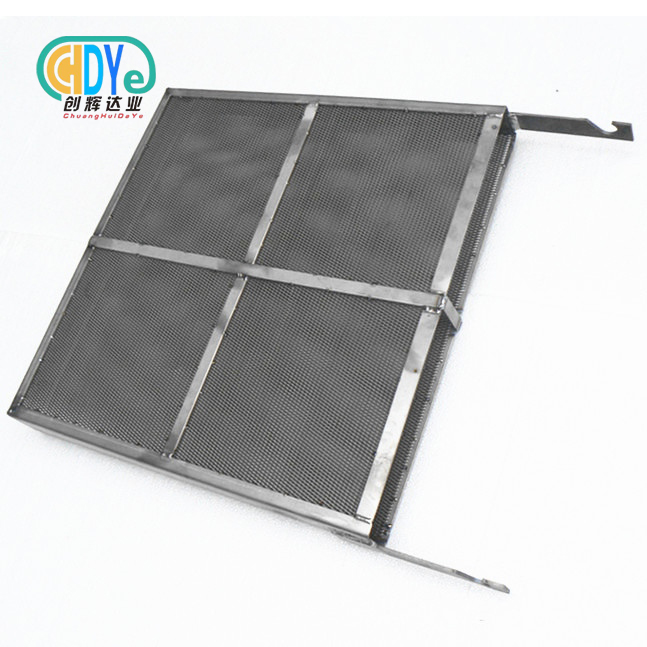
The main thing that determines how long a basket lasts is how well the welds are sealed. We use TIG (Tungsten Inert Gas) welding with argon protection to keep the joint process from oxidising and creating alpha-cases. Welds made with this method look silver or straw-coloured, which means they are properly fused to titanium without becoming weak. The mesh structure, which is usually made by expanding technology or spot welding, has diamond-shaped measurements that range from 6x3 mm to 12.5x4.5 mm. This makes the structure strong while still letting electrolytes pass through. Quality control always follows the rules set by ISO 9001:2015 during the whole production process. After being welded and put together, each basket goes through a thorough checking process that includes a chemical makeup analysis, mechanical performance testing, corrosion resistance evaluation, and dimensional verification. This methodical approach makes sure that every product that leaves our plant meets international standards and always works well in tough industrial settings.
How Do Titanium Anode Baskets Extend Electroplating Bath Life?
The material of the titanium anode basket affects how long the bath lasts by controlling pollution and keeping chemicals stable. Traditional materials add breakdown products that build up in the solution and need to be filtered, chemically adjusted, or even completely replaced every so often. Titanium baskets change this equation in a basic way.
Minimising Contamination Through Material Stability
Most of the time, bath pollution comes from anode material dissolving into the electrolyte. Graphite or stainless steel baskets that rust give off particles and metallic ions that mess up the chemistry of plating. These impurities make deposited coats rough, lower the throwing power, and require a lot of bath upkeep. Titanium's inactive oxide layer stops this kind of poisoning, so the electrolyte stays pure for long periods of time. This effect is especially clear in precise tasks like making PCBs, where even small amounts of contamination can change the quality of via-filling and the evenness of through-hole drilling. Titanium baskets provide a stable anode shape, which is useful for both artistic chrome plating on cars and nickel plating. While solid slab anodes change form as they break down, causing an uneven spread of current density, baskets keep their surface area the same over the course of their service life.
Reducing Operating Costs Through Extended Service Intervals
Many kinds of economic gains add up. Less upkeep on the bathroom means less downtime, fewer chemical purchases, and lower costs for getting rid of waste. If you take excellent care of them, the baskets should last between 5 and 10 years in standard nickel and copper baths. They generally break at mechanical stress points instead of through corrosion. Other materials need to be replaced every 12 to 24 months, but this one lasts a very long time. Gains in operational efficiency go beyond just planning repairs. Titanium baskets get almost 100% of the anode material used up by getting rid of the "stubs" that are left over when solid anodes break down into sizes that aren't useful. This full use of the material lowers the cost of purchase and makes inventory management easier. This is especially beneficial for businesses that use expensive anode materials like silver or special alloys.
Comparative Analysis: Titanium Anode Basket vs Other Anode Materials
Procurement workers can make smart investment decisions when they know how the different materials used in titanium anode baskets affect performance. Each type of material has its own unique properties that affect both the original prices and the long-term economics of operations.
Performance Against Traditional Materials
Graphite baskets are cheap to buy at first, but they wear away quickly in acidic environments, especially those with fluoride ions. The carbon particles that are released during degradation make the bath dirty and make it difficult to filter. Stainless steel has a stronger structure, but it avoids corroding more quickly in chloride-containing solutions, adding iron to the solution and making the electrodeposited layers more brittle. Lead-based methods used to be popular in some plating jobs, but environmental and worker health worries are making regulators look more closely at them. Aside from compliance problems, lead anodes need precise voltage control to avoid passivation and create oxides that need to be constantly cleared from bath surfaces. Titanium solves these problems and has better heat stability, which is very important in processes that need to be done at high temperatures.
Environmental and Safety Advantages
Compliance with regulations is having a bigger impact on material choices across all industrial areas. Titanium is safe to use, doesn't produce any harmful byproducts when it breaks down, and is compatible with efforts to make production more environmentally friendly. The fact that the material can be recycled adds to its environmental image. However, baskets rarely reach the end of their useful life because they last so long. Another comparison advantage is that it uses less energy. Pure titanium only conducts energy about 3% as well as copper, but hook systems that are properly built can circumvent this problem. Titanium-clad copper hooks are used in many high-amperage situations because they combine the conductivity of copper with the corrosion protection of titanium. This mixed method avoids the problems that come with solid titanium wires getting too hot while still being chemically compatible with the metal environment.
Practical Applications and Industry Use Cases
Titanium anode baskets are used in many different types of electroplating, and each one has specific performance needs that show how flexible and reliable the material is.
Electronics and PCB Manufacturing
For high-density connection boards, vertical continuous plating (VCP) lines need to be very regular and keep contaminants under control. Baskets with phosphorus-copper balls inside them enable the exact current flow needed for through-hole drilling and filling without any defects. The fixed anode area makes sure that the throwing power stays the same across complicated board shapes. This lowers the rate of rejects and supports the trend toward miniaturisation that is driving modern electronics.
Automotive and Decorative Finishing
Titanium baskets are used in Watts nickel or sulfamate nickel baths for cleaning wheels and auto trim parts. The ionic balance needed for bright, level finishes that meet OEM standards is maintained by being able to keep adding nickel rounds without stopping production. Titanium is resistant to the highly oxidising bath conditions that quickly break down other materials, which makes chromium coating, especially hexavalent chrome methods, more effective.
Heavy-Industry Applications
Making rotogravure cylinders is a good example of a tough job that titanium baskets do well in. During copper or chrome deposition, these processes subject anodes to long rounds of high current. Changes in the distance between the anode and cathode have a direct effect on the regularity and sharpness of the coating, so it's important that the dimensions stay the same. Titanium baskets stay rigid during plating processes that last hours on end, which ensures that the quality of the cylinders for printing stays the same.
Procurement Guide: Choosing and Buying Titanium Anode Baskets
To choose the right Titanium Anode Basket specs, you need to know both what the application needs and what the provider can do. Several things affect long-term happiness and operational success.
Critical Evaluation Criteria
Material approval is the basis for making sure of the quality of something. Suppliers should show Material Test Certificates (MTC) that show the chemical makeup meets the requirements of ASTM B265 Grade 1 or Grade 2 standards. Pay close attention to the amount of intermediate elements present; too much oxygen, hydrogen, nitrogen, or carbon can mean that the material isn't good and will fail early. Dimensional errors have a direct effect on how well something works. For full busbar contact, hook flatness must stay within 0.5 mm; variations cause hot spots that are dangerous and lower current efficiency. The mesh opening size needs to be big enough to hold your tiny anode material bits as they dissolve. For small balls or nuggets, you may need 10x5mm standard mesh or even finer micro-mesh inserts.
Understanding Pricing and Value
The prices depend on many things, like the size of the box, the complexity of the mesh, the arrangement of the hooks, and the number of orders. When you buy in bulk, the price per unit usually goes down, but the minimum order quantity varies by maker. Think about the total cost of ownership instead of just the purchase price. Premium titanium baskets often justify the higher original investment because they last longer and require less upkeep. Reliable sellers offer full after-sales support, including help with installation, teaching on how to use the product, and warranty coverage. These services are especially helpful during the first few months of adoption, when process optimisation might need help from a technology expert. Support for maintenance, such as hook repair and re-welding services, makes baskets last longer and saves capital investments over long periods of use.
Conclusion
In conclusion, titanium anode baskets give measured improvements to the life of the electroplating bath by providing better corrosion resistance and contamination protection. Their passive oxide layer keeps the electrolyte pure and helps keep the current flowing evenly in a wide range of plating tasks. When compared to standard basket materials, this material's durability means longer service intervals, lower upkeep costs, and better operating efficiency. When bought from reputable companies that use strict quality control methods, these boxes are a smart investment that improves both the quality and speed of production. Titanium is the best metal for difficult industrial electroplating jobs because it works well technically, doesn't harm the environment, and saves money in the long run.
FAQ
Q:How Long Do Titanium Anode Baskets Last?
A: Titanium Anode Baskets: How Long Do They Last? Titanium baskets that aren't treated usually last between 5 and 10 years in normal nickel and copper plating baths. The actual lifespan relies on things like the current density, the chemistry of the bath, and how the parts are handled mechanically. Baskets covered with MMO (Mixed Metal Oxide) for insoluble anode uses have a covering life of 1 to 5 years. They can be recoated after grinding and pickling steps.
Q: What Causes Titanium Anode Baskets to Stop Conducting?
A: Passivation occurs when the working voltage exceeds the breakdown potential of the oxide film on titanium, which is typically above 10–12V in certain bath chemistries. Solutions that contain fluoride make this effect happen more often. Applying anti-passivation coatings (MMO or platinum), maintaining the correct amount of chloride in effective bath mixtures, and monitoring voltage factors during operation can all help prevent this from happening.
Q: Can we repair damaged baskets?
A: You can fix most problems by replacing the hooks and sewing the mesh back together. Mesh pieces that have been separated can be joined back together using the right TIG welding methods in an argon atmosphere. When the catalyst in a coated basket runs out, the surface can be cleaned and coated again, which restores full usefulness at a fraction of the cost of a new basket.
Partner with Chuanghui Daye for Premium Titanium Anode Basket Solutions
Shaanxi Chuanghui Daye has been working with rare metals for more than 30 years and does electroplating work all over the world. We are a well-known titanium anode basket maker in Baoji's Titanium Capital. We use modern production methods and quality systems that are ISO 9001:2015 certified to make sure we meet the strictest requirements. Our customisation services can fit different shapes and power needs, and our factory-direct prices make sure you get the best value. Whether you're starting new production facilities or making the most of current plating lines, our technical team can help you with advice that is specific to your bath chemistry and operational factors. Get in touch with us at info@chdymetal.com to discuss your Titanium Anode Basket needs and find out how our precision-engineered goods can make your bath last longer and cost less to run.
References
1. Schlesinger, M., & Paunovic, M. (2010). Modern Electroplating, Fifth Edition. John Wiley & Sons, Inc.
2. Dini, J. W. (1993). Electrodeposition: The Materials Science of Coatings and Substrates. Noyes Publications.
3. Kanani, N. (2004). Electroplating: Basic Principles, Processes and Practice. Elsevier Advanced Technology.
4. Lowenheim, F. A. (1978). Modern Electroplating, Third Edition. John Wiley & Sons.
5. ASTM International (2020). ASTM B265: Standard Specification for Titanium and Titanium Alloy Strip, Sheet, and Plate. ASTM International Standards.
6. Gamburg, Y. D., & Zangari, G. (2011). Theory and Practice of Metal Electrodeposition. Springer Science+Business Media.
Learn about our latest products and discounts through SMS or email