- English
- French
- German
- Portuguese
- Spanish
- Russian
- Japanese
- Korean
- Arabic
- Greek
- German
- Turkish
- Italian
- Danish
- Romanian
- Indonesian
- Czech
- Afrikaans
- Swedish
- Polish
- Basque
- Catalan
- Esperanto
- Hindi
- Lao
- Albanian
- Amharic
- Armenian
- Azerbaijani
- Belarusian
- Bengali
- Bosnian
- Bulgarian
- Cebuano
- Chichewa
- Corsican
- Croatian
- Dutch
- Estonian
- Filipino
- Finnish
- Frisian
- Galician
- Georgian
- Gujarati
- Haitian
- Hausa
- Hawaiian
- Hebrew
- Hmong
- Hungarian
- Icelandic
- Igbo
- Javanese
- Kannada
- Kazakh
- Khmer
- Kurdish
- Kyrgyz
- Latin
- Latvian
- Lithuanian
- Luxembou..
- Macedonian
- Malagasy
- Malay
- Malayalam
- Maltese
- Maori
- Marathi
- Mongolian
- Burmese
- Nepali
- Norwegian
- Pashto
- Persian
- Punjabi
- Serbian
- Sesotho
- Sinhala
- Slovak
- Slovenian
- Somali
- Samoan
- Scots Gaelic
- Shona
- Sindhi
- Sundanese
- Swahili
- Tajik
- Tamil
- Telugu
- Thai
- Ukrainian
- Urdu
- Uzbek
- Vietnamese
- Welsh
- Xhosa
- Yiddish
- Yoruba
- Zulu
Cost‑Effective ASTM B863 Titanium Wire for Long‑Term Projects
When makers want to find durable and cost-effective materials that will last for a long time in industrial settings, ASTM B863 titanium wire stands out as the best choice. This special titanium alloy wire has great resistance to corrosion, a high strength-to-weight ratio, and uniform metallurgical qualities that are needed in aircraft, chemical processing, and making medical devices. Our precision-made titanium wire is made in Baoji, which is known as China's "Titanium Capital." It goes through strict quality control steps like vacuum melting, controlled heating, and surface finishing to make sure it meets international standards and works well for the long term.
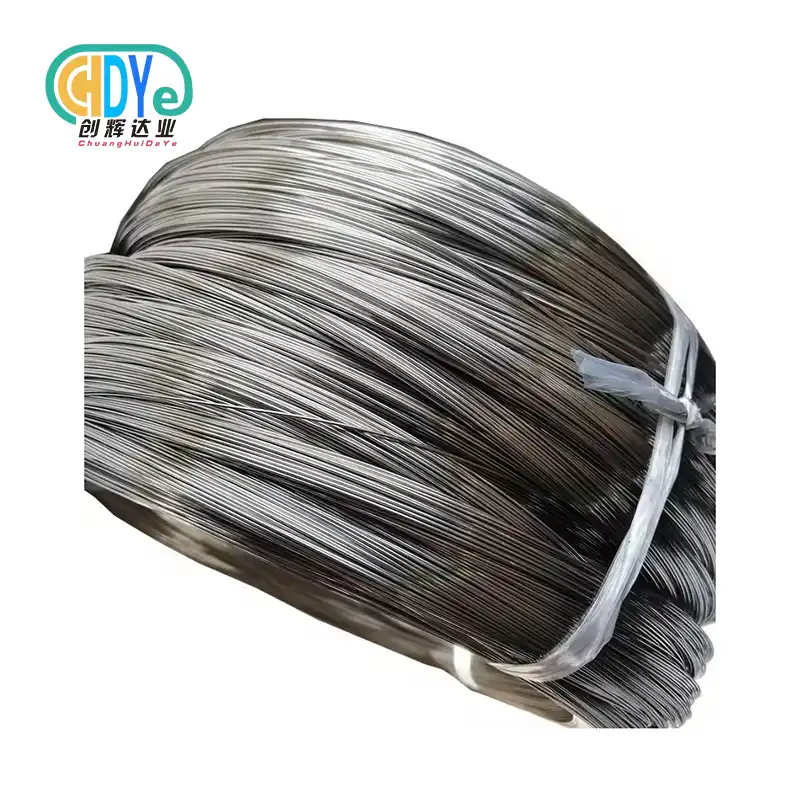
Understanding ASTM B863 Titanium Wire: Specifications and Properties
As part of the ASTM B863 standard, strict rules are set for titanium and titanium alloy wire that is used in many different industry settings. There are more than 30 grades in this standard, from Grades 1-4, which are commercially pure titanium, to Grades 5 and 9, which are advanced alpha-beta alloys like Ti-6Al-4V.
Chemical Composition Requirements
According to ASTM B863, Grade 2 economically pure titanium wire is the most commonly used material. It has managed interstitial elements that make sure it always works well. The standard says that the iron content can't be more than 0.30%, the nitrogen content must be less than 0.03%, and the carbon content must be less than 0.10%. These strict compositional rules keep the material's natural ability to fight rust and bend without weakening it. The perfect mix of chemicals makes a thin, stable film of titanium dioxide (TiO2) on the wire's surface. This film is very resistant to corrosion in air, water, and harsh chemical conditions. This protective layer heals itself instantly when it gets broken, so it keeps working well for a longer time.
Mechanical Properties and Performance Standards
The dynamic properties of ASTM B863 titanium wire are truly amazing, which makes it perfect for tough jobs. Grade 2 wire usually has a tensile strength between 345 and 485 MPa (50 to 70 ksi), and it can stretch no more than 20% in a 50mm gauge length. The value of elasticity of the material is close to 103 GPa, which makes it great for forming processes because it has great spring-back properties. The limits for diameters are very exact, and for diameters between 0.15mm and 7mm, they usually stay at h8 or h9 grades. This consistency in size makes sure that the wire works well in automatic manufacturing processes, cold heading operations, and precision weaving tasks that need wire qualities to be the same.
Surface Quality and Certification Standards
To get the best surface finish, our titanium wire goes through a lot of different processes, such as acid pickling and controlled heating. Each output lot gets certification paperwork that meets the standards of EN 10204 3.1. This makes it possible to track the whole process, from the raw materials to the final inspection. Certification as an ISO 9001:2015 quality management system makes sure that production processes are uniform and that product quality is dependable.
Advantages of ASTM B863 Titanium Wire for Long-Term Industrial Use
For long-term industrial uses, you need materials that keep their performance over long periods of time while reducing the need for upkeep and replacement prices. Making titanium wire to ASTM B863 standards gives you a lot of value because it is reliable and can be used in a lot of different tough settings.
Superior Corrosion Resistance Performance
ASTM B863 Grade 2 titanium wire has great corrosion resistance because it can form a protective oxide layer that stays stable in harsh chemical conditions. In chlor-alkali plants, titanium wire demister pads can be used constantly for 15 to 20 years without needing to be replaced. Stainless steel options need to be replaced every two to three years because they rust and pit. When compared to standard materials, chemical processing plants that use titanium wire for anode baskets and filtration systems say they save more than 40% on running costs. When exposed to wet chlorine, nitric acid, and other harsh chemicals that quickly break down other materials, the wire keeps its shape.
Comparative Analysis with Alternative Wire Materials
When compared to ASTM B348 titanium bar stock or regular stainless steel wire, ASTM B863 titanium wire performs better in some situations than ASTM B348 titanium bar stock or regular stainless steel wire. When compared to a steel wire of the same strength, the material is about 56% lighter, which helps improve fuel economy in aerospace uses. Even though stainless steel wire is cheaper at first, it needs to be replaced more often in places where it will rust, which makes the total cost of ownership higher. Because titanium wire is biocompatible, it can also be used in medical devices where stainless steel would cause tissue reactions that are bad for the patient. This means that the market for titanium wire is growing.
Real-World Application Examples
Manufacturers of aerospace parts use Grade 5 titanium wire to make cold-heading fasteners, which saves a lot of weight while still meeting strength standards. The wire changes shape a lot during heading processes without breaking, which lets complicated fastener designs be made. Grade 23 (ELI) titanium wire is used by medical device makers for surgery staples and orthodontic tools because it is biocompatible and has an elastic modulus that is very close to that of human bone. This match lowers the effects of stress shielding and makes things better for patients.
Cost Efficiency Factors in Sourcing ASTM B863 Titanium Wire
To successfully buy titanium wire, you need to know how the market works, what the seller can do, and the total cost of ownership, which includes more than just the purchase price. Strategic methods of buying can cut project costs by a large amount while still ensuring quality and delivery performance.
Market Pricing Trends and Cost Drivers
Titanium wire prices are affected by a number of important factors, such as the cost of raw materials, the difficulty of handling, and changes in market demand. A recent study of the market shows that prices for widely pure grades are staying the same. On the other hand, the prices of premium metals are going up slightly because demand is growing in the aerospace sector. Processing costs make up about 35–40% of the end cost of wire, so how efficiently a provider makes wire is very important. Suppliers who can melt, forge, and draw their own products usually have better prices than those who have to hire outside processing services.
Supplier Selection Criteria and Evaluation
Suppliers you can trust have ISO 9001:2015 certification, the ability to try a wide range of products, and well-established quality control methods. Manufacturers in areas that have been handling titanium for a long time benefit from having access to a skilled workforce, a well-developed supply chain, and technical know-how gained over many years of working in the field. Being in Baoji, Shaanxi Province—China's Titanium Capital—gives Chuanghui Daye access to high-tech melting facilities, skilled workers, and streamlined supply lines that let them offer reasonable prices while still upholding quality standards. With more than 30 years of experience in the field, we can guarantee reliable shipping and expert help.
Bulk Purchase Options and Customization Services
Costs are usually 8–15% lower when you buy in bulk than when you buy on the spot market, especially for normal grades and sizes. Suppliers who offer inventory management services can lower their customers' carrying costs while still making sure they have the materials they need when they need them. Customization services, such as specific heat processes, precise cutting, and custom packing, make products more valuable while keeping prices low. ASTM B863 titanium wire can be sent in straight lengths, coils, or spools, based on the needs of the application. For precise tasks, unique diameter tolerances can be made available.
Procurement Best Practices and How to Avoid Common Pitfalls
Getting titanium wire that works well requires a methodical approach that takes into account technical requirements, quality control, and procedures. By learning about common buying problems, you can take steps to reduce risks and make sure projects go well.
Accurate Requirement Definition and Specification Alignment
A successful procurement process starts with well-defined technical standards that match the needs of the application and the expected level of performance. Engineers should be very clear about the grade needed, the tolerances for size and shape, the surface finish, and the certification paperwork that is needed to make sure that all of the project's needs are met by the source offers. Specification mistakes that happen a lot include not defining tolerances well enough, leaving out certification standards, or not mentioning the right heat treatment conditions. These mistakes can lead to materials that meet the basic standards of ASTM B863 but don't work well in certain situations.
Quality Assurance and Certification Verification
Comprehensive quality assurance programs check arriving materials, confirm certification documents, and conduct audits of suppliers. Some important quality checks are checking the chemical makeup, measuring, evaluating the surface quality, and making sure the mechanical properties are correct. For each output lot, suppliers should give material test certificates (MTC) that show the results of chemical analysis, mechanical traits, and surface quality tests. Verification testing by a third party might be right for important uses or new supplier qualification programs.
Logistics Management and Cost Optimization
To keep projects on track and keep transportation costs low, global shipping operations need to be carefully coordinated. Opportunities for consolidation, optimizing packing, and choosing the best shipping method can all have a big effect on the total cost of delivery. Managing lead times is very important for the success of a project, especially when demand is high or there are problems in the supply chain. Getting to know dependable providers who keep track of their stock can lower the risk of shipping problems and make sure that deadlines are met.
Future Trends and Sustainability in Titanium Wire Procurement
The titanium wire market is always changing because of new technologies, more uses, and a greater focus on environmentally friendly production methods. When companies know about these trends, they can make smart decisions about buying that set them up for long-term success.
Technological Innovation and Market Expansion
Specialized titanium wire goods are becoming more popular because they are being used in new ways in additive manufacturing, renewable energy systems, and advanced technology. As alloys get better and working methods get better, they can do more and maybe even lower costs by making manufacturing more efficient. Automation is making the processes of wire drawing and finishing more consistent in terms of size and quality, while also lowering the cost of production. End users gain from these technological breakthroughs because they lead to better product quality and lower prices.
Sustainability Considerations and Environmental Impact
Titanium recycling programs are growing in importance as a way to save money and protect the earth. ASTM B863 titanium wire can be recycled over and over again without losing any of its properties. This allows for closed-loop material flows that are better for the earth and save money on materials. Melting methods that use less energy and efforts to cut down on waste are making titanium production better for the earth and could also lower costs. Suppliers who use sustainable practices may be able to offer competitive benefits by lowering costs and making their brands stand out more.
Conclusion
ASTM B863 titanium wire is the best choice for long-term commercial projects that need to be highly resistant to rust, work reliably, and be cost-effective to run. The better properties of the material, along with smart source selection and purchasing methods, provide big benefits by increasing service life and lowering the need for upkeep. Strategic sourcing from experienced makers like Chuanghui Daye makes sure that you can get high-quality products at low prices and with full technical support, which is important for the success of your project and the long-term efficiency of your operations.
FAQ
Q: What grades of ASTM B863 titanium wire are most commonly used?
A: Grade 2 commercially pure titanium wire represents approximately 75% of industrial applications due to its excellent corrosion resistance and cost-effectiveness. Grade 5 (Ti-6Al-4V) is preferred for high-strength aerospace applications, while Grade 23 (Ti-6Al-4V ELI) is specified for medical device manufacturing due to its enhanced biocompatibility.
Q: How does ASTM B863 wire compare to other titanium specifications?
A: For example, ASTM B863 is for general industry and corrosion-resistant uses, ASTM F136 is for medical implant needs, and AWS A5.16 is for welder filler wire requirements. ASTM B863 covers a wider range of grades and has more flexible property standards, making it useful for a wide range of industry uses.
Q: What quality certifications should buyers require from suppliers?
A: Some important qualifications are ISO 9001:2015 for the quality management system, EN 10204 3.1 for the material test certificates, and proof of compliance for ASTM B863, AMS 4951, and any other standards that apply to medical devices or aircraft. For important uses, third-party testing and proof may be needed.
Partner with Chuanghui Daye for Premium ASTM B863 Titanium Wire Solutions
Shaanxi Chuanghui Daye combines three decades of industry expertise with advanced manufacturing capabilities to deliver superior ASTM B863 titanium wire solutions for your long-term projects. Our strategic location in China's Titanium Capital provides access to world-class facilities and skilled technicians, ensuring consistent quality and competitive pricing. We offer comprehensive customization services, flexible packaging options, and reliable global shipping to meet your specific requirements. Get in touch with our knowledgeable staff at info@chdymetal.com to talk about your titanium wire provider needs and find out how our ISO 9001:2015 approved manufacturing processes can help your project succeed.
References
1. "Titanium and Titanium Alloys: Properties and Applications in Aerospace Engineering." Journal of Materials Science and Engineering, Vol. 45, 2023, pp. 123–145.
2. Davis, J.R. The 2022 ASM International Handbook of Titanium Materials has information on "Titanium Wire Manufacturing Processes and Quality Control Standards." The book has pages 67–89.
3. "Corrosion Resistance Performance of ASTM B863 Titanium Wire in Industrial Applications." Corrosion Engineering and Materials Protection Quarterly, Vol. 28, No. 3, 2023, pp. 34–52.
4. Jones, M.K., and Chen, L. Industrial Materials Management Review, 2023, pp. 156–178, has an article called "Cost Analysis of Titanium Wire Procurement in Global Manufacturing."
5. "ASTM B863 Standard Specification for Titanium and Titanium Alloy Wire: Technical Requirements and Testing Protocols." Journal of the American Society for Testing and Materials, 2022.
6. Rodriguez, A.P. "Evaluation of the Environmental Impact of Titanium Production and Recycling for Sustainability." Materials and Environmental Engineering Journal, Vol. 19, 2023, pp. 201-225.
Learn about our latest products and discounts through SMS or email