- English
- French
- German
- Portuguese
- Spanish
- Russian
- Japanese
- Korean
- Arabic
- Greek
- German
- Turkish
- Italian
- Danish
- Romanian
- Indonesian
- Czech
- Afrikaans
- Swedish
- Polish
- Basque
- Catalan
- Esperanto
- Hindi
- Lao
- Albanian
- Amharic
- Armenian
- Azerbaijani
- Belarusian
- Bengali
- Bosnian
- Bulgarian
- Cebuano
- Chichewa
- Corsican
- Croatian
- Dutch
- Estonian
- Filipino
- Finnish
- Frisian
- Galician
- Georgian
- Gujarati
- Haitian
- Hausa
- Hawaiian
- Hebrew
- Hmong
- Hungarian
- Icelandic
- Igbo
- Javanese
- Kannada
- Kazakh
- Khmer
- Kurdish
- Kyrgyz
- Latin
- Latvian
- Lithuanian
- Luxembou..
- Macedonian
- Malagasy
- Malay
- Malayalam
- Maltese
- Maori
- Marathi
- Mongolian
- Burmese
- Nepali
- Norwegian
- Pashto
- Persian
- Punjabi
- Serbian
- Sesotho
- Sinhala
- Slovak
- Slovenian
- Somali
- Samoan
- Scots Gaelic
- Shona
- Sindhi
- Sundanese
- Swahili
- Tajik
- Tamil
- Telugu
- Thai
- Ukrainian
- Urdu
- Uzbek
- Vietnamese
- Welsh
- Xhosa
- Yiddish
- Yoruba
- Zulu
How ASTM B 348 Titanium Rods Are Shaping the Future of Manufacturing?
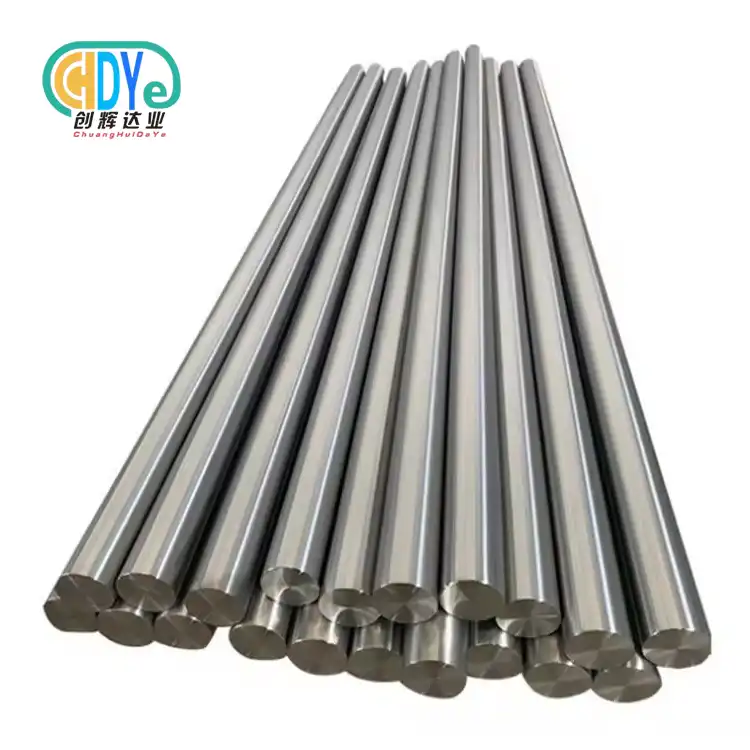
For the 21st century's industrial change to happen, materials must perform exceptionally well while also meeting higher standards for environmental and operating safety. The ASTM B 348 industrial titanium rod is a major step forward in this development. It changes how makers in the aerospace, chemical processing, and medical device sectors solve design problems. These precisely designed rods have the best mix of strength, resistance to corrosion, and light weight, which lets engineers push the limits of what's possible in modern industrial settings.
Understanding ASTM B 348 Titanium Rods: Specifications, Properties, and Standards
Defining ASTM B 348 Specifications and Industry Significance
ASTM B 348 titanium bars are made from carefully designed materials that meet one of the strictest international standards for using titanium in industry. This standard sets out detailed rules for the chemical makeup, mechanical properties, and size variations that make sure the product works the same way in all kinds of production settings. There are different grades in the standard, but Grade 2 (commercially pure) and Grade 5 (Ti-6Al-4V alloy) are the ones most often used for structural purposes in industry. ASTM B 348 covers more than just basic material standards. It also sets rules for heat treatment, surface finish, and measurement accuracy that make it easy to use in precision manufacturing processes. Companies that make things depend on this uniformity to confidently choose materials. They know that certified rods will work consistently, no matter where the provider is located.
Chemical Composition and Mechanical Excellence
Grade 2 titanium rods are very flexible and have tensile strengths of up to 345 MPa. This makes them perfect for uses that need complicated shaping or welding. The controlled interstitial content (oxygen, nitrogen, and carbon) makes sure that the balance between strength and workability is perfect. It also keeps the material's superior rust resistance in harsh chemical conditions. Grade 5 titanium alloy rods have much better mechanical performance. They can withstand tensile forces of more than 895 MPa and don't wear down easily. When you mix aluminum and vanadium, you get a two-phase microstructure that has the rust protection of pure titanium and the strength needed for high-stress situations. This grade works very well under cyclic loads, which makes it necessary for spinning gear and structural parts that are exposed to dynamic forces.
Quality Assurance Through Advanced Testing Protocols
Several quality control checks are built into the process of making ASTM B 348 industrial titanium rod to make sure the material is solid and that it works as it should. Ultrasonic testing that follows ASTM E114 guidelines finds internal cracks that could weaken the structure, and chemistry analysis makes sure that the exact elements are present within certain limits. Under normal settings, mechanical testing procedures check the yield strength, final tensile strength, and elongation percentages. Microstructural analysis shows the right grain structure and phase distribution, which means that the heat treatment methods have made the material's qualities better. These thorough testing methods give buying teams written proof of the quality of the materials and their ability to be tracked.
Comparing ASTM B 348 Titanium Rods to Alternatives: Making the Right Choice
Performance Advantages Over Traditional Materials
Titanium rods have better strength-to-weight ratios than traditional stainless steel options. This means that they can be made much lighter without losing any of their structural integrity. This trait is especially useful in spinning equipment, where less mass directly means less energy use and longer bearing life. Titanium is more resistant to rust than even the best types of stainless steel in chloride-rich environments. This means that it doesn't get pitting or crevice corrosion, which are common problems in chemical processing and marine uses. Stainless steels depend on chromium oxide films, but titanium makes a stable, self-healing oxide layer that keeps its protective qualities even when it is damaged physically.
Grade Selection Strategies for Optimal Performance
Commercially pure Grade 2 titanium works best in situations where resistance to rust and shapeability are more important than strength. Grade 2 is great for welding and resisting harsh media, which makes it useful for chemical processing equipment, heat exchangers, and pipe systems. The better thermal conductivity of the material compared to stainless steel makes heat transfer more efficient in thermal management uses. Grade 5 titanium metal is the best choice for structural uses that need the most strength and resistance to wear. This grade has great mechanical qualities and keeps its shape even when the temperature changes. It is used in aerospace parts, high-performance bolts, and precision machinery. Because the alloy has been used in harsh conditions before, it is the best choice for important safety uses.
Cost-Benefit Analysis for Manufacturing Applications
Even though titanium rods are more expensive than rods made of other materials, the total cost of ownership often works out better for titanium options because they last longer, need less upkeep, and perform better. The material is very durable, so it doesn't need to be replaced often. This cuts down on downtime and the productivity losses that come with it. Gains in manufacturing efficiency through lighter materials, better resistance to corrosion, and better mechanical qualities often cover the prices of the initial materials within the first operating cycle. This economic benefit becomes stronger in situations where material failure could have serious effects on safety or the environment.
Applications and Benefits of ASTM B 348 Titanium Rods in Modern Manufacturing
Aerospace and Defense Applications
ASTM B 348 industrial titanium rod is a key material for airplane structural parts, engine parts, and landing gear systems in the aerospace business. Because the material is so strong for how light it is, aircraft makers can make the vehicles lighter while still keeping their structural integrity in harsh circumstances. Rods made of titanium are used to machine important parts like wing spars, engine mounts, and hydraulic system parts. Titanium's unique mix of strength, resistance to corrosion, and electromagnetic transparency makes it useful for military uses in navy ships, armed vehicles, and electronic warfare systems. Because the material doesn't rust in saltwater, it's essential for underwater parts and gear on surface vessels that are used in harsh marine settings.
Chemical Processing and Petrochemical Industries
In chemical processing plants, titanium rods are used to make agitation shafts, valve stems, and pump parts that need to be able to withstand acidic chemicals while still staying the same size. The material doesn't crack when exposed to chloride stress, which is a usual way for stainless steel parts to fail in similar situations. In petrochemical plants, titanium bars are used for parts of heat exchangers, distillation columns, and pressure vessels because regular materials break down quickly in these places. The material's ability to keep its mechanical properties at high temperatures and to fight sulfur-containing compounds makes tools last longer and require less upkeep.
Medical Device Manufacturing Excellence
Medical device makers need high-purity titanium bars to make orthopedic implants, surgery tools, and parts for diagnostic equipment. Because the material is biocompatible and doesn't corrode easily in living settings, it's perfect for permanent implant uses where stability over time is very important. Precision machining of ASTM B 348 industrial titanium rod lets makers make the complicated shapes needed for current implant designs while keeping the dimensions close to the originals. The radiolucent qualities of the material make it easy to see images of the tissues around it, which makes tracking and diagnosis easier after surgery.
Procurement Insights: How to Source Quality ASTM B 348 Titanium Rods Efficiently
Supplier Evaluation and Certification Requirements
To successfully buy titanium rods, you need to carefully look at the skills, quality systems, and certifications of the seller. ISO 9001:2015 recognition is the bare minimum for quality management. More certifications in areas like flight or medical devices show that the company has more advanced quality skills. Procurement teams should check that suppliers have tracking systems that give full records from where the raw materials come from to the final inspection. As part of a manufacturing capability review, melting technology, forging tools, and precision machining resources should be looked at. Some suppliers have vacuum arc remelting (VAR) ovens that can make high-integrity titanium with few impurities. On the other hand, modern CNC machining centers can make tight tolerances in dimensions and provide better surface finishes.
Market Dynamics and Pricing Considerations
Price changes in the global titanium market are caused by aerospace production schedules, the supply of raw materials, and political issues in important producing areas. When procurement teams understand these dynamics, they can figure out the best time to buy things and make good long-term supply deals. Strategies for buying in bulk can save you a lot of money and make sure that your factory's most important processes never run out of supplies. When you form relationships with qualified suppliers, you can handle your goods together and cut down on lead times, which makes manufacturing more flexible.
Quality Assurance and Testing Requirements
Chemical makeup, mechanical properties, and dimensional accuracy should be checked against the buy specs during the incoming review process. Mill test certificates (MTC) are important for keeping track of materials, but more testing may be needed for important uses or when working with a new source. Advanced testing methods, like ultrasound inspection and microstructural analysis, make sure that materials are strong enough for tough jobs. Suppliers who offer full testing services make the buying process easier and provide extra quality security for important parts.
Future Trends: How ASTM B 348 Titanium Rods Are Driving Innovation in Manufacturing
Integration with Advanced Manufacturing Technologies
Because additive manufacturing technologies allow mixed manufacturing methods that blend standard machining with 3D printing, ASTM B 348 industrial titanium rod can be used in more situations. With these combined methods, producers can make complicated shapes that weren't possible before, all while keeping the excellent qualities of wrought titanium. Newer methods of cutting, like high-speed milling and electrical discharge machining (EDM), make it easier to work with titanium bars, which lowers the cost of production while raising the quality of the finish. Because of these advances in technology, titanium is now more available to businesses that used to think it was too expensive to use.
Sustainable Manufacturing and Environmental Benefits
Titanium parts are very durable, which helps with environmentally friendly manufacturing by making products last longer and needing to be replaced less often. Environmental duty and resource conservation are becoming more important in business, and titanium's long life makes it a good choice for businesses that want to meet their sustainability goals. Recycling titanium materials supports the idea of a circular economy because they let makers get value back from parts that are no longer needed, which reduces their reliance on main raw materials. New recycling methods are making titanium recovery more cost-effective, which is also better for the earth.
Emerging Applications and Market Expansion
Titanium bars are finding new uses in geothermal systems, sea energy harvesting gear, and parts of wind turbines that use renewable energy. The material doesn't break down easily in harsh environments and has great fatigue qualities, which make it perfect for these tough uses where upkeep access is limited. Adoption is speeding up in the automotive business as makers of electric vehicles look for lightweight materials to increase battery range while still meeting safety standards. Titanium bars are used to make high-performance bolts, suspension parts, and battery housing parts that help the car run more efficiently as a whole.
Conclusion
ASTM B 348 industrial titanium rod continues to change the way things are made in many different fields by offering unmatched performance qualities that help with new designs and better operations. The special mix of strength, rust resistance, and light weight of the material solves important problems in chemical processing, medical devices, aircraft, and new uses. As manufacturing technologies improve and environmental concerns grow, titanium bars will become more and more important in shaping the future of industrial production by making it more efficient, long-lasting, and eco-friendly.
FAQ
Q: What makes ASTM B 348 titanium rods superior to other metal alternatives?
A: Titanium rods made to ASTM B 348 have a strength-to-weight ratio that is better than stainless steel and aluminum options. They also fight corrosion better in harsh settings. The self-healing oxide layer of the material stops pitting and crevice rust that happens in chloride-rich environments. It also keeps the structure strong at very low temperatures (below 0°C) and high temperatures (400°C).
Q: How do I select the appropriate grade for my specific application?
A: The grade you choose relies on the standards of your application. Grade 2 (commercially pure) is great for chemical processing and naval uses because it doesn't rust and can be shaped easily. Grade 5 (Ti-6Al-4V) is the strongest and most resistant to wear for aircraft and building parts. When making your choice, think about things like the working temperature, the exposure to corrosive media, the needed strength levels, and the manufacturing needs.
Q: What quality certifications should I expect with ASTM B348 titanium rod purchases?
A: According to the EN 10204 3.1 standard, every shipment should have a Mill Test Certificate (MTC) that shows the heat number, the real chemical makeup, the mechanical test results, and that it meets ASTM B 348. Ultrasonic testing records, dimensional inspection certificates, and source quality system certifications like ISO 9001:2015 or aerospace-specific approvals may be added as well.
Q: Can ASTM B 348 titanium rods be welded effectively?
A: Grade 2 titanium is very easy to weld with inert gas protection (TIG/MIG) and doesn't need much heat treatment. Grade 5 needs more specific ways to be welded and a heat treatment after the welding process to keep the heat-affected zone from breaking. For high-quality welds of any grade, you need to use the right gas protection, clean the surface, and control the cooling rate.
Q: What are the typical lead times and minimum order quantities?
A: Lead times depend on the grade, size, and number needed, but for normal specs, they are usually between 2 and 6 weeks. Delivery times may be longer if you need custom sizes or special handling. Minimum order numbers depend on the diameter and length requirements. Usually, smaller sizes need higher minimum quantities. Setting up blanket orders with planned drops can help you get the best prices and lead times.
Partner with Chuanghui Daye for Premium ASTM B 348 Industrial Titanium Rod Solutions
You can trust Shaanxi Chuanghui Daye Metal Material Co., Ltd. to provide you with a high-quality ASTM B 348 industrial titanium rod supplier. They have been making rare metal products for over 30 years. In China's well-known "Titanium Capital," our ISO 9001:2015-certified factory makes high-quality titanium rods in grades Gr1, Gr2, Gr5, Gr7, Gr9, and Gr12. These rods come in lengths of up to 3000mm and widths of 4mm to 350mm. Our advanced vacuum arc remelting technology and precise CNC cutting skills make sure that your important applications get the best quality and most accurate measurements. You'll get reliable supply lines, low prices from the factory, and full expert help that manufacturers around the world trust. Email us at info@chdymetal.com to talk about your unique needs and find out how our titanium solutions can help you make better products.
References
1. Boyer, R.R., Welsch, G., and Collings, E.W. (2017). Second Edition of the Materials Properties Handbook: Titanium Alloys. ASM Worldwide.
2. Donachie, M.J. (2018). A Technical Guide for Manufacturing Applications with Titanium. Business Press Inc.
3. Peters, M., Kumpfert, J., Ward, C.H., and Leyens, C. (2016). How titanium and titanium alloys work and what they can be used for. VCH Wiley.
4. American Society for Testing and Materials (2019). The standard for titanium and titanium alloy bars and billets is ASTM B348-19. The International ASTM.
5. The Lutjering, G. Williams, J.C. (2020). The third edition of Titanium: Engineering Materials and Processes is out now. The Springer-Verlag.
6. Froes, F.H. and Qian, M. (2018). Processing, manufacturing, and market trends for titanium used in dentistry and medicine. Published by Woodhead.
Learn about our latest products and discounts through SMS or email