- English
- French
- German
- Portuguese
- Spanish
- Russian
- Japanese
- Korean
- Arabic
- Greek
- German
- Turkish
- Italian
- Danish
- Romanian
- Indonesian
- Czech
- Afrikaans
- Swedish
- Polish
- Basque
- Catalan
- Esperanto
- Hindi
- Lao
- Albanian
- Amharic
- Armenian
- Azerbaijani
- Belarusian
- Bengali
- Bosnian
- Bulgarian
- Cebuano
- Chichewa
- Corsican
- Croatian
- Dutch
- Estonian
- Filipino
- Finnish
- Frisian
- Galician
- Georgian
- Gujarati
- Haitian
- Hausa
- Hawaiian
- Hebrew
- Hmong
- Hungarian
- Icelandic
- Igbo
- Javanese
- Kannada
- Kazakh
- Khmer
- Kurdish
- Kyrgyz
- Latin
- Latvian
- Lithuanian
- Luxembou..
- Macedonian
- Malagasy
- Malay
- Malayalam
- Maltese
- Maori
- Marathi
- Mongolian
- Burmese
- Nepali
- Norwegian
- Pashto
- Persian
- Punjabi
- Serbian
- Sesotho
- Sinhala
- Slovak
- Slovenian
- Somali
- Samoan
- Scots Gaelic
- Shona
- Sindhi
- Sundanese
- Swahili
- Tajik
- Tamil
- Telugu
- Thai
- Ukrainian
- Urdu
- Uzbek
- Vietnamese
- Welsh
- Xhosa
- Yiddish
- Yoruba
- Zulu
How Does 6al 4v titanium round bar Resist Corrosion?
When air or water comes in contact with the 6Al-4V titanium round bar, it quickly forms a thin, stable, and highly adherent oxide layer made mostly of titanium dioxide (TiO₂). This layer prevents rust from forming. This passive film, which is only a few nanometres thick, protects the metal below from harsh conditions like salt, chlorides, oxidising acids, and alkaline solutions. It stops the metal from oxidising further and keeps it safe. Aluminium and vanadium, which are alloying elements, make this protective oxide layer even stronger and more stable. This makes Grade 5 titanium very durable in a wide range of industrial settings.
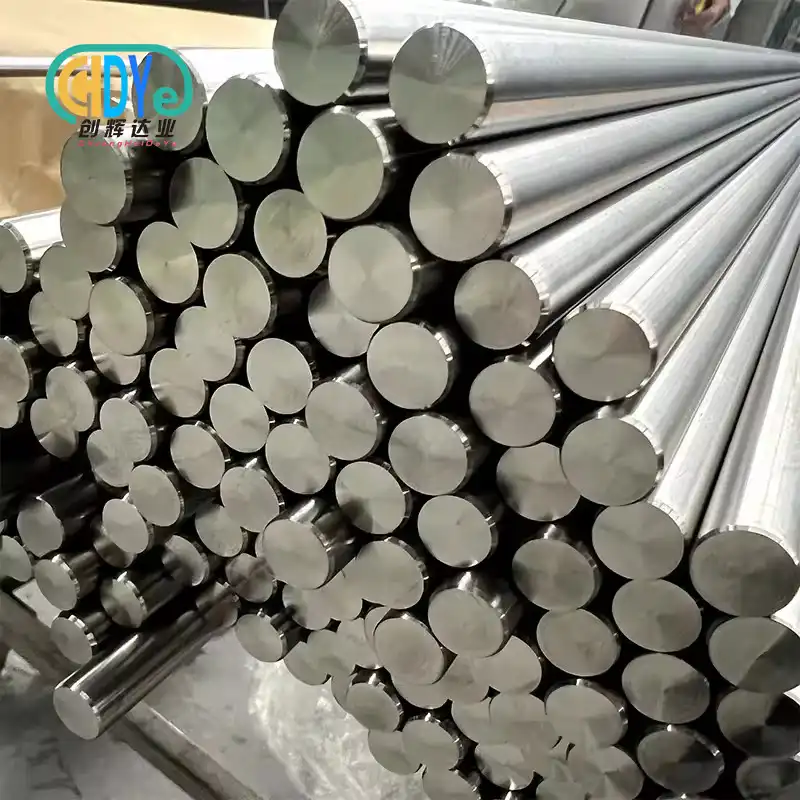
Understanding the Corrosion Resistance of Grade 5 Titanium Alloy
6Al-4V titanium round bar, which is also known as Grade 5 titanium, is the most common titanium metal in the world, making up more than half of all titanium used. It is famous for its great mechanical qualities and its resistance to environmental damage.
The Metallurgical Foundation of Corrosion Resistance
How well the metal resists rust depends on what chemicals are used to make it. This balance, which is made up of about 90% titanium, 6% aluminium, and 4% vanadium, makes a matrix with two phases: alpha and beta. Aluminium keeps the alpha phase stable, which adds to the strength and resistance to rusting at room temperature. Vanadium stabilises the beta phase, which makes the metal more flexible and sensitive to heat treatment. This microstructural design makes sure that the metal keeps its protective oxide film even when it is heated and cooled and put under stress. Industrial buyers need to understand this metallurgical basis when they are looking at material choices for corrosive settings. The alloy's make-up makes sure that it always works well in places where corrosion failure could be very bad, like chemical processing equipment, remote platforms, and aircraft parts.
Economic and Operational Benefits
Lifecycle costs are directly affected by the choice of materials that don't rust. Grade 5 titanium bars cut down on the number of upkeep tasks that need to be done, make parts last longer, and get rid of the need for protection coatings that wear off quickly in harsh settings. Manufacturing facilities in petroleum plants and desalination units have shown that these steels can last more than 20 years with very little wear and tear, which is a lot longer than regular stainless steels can last in the same conditions. Our factory in Baoji, China's Titanium Capital, makes titanium round bars following strict ISO 9001:2015 quality rules. This makes sure that the material is consistent and meets ASTM B348 and AMS 4928 standards. This approval makes sure that everything can be tracked, from inspecting the raw materials to the final machining. It gives buying managers the proof they need to follow the rules and make sure the quality is good.
Scientific Principles Behind Ti-6Al-4V Corrosion Resistance
The Self-Healing Passive Oxide Layer
This alloy's ability to make a new protective oxide film is what makes it so resistant to corrosion. When scratched or broken physically, the titanium surface responds with oxygen or moisture in the air within milliseconds, putting up a new barrier to protect itself. Titanium is different from many other structural metals because it can fix itself. The Electrochemical Society released research that shows the TiO₂ film on Grade 5 titanium is very stable across a pH range of 2 to 12. This means it can be used in both acidic and alkaline commercial processes. In oxidising conditions, where other metals break down quickly, the film remains intact and provides protection.
Comparative Resilience Against Aggressive Agents
The titanium oxide layer is better at protecting austenitic stainless steels from chloride-induced pitting and fissure corrosion than the chromium oxide layer. Testing according to ASTM G48 (ferric chloride pitting tests) shows that titanium metals keep their surface integrity, while 316 stainless steel quickly develops rust spots in certain areas. The vanadium makes the steel more resistant to hydrogen absorption, which stops hydrogen embrittlement, which is a frequent way for high-strength steels to fail when they are used in sour gas or cathodically protected settings. This feature is very useful for underwater fasteners and parts used in offshore drills.
Heat Treatment Effects on Corrosion Behaviour
The microstructure of the metal is changed by solution treatment and age (STA), which changes the alpha-beta phase ratio and the way the grains are arranged. These processes mostly make things stronger mechanically, but they also change how resistant they are to rust. When heat treatments are done right, they keep the small grain structures that help the oxide film form evenly. On the other hand, too much grain growth can make corrosion tracks that are easier to follow. Bars with tuned microstructures are made in factories that have controlled-atmosphere annealing ovens. Our electron beam melting and vacuum arc remelting methods keep impurity levels, especially those of iron, oxygen, and hydrogen, below critical levels that could weaken rust resistance.
Practical Applications Demonstrating Corrosion Resistance
Aerospace and Defense Applications
Grade 5 titanium bars are used to make aircraft structure parts, landing gear parts, and turbine engine parts that can survive decades of exposure to changing weather, de-icing chemicals, and jet fuel without any protective coatings. Because they don't rust or wear down easily, Boeing and Airbus standards call for titanium screws to be used in key parts of the airframe.
Chemical Processing Industry
6Al-4V titanium round bar is used for valve stems, pump shafts, and agitator parts in heat exchangers, reactor vessels, and pipe systems that deal with harsh chemicals like wet chlorine, chlorine dioxide, and mixed acids. Concentrated brine solution plants report very low corrosion rates, often less than 0.01 mm per year. This helps them keep the dimensions that are needed for closing surfaces.
Marine and Offshore Engineering
Because it has a lot of salt, dissolved oxygen, and living things, seawater is one of the most hostile natural settings. Titanium round bars are used in propeller shafts, ship fasteners, and underwater wellhead equipment where other materials would break in a few months. Naval engineers choose titanium because it doesn't have the problems that happen when different metals touch in salt water, which is called galvanic corrosion.
Validation Through Standardised Testing
Checking for quality includes several different testing methods. As per ASTM B117, objects are continuously exposed to fog for thousands of hours during salt spray tests. Titanium samples show no measurable corrosion. Electrochemical impedance spectroscopy measures how safe the inactive film is, and cyclic polarisation tests show that it cannot start localised corrosion. Each production lot comes with a material certification that shows it meets the standards for chemical makeup and mechanical properties. Every batch goes through spectroscopic analysis, tension testing, and a microstructural study in our lab, and the results can be linked to specific melt numbers.
Comparing Ti-6Al-4V with Alternative Corrosion-Resistant Materials
Grade 5 Titanium versus 304 Stainless Steel
304 stainless steel works well for most corrosion-related tasks, but it pits and cracks when exposed to salt conditions above 60°C. Titanium stays strong over a wider range of temperatures and concentrations. Titanium is also better because it is lighter than steel. Its density is about 60% that of steel, so it lowers structural loads in uses that need to be light. When lifetime factors are taken into account, titanium's higher price becomes more cost-effective, according to cost ratios. The cost of replacements, downtime, and repair workers usually covers the cost of the materials within the first operating cycle.
Titanium Grade 5 versus Commercially Pure Titanium (Grade 2)
Titanium that is sold as pure has great resistance to rust, but it isn't strong enough for load-bearing uses. The tensile strength of Grade 2 is about 345 MPa, while the minimum tensile strength of Grade 5 is 895 MPa. This means that engineers can make lighter, more compact systems without losing safety.
Procurement Decision Framework
When engineers choose materials, they should think about:
- Environmental conditions: Conditions in the environment, such as temperature ranges, chemical amounts, and flow rates
- Mechanical requirements: Mechanical needs: number of cycles, amount of tremor, and resistance to impact
- Manufacturing considerations: Thoughts on manufacturing: the need for welding, the difficulty of the cutting, and the need for heat treatment
- Economic factors: Cost of materials, prices of assembly, and expected service life are all economic factors.
Our expert team helps clients choose the right materials by predicting the rate of corrosion based on the conditions of use and suggesting the best product shapes, such as annealed bars for machining or solution-treated stock for direct manufacturing.
Procuring High-Quality Ti-6Al-4V Round Bars: Buyer's Guide
Verifying Supplier Credentials and Certifications
Reliable providers keep their ISO 9001:2015 approval up to date, which shows that they handle quality in a systematic way. Every shipment should have a material test record (MTR) that lists the chemicals used, the mechanical qualities, and the history of heat treatment. Independent proof is shown by certificates that can be tracked back to well-known testing labs. Our location is in the Baoji High-tech Development Zone in Shaanxi Province, which is close to places that melt titanium and have specialised manufacturing equipment. This geographical advantage ensures that the raw materials are of good quality and lets the production schedule be flexible.
Understanding Pricing Structures and Lead Times
Titanium prices are based on the cost of the raw materials, how hard the process is, and how many orders are placed. Standard diameter bars in standard lengths usually ship within four weeks. Lead times can go up to six weeks for unique sizes or special heat treatments. The minimum order quantity changes based on the diameter. For example, smaller bars may need a minimum of 100 kg, while bigger diameters can handle lower piece numbers. When procurement managers buy directly from the factory, they don't have to pay markups to distributors. This saves them 15-20% on costs compared to multi-tier supply chains. Our prices stay low because we have good long-term relationships with suppliers of titanium sponge and master alloys, and our production processes run smoothly.
Assessing Manufacturing Capabilities
Vacuum arc remelting furnaces in advanced facilities make ingots with low interstitial content, which is necessary for the best rust protection. CNC machine centres make it possible to keep the dimensions of parts very close to each other. Multi-pass forging and rolling processes improve the structure of the grains. We keep a stock of frequently ordered diameters ranging from 10 mm to 300 mm in a range of lengths, so we can quickly meet pressing needs. Custom cutting services take bars and turn them into finished parts like precision pins, threaded bolts, or flanged shafts. This makes your supply chain more efficient.
Logistics and Global Delivery
International shipping follows set rules for labelling dangerous products. Titanium is not dangerous, but it needs the right paperwork. Wooden boxes with moisture shields are used for packaging, which keeps the finish on the surfaces safe during transport. We work with freight forwarders who know how to ship metal, so we can make sure the goods get through customs and get to your building safely.
Conclusion
The amazing rust resistance of Ti-6Al-4V titanium round bars comes from basic materials science. More specifically, the protective oxide layer forms on its own and heals itself. This feature, along with its better mechanical qualities and lightweight design, makes Grade 5 titanium the material of choice in the medical device, chemical processing, aircraft, and chemical processing industries. When procurement workers know the science behind this corrosion resistance, they can make decisions that improve both performance and lifespan costs. Working with certified makers guarantees the quality of the materials, adherence to regulations, and dependable control of the supply chain, all of which are necessary for tough industrial uses.
FAQ
Q: What makes Ti-6Al-4V superior for seawater applications compared to marine-grade stainless steel?
A: The inactive film of titanium dioxide on Grade 5 titanium is resistant to pitting and crevice corrosion caused by chloride, which breaks down marine-grade stainless steels like 316L. Titanium shows corrosion rates below 0.002 mm per year in saltwater immersion studies, while 316L stainless steel gets isolated attack, especially when there is no flow or very little flow. Titanium doesn't contain any iron, so it doesn't cause galvanic rusting when mixed with other valuable metals.
Q: How do heat treatments affect the corrosion resistance of titanium bars?
A: The main way that solution treatment and ageing improve mechanical strength is by changing the spread of the alpha-beta phase. With the right heat treatment, small grain structures are kept, which helps a uniform oxide film form. Oxygen pollution during heat treatment can make an alpha case layer that makes the metal less flexible but not much less resistant to rust. Controlled-atmosphere ovens keep the surface from getting dirty, which keeps the mechanical and corrosion qualities.
Q: Which certifications should buyers verify when procuring corrosion-resistant titanium?
A: Some important certifications are ASTM B348 compliance (standards for size and composition), AMS 4928 for aircraft use, and ISO 9001:2015 quality management. Reports on materials that have been tested should include chemistry analysis using spectroscopy, mechanical testing according to ASTM E8, and an ultrasonic check to make sure the inside is sound. For medical uses, surgery implant-grade material needs to be certified to ASTM F136.
Partner with a Trusted Ti-6Al-4V Titanium Round Bar Manufacturer
Shaanxi Chuanghui Daye gives you straight access to approved Grade 5 titanium round bars that are made to last longer and work better mechanically. Our Baoji plant uses cutting-edge heating and processing technology along with strict ISO 9001:2015 quality standards. It has been in the rare metals business for more than 30 years. We have reasonable prices, can make small batches quickly, and can do special machining to your exact specs. Whether you need standard ASTM B348 material or aerospace-grade AMS 4928 bars, our expert team can help with the application and send the goods anywhere in the world with reliable logistics. Email us at info@chdymetal.com to talk about your needs for a 6Al-4V titanium round bar supplier requirements and get detailed quotes backed by full material approvals.
References
1. Boyer, R., Welsch, G., & Collings, E.W. (1994). Materials Properties Handbook: Titanium Alloys. ASM International, Materials Park, Ohio.
2. Schutz, R.W. & Thomas, D.E. (1987). "Corrosion of Titanium and Titanium Alloys." ASM Handbook, Volume 13: Corrosion, ASM International, pp. 669-706.
3. Lutjering, G. & Williams, J.C. (2007). Titanium: Engineering Materials and Processes, 2nd Edition. Springer-Verlag, Berlin.
4. ASTM International (2021). ASTM B348-21: Standard Specification for Titanium and Titanium Alloy Bars and Billets. West Conshohocken, Pennsylvania.
5. Donachie, M.J. (2000). Titanium: A Technical Guide, 2nd Edition. ASM International, Materials Park, Ohio.
6. Cotton, J.D., Briggs, R.D., Boyer, R.R., Tamirisakandala, S., Russo, P., Shchetnikov, N., & Fanning, J.C. (2015). "State of the Art in Beta Titanium Alloys for Airframe Applications." JOM: The Journal of the Minerals, Metals & Materials Society, Vol. 67, No. 6, pp. 1281-1303.
Learn about our latest products and discounts through SMS or email