- English
- French
- German
- Portuguese
- Spanish
- Russian
- Japanese
- Korean
- Arabic
- Greek
- German
- Turkish
- Italian
- Danish
- Romanian
- Indonesian
- Czech
- Afrikaans
- Swedish
- Polish
- Basque
- Catalan
- Esperanto
- Hindi
- Lao
- Albanian
- Amharic
- Armenian
- Azerbaijani
- Belarusian
- Bengali
- Bosnian
- Bulgarian
- Cebuano
- Chichewa
- Corsican
- Croatian
- Dutch
- Estonian
- Filipino
- Finnish
- Frisian
- Galician
- Georgian
- Gujarati
- Haitian
- Hausa
- Hawaiian
- Hebrew
- Hmong
- Hungarian
- Icelandic
- Igbo
- Javanese
- Kannada
- Kazakh
- Khmer
- Kurdish
- Kyrgyz
- Latin
- Latvian
- Lithuanian
- Luxembou..
- Macedonian
- Malagasy
- Malay
- Malayalam
- Maltese
- Maori
- Marathi
- Mongolian
- Burmese
- Nepali
- Norwegian
- Pashto
- Persian
- Punjabi
- Serbian
- Sesotho
- Sinhala
- Slovak
- Slovenian
- Somali
- Samoan
- Scots Gaelic
- Shona
- Sindhi
- Sundanese
- Swahili
- Tajik
- Tamil
- Telugu
- Thai
- Ukrainian
- Urdu
- Uzbek
- Vietnamese
- Welsh
- Xhosa
- Yiddish
- Yoruba
- Zulu
How Does a Titanium Anode Rod Protect Your Water Heater?
Impressed Current Cathodic Protection (ICCP) technology uses a titanium anode rod to keep water heaters safe. This advanced system uses a titanium base that doesn't dissolve and is covered with mixed metal oxides, usually iridium or ruthenium, instead of normal protective anodes that erode to protect the tank. The rod sends controlled low-voltage electrical currents into the water. This stops the walls of the tank from rusting without burning themselves. The "rotten egg" smell is caused by hydrogen sulfide gas, but this electrochemical method stops it from being made and keeps sediment from building up. This technique makes the water heater last 10–20 years instead of the usual 2–4 years for standard rods.
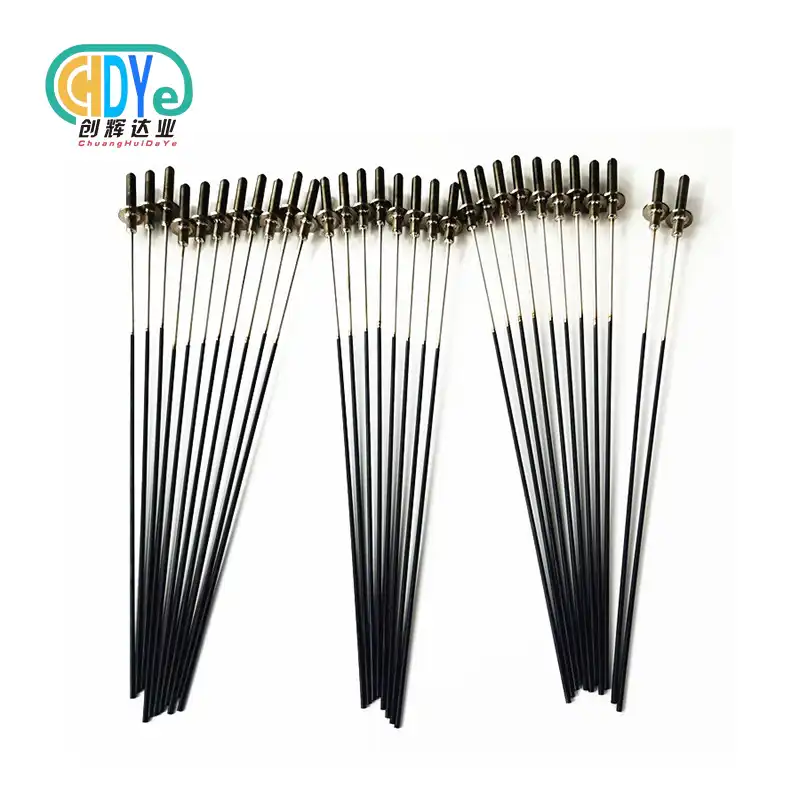
Understanding Titanium Anode Rods and Their Role in Water Heaters
Learn about titanium anode rods and what they do in water heaters. Modern water heaters need security that lasts a long time, which is difficult to get from older materials. Moving from inactive to active rust defense is a big step forward in making tools last longer.
Composition and Material Science
Precise material choice is at the heart of the engineering behind these safety devices. At Chuanghui Daye, we start the making process with ASTM B265/B348 Grade 1 or Grade 2 titanium as the base of the structure. This choice guarantees the best electrical connection while keeping the structure strong in difficult circumstances. The catalytic film is made up of layers of mixed metal oxides that were carefully designed with IrO₂-Ta₂O₅ mixtures. The coating's thickness is usually between 2 µm and 10 µm, and it is tailored to conditions where oxygen or chlorine is released. This dimensional stability makes these anodes a real Dimensionally Stable Anode (DSA) technology, as they maintain their geometric forms throughout their service life.
How does protection work?
The way it works is very different from how standard sacrificial systems work. Through galvanic action, standard magnesium or aluminum bars break down to protect steel tanks. The titanium-based system works at low voltages, usually less than 3V in homes, and the current flow changes automatically based on the resistance of the water. This smart reaction to changing water chemistry makes sure that safety stays in place regardless of what the season is or where the water comes from. The electrochemical factors keep the current flowing evenly across the tank's sides, which stops the kind of limited rust that usually leads to tanks breaking down too soon.
Distinguishing Features from Conventional Anodes
Manufacturers of water heaters have traditionally used three main types of anode materials. Magnesium rods work best in soft water, but they break down quickly in hard water. While aluminum anodes work pretty well, they also produce sludge that accumulates at the bottom of the tank. Zinc-alloy mixtures try to find a balance between durability and efficiency, but they still need to be replaced every so often. The titanium anode rod choice is better than these because it is chemically neutral, meaning it doesn't rust or add metals that have been dissolved to the water system. Because of this basic difference, there are no longer any food sources for sulfate-reducing bacteria. This means that systems that use standard defense methods will never have to deal with water smell problems again.
Benefits of Using Titanium Anode Rods Over Traditional Options
In corporate and business settings, choices about what to buy need a full cost-benefit study that goes beyond the initial purchase price. We often work with facility managers, who find that a lifetime review shows them the real value offered.
Extended Operational Lifespan
Depending on how hard the water is, traditional sacrificial anodes work for two to five years. Even shorter replacement cycles happen in places where the water chemistry is hard to handle, like when it has a lot of minerals, high temperatures, or changing pH levels. The MMO-coated titanium anode rod option protects for 10 to 20 years, which is often the same amount of time that the water heater itself will last. This huge addition makes maintenance planning easier and gets rid of the ongoing work costs that come with replacing and inspecting every two years. This lower upkeep cost is especially helpful for hotels, hospitals, and factories, where downtime in the hot water system can stop activities and hurt income.
Performance in Challenging Water Conditions
Hard water conditions make it faster for regular safety systems to break down. Magnesium bars get thick calcium carbonate scales on them that keep them from conducting electricity to the tank walls. This makes them useless even though they look like they are still whole. In these situations, the driven titanium anode rod system works very well because it actively flows a protected current through the solution, even if the surface is growing. Water with high amounts of Total Dissolved Solids (TDS), which is typical in well water sources in factories, doesn't cause any problems with operations. The high breakdown voltage of the system makes it work well in high-resistance watery settings where passive anodes would not be able to set up enough protection potential.
Economic Advantages Over Time
When you compare unit prices directly, it looks like the initial investment costs are higher. When you look at the big picture of the economy, you can come to different opinions. When the anode in an industrial water heater needs to be replaced every three years, it costs a lot. Over many repair rounds, the labor costs to empty tanks, get to anode ports, remove rusted rods, and install new ones add up. When production stops for repair, working capability is lost, which adds additional costs. When all direct and secondary costs are taken into account over ten-year review periods, our clients in petroleum plants have shown that overall costs have gone down by 60–75%. These proven savings are even bigger for systems that are used all the time or in remote areas where service calls cost a lot in travel and shipping costs.
Environmental and Safety Considerations
Getting rid of rusted magnesium and aluminum bars makes trash management jobs more difficult. The metals that dissolve get into water systems and have to be treated or thrown away at some point. Facilities that are trying to get ISO 14001 Environmental Management approval or that are part of company sustainability efforts, like the fact that non-consumable security systems don't produce any trash. Getting rid of the production of hydrogen gas solves another safety issue. Regular anodes make hydrogen as a result of their sacrificial reaction, which can build up in tight machinery rooms or places that don't have enough airflow.
Installing and Maintaining Titanium Anode Rods for Optimal Protection
Whether or not improved rust protection systems work as promised depends on how well they are installed. We help engineering teams put these ideas into action on a wide range of water heater designs by giving them expert support.
Installation Procedures and Compatibility
A standard 3/4-inch NPT threaded port for anode access is found on most water heaters. Before you start installing, turn off the power and the water taps that let water in. Drain enough water to show where the anode port is—usually, 10 to 15 percent of the tank's capacity is enough. Use the right tools to remove the old anode, keeping in mind that rust may make it harder to get out of systems that haven't had their repair done in a while. To make sure the electrical connection is correct, clean the threads very well. The new titanium anode rod fits into the same port, and a thread sealer is used to keep the electrical link and stop leaks. The power supply box is mounted on the outside and can be connected to normal wall plugs. Most systems have LED lights that show how they're working. A green light means the system is protecting you, while a red or orange light means you need to pay attention.
Maintenance Protocols for Sustained Performance
The great thing about these devices is that they don't need as much upkeep as other options. For most uses, once-a-year checks are enough. These inspections should include checking the state of the LED indicators and visually checking the electrical connections. Under regular situations, the titanium anode rod itself doesn't need to be replaced. In places with very hard water, scale can form on the electrode surface; this can be seen when the warning light changes. Taking out the rod and putting it in white vinegar for a few hours breaks down any calcium crystals that have built up, returning full functionality. This simple cleaning process, which may need to be done every three to five years in tough situations, is all that needs to be done for upkeep.
Troubleshooting Common Issues
LED signs make it easier to figure out what's wrong. Continuous green lighting shows that everything is working right. Several situations could be causing lights to come on and off or not work at all. Use test tools to make sure the electricity outlet works. Check the links between the cables for rust or looseness. If the light stays red all the time, check the titanium anode rod for too much scale that stops the flow of current. Remove, clean, and restore by following the steps above. Systems in solar water heaters or places where temperatures change a lot do better with checks every six months instead of once a year. This way, any problems can be found early, before they get bad enough to risk tank safety.
How can you choose the right titanium anode rod for your business needs?
Clear selection factors are needed for procurement teams that are in charge of water heating systems in various buildings. The most important specs rely on how you plan to use the water and what chemicals are in it.
Material Quality and Construction Standards
Not every titanium anode rod works as well as others. Longevity and dependability are directly affected by the quality of the base material. Grade 1 titanium is the most resistant to rust, while Grade 2 titanium works very well and has slightly better tensile qualities. Both types are good for use in water heaters. The MMO covering is what makes the speed difference. The operating lifespan is based on the coating's makeup, thickness, and ability to stick to surfaces. In Chuanghui Daye's production process, coats are put on using thermal breakdown techniques. These create molecular links between the titanium base and oxide layers that keep them from coming apart even when the temperature changes a lot. We keep our ISO 9001:2015 certification, which makes sure that quality control is always in place, from checking the raw materials to packing them up at the end. Before being shipped, each production batch goes through rapid life testing and electrochemical impedance spectroscopy to make sure the layer is still intact.
Evaluating Supplier Capabilities
When setting up safe ways to buy things, the relationship with the seller is just as important as the product specs. Check the supplier's production ability and flexibility—can they increase or decrease output to meet your needs as your business grows or as seasonal demand changes? When requirements don't match normal measurements, being able to make things to order becomes important. In some cases, different widths, bolt setups, or power source levels are needed for the fitting. When a supplier runs its own mining plants, like ours in Baoji, China's Titanium Capital, it has more control over quality and wait times. Vertical integration eliminates the need for outside suppliers, which can cause schedule problems and quality differences, by processing raw materials all the way through to finished products.
Technical Support and Documentation
When making B2B purchases, providers who offer a wide range of professional tools are helpful. Implementation risks are lower when there are detailed installation guides, suitability charts for different water heater models, and repair methods. Material approvals, test records, and tracking documents that show agreement with important standards should be requested by procurement managers. Our expert team helps clients choose the right options for their water, chemical, and practical needs by providing application engineering support. This consultation method cuts down on the costs of trying things and failing, and speeds up successful operations.
Global Logistics and Inventory Strategy
Facilities that work in more than one area need sellers who can ship goods safely across foreign borders. Keeping track of import rules, paperwork needs, and delivery times can help keep your purchases running smoothly. With the ability to place bulk orders and flexible shipping schedules, inventory can be optimized, allowing for large-volume prices without the load on working capital that comes from having too much stock on hand. Our factory-direct model gets rid of markups for distributors while keeping wait times for orders around the world cheap. We help our clients set up blanket purchase orders with planned drops that keep costs low and follow the principles of just-in-time inventory.
Conclusion
Protection technology for water heaters has come a long way since the days of standard sacrifice systems. The titanium anode rod method has clear benefits, including a longer lifespan, better performance in tough water conditions, and a huge drop in the amount of upkeep that needs to be done. Years of operation have shown that these benefits are real in a wide range of facilities, from business buildings to industrial manufacturing plants. The technology solves real practical problems by getting rid of smell issues, cutting down on upkeep work, and making tools last longer. It also fits with modern environmental goals. When procurement teams have clear selection criteria and strong ties with suppliers, they can install these systems with confidence, knowing that they are good long-term investments in important infrastructure. The best material science, tried-and-true electrical principles, and useful operating benefits make these systems the best choice for businesses that want to make water heaters more reliable while lowering their lifecycle costs.
FAQ
Q: How Long Does a Titanium Anode Rod Last?
A: Under normal settings, high-quality titanium anode rods treated with MMO provide safety for 10 to 20 years. This length often matches or exceeds the remaining service life of the water heater tank itself, so you won't have to worry about replacing it for as long as you own the equipment. How long something works depends on the chemistry of the water. Well water that is very hard or contains a lot of minerals may need to be cleaned every so often, but it doesn't affect how long the basic electrode lasts.
Q: Can Titanium Anode Rods Eliminate Water Odor?
A: Yes, these methods get rid of hydrogen sulfide smell problems caused by sulfate-reducing bacteria for good. The smell of a "rotten egg" is caused by traditional magnesium rods that give off hydrogen gas and metal ions that feed these bacteria. The titanium anode rod option doesn't make any reaction leftovers and stops germs from getting food, so smell problems go away right away after installation.
Q: Are These Systems Compatible with All Water Heater Types?
A: The method works well with steel or glass-lined tanks used in gas, electric, and solar water heating systems. Thread size compatibility is important. Most systems use standard 3/4-inch NPT fittings that match the anode ports that are already there. The size of the tank should determine the length of the rods so that the current flows evenly across all areas inside the tank that need to be protected.
Q: What Energy Consumption Should I Expect?
A: Power use stays very low, usually less than 1-2 kWh per year. To keep safe redox potentials, the device runs on milliamp-level currents. Because it doesn't use much electricity, this has almost no effect on running costs and saves a lot on repair costs.
Partner with Chuanghui Daye for Advanced Corrosion Protection Solutions
Shaanxi Chuanghui Daye is an expert at making high-quality titanium anode rods that are used in tough industrial and business water heating situations. Our site is in Baoji's High-tech Development Zone, which is the center of China's titanium industry. It blends cutting-edge metalworking skills with 30 years of experience working with rare metals. We work with companies that process metal, make aircraft parts, make chemical equipment, and do research that needs high-quality materials and dependable supply chains. Our production methods are ISO 9001:2015-certified, which means that every titanium anode rod seller's package works the same way. Whether you need standard setups or solutions that are specifically designed for your needs, our expert team can help you in a way that is tailored to your needs. We offer affordable factory-direct prices, a range of batch sizes for testing to mass production, and reliable shipping around the world. For more information on how our rust protection technology can protect your water heater investments and lower lifetime costs, please email us at info@chdymetal.com.
References
1. Baboian, R. (2005). Corrosion Tests and Standards: Application and Interpretation. ASTM International, West Conshohocken, Pennsylvania.
2. Bardal, E. (2004). Corrosion and Protection. Springer-Verlag London Limited, Engineering Materials and Processes Series.
3. Peabody, A.W. (2001). Control of Pipeline Corrosion (2nd Edition). NACE International, Houston, Texas.
4. Revie, R.W. and Uhlig, H.H. (2008). Corrosion and Corrosion Control: An Introduction to Corrosion Science and Engineering (4th Edition). John Wiley & Sons, Hoboken, New Jersey.
5. Von Baeckmann, W., Schwenk, W., and Prinz, W. (1997). Handbook of Cathodic Corrosion Protection: Theory and Practice of Electrochemical Protection Processes (3rd Edition). Gulf Professional Publishing, Houston, Texas.
6. Zhang, J. (2011). Impressed Current Cathodic Protection System Design and Performance Analysis. Materials Performance Journal, NACE International, Volume 50, Issue 8, Pages 42-48.
Learn about our latest products and discounts through SMS or email