- English
- French
- German
- Portuguese
- Spanish
- Russian
- Japanese
- Korean
- Arabic
- Greek
- German
- Turkish
- Italian
- Danish
- Romanian
- Indonesian
- Czech
- Afrikaans
- Swedish
- Polish
- Basque
- Catalan
- Esperanto
- Hindi
- Lao
- Albanian
- Amharic
- Armenian
- Azerbaijani
- Belarusian
- Bengali
- Bosnian
- Bulgarian
- Cebuano
- Chichewa
- Corsican
- Croatian
- Dutch
- Estonian
- Filipino
- Finnish
- Frisian
- Galician
- Georgian
- Gujarati
- Haitian
- Hausa
- Hawaiian
- Hebrew
- Hmong
- Hungarian
- Icelandic
- Igbo
- Javanese
- Kannada
- Kazakh
- Khmer
- Kurdish
- Kyrgyz
- Latin
- Latvian
- Lithuanian
- Luxembou..
- Macedonian
- Malagasy
- Malay
- Malayalam
- Maltese
- Maori
- Marathi
- Mongolian
- Burmese
- Nepali
- Norwegian
- Pashto
- Persian
- Punjabi
- Serbian
- Sesotho
- Sinhala
- Slovak
- Slovenian
- Somali
- Samoan
- Scots Gaelic
- Shona
- Sindhi
- Sundanese
- Swahili
- Tajik
- Tamil
- Telugu
- Thai
- Ukrainian
- Urdu
- Uzbek
- Vietnamese
- Welsh
- Xhosa
- Yiddish
- Yoruba
- Zulu
How Does Titanium Coil Wire Enhance Mechanical Stability?
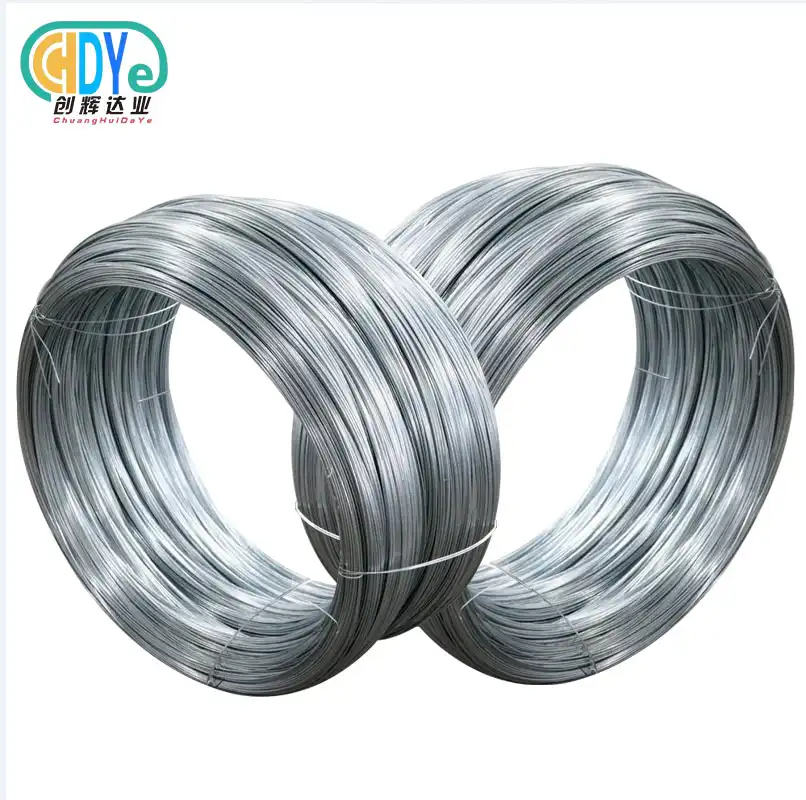
Titanium coil wire improves mechanical stability because it has a high strength-to-weight ratio, is very resistant to wear, and blocks corrosion well. This continuously spooled titanium thread comes in grades like Ti Gr2 and Gr5. It has tensile strengths between 345 and 895 MPa and a density of only 4.43 to 4.51 g/cm³. The wire's structure can withstand repeated loading and damage from the environment, titanium coil wire, which is why it is essential in chemical processing, aircraft, and medical fields. The precise production process of cold drawing and vacuum annealing guarantees consistent surface quality and dimensional accuracy. This directly translates to reliable performance under high operational stresses that cannot compromise mechanical stability.
Understanding Titanium Coil Wire and Its Mechanical Properties
Definition and Core Manufacturing Characteristics
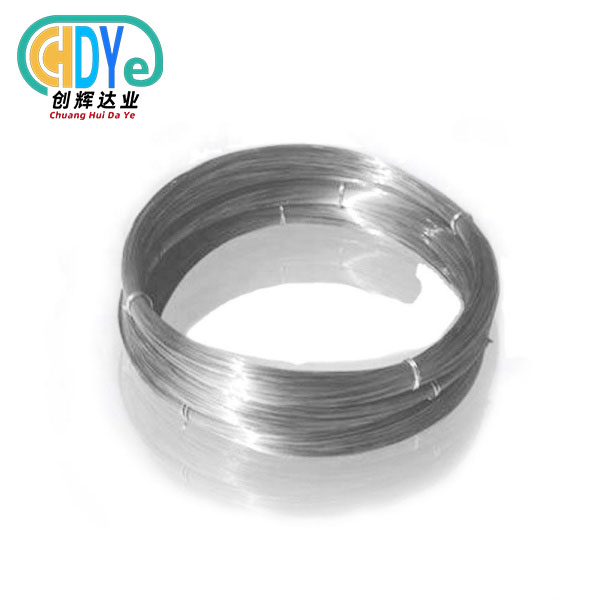
Titanium wire that is wound around spools that are between 0.1 and 5 mm in diameter is a continuous, carefully drawn metal filament. We make this material at Shaanxi Chuanghui Daye Metal Material Co., Ltd. by vacuum arc remelting it and then cold drawing it many times to smooth out the grain structure and get rid of any internal flaws. This way of making things solves a big problem that comes up a lot in automatic production lines: it gets rid of the need for downtime to reload materials and keeps feedability stable during high-speed operations. Our factory in Baoji, China's Titanium Capital, uses decades of metalworking experience to make sure that every coil meets the exact measurements needed for automatic welding, additive manufacturing, and making precise parts.
Key Mechanical Properties Contributing to Stability
Titanium wire's mechanical stability comes from a number of properties that work together to make it strong. Tensile strengths between 345 and 895 MPa give the material a lot of load-bearing power, and its natural flexibility lets it handle shock loads without breaking. Because it isn't as dense as steel, it has lower inertial forces during dynamic uses. This means that vibration-induced fatigue is less likely to happen. Titanium's resistance to fatigue is especially useful in cyclic loading situations, like in aircraft fasteners and medical implants, where failure of the material could have terrible results. Our production method, which is ISO 9001:2015 certified, makes sure that these properties stay the same in every metre of wire we make.
How Titanium Coil Wire Improves Mechanical Stability Compared to Other Metals
Strength-to-Weight Ratio Advantages Over Conventional Materials
When it comes to mechanical stability, titanium's strength-to-weight ratio is what sets it apart from other materials. While titanium coil wire and stainless steel wire have a high tensile strength, it also has a 75% higher weight per unit volume. This extra weight makes it less effective in spinning assemblies and airborne systems. Aluminium has a low density but is only 40–50% as strong as titanium. This means that bigger cross-sections are needed, which loses the weight savings and raises concerns about flexibility. Our titanium coil wire strikes the perfect mix between strength and weight, with strength similar to steel and weight similar to aluminium alloys. In aerospace uses, where every gram counts when it comes to fuel efficiency and payload capacity, this trait is very useful.
Corrosion Resistance and Long-Term Structural Integrity
Mechanical stability includes more than just the original strength values; it also includes performance that stays the same over time. Titanium forms a strong oxide layer that heals itself when it gets broken. This makes it very resistant to chloride environments, acidic conditions, and oxidising atmospheres that quickly break down stainless steel and carbon steel alternatives. Nickel metals are pretty good at resisting corrosion, but they are not biocompatible like titanium and are denser. Copper wire rusts easily in saltwater and chemical environments, which weakens links in structures over time. Titanium wire lasts longer, so it doesn't need to be replaced as often. This lowers operational disruptions and lifecycle costs, which is a figure that procurement professionals are using more and more when they look at the total cost of ownership instead of just the purchase price.
Manufacturing Process and Its Role in Enhancing Mechanical Stability
Advanced Production Techniques and Quality Control
During the first steps of processing, mechanical security starts at the molecular level. We start with a very pure titanium sponge that is vacuum arc remelted in our electron beam ovens. This gets rid of any impurities that could cause cracks to start. The finished ingot goes through hot rolling to set up the initial grain structure. It then goes through several cold drawing passes that gradually lower the diameter while hardening the material. Between drawing passes, annealing processes reduce internal stresses and smooth out grain boundaries. This makes the metal more flexible without weakening it. When our precision coiling equipment winds, it uses controlled tension to keep the coils from getting internal forces that could make them lose their shape when they are unwound and processed by end users.
ISO Certification and Traceability Standards
Quality control extends throughout our production chain, backed by ISO 9001:2015 certification that mandates documented procedures at every manufacturing stage. Each coil receives a unique identification, enabling complete traceability of titanium coil wire from raw material chemistry through final inspection data. Non-destructive testing, including ultrasonic examination, detects subsurface defects invisible to visual inspection. Dimensional verification using calibrated micrometers confirms diameter consistency within ±0.02 mm tolerances critical for automated feeding systems. Tensile testing validates mechanical properties against specification requirements, with test certificates accompanying every shipment. This documentation proves essential for aerospace and medical applications requiring material pedigree and performance validation.
Real-World Applications Demonstrating Mechanical Stability Advantages
Aerospace and Defense Component Reliability
During the first steps of processing, mechanical security starts at the molecular level. We start with a very pure titanium sponge that is vacuum arc remelted in our electron beam ovens. This gets rid of any impurities that could cause cracks to start. The finished ingot goes through hot rolling to set up the initial grain structure. It then goes through several cold drawing passes that gradually lower the diameter while hardening the material. Between drawing passes, annealing processes reduce internal stresses and smooth out grain boundaries. This makes the metal more flexible without weakening it. When our precision coiling equipment winds, it uses controlled tension to keep the coils from getting internal forces that could make them lose their shape when they are unwound and processed by end users.
Medical Device Performance and Biocompatibility
The medical device sector relies on titanium wire for applications where mechanical stability intersects with biocompatibility requirements. Orthopedic implant manufacturers utilize our wire in bone fixation devices that must maintain structural integrity during healing periods spanning months while gradually transferring loads as bone regenerates. Surgical instrument springs require fatigue resistance exceeding 100,000 cycles without performance degradation or corrosion in sterilization environments. Dental arch wires demand consistent elastic modulus and yield strength to apply controlled orthodontic forces. The material's osseointegration properties eliminate rejection risks associated with alternative metals, while its radiolucency facilitates post-operative imaging without artifacts that obscure diagnostic information.
Industrial and Chemical Processing Durability
Chemical processing facilities leverage titanium wire's mechanical stability in corrosive environments that rapidly destroy conventional materials. Heat exchanger tie rods maintain structural integrity in chloride-rich cooling water systems operating at elevated temperatures and pressures. Fasteners securing reactor vessel internals resist stress corrosion cracking in acidic process streams. Filter support structures withstand mechanical loads while resisting degradation from aggressive chemicals. Our customers in petrochemical applications report 15–20 year service life for titanium components compared to 3–5 years for stainless alternatives, demonstrating how mechanical stability in hostile environments translates directly to operational cost savings and improved process reliability.
Procuring Titanium Coil Wire: What B2B Clients Should Consider
Supplier Qualification and Certification Requirements
Selecting a qualified titanium coil wire supplier requires careful evaluation of technical capabilities and quality systems. ISO 9001:2015 certification provides baseline assurance of documented quality procedures, though aerospace and medical applications may require additional certifications like AS9100 or ISO 13485. Verify the supplier maintains material test reports documenting chemistry and mechanical properties for each production lot. Assess manufacturing equipment capabilities—modern drawing towers and controlled atmosphere annealing furnaces indicate investment in quality production. Our three decades of rare metal industry experience and location in Baoji's established titanium industrial cluster provide technical depth and supply chain reliability that newer entrants cannot match.
Custom Specifications and Order Flexibility
Industrial applications frequently require customized specifications beyond the titanium coil wire standard catalog offerings. Diameter tolerances may need tightening for precision automated feeding systems. Specific coil winding patterns prevent tangling in high-speed payoff operations. Controlled hardness ranges optimize formability for subsequent cold-heading or spring-forming processes. We accommodate custom requirements, including small prototype quantities for R&D validation before committing to production volumes. Our machining capabilities enable value-added processing, including cutting to length, straightening, and surface treatments that reduce your internal processing requirements. Discuss lead time expectations honestly—custom specifications typically require 4–6 weeks from order confirmation to delivery, though we maintain strategic inventory of common grades and sizes for faster turnaround.
Logistics and Quality Assurance Upon Delivery
Proper packaging preserves the material condition during international shipping. Coils should arrive in sealed containers with desiccant protection against moisture exposure that could cause surface oxidation. Cushioning prevents mechanical damage during handling. Upon receipt, conduct an incoming inspection verifying dimensional accuracy, surface condition, and documentation completeness before releasing material to production. Reputable suppliers like Chuanghui Daye provide comprehensive material test reports, certificates of conformance, and packing lists, enabling efficient receiving inspection. Establish clear communication channels for addressing discrepancies—responsive technical support distinguishes professional suppliers from commodity vendors who disappear after payment clears.
Conclusion
Titanium coil wire delivers unmatched mechanical stability through its exceptional strength-to-weight ratio, superior fatigue resistance, and outstanding corrosion protection. The material's inherent properties, combined with precision manufacturing processes and rigorous quality control, produce wire that maintains structural integrity across demanding aerospace, medical, and industrial applications. Compared to conventional materials like stainless steel and aluminum, titanium provides measurable advantages in long-term durability and lifecycle cost effectiveness. Successful procurement requires partnering with experienced suppliers offering certified quality systems, technical expertise, and reliable delivery performance that align with your operational requirements and project timelines.
FAQ
1. What factors determine titanium coil wire's mechanical stability?
Mechanical stability depends primarily on material grade selection, manufacturing process quality, and proper handling. Grade 5 (Ti-6Al-4V) offers higher strength than Grade 2, while controlled cold drawing and annealing optimize grain structure. Surface finish quality, dimensional consistency, and absence of internal defects all contribute to reliable performance under load. Supplier certifications like ISO 9001:2015 indicate systematic quality control that ensures consistent material properties across production batches.
2. How does titanium compare to stainless steel for corrosion resistance?
Titanium significantly outperforms stainless steel in chloride environments, acidic conditions, and oxidizing atmospheres. The spontaneously forming oxide layer provides protection in pH ranges from 3–12, where stainless steel suffers pitting and stress corrosion cracking. This translates to 3–5 times longer service life in chemical processing and marine applications, reducing replacement costs and operational disruptions.
3. Can titanium coil wire specifications be customized for specific applications?
Absolutely. Reputable manufacturers accommodate custom diameter tolerances, specific hardness ranges, controlled surface finishes, and specialized coil winding patterns. Custom orders typically require a 4–6 week lead time but enable optimization for automated feeding systems, precision forming operations, and application-specific performance requirements that standard catalog products cannot address.
Partner with a Trusted Titanium Coil Wire Manufacturer
Shaanxi Chuanghui Daye brings over 30 years of rare metal expertise to titanium coil wire for your most demanding applications. Our ISO 9001:2015 certified facility in Baoji produces premium titanium coil wire in Gr2 and Gr5 grades, with diameters from 0.1 to 5 mm and tensile strengths reaching 895 MPa. We serve aerospace, medical, and chemical processing sectors worldwide with factory-direct pricing, full material traceability, and technical support that accelerates your project success. Contact our team at info@chdymetal.com to discuss your specifications, request material test reports, or obtain a detailed quote from a reliable titanium coil wire supplier committed to your long-term satisfaction.
References
1. Boyer, R., Welsch, G., & Collings, E.W. (1994). Materials Properties Handbook: Titanium Alloys. ASM International, Materials Park, Ohio.
2. Donachie, M.J. (2000). Titanium: A Technical Guide, Second Edition. ASM International, Materials Park, Ohio.
3. Lütjering, G. & Williams, J.C. (2007). Titanium, Second Edition. Springer-Verlag, Berlin Heidelberg.
4. Peters, M., Kumpfert, J., Ward, C.H., & Leyens, C. (2003). Titanium Alloys for Aerospace Applications. Advanced Engineering Materials, Volume 5, Issue 6.
5. Schutz, R.W. & Watkins, H.B. (1998). Recent Developments in Titanium Alloy Application in the Energy Industry. Materials Science and Engineering A, Volume 243, Issues 1-2.
6. Veiga, C., Davim, J.P., & Loureiro, A.J.R. (2012). Properties and Applications of Titanium Alloys: A Brief Review. Reviews on Advanced Materials Science, Volume 32, Number 2.
Learn about our latest products and discounts through SMS or email