- English
- French
- German
- Portuguese
- Spanish
- Russian
- Japanese
- Korean
- Arabic
- Greek
- German
- Turkish
- Italian
- Danish
- Romanian
- Indonesian
- Czech
- Afrikaans
- Swedish
- Polish
- Basque
- Catalan
- Esperanto
- Hindi
- Lao
- Albanian
- Amharic
- Armenian
- Azerbaijani
- Belarusian
- Bengali
- Bosnian
- Bulgarian
- Cebuano
- Chichewa
- Corsican
- Croatian
- Dutch
- Estonian
- Filipino
- Finnish
- Frisian
- Galician
- Georgian
- Gujarati
- Haitian
- Hausa
- Hawaiian
- Hebrew
- Hmong
- Hungarian
- Icelandic
- Igbo
- Javanese
- Kannada
- Kazakh
- Khmer
- Kurdish
- Kyrgyz
- Latin
- Latvian
- Lithuanian
- Luxembou..
- Macedonian
- Malagasy
- Malay
- Malayalam
- Maltese
- Maori
- Marathi
- Mongolian
- Burmese
- Nepali
- Norwegian
- Pashto
- Persian
- Punjabi
- Serbian
- Sesotho
- Sinhala
- Slovak
- Slovenian
- Somali
- Samoan
- Scots Gaelic
- Shona
- Sindhi
- Sundanese
- Swahili
- Tajik
- Tamil
- Telugu
- Thai
- Ukrainian
- Urdu
- Uzbek
- Vietnamese
- Welsh
- Xhosa
- Yiddish
- Yoruba
- Zulu
Why choose pure titanium wire for Corrosion-Resistant Applications?
Choosing pure titanium wire for corrosion-resistant applications addresses fundamental challenges that industrial sectors face daily—equipment failure, frequent maintenance, and premature component replacement. This stuff has a TiO2 oxide layer that is very stable and heals itself right away when it comes into contact with oxygen. This is the best way to protect it from salt attack, acidic media, and seawater damage. Unlike other alloys, commercially pure titanium grades (ASTM Grades 1-4) can be used reliably in chemical processing plants, offshore platforms, and the making of medical implants. Buyers who need long-lasting, low-cost solutions in tough environments choose this one over others because it is safe, light, and has been shown to last a long time.
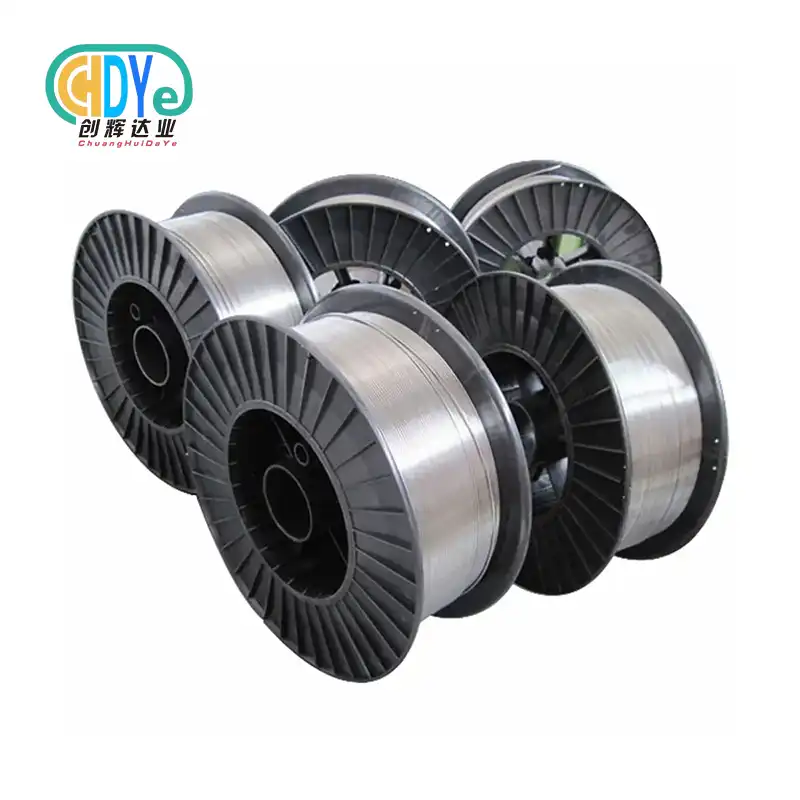
Understanding Pure Titanium Wire and Its Corrosion Resistance
What Defines Commercially Pure Titanium Wire
Titanium wire that is sold in stores is mostly titanium, with small amounts of oxygen, nitrogen, carbon, and iron. Based on ASTM B863 standards and AWS A5.16 specs, the material is divided into four different grades. It is easy to shape because Grade 1 is the most flexible and has a tensile strength of about 240 MPa. Grade 4 is stronger than Grade 3 because it has more oxygen. Its strength is close to 550 MPa, which makes it good for structural uses that need strong metal without giving up resistance to rust.
The Science Behind Superior Corrosion Protection
When pure titanium wire comes into contact with air, a passivation process happens right away, creating a thick film of titanium dioxide that sticks to the wire and is about 1 to 10 nanometres thick. Unlike passive layers on stainless steels, which can break down irreversibly under chloride stress, this protective barrier grows back on its own if it gets damaged. The oxide film stays stable at pH levels from 2 to 12 and temperatures up to 315°C. This is why titanium wire parts last decades longer than other options in chemical reactors and desalination equipment.
Manufacturing Excellence and Quality Assurance
At our factory in Baoji, China's "Titanium Capital," Shaanxi Chuanghui Daye Metal Material Co., Ltd. uses advanced electron beam melting and controlled atmosphere processing to make high-purity titanium wire. Our production method is ISO 9001:2015 approved, and spectrochemical analysis proves that each batch is more than 99.6% pure. We keep a close eye on the hydrogen content (below 0.015%) to keep the metal from becoming weak, use eddy current testing to find problems below the surface, and give full Material Test Certificates (MTC) that can be fully tracked. Standard stock sizes allow delivery within one to three days, meeting tight project deadlines without lowering quality standards.
Comparing Pure Titanium Wire with Other Metal Wires for Corrosion Resistance
Pure Titanium Versus Stainless Steel Wire
Some types of stainless steel, like 316L, depend on chromium oxide passivation, which fails when chloride levels reach more than 1000 parts per million or when temperatures rise above 60°C. Pure titanium wire stays strong in hot, acidic brine solutions and other conditions where stainless steel will pit within months. Field data from chemical plants shows that titanium wire mesh filters last 15-20 years, while stainless steel filters only last 3–5 years, even though titanium filters cost more at first. Because austenitic stainless steels don't contain nickel, they don't have the problem of galvanic corrosion that happens when they are mixed with metals that are not the same.
Unalloyed Titanium Compared to Titanium Alloys
The tensile strength of Ti-6Al-4V (Grade 5) metal is very high, reaching 900 MPa. However, because it contains aluminium, it is less resistant to corrosion in reducing acid environments. In hydrochloric and sulphuric acid services at low amounts, commercially available pure titanium wire performs better. The unalloyed grades have a single-phase alpha microstructure that makes the erosion behaviour regular. This is because the alpha and beta phases don't interact with each other as much as they do in alloys. For the best chemical protection, procurement teams should define pure grades, and alloys should only be used when tensile strength needs to be higher than 550 MPa.
Titanium Wire Versus Copper in Specialized Applications
Copper wire has a high electrical conductivity (about 58 MS/m), but it corrodes quickly in coastal settings and places where ammonia is present. Titanium wire has a conductivity of 2.5 to 3 MS/m, which is good enough for electrochemical uses like cathodic protection anodes and electrolytic cell parts. It also stays structurally sound for decades. In desalination plants, titanium wire fixings and screens get rid of the green copper rust products that pollute water systems. The cost of the materials is justified by the fact that they don't need to be maintained as often and the water quality is still good.
Benefits of Pure Titanium Wire in Corrosion-Resistant Applications
Exceptional Chemical Resistance Across Industries
It is very stable in oxidising acids like nitric acid at all amounts and temperatures, as well as in cleaning environments with chlorine dioxide in pulp mills and wet chlorine gas environments in chemical production. Marine engineering uses profit from not corrode in salt water, so they don't need the expensive disposable anode systems that are needed for steel or aluminium parts. Manufacturers of medical devices rely on ASTM F67 certified pure titanium wire for surgical sutures and orthodontic springs because it is biocompatible with tissue and doesn't leach any ions, which means it meets FDA biocompatibility requirements without any other materials.
Strength-to-Weight Advantages in Critical Systems
Pure titanium wire has a density of only 4.51 g/cm³, which is about 60% lighter than steel and 40% lighter than copper. This makes it possible for lightweight designs in medical equipment and aerospace cable assemblies. The material keeps its mechanical properties at cryogenic temperatures as low as -253°C, which makes it useful for space applications and equipment used to process liquefied natural gas (LNG). A Grade 2 titanium wire with a tensile strength of 345 MPa can be used instead of heavier stainless steel wire. This lowers structural loads, makes aviation systems use less fuel, and increases the mobility of equipment in field deployment situations.
Total Cost of Ownership Analysis
Titanium wire is usually three to five times more expensive to buy at first than 316 stainless steel wire of the same size. Lifecycle study, on the other hand, shows huge savings because replacement cycles are cut down, downtime is cut down, and environmental cleanup costs are avoided. A chemical company that changes the tie wires in their heat exchangers every 18 months with stainless steel can expect titanium alternatives to last 20 years or more, which will pay for themselves in avoided production interruptions worth millions of dollars every year. Maintenance teams like that the material isn't magnetic, which keeps it from messing up sensitive instruments, and that it doesn't crack easily under stress, which can cause quick, catastrophic failures in chloride-containing process streams.
How to Procure Pure Titanium Wire for Your Industrial Needs
Selecting a Qualified Supplier
Reliable sellers show they follow the rules by having ISO 9001:2015 certification, keeping track of the material batches by linking them to melt records, and giving third-party test results from approved labs. Because Chuanghui Daye is in Baoji's well-established titanium industrial area, it has easy access to high-quality raw materials and processing know-how that has been built up over 30 years. We have different grades, such as Grades 1, 2, 3, and 4, in both straight-cut lengths and coil shapes, and the sizes range from 0.2mm to 6.0mm. Our stock collection lets us get things to you quickly, and special specs let you choose from a variety of surface finishes, such as bright-annealed or pickled.
Critical Ordering Specifications
The grade you choose depends on how tough the application is. Grade 1 is best for making woven mesh because it is the most flexible. Grade 2 is a general-purpose grade that balances strength and ductility. Grade 4 is best for situations where mechanical loads require higher tensile properties. For precise uses like making jigs for semiconductors, you should set the size tolerances according to ISO h7, h8, or h9 standards. Ask for certificates that show interstitial element analysis, especially hydrogen content below 0.015 percent, so that cracking doesn't happen later. Minimum order numbers depend on the diameter and shape of the product, but we can handle study quantities and offer free samples for testing before committing to production of pure titanium wire.
Verification and Quality Confirmation
Set up new inspection procedures that include using calibrated micrometres to check for errors in the dimensions, looking at the surface under a microscope to find flaws, and testing the hardness to make sure the annealing was done right. You can ask for witness testing to be done at our site or set up third-party proof through SGS or TÜV services. Our material tracking system gives batch numbers that are linked to specific melt tests. This lets us find the root cause of problems in the field if they happen. This paperwork is necessary for businesses that follow ASME, FDA, or aircraft AS9100 quality standards that need to show the full history of a resource.
Practical Guide: Working with Pure Titanium Wire in Corrosion-Resistant Applications
Fabrication Techniques and Best Practices
When the right techniques are used, common forming operations like cold drawing, bending, and coiling work well with pure titanium wire. Keep the tools clean and free of iron pollution that can lead to galvanic sites. When cutting with carbide or high-speed steel tools, go slower than when cutting with steel tools and use a lot of coolant to keep the work from getting too hard. When you weld, you need to use argon or helium atmospheres to protect both sides of the joint with inert gases. You should also use ERTi-1 or ERTi-2 filler materials that are the same grade as the base metal. Don't weld in places that are too wet or dirty, as this can cause hydrogen embrittlement.
Real-World Performance in Demanding Sectors
Offshore oil platforms use titanium wire rope units for their riser tensioning systems because stainless steel would break after just a few months of being submerged in seawater and being loaded and unloaded over and over again. These installations have been in use for more than 25 years without showing any signs of wear and tear. In chlor-alkali cells, where hot caustic and chlorine gas coexist, chemical plants use titanium wire mesh demister pads. Other materials can't survive in this environment at all. Manufacturers of medical implants weave spine fusion bars out of Grade 1 titanium wire, which was approved by the FDA because it is biocompatible and doesn't rust after decades of use in living organisms.
Maintenance and Lifecycle Management
Titanium wire parts don't need as much care as other materials, but they should be checked regularly to make sure they're working at their best. Corrosion should not be seen visually because the oxide film stops material loss. Instead, mechanical damage should be found. In high-cycle situations, stress cracks can be found with ultrasonic or dye penetrant tests. Do not use hydrofluoric acid or strong hydrochloric acid solutions to clean titanium wire because they damage the passive layer. Instead, use light soaps and deionised water. Nitric acid passivation methods can get rid of iron particles that are a problem and restore full rust resistance. The non-porous oxide surface doesn't let biological fouling stick to it, so it doesn't need to be cleaned as often in safe settings.
Conclusion
Using commercially pure titanium wire for uses that need to be resistant to corrosion has measured benefits for equipment longevity, operating efficiency, and total cost of ownership. The material's ability to passivate on its own, its wide range of chemical compatibility, and its proven performance in the sea, chemical processing, and medical fields make the initial investment worth it over many decades of service without any repairs. Partnering with well-known suppliers that offer ISO-certified quality systems, full material traceability, and technical support throughout the lifecycle of a product is good for procurement professionals. There are stricter rules and more aggressive working conditions for many businesses. Titanium wire is a long-lasting option that doesn't have the performance and durability problems that come with other materials.
FAQ
Q: Which titanium wire grade performs best in highly corrosive chemical environments?
A: Grade 2 commercially pure titanium wire is the standard for general corrosion resistance. It works very well in oxidising acids, seawater, and chloride solutions. Grade 1 has about the same level of corrosion resistance as Grade 2, but it is a little easier to shape for woven applications. When the required mechanical strength is more than 450 MPa, Grade 4 is used. In most industrial settings, the rust resistance of all unalloyed grades is the same, though.
Q: How do maintenance costs compare between titanium wire and stainless steel alternatives over ten years?
A: Field data shows that titanium wire systems don't need much upkeep for rust over 10 years. On the other hand, 316L stainless steel usually needs to be replaced two to three times, based on how much chloride it is exposed to. Even though it costs more at first, titanium wire lowers total ownership costs by 40 to 60 percent when you add up the costs of production breaks, replacement materials, and installation labour. This is especially true in naval and chemical processing applications.
Q: Can I order custom wire dimensions and receive samples before committing to production quantities?
A: Shaanxi Chuanghui Daye can meet special requests for things like non-standard diameters, precise length cuts, and unique surface finishes. We offer free samples for material proof testing, which lets engineering teams make sure the material is right before ordering a lot of it. Our technical staff works with customers to make sure that the grade they choose and the size standards are the best ones for their needs. They do this for both prototypes and full production runs.
Partner with a Trusted Pure Titanium Wire Manufacturer
Shaanxi Chuanghui Daye has factory-direct pure titanium wire solutions that can meet your needs for corrosion-resistant materials. They are backed by ISO 9001:2015 certification and 30 years of experience working with rare metals. Our Baoji facility keeps a large stock inventory that allows for delivery in one to three days for standard sizes. We can also do custom processing for sizes and finishes that aren't available off the shelf. We offer a range of grades and shapes, including straight wire and coils, along with full material traceability and MTC documentation that meets international standards. You can talk to our technical team about your unique needs, get free samples, or get full quotes by emailing info@chdymetal.com. As a well-known provider of pure titanium wire, we give procurement workers the quality, dependability, and quick service they need for important corrosion-resistant tasks.
References
1. American Society for Testing and Materials. (2021). ASTM B863: Standard Specification for Titanium and Titanium Alloy Wire. ASTM International, West Conshohocken, PA.
2. American Welding Society. (2019). AWS A5.16/A5.16M: Specification for Titanium and Titanium-Alloy Welding Electrodes and Rods. AWS, Miami, FL.
3. Schutz, R.W., and Thomas, D.E. (2018). "Corrosion of Titanium and Titanium Alloys." ASM Handbook, Volume 13B: Corrosion: Materials, ASM International, pp. 252-299.
4. International Organisation for Standardisation. (2015). ISO 9001:2015: Quality Management Systems—Requirements. ISO, Geneva, Switzerland.
5. Peters, M., Kumpfert, J., Ward, C.H., and Leyens, C. (2003). "Titanium Alloys for Aerospace Applications." Advanced Engineering Materials, Vol. 5, No. 6, pp. 419-427.
6. Cotton, J.D., Briggs, R.D., Boyer, R.R., Tamirisakandala, S., Russo, P., Shchetnikov, N., and Fanning, J.C. (2015). "State of the Art in Beta Titanium Alloys for Airframe Applications." Journal of Materials, Vol. 67, No. 6, pp. 1281-1303.
Learn about our latest products and discounts through SMS or email