- English
- French
- German
- Portuguese
- Spanish
- Russian
- Japanese
- Korean
- Arabic
- Greek
- German
- Turkish
- Italian
- Danish
- Romanian
- Indonesian
- Czech
- Afrikaans
- Swedish
- Polish
- Basque
- Catalan
- Esperanto
- Hindi
- Lao
- Albanian
- Amharic
- Armenian
- Azerbaijani
- Belarusian
- Bengali
- Bosnian
- Bulgarian
- Cebuano
- Chichewa
- Corsican
- Croatian
- Dutch
- Estonian
- Filipino
- Finnish
- Frisian
- Galician
- Georgian
- Gujarati
- Haitian
- Hausa
- Hawaiian
- Hebrew
- Hmong
- Hungarian
- Icelandic
- Igbo
- Javanese
- Kannada
- Kazakh
- Khmer
- Kurdish
- Kyrgyz
- Latin
- Latvian
- Lithuanian
- Luxembou..
- Macedonian
- Malagasy
- Malay
- Malayalam
- Maltese
- Maori
- Marathi
- Mongolian
- Burmese
- Nepali
- Norwegian
- Pashto
- Persian
- Punjabi
- Serbian
- Sesotho
- Sinhala
- Slovak
- Slovenian
- Somali
- Samoan
- Scots Gaelic
- Shona
- Sindhi
- Sundanese
- Swahili
- Tajik
- Tamil
- Telugu
- Thai
- Ukrainian
- Urdu
- Uzbek
- Vietnamese
- Welsh
- Xhosa
- Yiddish
- Yoruba
- Zulu
Reliable Titanium Welding Wire for Chemical Processing
The pinnacle of metallurgical engineering is reliable titanium welding wire for chemical processing, which combines excellent resistance to rust with superior mechanical qualities needed in harsh industrial settings. Titanium welding wire offers unrivaled performance and life in chemical processing facilities where abrasive media, high temperatures, and acidic materials present constant challenges. These special filler materials make sure that the joints are smooth and can resist harsh chemicals while keeping the structure strong for a long time. When procurement workers know how important it is to choose the right materials for chemical processing jobs, they can make decisions that improve working efficiency and lower long-term maintenance costs.
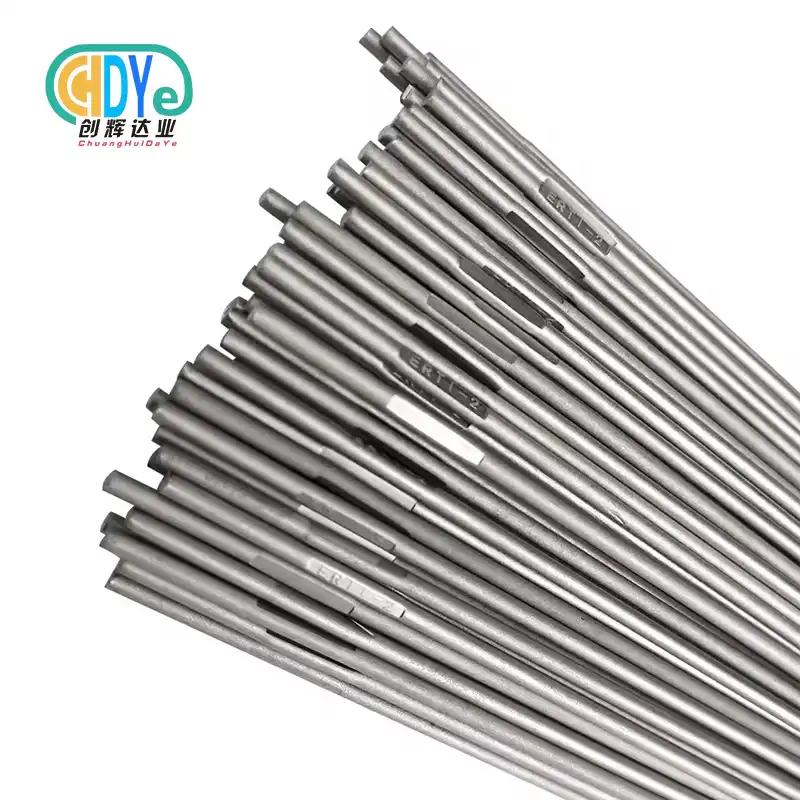
Understanding Titanium Welding Wire and Its Role in Chemical Processing
Titanium welding wire is a special kind of filler material that was made to join titanium and titanium alloy parts together in places where other materials don't work. Titanium welding wire is essential in chemical processes because of its special metallurgical qualities, such as its amazing temperature stability, high strength-to-weight ratio, and exceptional corrosion resistance.
Fundamental Properties of Titanium Welding Wire
The solid structure and chemical makeup of titanium welding wire give it its great performance. Pure titanium and its alloys are very good at resisting stress corrosion cracking caused by chloride. This makes them perfect for chemical processing equipment that has to deal with strong media. Because the wire has a mass of about 4.43 g/cm³, it is much lighter than other materials of the same size and strength.
It is amazing how well titanium welding wire resists rust, and it keeps its mechanical qualities even when it is heated above 600°C. This thermal stability makes sure that the quality of the weld stays the same in high-temperature chemical processing situations where other materials would break down or degrade.
International Standards and Quality Assurance
Titanium welding wire must meet strict quality standards for chemical processing uses, which is why it must comply with international standards like ASTM B863 and AWS A5.16. These standards spell out exact chemical makeups, mechanical qualities, and production methods that make sure that products from different batches and sources work the same way.
There are 12 different ERTi codes for the different types of wire, which are Gr1, Gr2, Gr3, Gr4, Gr5, Gr7, Gr9, and Gr23. Each grade has its own benefits that are best for the chemical handling needs at hand. For example, commercially pure grades are designed to be as resistant to corrosion as possible, while aerospace-grade metals are stronger.
Titanium Welding Wire: Welding Process and Best Practices for Chemical Processing
To use titanium welding wire successfully in chemical processes, you need to follow certain welding methods and keep the environment under control. The welding process has to take into account how easily the material can become contaminated by air while also making sure the joint is strong and won't rust.
TIG and MIG Welding Techniques
Gas Tungsten Arc Welding, or GTAW/TIG, is the most popular way to use titanium welding wire in chemical processes. This method gives exact control over the amount of heat applied and the coverage of shielding gas, which is necessary to avoid contamination that could lower the quality of the weld. When welding, oxygen and nitrogen can't get through because of the protective gas argon, which has a purity level above 99.99%.
Gas Metal Arc Welding (GMAW/MIG) is faster and better at making welds, so it's great for bigger chemical processing production jobs. The automatic wire feeding system makes sure that the deposition rates stay the same during long welding jobs by reducing the impact of human error.
Preparation and Storage Protocols
As part of proper preparation, the base materials and welding wire surfaces must be cleaned thoroughly to get rid of any contaminants that could lead to gaps or weakening. You can choose between pickled and bright ends for the wire's surface. Each is best for a certain welding situation and quality standard.
The conditions of storage must keep the purity of the wire by stopping it from absorbing water and getting contaminated by the air. Titanium welding wire keeps its metallurgical qualities from the time it is made until it is used. This is done by controlled humidity conditions and protective packing.
Comparing Titanium Welding Wire with Alternatives in Chemical Processing
In order to choose the right welding materials for chemical processing uses, you need to look at their performance, cost, and how reliable they will be in the long run. Titanium welding wire regularly works better than other materials in acidic conditions and has special benefits that support its high price.
Performance Comparison with Traditional Materials
Compared to stainless steel welding wire, titanium is better at resisting rust caused by chloride and keeping its mechanical qualities at high temperatures, where stainless steel breaks down a lot. Aluminum welding wire is good at resisting corrosion in some situations, but it doesn't work well at high temperatures or with chemicals that are commonly used in harsh working settings.
Nickel-based welding metals are very resistant to corrosion, but they cost more and have higher density penalties than titanium-based options. In situations where reducing weight improves system efficiency and lowers structural stress, the specific strength benefit of titanium welding wire becomes especially important.
Grade-Specific Applications and Cost Optimization
Different types of titanium have different performance qualities that can be used to save money by carefully choosing the material. For uses with very strong chemicals, commercially pure grades (Gr1, Gr2) offer the best corrosion protection. Aerospace grades (Gr5, Gr23), on the other hand, offer better strength for pressure vessels and structural uses.
The fact that aerospace-grade titanium welding wire could be used in chemical processing shows how flexible and reliable these materials are. Innovations created for tough aircraft settings directly improve performance in chemical processing uses, giving decision-makers more confidence in the materials they choose.
How to Procure Reliable Titanium Welding Wire for Chemical Processing Needs
To get the best deals on titanium welding wire, you need to carefully look at the skills, quality systems, and technical support facilities of each provider. Chemical processing uses are very complicated, so providers need to know both the needs of the metalworking industry and the problems that come up in that industry.
Supplier Qualification and Certification Requirements
Qualified suppliers must show that they are certified by ISO 9001:2015 and have specific knowledge in titanium metals and chemical processing uses. Material tracking paperwork, such as chemical analysis reports and mechanical property certificates, makes sure that project requirements and government rules are met.
Shaanxi Chuanghui Daye Metal Material Co., Ltd. is a good example of a seller that meets the needs of chemical processing uses. In Baoji, China's "Titanium Capital," the company has over 30 years of experience in the rare metals business and uses cutting-edge manufacturing tools like electron beam ovens and advanced quality control systems.
Bulk Purchasing and Custom Solutions
Inventory management, project needs, and wait time considerations must all be balanced in effective titanium welding wire procurement strategies. Buying in bulk can save you money and make sure you have enough materials on hand for important production plans.
Custom metal development and specific diameter needs (0.4–6.0 mm range) make it possible to find the best welding settings for certain chemical processing tasks. Material handling and storage systems can be flexible thanks to packaging choices like straight wire, natural coil, and coil patterns (D100/D300).
Technical Support and Troubleshooting for Titanium Welding Wire Applications
To successfully use titanium welding wire, you need more than just the right materials. You also need to be able to get full expert help and solve problems. Chemical manufacturing settings have their own problems that need to be solved by people with specific knowledge and experience.
Common Welding Challenges and Solutions
One of the most important parts of titanium welding for chemical processes is keeping the joint from porosity. Adsorption of hydrogen from the air or polluted surfaces can delay cracking and weaken the integrity of joints. With the right pre-weld cleaning steps and controlled shielding gas covering, these risks can be avoided, and the quality of the weld is always the same.
When oxygen gets into the metal during welding, it forms alpha case formation. This makes the top layers more brittle, which lowers the resistance to corrosion and the mechanical qualities. Advanced methods for treating the surface and finding the best welding settings stop alpha cases from forming while keeping the great qualities that make titanium welding wire necessary for chemical processes.
Parameter Optimization and Quality Control
When optimizing welding parameters, you need to think about the wire grade, thickness, and the needs of the particular application. To get the best penetration and the fewest heat-affected zone features that could affect corrosion resistance, the current settings, travel speed, and shielding gas flow rates must be carefully adjusted.
Automated welding solutions make it easier to control parameters consistently and reduce the amount of variation caused by operators in important chemical processing tasks. These systems allow for exact control of heat input and repeatability, which is necessary to keep quality standards high in industrial settings.
Conclusion
When it comes to corrosion protection and mechanical performance in harsh industrial settings, reliable titanium welding wire is an important part of modern chemical processing. A thorough check of the material's properties, the welding methods used, and the supplier's credentials guarantees a smooth implementation that boosts working efficiency and lowers the need for long-term upkeep. When you know the specific benefits of each type of titanium, you can make smart purchasing choices that balance cost and performance. For chemical processing professionals looking for dependable, high-performance joining solutions, the proven track record of titanium welding wire in aerospace and medical uses adds further trust.
FAQ
Q: What makes titanium welding wire better for use in chemical processing?
A: When compared to other welding materials, titanium welding wire is much better at resisting stress corrosion cracking caused by chloride. It also keeps its mechanical qualities at high temperatures and works better with strong processing media.
Q: How do I choose the right type of titanium for my chemical processing project?
A: The choice of grade is based on the chemical surroundings and the technical needs. Commercially pure grades (Gr1, Gr2) are the most resistant to rust, while aircraft grades (Gr5, Gr23) are stronger for use under pressure.
Q: What safety measures should be taken when titanium wire is used for welding?
A: It is very important to have enough air, inert gas protection, and contamination prevention. Air pollution that could affect the quality of the weld can be avoided by storing the metal in places with controlled humidity and cleaning the surface very well.
Q: What kinds of licenses should I look for in a company that sells titanium welding wire?
A: Be sure that the company is certified by both AWS A5.16 and ASTM B863, as well as ISO 9001:2015. Chemical analysis reports and material test records make sure that things can be tracked and that quality is maintained.
Q: What is the difference between the prices of titanium welding wire and other materials?
A: Even though the material costs more up front, titanium welding wire often has better long-term value in chemical processing uses because it lasts longer and needs less upkeep.
Partner with Chuanghui Daye for Premium Titanium Welding Wire Solutions
Shaanxi Chuanghui Daye Metal Material Co., Ltd. is ready to help you improve your chemical processing skills with our full range of titanium welding wire options. Our ISO 9001:2015-certified factory in China's "Titanium Capital" makes high-purity welding wire that meets ASTM B863 and AWS A5.16 standards. This wire is very resistant to rust and will hold welds together well in the toughest situations. We offer consistent quality and dependable technical support thanks to our more than 30 years of experience in the rare metals business and our advanced electron beam processing capabilities. Email our team at info@chdymetal.com right now to talk about your needs for a titanium welding wire source and find out how our tried-and-true solutions can help your chemical processing operations run more smoothly.
References
1. American Welding Society. "Specification for Titanium and Titanium Alloy Welding Electrodes and Rods." AWS A5.16/A5.16M Standard, Miami: American Welding Society, 2018.
2. ASTM International. "Standard Specification for Titanium and Titanium Alloy Wire." ASTM B863-17, West Conshohocken: ASTM International, 2017.
3. Peters, Matthew und Kumpfert, Jürgen. "Titanium Alloys for Aerospace Applications." Advanced Engineering Materials, Vol. 5, No. 6, 2003.
4. Schutz, Roland W. and Watkins, Harry B. "Recent Developments in Titanium Alloy Application in the Chemical Process Industry." Materials Performance, NACE International, 1998.
5. Boyer, Rodney R. "An Overview on the Use of Titanium in the Aerospace Industry." Materials Science and Engineering: A, Volumes 213-214, 1996.
6. Donachie, Matthew J. "Titanium: A Technical Guide for Chemical Processing Applications." Industrial Press Inc., New York, 2000.

Learn about our latest products and discounts through SMS or email