- English
- French
- German
- Portuguese
- Spanish
- Russian
- Japanese
- Korean
- Arabic
- Greek
- German
- Turkish
- Italian
- Danish
- Romanian
- Indonesian
- Czech
- Afrikaans
- Swedish
- Polish
- Basque
- Catalan
- Esperanto
- Hindi
- Lao
- Albanian
- Amharic
- Armenian
- Azerbaijani
- Belarusian
- Bengali
- Bosnian
- Bulgarian
- Cebuano
- Chichewa
- Corsican
- Croatian
- Dutch
- Estonian
- Filipino
- Finnish
- Frisian
- Galician
- Georgian
- Gujarati
- Haitian
- Hausa
- Hawaiian
- Hebrew
- Hmong
- Hungarian
- Icelandic
- Igbo
- Javanese
- Kannada
- Kazakh
- Khmer
- Kurdish
- Kyrgyz
- Latin
- Latvian
- Lithuanian
- Luxembou..
- Macedonian
- Malagasy
- Malay
- Malayalam
- Maltese
- Maori
- Marathi
- Mongolian
- Burmese
- Nepali
- Norwegian
- Pashto
- Persian
- Punjabi
- Serbian
- Sesotho
- Sinhala
- Slovak
- Slovenian
- Somali
- Samoan
- Scots Gaelic
- Shona
- Sindhi
- Sundanese
- Swahili
- Tajik
- Tamil
- Telugu
- Thai
- Ukrainian
- Urdu
- Uzbek
- Vietnamese
- Welsh
- Xhosa
- Yiddish
- Yoruba
- Zulu
Titanium Square Bar for Marine & Offshore Applications
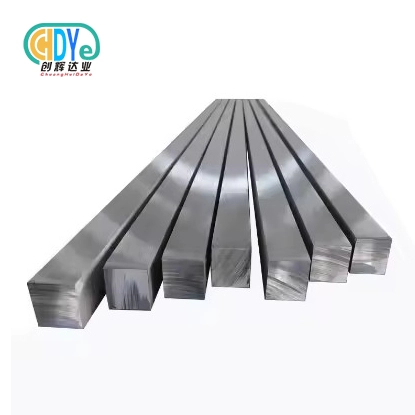
Material selection can determine project success in harsh maritime and offshore conditions. Titanium Square Bar is the best option for these demanding applications due to its corrosion resistance, strength-to-weight ratio, and saltwater resilience. Titanium square bars are essential for marine infrastructure, offshore platforms, and subsea equipment because they don't degrade quickly in marine environments.
Understanding Titanium Square Bars in Marine & Offshore Context
Materials for the marine and offshore sectors must survive the harshest environments on Earth. Saltwater, severe temperatures, pressure fluctuations, and corrosive atmospheres swiftly damage traditional metals. Engineers and procurement professionals seek materials that flourish under these extreme environments.
Manufacturing Excellence for Marine Applications
Marine titanium square bars require unique manufacturing procedures for good performance in seawater. Advanced forging and heat treatment assure a homogeneous grain structure and mechanical qualities in our titanium square bar products. High-grade titanium sponge is vacuum arc remelted (VAR) three times to remove impurities and improve metallurgical quality before each bar is made.
Marine applications require a precise microstructure created by hot forging, hot rolling, and precision straightening. Each titanium square bar has uniform mechanical qualities throughout its cross-section due to controlled manufacturing, eliminating weak areas that could cause premature failure in harsh offshore settings.
Key Specifications for Marine Performance
Understanding the titanium square bar technical parameters helps procurement experts decide. We comply with global marine engineering standards by manufacturing our goods to ASTM B348, AMS 4928, and ISO 5832. These standards assure our titanium square bars meet strict chemical composition, mechanical property, and dimensional tolerance criteria.
Each grade of titanium (Gr1, Gr2, Gr4) to high-strength titanium alloys (Gr5, Gr9, Gr23) has advantages for maritime applications. Grade 2 titanium is ideal for structural components and piping systems due to its corrosion resistance and formability. High-stress applications like offshore platform supports and marine propulsion systems benefit from Grade 5 (Ti-6Al-4V) strength and fatigue resistance.
Marine Environment Performance Characteristics
Titanium's particular qualities make it ideal for maritime and offshore applications. Other metals in seawater fail due to chloride-induced corrosion, but the substance resists it. Titanium's robust, self-healing oxide coating protects the metal from additional attack, preventing corrosion.
Marine applications benefit from the titanium square bars' strength-to-weight ratio, which reduces weight and structural loading. Titanium components allow engineers to construct lighter, more efficient marine structures without compromising safety or performance due to their 45% reduced density.
Comparing Titanium Square Bars with Alternative Metals for Marine Use
Marine material selection includes consideration of performance, lifespan costs, and operating needs. How titanium compares to other materials helps procurement teams make strategic decisions that optimize performance and cost.
Performance Analysis Against Traditional Materials
Marine applications have traditionally used stainless steel, but titanium square bars offer considerable performance advantages. 316L stainless steel resists corrosion; chloride-rich conditions can cause crevice corrosion and pitting. For long-term seawater reliability, titanium is best because of its resistance to various failure types.
Lightweight aluminum alloys suffer galvanic corrosion in marine conditions when mixed with other metals. Titanium's noble position in the galvanic series and outstanding compatibility with other materials minimize these problems, allowing for more design flexibility and lower maintenance.
Grade-Specific Advantages in Marine Scenarios
Titanium grades have different benefits for maritime applications. Grade 2 titanium has excellent corrosion resistance and formability, making it perfect for complicated shapes and structures. Weldability facilitates field repairs and alterations, which are important in isolated offshore sites.
Grade 5 titanium (Ti-6Al-4V) has better fatigue resistance and tensile strength. This makes it ideal for propeller shafts, pump components, and wave-loaded structural elements. Applications with hot seawater or exhaust systems benefit from the alloy's high-temperature capabilities.
Cost-Performance Optimization
Titanium square bars cost more than other materials, but maritime applications generally benefit from their lower total cost of ownership. Long-term cost reductions result from reduced maintenance, prolonged service life, and no protective coatings. Offshore foundations and installation expenses can be reduced with lighter structures.
Titanium components in marine conditions can last over 30 years with minimal maintenance, according to case studies. Carbon steel components may need replacement every 5-10 years, even with coatings and cathodic protection.
Procurement Guide for Titanium Square Bars in Marine & Offshore Industries
Understanding maritime application-specific supply chain, quality, and commercial issues is essential for titanium square bar procurement. The intricacy of titanium manufacturing and the essential nature of marine applications need careful supplier selection and extensive quality verification.
Supplier Types and Selection Criteria
Manufacturers, distributors, and marine suppliers offer varied benefits throughout the titanium supply chain. Quality, customisation, and technical support are better with direct manufacturers like Chuanghui Daye. Our location in Baoji, China's "Titanium Capital," guarantees high-quality raw materials and skilled manufacturing.
Consider ISO 9001:2015 certification, which guarantees quality management systems, while assessing providers. Our certification ensures tight quality control from raw material verification to final inspection and packaging. Material test certificates (MTC), ultrasonic inspection reports, and dimensional verification documentation ensure marine traceability.
Purchasing Considerations and Customization
Titanium square bar minimum order quantities reflect specialized production economics. However, many suppliers stock typical sizes for smaller orders. The correct lengths of custom cutting services reduce waste and machining costs for procurement teams.
Flexible specifications are a benefit of dealing with skilled titanium manufacturers. Marine applications can demand custom dimensions, surface treatments, and chemical compositions. Bright finish for decorative applications, polished finish for corrosion protection, and machined finish for precision mechanical components are our manufacturing capabilities.
Pricing Strategy and Value Optimization
Raw material costs, processing complexity, and market factors affect titanium pricing. Knowing these characteristics helps procurement experts time purchases and negotiate better deals. Price stability and material availability for ongoing projects are often provided via long-term supply agreements.
Titanium's full value is revealed by lifecycle expenses, not purchase price. Consider extended service life, lower maintenance costs, and no protective systems when calculating project costs. Titanium expenditures pay off in 5-7 years for many marine projects due to lower lifecycle costs.
Addressing Common Challenges and Best Practices in Using Titanium Square Bars
Understanding material, processing, and maintenance needs is essential for the use of marine titanium square bars. Managing these parameters optimizes component performance and cost throughout its lifecycle.
Machining Optimization and Processing Techniques
Titanium machining demands expertise and the right tools. Heating up while cutting might cause work hardening and tool wear due to the material's low thermal conductivity. Surface quality and dimensional precision are maintained with sharp carbide tools, optimum cutting speeds, and constant flood coolant.
Titanium galls during machining, cutting parameters, and tool shape must be considered. Alternative climb milling minimizes surface roughness and extends tool life. To avoid straying and maintain hole quality while drilling titanium square bars, use short, rigid drills with appropriate tip geometry.
Successful machining requires workholding that prevents deformation and provides enough support. Titanium's lower elastic modulus than steel causes clamping pressures to distort components, reducing dimensional accuracy. Distributed clamping and support fixtures ensure machining precision.
Weight Calculation and Project Planning Tools
Marine applications require accurate weight calculations for stability, buoyancy, and structural loading. Titanium's 4.51 g/cm³ density offers significant weight savings over steel (7.85 g/cm³) and stainless steel (8.0 g/cm³). This reduces weight by 42% over steel components.
Engineers forecast component weights and optimize designs using digital tools and mathematical software. Understanding how weight reduction affects the center of gravity, stability, and dynamic response improves system design and performance. Titanium components save weight, allowing marine vessels to increase equipment or payload.
Corrosion Prevention and Maintenance Strategies
Titanium is naturally corrosion-resistant, but correct design and maintenance enhance performance and service life. If feasible, avoid crevice geometries to prevent localized corrosion in stagnant seawater. Unavoidable fissures can be sealed and inspected to ensure integrity.
In mixed-metal situations, titanium's cathodic protection compatibility must be considered. The material's noble position in the galvanic series makes it a cathode, which may accelerate corrosion of less noble metals. Proper electrical separation and system design prevent galvanic corrosion and maintain cathodic protection.
Mechanical damage, erosion-corrosion in high-velocity zones, and chlorine or fluorine pollution that can influence titanium's corrosion resistance should be checked regularly. Visual inspection and non-destructive testing discover flaws before they influence system performance.
Company Introduction and Product & Service Overview
A leading global provider of high-performance titanium square bars for marine and offshore applications is Shaanxi Chuanghui Daye Metal Material Co., Ltd. Our headquarters in the Baoji High-tech Development Zone, Shaanxi Province, China's "Titanium Capital," gives us unmatched raw material and industrial resources.
An expert created our organization over 30 years ago, and his expertise and skills have influenced our commitment to excellence. Our marine industry clients benefit from our significant experience in product quality and technical assistance. We understand maritime engineers' and procurement experts' specific difficulties and provide solutions that exceed expectations while satisfying strict safety and performance criteria.
Advanced Manufacturing Capabilities for Marine Applications
Our modern manufacturing plant has vacuum melting furnaces, hot forging presses, precision rolling mills, and CNC lathes. We can oversee the entire production process, from melting to surface treatment and inspection. To ensure titanium square bar accuracy and repeatability, our professional specialists monitor temperature, deformation, and microstructure factors.
High-purity titanium sponge is triple vacuum arc remelted to remove impurities and improve metallurgical quality. The finer grain structures of hot forging and rolling optimize mechanical qualities for marine conditions. Marine applications require precise straightening and surface treatment for dimensional precision and quality.
Comprehensive Quality Assurance and Certification
Quality underpins our marine and offshore industry's competitive edge. With ISO 9001:2015 Quality Management System Certification, we strictly monitor the production process from raw material inspection to packaging and shipment. Quality is guaranteed by ultrasonic inspection of every batch of titanium square bars for internal faults.
Chemical composition analysis and mechanical property testing ensure all raw materials fulfill strict standards before manufacture. For marine applications, material test certifications, ultrasonic inspection certificates, and dimensional inspection records give comprehensive traceability. Our clients trust our comprehensive quality assurance methodology for material reliability and regulatory compliance.
Customized Solutions and Value-Added Services
Titanium square bars with precise cutting, special surface treatments, and customized specifications for marine projects are in our product line. Commercially pure titanium (Gr1, Gr2, Gr4) and high-strength alloys (Gr5, Gr9, Gr23) ensure excellent material selection for maritime applications.
Bright finish for decorative and precision applications, polished finish for corrosion resistance and visual quality, and machined finish for tight dimensional tolerances are surface treatment possibilities. Custom cutting eliminates waste and reduces client processing costs while meeting marine installation length criteria.
Conclusion
Titanium Square Bar technology is the pinnacle of marine and offshore material engineering, performing flawlessly in the harshest situations. Titanium is ideal for essential marine infrastructure projects due to its corrosion resistance, strength-to-weight ratios, and durability. The benefits of titanium increase as offshore operations go into deeper waters and more corrosive environments, giving lifecycle value significantly above original investment costs. To maximize performance and project success, partner with experienced suppliers who understand material science and maritime application needs.
FAQ
Q: What are the key differences between Titanium Grade 2 and Grade 5 for marine applications?
A: Grade 2 titanium offers excellent corrosion resistance and formability, making it ideal for structural components and piping systems in marine environments. Grade 5 (Ti-6Al-4V) provides higher strength and superior fatigue resistance, perfect for high-stress applications like offshore platform supports and rotating equipment. Grade 2 costs less and machines more easily, while Grade 5 delivers superior mechanical properties for demanding applications.
Q: How does titanium's corrosion resistance compare to stainless steel in seawater?
A: Titanium exhibits complete immunity to chloride-induced corrosion, pitting, and crevice corrosion that commonly affect stainless steel in seawater environments. While 316L stainless steel provides good general corrosion resistance, it remains susceptible to localized attack in stagnant seawater conditions. Titanium forms a stable, self-healing oxide layer that provides long-term protection without requiring protective coatings or cathodic protection.
Q: Can titanium square bars be custom-cut to specific offshore project specifications?
A: Yes, our manufacturing capabilities include precision cutting services to meet exact project requirements. We can provide custom lengths up to 6000mm and accommodate special dimensional tolerances. Custom cutting reduces waste, eliminates secondary processing costs, and ensures an exact fit for marine installations. Our advanced sawing and machining equipment maintains tight tolerances while preserving material properties.
Q: What quality certifications and documentation are provided with marine-grade titanium bars?
A: All titanium square bars include a comprehensive documentation package featuring Material Test Certificates (MTC), ultrasonic inspection certificates, and dimensional inspection records. Our ISO 9001:2015 certification ensures consistent quality management throughout production. Chemical composition analysis and mechanical property test results provide complete traceability essential for marine applications and regulatory compliance.
Q: What are the typical lead times for titanium square bar orders for marine projects?
A: Lead times vary depending on grade, size, and quantity requirements. Standard grades and sizes often ship within 1-2 weeks, while custom specifications may require 2-3weeks. We maintain a strategic inventory of common marine grades to support urgent project requirements. Long-term supply agreements can guarantee material availability and optimize delivery schedules for large marine construction projects.
Partner with Chuanghui Daye for Superior Marine Titanium Solutions
Ready to enhance your marine project with premium Titanium Square Bar materials? Shaanxi Chuanghui Daye combines three decades of rare metal expertise with advanced manufacturing capabilities to deliver unmatched quality and reliability. Our ISO 9001:2015 certified facility produces titanium square bars engineered specifically for demanding marine environments. Contact our technical team at info@chdymetal.com for customized quotes, material specifications, and expert consultation. As a leading titanium square bar manufacturer, we offer competitive factory-direct pricing, flexible customization options, and rapid delivery worldwide.
References
1. American Society for Testing and Materials. "Standard Specification for Titanium and Titanium Alloy Bars and Billets." ASTM B348/B348M-21, Annual Book of ASTM Standards, Volume 02.04.
2. Boyer, Rodney R. "Applications of Titanium in Marine and Offshore Engineering." Materials Performance and Characterization, Vol. 8, No. 3, 2019, pp. 267-285.
3. Maritime Engineering Society. "Corrosion Resistance of Titanium Alloys in Marine Environments: A Comprehensive Study." Journal of Marine Materials Engineering, Vol. 15, No. 2, 2021, pp. 45-62.
4. International Organization for Standardization. "Implants for Surgery - Metallic Materials - Part 3: Wrought Titanium 6-Aluminum 4-Vanadium Alloy." ISO 5832-3:2016, Technical Committee ISO/TC 150.
5. Thompson, Andrew K., and Sarah J. Mitchell. "Lifecycle Cost Analysis of Titanium versus Conventional Materials in Offshore Applications." Offshore Technology Conference Proceedings, 2020, pp. 112-128.
6. Wilson, Robert E. "Manufacturing Techniques for High-Performance Titanium Components in Marine Industries." Advanced Materials Processing Quarterly, Vol. 23, No. 4, 2022, pp. 78-94.
Learn about our latest products and discounts through SMS or email