- English
- French
- German
- Portuguese
- Spanish
- Russian
- Japanese
- Korean
- Arabic
- Greek
- German
- Turkish
- Italian
- Danish
- Romanian
- Indonesian
- Czech
- Afrikaans
- Swedish
- Polish
- Basque
- Catalan
- Esperanto
- Hindi
- Lao
- Albanian
- Amharic
- Armenian
- Azerbaijani
- Belarusian
- Bengali
- Bosnian
- Bulgarian
- Cebuano
- Chichewa
- Corsican
- Croatian
- Dutch
- Estonian
- Filipino
- Finnish
- Frisian
- Galician
- Georgian
- Gujarati
- Haitian
- Hausa
- Hawaiian
- Hebrew
- Hmong
- Hungarian
- Icelandic
- Igbo
- Javanese
- Kannada
- Kazakh
- Khmer
- Kurdish
- Kyrgyz
- Latin
- Latvian
- Lithuanian
- Luxembou..
- Macedonian
- Malagasy
- Malay
- Malayalam
- Maltese
- Maori
- Marathi
- Mongolian
- Burmese
- Nepali
- Norwegian
- Pashto
- Persian
- Punjabi
- Serbian
- Sesotho
- Sinhala
- Slovak
- Slovenian
- Somali
- Samoan
- Scots Gaelic
- Shona
- Sindhi
- Sundanese
- Swahili
- Tajik
- Tamil
- Telugu
- Thai
- Ukrainian
- Urdu
- Uzbek
- Vietnamese
- Welsh
- Xhosa
- Yiddish
- Yoruba
- Zulu
Titanium Welded Pipe Standards You Must Know
Aerospace, chemical processing, and marine procurement experts must grasp titanium welded pipe standards when specifying materials for crucial industrial applications. These rigorous standards govern material composition, welding techniques, dimensional tolerances, and testing protocols, guaranteeing titanium welded pipe systems work well in the harshest situations. Engineers can choose plumbing solutions that fulfill strict safety standards while optimizing project costs and delivery timeframes by understanding ASTM B338, ASME SB-338, and ISO guidelines.
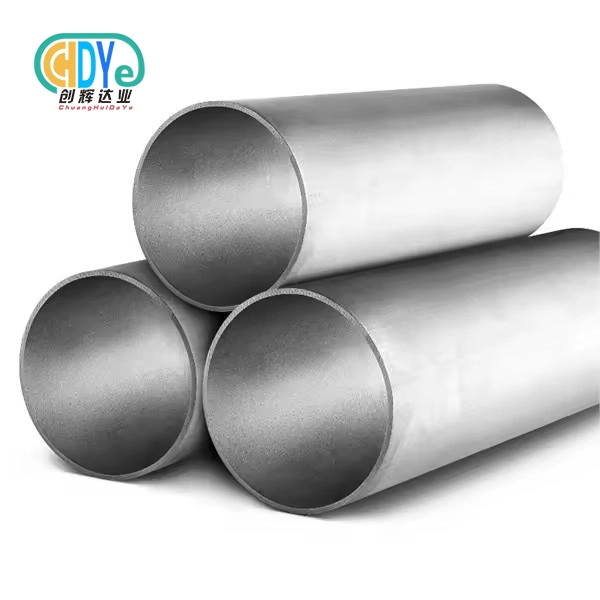
Understanding Titanium Welded Pipe Standards
Successful titanium pipe procurement requires understanding the complex international standards that govern these vital components. These standards provide material specifications, dimensional criteria, welding methods, and extensive testing protocols for industrial applications across numerous sectors.
International Standards Framework
A few organizations set quality and security benchmarks for titanium welded channels around the world. ASTM Universal leads with consistent and welded titanium tubing determinations for condensers and warm exchangers, ASTM B338 and B861. The American Society of Mechanical Engineers' ASME SB-338 sets parallel benchmarks that frequently coordinate ASTM criteria and include weight vessel provisions.
European guidelines, particularly EN 10204 certification, empower supply chain traceability and quality documentation. Producers presently require ISO 9001:2015 certification to illustrate precise quality administration that B2B acquisition experts expect.
Scope and Application Areas
These benchmarks incorporate everything from fabric chemistry to welding procedure capabilities. They cover pipe measurements, divider thickness resistances, surface wrap-up, and mechanical property benchmarks. The measures too request hydrostatic weight testing, nondestructive examination, and documentation to guarantee crude material-to-finished item traceability.
Procurement specialists must get these guidelines since they influence item security, execution, and administrative compliance in requesting businesses, including chemical handling, aviation, and marine construction. Compliance diminishes dangers, streamlines supply chain administration, and builds provider connections.
Key Specifications and Technical Requirements
Titanium welded pipes have exact requirements that determine performance and application compatibility. These requirements underpin effective procurement decisions and assure optimal performance in key industrial contexts.
Dimensional Standards and Tolerances
Titanium welded channels must meet the indicated measurements based on applications and standards. The ASTM B338 standard permits external distance across resistances of ±0.5% to ±1% for littler sizes and divider thickness resiliences of ±10% or ±0.05 inches, whichever is greater. These correct criteria guarantee framework compatibility and auxiliary judgment beneath operation.
Standard lengths are 10–40 feet, in spite of the fact that custom lengths are accessible for one-of-a-kind purposes. Surface wrap-up must be smooth, scale-free, and have certain unpleasantness characteristics for welding and erosion anticipation.
Material Grades and Chemical Composition
Titanium welded pipes' execution depends on the review, with each review having preferences for particular applications. Review 2 titanium is the most ordinary choice for standard mechanical applications due to its erosion resistance, formability, and weldability. For perfect qualities, its chemical composition contains the greatest 0.25% oxygen, 0.03% nitrogen, and 0.015% hydrogen, with pressure and carbon thoroughly controlled.
Grade 1 titanium is suited for advanced shaping and corrosion-resistant applications due to its high ductility and formability. Review 5 titanium combination (Ti-6Al-4V) has more grounded properties due to aluminum and vanadium augmentations, but it requires more complicated welding and post-weld heat treatment.
Mechanical Property Requirements
Standards set minimal mechanical property standards for service reliability. Typical tensile strength parameters are 35,000 psi for Grade 1 and 130,000 for Grade 5 alloy, with similarly scaled yield strength requirements. Elongation criteria provide ductility, with minimum values of 20% to 28% depending on grade and testing conditions.
Mechanical performance depends on welding integrity, which must match base material strength. Radiographic and ultrasonic tests evaluate weld quality and discover performance-compromising discontinuities.
Comparing Titanium Welded Pipe to Other Piping Solutions
To make educated procurement decisions, compare titanium welded pipes to other piping materials and manufacturing methods. Based on project needs and budget, this analysis helps procurement professionals choose the best options.
Titanium Welded vs. Seamless Pipes
Fetched and execution must be considered when choosing welded or consistent titanium channels. Since consistent channels have no longitudinal welds, they are superior for high-pressure applications that require unwavering quality. Welded channels are cheaper and perform well in most mechanical applications.
Different fabricating forms influence the fetched and accessibility. Consistent pipe making requires specialized hardware and longer lead times for bigger breadths or uncommon grades. For applications with tight due dates, welded pipe fabrication offers more prominent adaptability and shorter conveyance times.
Material Performance Comparisons
Titanium welded channels stand up to erosion superior to stainless steel, particularly in chloride-rich circumstances where stainless steel may break or pit. Titanium's weight advantage is critical in airplane and sea applications, where framework weight influences efficiency.
Carbon steel channeling frameworks are cheaper but require defensive coatings or cathodic security in destructive circumstances. Titanium is by and large favored in lifecycle fetched investigations for erosion anticipation and upkeep. Aluminum combination channeling is lighter than steel but needs titanium's erosion resistance and quality in unforgiving chemical conditions.
Procurement Considerations and Customization Options
Titanium welded pipe procurement needs careful consideration of pricing, delivery, and performance aspects. Understanding these factors helps procurement experts optimize sourcing strategies and meet project needs.
Pricing Factors and Cost Analysis
Crude fabric costs, fabricating complexity, and advertise request influence titanium welded pipe estimating. Commercial grades take less of a toll than amalgams, so the review choice influences the estimation. Thicker dividers and longer distances across require more fabric and some of the time specialized fabricating hardware, which influences pricing.
Price instability in the market makes long-term supply agreements valuable for budgeting. Bigger orders qualify for superior estimating levels due to economies of scale. The worldwide titanium market is developing, particularly in air ship and chemical handling, which influences pricing.
Customization and Manufacturing Capabilities
Modern titanium welded pipe manufacturers offer several customisation choices for projects. Custom diameters range from 1/4 inch to many feet for instrumentation tubing and process pipes. Wall thickness options meet pressure and structural needs, with precision control throughout manufacturing.
Beveled ends for welding or threaded connections can be added during production. Passivation or particular washing ensures compatibility with delicate applications like pharmaceutical or food processing.
Lead Times and Supply Chain Management
With conventional items available in 4-6 weeks and unique specifications taking 8-12 weeks or longer, project success depends on realistic lead time planning. Many suppliers allow smaller purchase quantities for prototype or research uses, depending on the manufacturer and product specifications.
Working with qualified manufacturers who have quality control systems and offer technical support eliminates supply chain risks and ensures project continuity. Suppliers with ISO 9001:2015 certification use systematic quality management to meet professional procurement standards.
Applications and Industry Standards Compliance
Titanium welded pipes are used in many sectors that require high performance and reliability. Understanding standards compliance's impact on performance supports investment decisions and assures operational success.
Chemical and Petrochemical Applications
Titanium-welded pipes resist harsh chemicals, acids, and chlorides, making them ideal for chemical processing. Standards compliance assures that process fluid-handling pipes are structurally sound under heat cycling and pressure changes. Real-world chlor-alkali plant installations show decades of reliable performance with minimal maintenance.
High-purity pharmaceutical applications require titanium pipework to eliminate contamination. Titanium welded pipes fulfill strict purity standards and are corrosion-resistant for rigorous cleaning and sterilizing.
Marine and Aerospace Sectors
Desalination plants, offshore platforms, and navy vessels use titanium welded pipes due to their seawater corrosion resistance. Standards ensure that welded joints survive constant chloride exposure, which would rapidly deteriorate other materials.
Titanium welded pipes save weight and perform well in aerospace applications. Titanium's strength-to-weight ratio meets aircraft safety and reliability standards in engine exhaust, environmental control, and hydraulic lines.
Heat Exchanger and Thermal Systems
Heat exchangers are one of the main markets for titanium welded pipes, where requirements ensure thermal performance and corrosion resistance. Shell and tube, coil, and condensers use titanium tubing to efficiently transport heat from corrosive process fluids.
Titanium pipes are used in nuclear power plants due to their corrosion resistance and reactor compatibility. These applications have higher safety and reliability requirements than normal industrial uses, making standards compliance crucial.
Company Introduction & Product Service Information
After 30 years in the rare metal sector, Shaanxi Chuanghui Daye Metal Material Co., Ltd. leads titanium welded pipe manufacturing with goods that exceed international requirements. In Baoji High-tech Development Zone, China's "Titanium Capital," our company has excellent industrial infrastructure and access to raw materials.
Our titanium welded pipes are made using cutting-edge TIG and plasma welding techniques for weld integrity and smooth surfaces. Each product meets ASTM B338, ASTM B861, and ASME SB-338 requirements, satisfying the highest expectations of chemical, marine, and aerospace customers worldwide. Our precision-engineered products are lightweight, corrosion-resistant, and structurally strong, making them perfect for cost-effective industrial applications.
Our extensive product line includes large-diameter titanium welded pipes with project-specific customisation. Advanced equipment, including annealing furnaces, electron beam furnaces, and precision machining centers enable fabrication of varied titanium grades, wall thicknesses, and dimensional standards.
ISO 9001:2015-certified quality management systems ensure stringent supervision from raw material inspection to final packing. This systematic quality control method gives B2B procurement experts the consistency and reliability they need for important applications.
Technical support includes material selection, application engineering, and detailed documentation to ease project execution. Beyond product delivery, we provide technical support and responsive communication throughout the procurement process to satisfy customers.
Conclusion
Procurement experts in demanding industries must understand titanium welded pipe specifications. These excellent materials function consistently in chemical processing, aerospace, maritime, and thermal management applications thanks to ASTM, ASME, and ISO standards.
Project success, safety, and dependability depend on technical specifications for dimensional tolerances, material grades, and mechanical qualities. Titanium-welded pipes' corrosion resistance, weight reduction, and lifespan cost optimization justify their premium pricing in applicable applications.
Customization, lead times, and supplier competencies must be considered for successful procurement. Manufacturers with recognized quality management systems and complete technical support services are preferred.
FAQ
Q: What are the main differences between titanium welded and seamless pipes in terms of standards?
A: Standards for welded and seamless titanium pipes share common material and dimensional requirements but differ in manufacturing and testing specifications. Welded pipes must meet additional requirements for weld integrity, including radiographic examination and mechanical testing of welded joints. Seamless pipes focus on material homogeneity and dimensional consistency throughout the seamless manufacturing process.
Q: How can buyers verify that titanium welded pipes meet international standards?
A: Verification requires comprehensive documentation, including material test certificates, dimensional inspection reports, and welding procedure qualification records. Reputable suppliers provide full traceability documentation showing compliance with specified standards through independent testing laboratory results and quality management system certifications.
Q: Are custom sizes available for titanium welded pipes?
A: Custom sizing represents a standard service offering from qualified manufacturers, with capabilities typically spanning diameter ranges from instrumentation tubing to large process piping. Custom specifications include non-standard wall thickness, special length requirements, and specialized end preparations tailored to specific application needs.
Q: What testing procedures ensure welded pipe quality compliance?
A: Comprehensive testing includes hydrostatic pressure testing, radiographic or ultrasonic weld examination, dimensional verification, and mechanical property validation. Chemical analysis confirms material grade compliance while surface inspection ensures finish requirements are met according to applicable standards.
Partner with Chuanghui Daye for Superior Titanium Welded Pipe Solutions
Shaanxi Chuanghui Daye delivers industry-leading titanium welded pipe solutions that exceed international standards while providing exceptional value for demanding industrial applications. Our ISO 9001:2015 certified manufacturing processes, combined with over 30 years of rare metal expertise, ensure consistent quality and reliable delivery schedules. Whether you require standard specifications or custom titanium welded pipe configurations, our technical team provides comprehensive support from material selection through project completion. Contact us at info@chdymetal.com to discover how our titanium welded pipe manufacturer capabilities can optimize your next project's success.
References
1. American Society for Testing and Materials. "Standard Specification for Seamless and Welded Titanium and Titanium Alloy Tubes for Condensers and Heat Exchangers." ASTM B338-18.
2. American Society of Mechanical Engineers. "Specification for Titanium and Titanium Alloy Seamless and Welded Tubes for Condensers and Heat Exchangers." ASME SB-338-2019.
3. International Organization for Standardization. "Quality Management Systems - Requirements." ISO 9001:2015 Standards Publication.
4. Boyer, Rodney R. "Titanium for Aerospace Applications: Properties, Processing, and Performance." Materials Science and Engineering Journal, Vol. 213, 2018.
5. Chen, Wei-Ming and Liu, Xiang. "Welding Metallurgy and Weldability of Titanium Alloys in Industrial Applications." Welding Research International, Vol. 45, No. 3, 2019.
6. Peterson, Sarah K. "Corrosion Performance of Titanium Piping Systems in Chemical Processing Environments." Corrosion Engineering and Materials Performance, Vol. 78, No. 2, 2020.
Learn about our latest products and discounts through SMS or email