- English
- French
- German
- Portuguese
- Spanish
- Russian
- Japanese
- Korean
- Arabic
- Greek
- German
- Turkish
- Italian
- Danish
- Romanian
- Indonesian
- Czech
- Afrikaans
- Swedish
- Polish
- Basque
- Catalan
- Esperanto
- Hindi
- Lao
- Albanian
- Amharic
- Armenian
- Azerbaijani
- Belarusian
- Bengali
- Bosnian
- Bulgarian
- Cebuano
- Chichewa
- Corsican
- Croatian
- Dutch
- Estonian
- Filipino
- Finnish
- Frisian
- Galician
- Georgian
- Gujarati
- Haitian
- Hausa
- Hawaiian
- Hebrew
- Hmong
- Hungarian
- Icelandic
- Igbo
- Javanese
- Kannada
- Kazakh
- Khmer
- Kurdish
- Kyrgyz
- Latin
- Latvian
- Lithuanian
- Luxembou..
- Macedonian
- Malagasy
- Malay
- Malayalam
- Maltese
- Maori
- Marathi
- Mongolian
- Burmese
- Nepali
- Norwegian
- Pashto
- Persian
- Punjabi
- Serbian
- Sesotho
- Sinhala
- Slovak
- Slovenian
- Somali
- Samoan
- Scots Gaelic
- Shona
- Sindhi
- Sundanese
- Swahili
- Tajik
- Tamil
- Telugu
- Thai
- Ukrainian
- Urdu
- Uzbek
- Vietnamese
- Welsh
- Xhosa
- Yiddish
- Yoruba
- Zulu
What Are the Common Uses of Titanium Metal Plates?
Titanium metal plates are needed in many industries because they have excellent performance and material qualities. Aside from medical implants like cranial reconstruction plates and orthopaedic devices, these plates are also used in chemical processing equipment like heat exchanger plates and reactor vessels, marine engineering for things like submarine hulls and offshore platforms, and auto racing parts that need to be light. Titanium is very useful because it is strong for its weight, doesn't rust in hard settings, is biocompatible for medical use, and stays durable at both low and high temperatures. Since performance must be kept up, its strength makes it the best material.
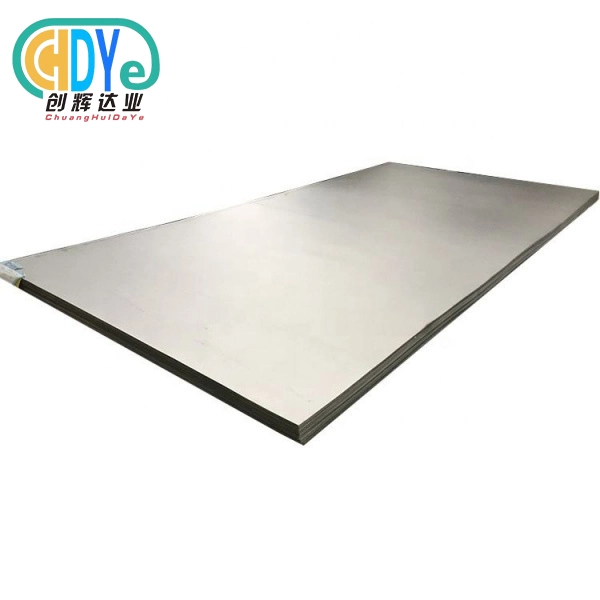
Understanding Titanium Metal Plates: Properties and Grades
What Makes Titanium Plates Unique?
Titanium is interesting because it has special chemistry and physical qualities. It weighs about 4.51 g/cm³, which is about 56% of steel's weight. Titanium is very strong and light at the same time. It makes a strong titanium dioxide (TiO₂) film on its own when it comes in contact with air. This means that saltwater, chlorides, and most reactive acids can't damage it. Even if the surface is damaged, this oxide layer keeps growing back. This makes sure that it will last for a long time in acidic environments. It can melt at temperatures as high as 1,668°C (3,034°F), which means that titanium metal plates can stay in shape and work well in places where other metals would break.
Standard Manufacturing Specifications
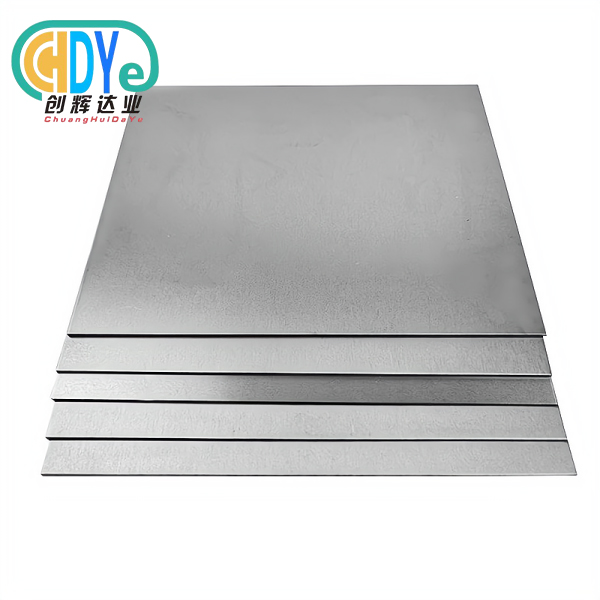
When it comes to making new titanium metal plates, there are very strict rules around the world. Things we can make at Chuanghui Daye are 0.5 mm thick up to 50 mm thick, 500 mm wide up to 2000 mm wide, and 1000 mm long up to 6000 mm long. These measures are the same as those in ASTM B265 for use in chemicals and industry, AMS 4911 for use in aeroplanes, and ASME SB265 for making pressure vessels. Electric beam furnaces, precision rolling machines, and computer-controlled heating furnaces are some of the high-tech tools we use to make sure that all of the plates have the same properties of the materials. In order to avoid problems with manufacturing later on, tight limits are put on measurement errors. Also, standards for flatness meet the exact needs of precision machining processes.
Critical Grade Selection for Performance
Titanium types are very different in terms of how pure they are and what other elements they contain. For different things, each grade works best. For making chemical processing equipment with difficult shapes, Grade 1 is the best choice because it is the most bendable and moulds well. Grade 2 titanium is the most common type of pure titanium. It is strong enough for most commercial uses and easy to shape. It's not very strong in Grade 3, but it can still be made. The strength is better in Grade 4, but it's still easy to shape for building parts. Grade 5 (Ti-6Al-4V), an alpha-beta alloy with 6% aluminium and 4% vanadium, can withstand tensile forces greater than 895 MPa (130 ksi). This is stronger than many steel alloys and keeps titanium's rust resistance. Our buying experts at Chuanghui Daye help clients pick the best grade based on things like how much they will be used, the weather, their budgets, and the needs of their manufacturing processes. To pick the right grade, you need to look at how much oxygen, nitrogen, carbon, and hydrogen are in the pores. These parts have a big impact on how the machine works and how it produces things. If there is more oxygen in something, it is stronger but less flexible. To keep it from becoming stiff, the amount of hydrogen must be controlled. Inductively Coupled Plasma (ICP) spectroscopy is used by our ISO 9001:2015-approved quality system to check the chemical make-up of each plate and make sure it meets all the requirements before it is shipped.
Common Industrial Applications of Titanium Metal Plates
Aerospace and Defense Applications
The military industry gets the most titanium metal plates since they are worth the extra cost because they work so well. Titanium is used by plane builders for major structural parts like engine shields, wing box parts, landing gear kits, and hydraulic system housings. Because the material is strong for its weight, it uses less gas and has more room for goods. Titanium is used in military planes because it can handle the high temperatures and damage that come with flying faster than sound. It is also hard to replace in important parts of the body. Space-grade titanium metal plates are put through ultrasonic testing (UT) that meets AMS 2631 Class AA standards. To make sure the frame is strong, UT can find flaws as small as 0.8 mm. More and more, commercial planes are using titanium for places like bolt holes and joints that are under a lot of stress and need better wear protection. Once the plane parts are made, our companies keep track of them all the way through to the final review, which gives all the papers needed for aviation approval.
Chemical Processing and Desalination Equipment
Materials used in chemical plants need to be able to handle being around rough substances for a long time at high temperatures and pressures. Titanium metal plates work really well in these conditions, especially for the insides of chlor-alkali electrolysis cells, the linings of heat exchanger tubesheets, and the insides of distillation columns. Titanium is often used on the sides of evaporators and other equipment that deals with brine in desalination plants because it doesn't crack easily in high-temperature salt solutions as stainless steel does. When it comes to bleach plant tools that will be used with hypochlorite and chlorine dioxide solutions, the pulp and paper industry needs titanium. The neutral surface of titanium is used by drug companies for process tanks and pipe systems that can't handle metal contamination. Nickel Grade 7 has 0.1 to 0.25% palladium in it, which makes it more resistant to reducing acids. It is used in chemical processing equipment that works with sulphuric and hydrochloric acids. As part of our custom production services, we can make welded kits and made parts that fit in with the way things are done now. This makes the work go faster and cost less.
Medical and Biomedical Devices
Titanium is used for life-saving implants because it is not magnetic and is okay with living things. Grade 23 ELI (Extra Low Interstitial) titanium metal plates can be used to make head repair plates, maxillofacial implants, spine fusion bars, and parts used to fix injuries. The material is about 110 GPa hard and flexible, which is a lot like human bone. In other words, it doesn't protect as well against stress, which can break down bone around implants. Titanium forms a direct link with bone tissue, which means that things can be fixed for good without using cement or biological glue. For implant fittings and abutments, companies that make dental implants use titanium types that are pretty pure. Because titanium is not magnetic like ferromagnetic materials, it is easy for people with implants to get MRI scans. Medical device companies and research institutions can get high-purity materials with full mill test results and biocompatibility certifications from our small-batch production. This helps them come up with new implant designs.
Marine Engineering and Offshore Structures
Titanium is the only metal that can stand up to the extreme rusting that happens in sea environments. Titanium metal plates are used by naval engineers for submarine pressure hull holes, heat exchanges in nuclear reactors, and marine water pipe systems. They are also used for propeller shafts. Titanium is used in riser parts, wellhead equipment, and process heat exchangers at oil and gas sites in the ocean, where the water is cool and the gas is sour with hydrogen sulphide. Safety coating systems don't need to be kept because the material doesn't rust or pit in cracks or chloride-filled water. It is becoming more and more common for luxury builders to use titanium for structural support, through-hull fittings, and exhaust systems. Getting rid of extra weight makes it faster and uses less gas. Titanium is used to make housings for deep-sea sensors and sample collection tools that work at very high pressures on marine research ships. There are tighter steps used to prepare the surface of our marine-grade titanium metal plates so that they don't have any alpha-case contamination that might make them less effective at fighting rust in chloride settings.
Titanium Metal Plates vs Other Metal Plates: A Comparative Analysis
Titanium vs Stainless Steel Comparison
People who buy things often compare titanium metal plates to austenitic stainless steels (304, 316) for uses that need to be resistant to rust. Titanium costs more than stainless steel when it is first made. Titanium, on the other hand, works better in places with salt than stainless steel, which can cause flaking and SCC. The mass of titanium is 4.51 g/cm³, which is 44% less than that of stainless steel, which makes a big difference in how much it weighs and how much it costs to ship. The tensile strength of Grade 5 titanium is higher (895 MPa) than that of 316 stainless steel (515 MPa). This means that wall sections can be cut even more and weights can be cut even more. But titanium is more flexible, which lets it be used in ways that need to spread stress. Heat exchangers are made in a certain way because different materials don't conduct heat the same way. Titanium doesn't carry electricity as well as stainless steel (16 W/m·K), but it does the same job and doesn't rust as easily. When the lifetime study looks at how much it costs to maintain, repair, and shut down stainless steel because of corrosion, the price difference fades.
Titanium vs. Aluminium Evaluation
Both aluminium and titanium are used in aeroplanes, where the main goal is to reduce weight. Because it is cheap and easy to work with, aluminium is a good choice for buildings that aren't very important. Titanium is stronger than aluminium alloys at high temperatures. Above 150°C, aluminium alloys lose their strength, but titanium stays strong to 400°C and beyond. Titanium is better at fighting rust in acidic or basic environments, such as at the coast or in a lab, where aluminium's oxide layer breaks down. It is harder to build joints in buildings that go through thermal cycles because metal expands more when it gets hot or cold. It is important to keep aluminium and titanium separate because galvanic corrosion can happen when they touch in an electrolyte. Aluminium is often the material of choice for aeroplane skins and other structures that don't need to be forceful. Titanium, on the other hand, is only used in places with a lot of stress, high temperatures, or important load lines where the extra strength is worth the extra cost.
Comparison with Exotic Alloys
Titanium and speciality nickel-based superalloys like Inconel are competitors when it comes to high temperatures. Too hot for titanium, Inconel 625 stays strong at up to 980°C. This is why it is used in exhaust systems and hot parts for gas engines. Titanium does not rust easily when reacting, and its lower density makes it suitable for chemical processes and aircraft parts below 400°C. Titanium is better for making large structural parts than Inconel, which is more expensive and harder to work with. This metal doesn't rust as easily in some reducing acids, but it's very pricey and has a very high density (16.6 g/cm³). While titanium is more expensive, zirconium is less expensive and has about the same level of rust protection in some chemical environments. But it's not strong enough to be used for building. These examples show that picking the right material is hard because you have to think about a lot of things, such as cost, weather, technical needs, and the limits of the manufacturing process.
Procurement Considerations for Titanium Metal Plates
Supplier Qualification and Certification
The first step to a good titanium metal plate buy is to carefully look over the suppliers you are considering. Buyers should look for ISO 9001:2015 certification, which shows that the company manages quality in a planned way, as well as qualifications that are important to their business, such as AS9100 for medical equipment or ISO 13485 for aircraft. It is very important that the production line can be tracked. The heat number, chemical makeup analysis, mechanical test results, and inspection records should all be on each plate's mill test report. There are established sellers who continue to work with major titanium makers such as TIMET (USA), VSMPO-AVISMA (Russia), and Baoji Titanium Industry (China). This keeps the quality of the raw materials high. Being in the "Titanium Capital" of China gives Chuanghui Daye direct access to high-quality sponge titanium and lets us offer low prices as if we were the plant. We've been in this business for more than 30 years, so we know a lot about science and can help buyers from all over the world with their important projects.
Customisation Capabilities and Lead Times
Standard plate shapes are useful for many things, but making titanium metal plates to specific needs can often save money on materials and make them more useful. Buying groups should ask suppliers if they can make sizes, widths, and lengths that aren't normal and fit the needs of a certain project. If you have the sides smoothed, sharpened, or polished, you may not need to take any extra steps. Surface finish options, such as "as rolled" or "precision ground", change how the part is handled further down the line and how well it works. The cutting-edge machines we use can change regular plates into blanks that look a lot like net shapes. There is a lot less trash and time spent on customer handling because of this. It depends on how difficult the specs are and how long the lead time is. Standard grades in common sizes usually ship in two to four weeks. However, it may take eight to twelve weeks for special metal formulas or sizes that aren't common. By making deals with qualified service providers, you can be sure that production will happen first and that prices will stay the same for ongoing needs. We can do both varying small-batch production to help with research and development projects and large-scale production for programmes that are already in place.
Cost Structure and Value Analysis
Titanium prices depend on a lot of factors, including the availability of raw materials, how hard they are to work with, market demand, and the needs of the specs. Prices per kg change a lot from one grade to the next. Pure titanium (Grades 1-4) costs a lot less than Grade 5 mixture because it is easier to work with. Buyers should get detailed prices that include the grade of the material, its size, its weight, how it will be shipped, and any rules that apply. Committing to a certain amount of goods often helps you get better prices because it makes production more efficient. There are more things that a total cost study needs to look at than just the stuff's price. It also has to think about the cost of freight, customs duties, inspection fees, and keeping the inventory. Even though titanium costs more at first, its longer service life and better protection to rust usually make up for it. At first, a titanium heat exchanger for chemical processes might cost three to four times as much as one made of stainless steel. However, it will not need to be fixed for ten to fifteen years, while stainless steel parts always need to be changed because they rust. When you buy from us, you save money because we don't add markups like other stores do. But we also stick to quality standards that are the toughest in the scientific world.
Why Choose Titanium Metal Plates? Key Advantages for B2B Buyers
Long-Term Durability and Lifecycle Value
Choosing titanium metal plates is a smart move that will lower the total cost of ownership and make the machine more reliable. Titanium can be used in corrosive environments for decades without any maintenance. Other materials, on the other hand, need coats to protect them, cathodic protection, or repair programmes. Chemical companies say that titanium heat exchangers can work nonstop for at least 20 years without breaking. Coated steel heat exchangers, on the other hand, need to be changed every 3 to 5 years. With this longer service life, there is less downtime, less repair work, and less loss of production when equipment breaks down. The material doesn't wear down or rust in high-velocity fluid streams, so it keeps moving heat well over time. Other materials, on the other hand, lose their effectiveness over time as the tube walls thin. Titanium does not get biofouling or marine growth, so it can be used in the ocean without having to pay a lot of money for cleaning. To keep temperature efficiency, it also works in systems that are cooled by seawater.
Performance Optimisation Across Applications
There are some things about titanium that make it possible to improve efficiency in ways that other materials can't. When buildings in space are made lighter, they use less fuel. For example, taking one kilogram off of a flight structure saves about 3,000 litres of fuel over the life of the plane. Titanium's biocompatibility and osseointegration features help people who have medical devices get better results. This means they don't need to have as much treatment again, and their quality of life is higher. Titanium is used in chemical processing plants to make tools that can work at higher temperatures and pressures. This makes the process go faster and better. Temperature changes don't cause too much thermal stress in buildings because the material doesn't expand or contract very much. This makes the wear last longer and keeps the joints from breaking. Titanium suspension parts make race cars easier to drive because they reduce the weight that the springs don't support. These performance advantages set titanium apart from other materials on the market and provide practical benefits that explain its higher cost.
Design Flexibility and Engineering Freedom
Artists can be very artistic with it because it is strong, easy to shape, and reliable to weld. Both hot and cold working can be used to make complex shapes. This lets you find the best shapes for buildings that work better. TIG welding, electron beam welding, and friction stir welding are all easy ways to put titanium pieces together. It can be used to make both small and large things. If you have the right cutting settings and tools, you can machine the material easily to make parts with very tight tolerances. Anodising (which adds colours for decoration) and thermal spray paints are two ways to improve the surface of something. Designers can ask for wall pieces that aren't as thick as most materials need to be. This lets them make small parts that are lighter and take up less space. This design freedom speeds up production and opens new options that materials previously limited.
Titanium is the best material for uses where speed, dependability, and long-term value are more important than the price of the material itself. Chuanghui Daye can help customers pick out supplies, make plans for them, and buy them, which makes sure that projects are finished smoothly.
Conclusion
Titanium metal plates are the best material for a lot of different industrial uses, from making structures for tanks and spaceships to medical tools and systems for ships. The material is worth a lot more than what it costs to buy because it is strong for its weight, doesn't rust, is biocompatible, and doesn't change shape when heated. You need to know how the grades change, what the application needs, and what the seller can do to write a good specification. When B2B buyers work with qualified makers who offer full technical support, custom production services, and strict quality control, they can be sure that they will always have the materials they need for important projects and that their business will be successful in the long run. Using titanium metal plates is a smart move because it will improve their performance, make them last longer, and give businesses in tough industries an edge.
FAQ
Q: What are typical lead times for titanium plate orders?
A: Standard economically pure titanium grades (1, 2, 4) in common sizes usually ship within two to four weeks from reputable suppliers who keep stock on hand. It usually takes 6 to 10 weeks to make titanium metal plates to your specific needs, like a size that isn't normal, Grade 5 metal, or a special surface finish. Space applications that need a lot of tests and paperwork can take up to 14 weeks to process. You can plan for long-term needs more quickly and with fewer delays if you set up framework deals or blanket buy orders with sellers.
Q: How does titanium compare to steel in terms of environmental impact?
A: It takes a lot of energy to make titanium, but it lasts a long time and doesn't rust, so it doesn't need to be changed as often as steel does. A study called "lifecycle" shows that titanium is better for the environment because it lasts longer (20–30 years vs. 5–8 years for protected steel) and uses less energy to make, ship, and throw away over many renewal cycles.
Q: Can titanium plates be welded to other materials?
A: When you weld titanium straight to metals that are not the same, you make intermetallic alloys that are not strong and should not be used. When using mechanical binding, explosion bonding, or transition joints to connect titanium to steel or aluminium buildings, you need to use special techniques. Welding titanium to titanium makes strong joints as long as the right cover keeps the process clean.
Partner with Chuanghui Daye for Premium Titanium Metal Plate Supply
Shaanxi Chuanghui Daye is ready to help you buy titanium metal plates by giving you approved materials, the freedom to handle them however you want, and quick help from experts. We've been in business for 30 years and are in China's titanium capital. Our quality systems have been approved by ISO 9001:2015, and we can make titanium metal plates that are up to code. We have a lot of commercially pure grades and high-strength metals in our collection. You can order these in regular sizes or have them made just the way you want them. We can do a lot of different things and have low factory-direct prices, so you can choose us whether you need a few samples for study projects or a lot of them for regular production. Contact our engineering team at info@chdymetal.com to talk about your specific needs and find out how our experience as a seller of titanium metal plates can save you time and money on your project.
References
1. Boyer, R., Welsch, G., & Collings, E.W. (1994). Materials Properties Handbook: Titanium Alloys. ASM International, Materials Park, Ohio.
2. Donachie, M.J. (2000). Titanium: A Technical Guide, 2nd Edition. ASM International, Materials Park, Ohio.
3. Schutz, R.W. & Watkins, H.B. (1998). Recent Developments in Titanium Alloy Application in the Energy Industry. Materials Science and Engineering A, Volume 243, Issues 1-2, Pages 305-315.
4. Veiga, C., Davim, J.P., & Loureiro, A.J.R. (2012). Properties and Applications of Titanium Alloys: A Brief Review. Reviews on Advanced Materials Science, Volume 32, Pages 133-148.
5. Froes, F.H. (2015). Titanium: Physical Metallurgy, Processing, and Applications. ASM International, Materials Park, Ohio.
6. Peters, M., Kumpfert, J., Ward, C.H., & Leyens, C. (2003). Titanium Alloys for Aerospace Applications. Advanced Engineering Materials, Volume 5, Issue 6, Pages 419-427.
Learn about our latest products and discounts through SMS or email