- English
- French
- German
- Portuguese
- Spanish
- Russian
- Japanese
- Korean
- Arabic
- Greek
- German
- Turkish
- Italian
- Danish
- Romanian
- Indonesian
- Czech
- Afrikaans
- Swedish
- Polish
- Basque
- Catalan
- Esperanto
- Hindi
- Lao
- Albanian
- Amharic
- Armenian
- Azerbaijani
- Belarusian
- Bengali
- Bosnian
- Bulgarian
- Cebuano
- Chichewa
- Corsican
- Croatian
- Dutch
- Estonian
- Filipino
- Finnish
- Frisian
- Galician
- Georgian
- Gujarati
- Haitian
- Hausa
- Hawaiian
- Hebrew
- Hmong
- Hungarian
- Icelandic
- Igbo
- Javanese
- Kannada
- Kazakh
- Khmer
- Kurdish
- Kyrgyz
- Latin
- Latvian
- Lithuanian
- Luxembou..
- Macedonian
- Malagasy
- Malay
- Malayalam
- Maltese
- Maori
- Marathi
- Mongolian
- Burmese
- Nepali
- Norwegian
- Pashto
- Persian
- Punjabi
- Serbian
- Sesotho
- Sinhala
- Slovak
- Slovenian
- Somali
- Samoan
- Scots Gaelic
- Shona
- Sindhi
- Sundanese
- Swahili
- Tajik
- Tamil
- Telugu
- Thai
- Ukrainian
- Urdu
- Uzbek
- Vietnamese
- Welsh
- Xhosa
- Yiddish
- Yoruba
- Zulu
What Are the Key Grades of Titanium Plate Available?
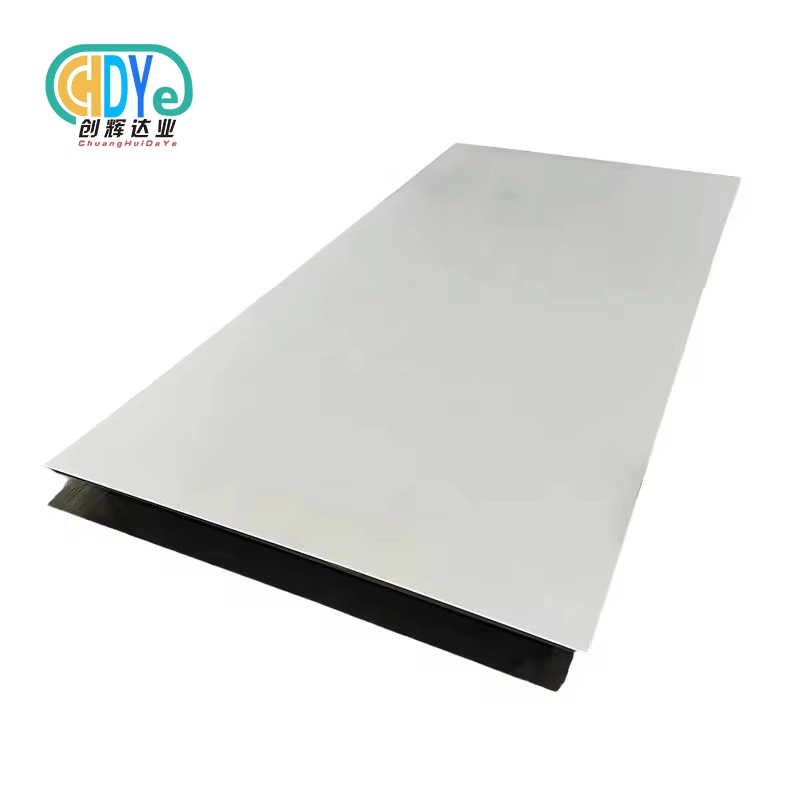
Titanium plate comes in five main grades today, ranging from Grade 1 to Grade 5. Grades 2 and 5 are the most common grades used in many fields. Because Grade 2 titanium doesn't rust and is easy to weld, it's ideal for use in chemical processing equipment and in seawater. Grade 5 (Ti-6Al-4V) is better for making medical and aerospace devices since it is stronger and can handle heat better. If procurement professionals know about these groups, they can choose the best material for their needs while ensuring it is reliable and not too expensive.
Understanding Titanium Plate Grades: General Overview
There are different types of titanium plates based on the chemicals they are made of and how they were treated, which changes their mechanical properties, like how strong they are and how well they fight corrosion. The American Society for Testing and Materials (ASTM) has established standardized classifications that define each grade's characteristics and applications.
Commercial Pure Titanium Grades
There are four grades of pure titanium for sale. Each grade has a different amount of oxygen, nitrogen, carbon, and iron. The worst form is Grade 1, which is also the most bendable. Grade 4 is better than Grade 3 because it has fewer flaws. For tasks that need strength and protection against rust, these are great.
Titanium Alloy Classifications
This type of titanium metal is called Grade 5 (Ti-6Al-4V), and it has 6% aluminum and 4% vanadium. This mixture makes a two-phase lattice that is very good at tensile strength. Engineers and buying teams need to know about these types so they can pick materials that are right for certain uses, like in airplanes, medicine, or chemical processing. In this way, the best efficiency and lowest costs are guaranteed.
Key Characteristics of Major Titanium Plate Grades
Different types of titanium plates are good for different industrial uses because they have different properties. Every grade has its own perks that help engineers do their jobs and solve problems.
Grade 2 Titanium Properties
Grade 2 titanium doesn't rust or corrode easily, even in chemical and sea environments. It's also very simple to weld. This grade has a stable mechanical strength and can be used in machines for trade and in building materials. Its tensile strength is about 345 MPa (50 ksi), and its yield strength is about 275 MPa (40 ksi). This makes it useful in places with mild stress.
Grade 5 Performance Characteristics
If you need something strong that will last a long time, Grade 5 is the best choice for tough jobs like flying and medical implants. It is more immune to both heat and rust because its chemicals are well-balanced. The tensile strength of this metal is 895 MPa (130 ksi), and the yield strength is 828 MPa (120 ksi). This makes it great for high-stress situations. For business-to-business buyers, these traits help them pick the right grade for their needs.
Medical Grade Specifications
Flat, well-designed parts make up our medical titanium plate. It is meant to be used with dental, surgical, and orthopedic implants. In medicine, Grade 5, Grade 5 ELI (Extra Low Interstitial), and Grade 23 ELI are all typical grades. These grades are better for important healthcare uses because they are biocompatible and strong.
Comparative Analysis: Grade 2 vs Grade 5 Titanium Plates
When it comes to how well they work technically, how much they cost, and what they're best for, Grade 2 and Grade 5 are very different. You can use this study to help you decide what to buy based on price, strength needs, and exposure to the environment.
Mechanical Property Differences
Grade 5 is about twice as strong when pulled apart as Grade 2. It also resists heat better, making it ideal for high-stress, temperature-sensitive tasks. Grade 2 is better at being soft and bent, while Grade 5 is better at staying hard and not getting tired. Because of these technical changes, engineers have to choose a different material for some jobs.
Cost and Procurement Considerations
The fact that Grade 5 titanium is better than Grade 2 means that it costs more, which changes how people plan to buy things. Grade 2 costs 20–30% less than Grade 5, so it's a good choice for jobs that only need a little power. But because Grade 5 does better, the extra money is often worth it in important cases where failing would be bad.
Application-Specific Selection Criteria
Companies can better choose what to buy for their building or manufacturing projects when they know how to tell the difference between titanium plates and sheets based on their thickness and finish. Grade 5 is best for making strong but light tools for medical and aerospace use. Grade 2 is best for making tools for working with chemicals.
Technical Specifications and Industry Standards of Titanium Plates
Titanium plates are made according to well-known guidelines that make sure they have the right chemical makeup, mechanical qualities, and can be tracked. These things play a big role in foreign buying and following the rules.
ASTM Standards Compliance
Titanium and titanium alloys made into strips, sheets, and plates must meet ASTM B265. This standard tells you what chemicals can't be used, what mechanical traits they must have, and how to test different types. ASTM F67 and F136 are two extra standards that are only used in medicine. They make sure that the gadgets that are implanted are safe and will work with the body.
Manufacturing and Quality Control
Our companies are certified with the ISO 9001:2015 Quality Management System. This means that the whole process of making the goods is closely watched. As part of the inspection process, the item's size and look are checked, and any cracks or scratches are fixed using ultrasound and eddy current testing. The item's straightness is also checked, and its tensile and yield strengths are tested using both internal equipment and a third-party lab.
Surface Finishes and Dimensional Options
Depending on the product, the surface can be "mill finish" or "polished," and the thickness can be anywhere from 0.5 mm to 100 mm. People can get custom cutting services that make sure the sizes they need are met while still keeping the close limits needed for precision making.
Procurement Guide: How to Source the Right Titanium Plate Grade
Before you choose a provider for a titanium plate, you should carefully look at each one based on things like quality certifications, shipping times, minimum order amounts, and the ability to make changes. Buying things in a strategic way makes sure that the best materials are used and that costs are kept under control.
Supplier Evaluation Criteria
When looking for titanium plate companies, quality certificates are still the most important thing to look for. The company can make the plates because they have ISO certifications and approvals from the right industries. The smallest amount you can order from each service company is very different. Some are better at big corporate orders, while others are better at small study batches. Delivery times depend on how quickly you can get things, how you need to handle them, and where you find them.
Customization and Processing Services
The best makers do a lot of different kinds of processing, like cutting precisely, heating, and cleaning the surface. Cutting parts from raw plates is possible with custom cutting services. This makes the buying process easier and cuts down on lead times. These high-tech machines, such as melting furnaces, electron beam furnaces, exact lathes, and specialized cutting machines, help us meet the needs of a wide range of customers.
Cost Optimization Strategies
Smart buying plans weigh the performance and cost of titanium plates against those of other materials to make sure that project goals are met without any issues. Agreements to buy in bulk can save you money on goods and still let you change your plans as the project needs dictate. If you work with the same source for a long time, you might get extra benefits, like getting goods before they run out and getting help from experts.
Conclusion
When picking the right type of titanium plate, you should carefully consider its material properties, the use it will be put to, and the cost. Grade 5 is best for high-stress situations, while Grade 2 is best for situations that don't need much power and don't need to fight rust. Some grades, like Grade 5 ELI and Grade 23 ELI, are good for medical uses because they are more biocompatible. You can make smart decisions about buying that are both more efficient and less expensive if you know these differences. Getting supplies from certified sources that follow high-quality standards is the best way to make sure that projects in a lot of different industries go well.
FAQ
Q: What is the difference between Grade 2 and Grade 5 titanium plates?
A: Titanium Grade 2 doesn't rust and welds well, but it's not very strong. Grade 5 (Ti-6Al-4V), on the other hand, can hold its shape better and is stronger against heat. Grade 2 is good for working with chemicals and in the sea. Grade 5 is the best for making aircraft and medical devices because it has a high strength-to-weight ratio.
Q: How can I be sure that rules from other countries are being followed?
A: This item meets standards like ASTM B265, ASTM F67, and ASTM F136, as shown by material certificates from trustworthy sources. These papers have the chemistry make-up analysis, the mechanical property test results, and information on how the goods can be tracked. When there is a need for more proof, things can be checked by non-government testing labs.
Q: Is it possible to get titanium plates cut to order?
A: Laser, water jet, or plasma cutting technology is used by most well-known providers to do accurate cutting. You can ask for complicated forms, close limits, and different ways to prepare the edges. Custom cutting can take anywhere from a few days to a few weeks, depending on how hard it is and how busy the factory is at the time.
Partner with Chuanghui Daye for Superior Titanium Plate Solutions
Shaanxi Chuanghui Daye combines over 30 years of rare metal industry expertise with state-of-the-art manufacturing capabilities to deliver exceptional titanium plate products. Our ISO 9001:2015 certified facility in China's "Titanium Capital" ensures consistent quality and reliability for demanding applications. We specialize in medical-grade titanium plates manufactured to ASTM F67 and F136 standards, offering custom processing services and competitive factory-direct pricing. Contact our technical team at info@chdymetal.com to discuss your titanium plate supplier requirements and receive personalized recommendations for your specific application needs.
References
1. Boyer, R., Welsch, G., & Collings, E.W. (2007). Materials Properties Handbook: Titanium Alloys. ASM International, Materials Park, Ohio.
2. Donachie, Matthew J. (2000). Titanium: A Technical Guide, 2nd Edition. ASM International, Materials Park, Ohio.
3. ASTM International. (2019). ASTM B265-15: Standard Specification for Titanium and Titanium Alloy Strip, Sheet, and Plate. ASTM International, West Conshohocken, PA.
4. Lütjering, Gerd, & Williams, James C. (2007). Titanium: Engineering Materials and Processes, 2nd Edition. Springer-Verlag, Berlin Heidelberg.
5. Peters, M., Kumpfert, J., Guest, C.H., & Leyens, C. (2003). Titanium Alloys for Aerospace Applications. Advanced Engineering Materials, Volume 5, Issue 6.
6. Rack, H.J., & Qazi, J.I. (2006). Titanium Alloys for Biomedical Applications. Materials Science and Engineering: C, Volume 26, Issues 8-9.
Learn about our latest products and discounts through SMS or email