- English
- French
- German
- Portuguese
- Spanish
- Russian
- Japanese
- Korean
- Arabic
- Greek
- German
- Turkish
- Italian
- Danish
- Romanian
- Indonesian
- Czech
- Afrikaans
- Swedish
- Polish
- Basque
- Catalan
- Esperanto
- Hindi
- Lao
- Albanian
- Amharic
- Armenian
- Azerbaijani
- Belarusian
- Bengali
- Bosnian
- Bulgarian
- Cebuano
- Chichewa
- Corsican
- Croatian
- Dutch
- Estonian
- Filipino
- Finnish
- Frisian
- Galician
- Georgian
- Gujarati
- Haitian
- Hausa
- Hawaiian
- Hebrew
- Hmong
- Hungarian
- Icelandic
- Igbo
- Javanese
- Kannada
- Kazakh
- Khmer
- Kurdish
- Kyrgyz
- Latin
- Latvian
- Lithuanian
- Luxembou..
- Macedonian
- Malagasy
- Malay
- Malayalam
- Maltese
- Maori
- Marathi
- Mongolian
- Burmese
- Nepali
- Norwegian
- Pashto
- Persian
- Punjabi
- Serbian
- Sesotho
- Sinhala
- Slovak
- Slovenian
- Somali
- Samoan
- Scots Gaelic
- Shona
- Sindhi
- Sundanese
- Swahili
- Tajik
- Tamil
- Telugu
- Thai
- Ukrainian
- Urdu
- Uzbek
- Vietnamese
- Welsh
- Xhosa
- Yiddish
- Yoruba
- Zulu
Why Choose Anodized Titanium Wire for High-Performance Use?
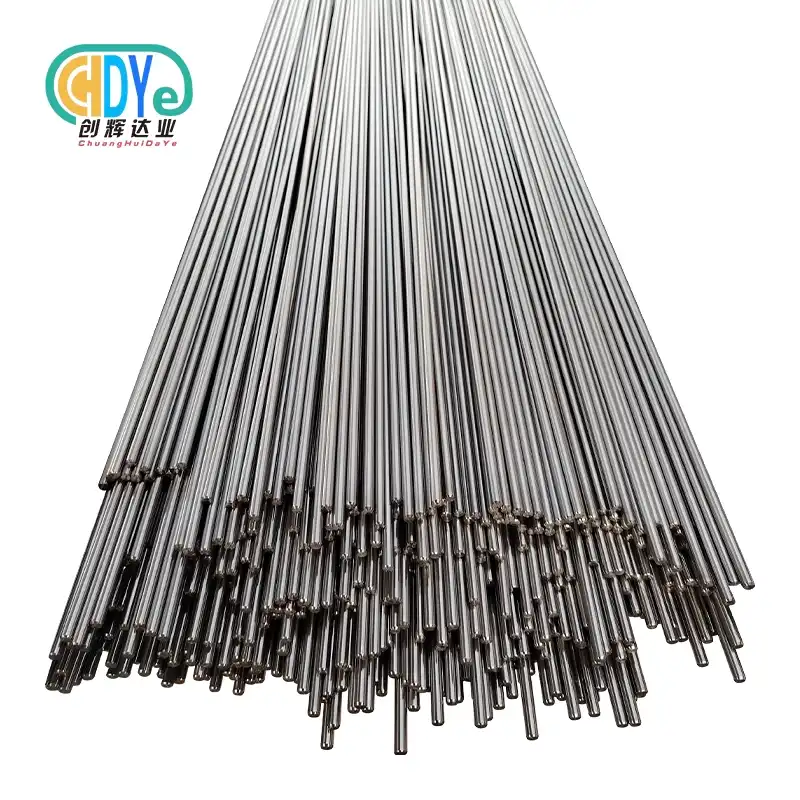
Anodised titanium wire is a big step forward in material engineering. It has a unique mix of strength, resistance to corrosion, and aesthetic flexibility that regular titanium wire can't match. Using an electrochemical anodised titanium wire passivation process, the natural oxide layer on the wire's surface is purposely made thicker. This makes a barrier that improves resistance to wear, biocompatibility, and appearance without changing the mechanical properties of the material. This special treatment solves important problems in many fields, from stopping galling in aircraft fastening systems to making colour coding safe for use in operating rooms. Anodised titanium wire is being used more and more in situations where failure is not an option by industries that need reliability in harsh conditions.
Understanding Anodised Titanium Wire: Properties and Benefits
The anodising process transforms ordinary titanium wire into a high-performance material through controlled oxide layer growth. Unlike surface coatings that can chip or peel, the anodised layer becomes an integral part of the wire itself, achieving thicknesses ranging from 30 nanometers for decorative colour finishes to several microns for Type II wear-resistant applications governed by SAE AMS 2488 standards.
Enhanced Corrosion Resistance and Durability
The thicker oxide layer makes it much more resistant to chemicals, especially chlorides and acidic conditions that would normally eat away at weaker materials. Testing under ASTM B117 salt spray settings shows that the performance lasts for more than 1000 hours without getting worse. Because of this, the wire can be used in marine settings, for processing chemicals, and outdoor installations that are always exposed to the elements. When compared to raw titanium, the surface hardness goes up a lot. This stops adhesive wear and galling, a problem that happens when standard fastening systems are under a lot of stress.
Biocompatibility and Medical Applications
Anodised titanium wire is biocompatible with medical devices and meets ISO 10993 standards. This means it is naturally non-cytotoxic and safe for use in implantable applications. Instead of using dyes or pigments, the anodising method uses light interference to make colour. This means that medical manufacturers can use colour-coded sizing systems for surgical instruments and implants without adding substances that could be harmful. This physics-based colouration happens when the thickness of the oxide layer precisely controls the anodised titanium wire, which wavelengths of light are reflected. This makes bright blues, purples, golds, and greens that stay the same through multiple sterilisation processes.
Comparing Anodised Titanium Wire with Other Materials
Material selection requires careful analysis of performance characteristics, cost implications, and application-specific requirements. Understanding how anodised titanium wire compares to alternatives helps procurement teams make informed decisions that balance technical needs with budget constraints.
Advantages Over Stainless Steel
Stainless steel wire has been the standard for corrosion-resistant uses for a long time. But anodised titanium wire has better strength-to-weight ratios that are important for aircraft and designs that need to be light. Titanium is less dense than stainless steel (4.5 g/cm³ vs. 8.0 g/cm³), so parts made of it can be just as strong while being almost half as heavy. Even the best grades of stainless steel aren't as resistant to corrosion in marine and chemical environments. Titanium is also the only material that can be used in many medical uses, where stainless steel would cause tissue reactions that aren't good.
Comparison with Non-Anodised Titanium Wire
The anodising process adds important usefulness to raw titanium wire that already has great qualities. The oxide layer keeps the surface from getting scratched during handling and installation. It also lowers friction in threaded applications and makes the part easy to spot by using different colours. In rack anodising processes for finishing aluminium, the anodised titanium wire keeps its shape over multiple cycles without needing the caustic stripping treatments that aluminium racks need. This cuts cycle times by 15–20% and gets rid of the chemical costs and environmental compliance issues that come with them.
Selecting the Right Anodised Titanium Wire for Your Needs
Proper material specification ensures optimal performance and cost-effectiveness. Several factors influence selection, from alloy composition to surface finish requirements.
Grade Selection and Alloy Considerations
Commercially pure titanium grades (CP Ti Grades 1-4) get stronger while becoming less flexible. They can be used in situations where the metal needs to be shaped and has good corrosion protection. Grade 2 is the most popular choice because it is easy to work with and strong enough for general industrial use. When mechanical loads are high, the titanium alloy Ti-6Al-4V (Grade 5) is much stronger and can be used in aircraft and medical implants. The anodising method works just as well on all of these grades, but the oxide growth rates and final colours may be a little different because of the differences in composition.
Diameter and Dimensional Tolerances
The thickness of the wire has a direct effect on its mechanical performance and its ability to be fabricated. Smaller diameters (0.5–2.0 mm) work well for medical device parts, jewellery, anodised titanium wire, and complex systems where flexibility and accuracy are important. Sizes in the middle (2.0 to 5.0 mm) are good for basic structural and fastening tasks. For load-bearing uses, larger sizes (5.0–10.0 mm) give the best strength. Dimensional tolerances are very important when the wire is used as a rack material to hold parts in place while they are being finished. Tight tolerances make sure that there is consistent electrical contact and stop changes in current density that could affect the consistency of the coating.
Procurement Guide: How to Buy Anodised Titanium Wire Efficiently
Successful procurement balances quality assurance, cost optimisation, and supply chain reliability. Several considerations guide the process.
Supplier Qualification and Certification
Reliable providers keep their ISO 9001:2015 Quality Management System certification, which shows that they are committed to controlling processes consistently and keeping records of them. Material certificates should list the chemical make-up, mechanical qualities, and anodising requirements. Regulatory businesses have more faith in suppliers who have aerospace approvals (AS9100) or medical device certifications. Being close to suppliers in big industrial areas is helpful for logistics reasons, like shorter lead times, lower shipping costs, and better communication across fewer time zones.
Custom Specifications and Small-Batch Flexibility
Off-the-shelf products can't always meet the needs of many uses that need non-standard sizes or exact colour matches. Suppliers who can anodise their own products can come up with custom solutions and test samples before committing to large amounts of production. When it comes to prototyping, research, and low-volume speciality goods, being able to change the minimum anodised titanium wire order quantity (MOQ) is helpful. Some suppliers give rapid prototyping services with faster processing for projects that need to be done quickly, but the prices are usually higher.
Practical Applications of Anodised Titanium Wire in High-Performance Industries
Real-world applications demonstrate the material's versatility and value across diverse sectors.
Aerospace and Defense Applications
Aircraft manufacturers utilise anodised titanium wire for securing complex geometry components during Type II and Type III hard coat anodising of aluminium structural parts. The wire's chemical resistance to sulfuric acid baths at low temperatures required for hard coating ensures dimensional stability throughout processing. Fastening systems for satellite assemblies and missile guidance components specify anodised wire to prevent galling during assembly in clean room environments where lubricants cannot be tolerated. The weight savings compared to stainless steel alternatives directly improve payload capacity and fuel efficiency.
Medical Device Manufacturing
Surgical instrument manufacturers employ voltage-controlled anodization with titanium wire racks to create colour-coded implants—dental screws, bone plates, and spinal fixation devices—where each colour indicates a specific size or thread pitch. Since the rack material matches the substrate, galvanic corrosion is eliminated, and precise voltage control creates accurate oxide thicknesses for consistent colouration. The wire's biocompatibility prevents contamination concerns that would arise from dissimilar metals, maintaining ISO 13485 medical quality system compliance.
Conclusion
Anodised titanium wire delivers a compelling combination of mechanical strength, corrosion resistance, biocompatibility, and aesthetic versatility that addresses critical requirements across aerospace, medical, electronics, and precision manufacturing sectors. The anodising process enhances surface properties without compromising substrate integrity, creating a material that outperforms alternatives in demanding applications where reliability cannot be compromised. Successful procurement requires understanding grade selection, dimensional specifications, colour options, and supplier capabilities. Partnering with certified suppliers offering custom processing, flexible order quantities, and comprehensive technical support ensures project success and long-term value.
FAQ
1. What makes anodised titanium wire suitable for medical applications?
The anodising process creates colours through light interference rather than dyes or pigments, making the wire inherently biocompatible and non-cytotoxic according to ISO 10993 standards. The titanium substrate is biologically inert, and the oxide layer is chemically stable, preventing adverse tissue reactions. This enables safe use in implantable devices and surgical instruments where direct body contact occurs.
2. How does anodising improve corrosion resistance?
The electrochemical process thickens the natural oxide layer from a few nanometers to several microns, creating a dense protective barrier. This layer demonstrates exceptional resistance to chlorides, acids, and marine environments, performing reliably in ASTM B117 salt spray testing beyond 1000 hours without degradation—substantially exceeding untreated titanium performance.
3. Can the wire colour be customised?
Voltage-controlled anodization precisely adjusts oxide layer thickness to create specific colours through optical interference. Common options include bronze, purple, blue, light blue, yellow, and pink. Each voltage setting produces a repeatable, consistent colour. Multiple colours can be applied to a single component through masked anodization or sequential processing.
4. What certifications should I look for in a supplier?
ISO 9001:2015 Quality Management System certification ensures consistent process control and documentation. Aerospace applications require AS9100 certification, while medical device manufacturing demands ISO 13485 compliance. Material test certificates documenting chemical composition, mechanical properties, and anodising specifications should accompany each shipment for full traceability.
Partner with Chuanghui Daye for Premium Anodised Titanium Wire
Procurement teams seeking a reliable anodised titanium wire supplier benefit from partnering with manufacturers who combine technical expertise with responsive customer service. Shaanxi Chuanghui Daye, located in China's Titanium Capital of Baoji, brings over 30 years of rare metal industry experience to every project. Our ISO 9001:2015 certified facilities utilise advanced melting, forging, anodised titanium wire and precision machining equipment to produce titanium wire meeting the most stringent specifications.
We offer custom anodising services with precise colour control, flexible minimum order quantities for prototyping and research applications, and expedited processing for urgent timelines. Our engineering team provides technical consultations to optimise material selection for your specific application requirements. Competitive factory-direct pricing eliminates distributor markups while maintaining the quality assurance and traceability documentation that aerospace, medical, and electronics manufacturers demand. Contact our team at info@chdymetal.com to discuss your anodised titanium wire requirements and receive a detailed quotation tailored to your project specifications.
References
1. American Society for Metals (ASM) International. "Titanium: A Technical Guide, 2nd Edition." Materials Park, Ohio: ASM International, 2000.
2. Donachie, Matthew J. "Titanium: A Technical Guide." ASM International Handbook Committee, 2000.
3. Rack, H.J., and Qazi, J.I. "Titanium Alloys for Biomedical Applications." Materials Science and Engineering C, Volume 26, Issue 8, 2006.
4. Society of Automotive Engineers. "SAE AMS 2488: Anodic Treatment of Titanium and Titanium Alloys Solution pH 13 or Higher." SAE International Aerospace Material Specification, 2018.
5. Shibata, T., and Zhu, Y. "The Effect of Anodization on the Corrosion Resistance of Titanium." Corrosion Science Journal, Volume 37, Issue 2, 1995.
6. International Organisation for Standardisation. "ISO 10993: Biological Evaluation of Medical Devices." Geneva: ISO Standards, 2018.
Learn about our latest products and discounts through SMS or email