- English
- French
- German
- Portuguese
- Spanish
- Russian
- Japanese
- Korean
- Arabic
- Greek
- German
- Turkish
- Italian
- Danish
- Romanian
- Indonesian
- Czech
- Afrikaans
- Swedish
- Polish
- Basque
- Catalan
- Esperanto
- Hindi
- Lao
- Albanian
- Amharic
- Armenian
- Azerbaijani
- Belarusian
- Bengali
- Bosnian
- Bulgarian
- Cebuano
- Chichewa
- Corsican
- Croatian
- Dutch
- Estonian
- Filipino
- Finnish
- Frisian
- Galician
- Georgian
- Gujarati
- Haitian
- Hausa
- Hawaiian
- Hebrew
- Hmong
- Hungarian
- Icelandic
- Igbo
- Javanese
- Kannada
- Kazakh
- Khmer
- Kurdish
- Kyrgyz
- Latin
- Latvian
- Lithuanian
- Luxembou..
- Macedonian
- Malagasy
- Malay
- Malayalam
- Maltese
- Maori
- Marathi
- Mongolian
- Burmese
- Nepali
- Norwegian
- Pashto
- Persian
- Punjabi
- Serbian
- Sesotho
- Sinhala
- Slovak
- Slovenian
- Somali
- Samoan
- Scots Gaelic
- Shona
- Sindhi
- Sundanese
- Swahili
- Tajik
- Tamil
- Telugu
- Thai
- Ukrainian
- Urdu
- Uzbek
- Vietnamese
- Welsh
- Xhosa
- Yiddish
- Yoruba
- Zulu
Why Is Titanium Coil Wire Popular in High-Tech Industries?
Titanium coil wire has become increasingly popular in high-tech industries due to its exceptional combination of mechanical properties and chemical resistance. This continuous, spooled titanium filament offers superior strength-to-weight ratios, outstanding corrosion resistance, and biocompatibility that traditional materials cannot match. Industries ranging from aerospace to medical device manufacturing rely on titanium coil wire for critical applications where failure is not an option. The material's ability to maintain structural integrity under extreme conditions while offering design flexibility makes it indispensable for modern engineering challenges.
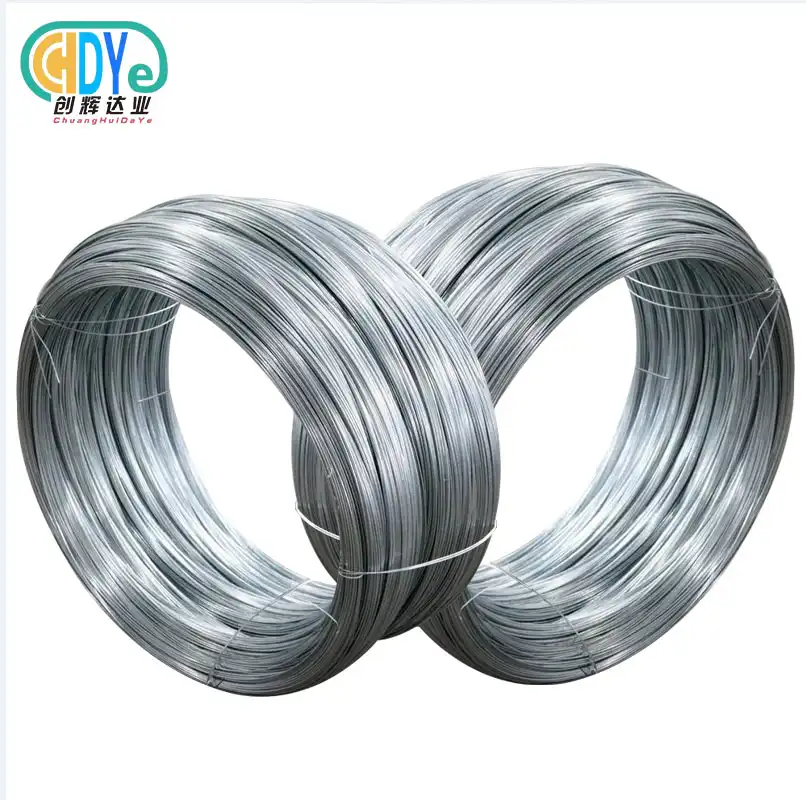
Understanding Titanium Coil Wire and Its Core Properties
Titanium coil wire is fundamentally different from other metals due to its unique makeup and production method. This continuous wire structure is a big improvement over traditional materials that are cut into straight lengths. It makes automatic manufacturing processes more efficient.
Chemical Composition and Grade Variations
Titanium coil wire usually comes in two main grades that are used for different tasks in industry. Grade 2 titanium, which is also known as "commercially pure titanium," is made up of 99.2% titanium and very few other elements. Because this grade is easy to shape and doesn't rust, it can be used in a wide range of commercial settings. Grade 5 titanium alloy (Ti-6Al-4V) has better mechanical qualities than Grade 2 (which has tensile strengths of 345 MPa) because it has 6% aluminum and 4% vanadium in it.
With a density of 4.43–4.51 g/cm³, the material is the perfect mix of weight and strength. In aircraft uses, where every gram counts for fuel economy and payload capacity, this trait is very important.
Manufacturing Excellence and Quality Control
Modern ways of making things make sure that the quality and performance of titanium coil wire are always the same. The process starts with vacuum arc remelting (VAR), which gets rid of any flaws in the high-purity titanium sponge. Using cold drawing or hot rolling, exact sizes from 0.1 mm to 5 mm can be made, and tight tolerances are kept throughout production.
Some quality control methods are checking the dimensions, looking at the surface, and testing the material properties. Through vacuum annealing, the right amount of heat is applied to each coil to get the best mechanical qualities and stop hydrogen embrittlement. With ISO 9001:2015 approval, you can be sure that the rules for making things meet international standards for dependability and stability.
Why Titanium Coil Wire Outperforms Other Metal Wires in Industry
Comparative research shows that titanium wire has big benefits over other materials when used in tough situations. Procurement workers looking at material choices should think about investing in these items because they perform better than others.
Superior Material Properties Comparison
Titanium has many benefits over stainless steel, especially in places where rust is a problem and chloride stress corrosion cracking makes stainless steel less effective. Even though stainless steel is cheaper at first, titanium coil wire lasts longer, which lowers the total cost of ownership. The strength-to-weight ratio of this material is about 40% higher than that of stainless steel. This lets smaller parts be made without losing structural integrity.
Titanium alloys are better at being biocompatible and have lower thermal expansion rates than nickel metals. Even though copper and aluminum lines are conductive, they don't have the corrosion protection or high-temperature stability that is needed in tough industrial settings. Titanium keeps its functional qualities even at high temperatures, where other materials break down a lot.
Application-Specific Grade Selection
The choice of grade depends on the needs of the program and the setting in which it will be used. When biocompatibility is very important, grade 2 titanium works great in chemical processing equipment, sea uses, and medical devices. Because it is so easy to shape, it can be used to make complicated shapes and is resistant to rusting in harsh environments.
Grade 5 titanium metal can be used in aircraft, cars, and high-performance sports equipment. The improved strength qualities allow for lighter parts that still meet strict safety standards. The material is more resistant to wear than most materials, which means that parts don't need to be serviced as often, and upkeep costs are lower.
Key Applications of Titanium Coil Wire in High-Tech Industries
Titanium wire is useful in many high-tech fields where the performance of the material has a direct effect on the success of the product and safety concerns.
Aerospace and Defense Applications
For a variety of essential parts, such as fasteners, springs, and welding uses, aerospace makers use titanium coil wire. Because it can handle temperature changes from -253°C to 600°C, the material can be used for both cold fuel systems and high-temperature engine parts. Titanium is good for defense uses because it is not magnetic and doesn't reflect radar, which is important for using stealth technology.
Manufacturers of airplanes say that using titanium parts instead of steel ones saves 20 to 30 percent of weight. This weight loss means better fuel economy and more payload capability, which has a direct effect on operational costs.
Medical Device Manufacturing
Biocompatibility makes titanium the best material for internal medical gadgets because it is biocompatible. Where biological compatibility is essential, titanium coil wire is used to make surgery tools, orthopedic implants, and heart devices. The material's elastic modulus is very similar to that of human bone, which means it doesn't protect against stress as well in orthopedic uses.
Medical device makers like that titanium is safe for MRI scans, which means that people with titanium implants can go through the scans without worrying about their safety. The material's ability to prevent cellular corrosion ensures that implants stay stable over time and keep patients safe.
Electronics and Semiconductor Industries
Titanium is used in electronics because it is a good electrical conductor and doesn't change temperature easily. The material is used to make precise parts for high-frequency uses, vacuum systems, and electronic equipment. Because it doesn't give off much gas, it can be used in ultra-high vacuum settings where keeping contaminants under control is very important.
Stress-related problems in electronic systems are less likely to happen because the material's thermal expansion coefficient is compatible with silicon surfaces. This trait is useful in aircraft technology, where temperature changes are common, and dependability is very important.
Procurement Insights for Titanium Coil Wire
To be good at buying, you need to know how the market works, what suppliers can do, and what quality standards affect choices about what to buy and how reliable the supply chain is.
Supplier Selection Criteria
When looking at possible suppliers, you need to check their production skills, safety certifications, and expert support services. ISO 9001:2015 certification shows that quality control systems are well-established, while AS9100 certification shows that the aerospace business is following the rules. Audits of suppliers should check that their methods for tracking goods, their ability to test things, and their production capacity are all in line with what is needed.
Technical communication tools are helpful for long-term relationships with suppliers. Suppliers who give metallurgical knowledge, application engineering help, and the ability to customize products add value beyond just providing materials. The ability to send packages reliably and get emergency help depends on how close the delivery location is and how well the operations work.
Cost Analysis and Pricing Trends
The price of raw materials has a big effect on the price of titanium coil wire. The price of titanium sponge changes based on changes in world supply and demand. Buying in bulk can save you 15 to 25 percent on costs compared to ordering in small amounts. Long-term supply deals keep prices stable and make sure that materials are available even when supplies are low.
When you figure out the total cost of ownership, you should include the perks of better performance, less upkeep, and a longer service life. Titanium is more expensive than other materials at first, but lifecycle value analysis often shows that it is better for important uses that need speed and dependability.
Lead Times and Inventory Management
Lead time for standard grades is usually between 4 and 6 weeks, while lead time for special specs can be between 8 and 12 weeks. Strategies for managing inventory should find a balance between the costs of holding on to items and the needs of the output plan. For just-in-time shipping to work, you need to have strong relationships with your suppliers and good logistics planning.
For unplanned output needs, emergency supply options become very important. When things go wrong, suppliers who keep strategic reserves or the ability to speed up production give businesses more options.
Why Choose Our Titanium Coil Wire Solutions for Your Industry Needs
Shaanxi Chuanghui Daye Metal Material Co., Ltd. has been working with rare metals for more than 30 years and can provide high-quality titanium coil wire options for tough jobs. Our company is in Baoji, China, which is known as the "Titanium Capital." We use our well-established facilities and technical know-how to provide stable, high-quality materials.
Manufacturing Excellence and Quality Assurance
Our modern production facilities have electron beam furnaces, precise rolling tools, and the ability to test everything. Each batch of products goes through strict quality control steps, such as chemical analysis, testing of mechanical properties, and checking of dimensions. Our ISO 9001:2015 certification makes sure that we handle quality consistently across all of our activities.
Our vacuum annealing methods get rid of hydrogen contamination and improve the mechanical qualities at the same time. Pickled and glossy finishes can be used on the surface depending on the needs of the application. Traceability paperwork is sent with every shipment. This gives a full history of the materials for quality control and legal compliance.
Comprehensive Product Range and Customization
With sizes ranging from 0.1mm to 5mm, we offer titanium coil wire in Grades 2 and 5 standards. Because we can make things in a variety of ways, we can meet custom measurement needs. Precision layer winding is one choice for coil packing to keep the coils from getting tangled during automated feeding applications.
As part of technical support services, application engineers can give advice on things like material choices and processing suggestions. Our knowledge of metallurgy helps customers get the best material specs for their needs while also making sure that the solutions are as cost-effective as possible.
Conclusion
Because of its special mechanical qualities, chemical resistance, and industrial benefits, titanium coil wire is very famous in the high-tech industry. Even though they cost more at first, industries that need high performance, dependability, and durability keep using titanium options. Because it is biocompatible, has a high strength-to-weight ratio, and doesn't rust, this material is essential for use in aircraft, medicine, and electronics. To get the best deals and make sure the supply chain works well, you need to know what your suppliers can do, what quality you need, and what the total cost of ownership is.
FAQ
Q: What are the key differences between Grade 2 and Grade 5 titanium coil wire?
A: Grade 2 titanium is good at resisting rust and can be shaped easily. Its strength is average, so it can be used in chemical processes and medicine. Grade 5 (Ti-6Al-4V) has better mechanical qualities, like higher tensile strength and temperature resistance, making it perfect for high-performance and aircraft uses.
Q: How does surface finish affect titanium coil wire performance?
A: If you pickle surfaces, they get a matte gray finish that keeps oils from forming during later forming operations. If you shine surfaces, they have less friction for welding tasks and lower contamination risks. The choice depends on the needs of the program and the work that needs to happen afterward.
Q: What quality certifications should I look for when sourcing titanium coil wire?
A: ISO 9001:2015 certification makes sure that the quality management system follows the rules, and AS9100 certification shows that the aircraft business is following the rules. For welding uses, AWS A5.16 approval ensures chemical controls and hydrogen content limits to avoid weld flaws.
Q: How should titanium coil wire be stored to maintain quality?
A: When seals stay in place, vacuum-packed coils keep their quality forever. Once it's opened, keeping it in a dry, dust-free place keeps the surface from getting dirty, which could affect how well it works. Rapid use after opening makes sure that the material is in its best state for important uses.
Q: What factors affect titanium coil wire pricing and availability?
A: Prices change based on the cost of raw materials, the amount of production, and market demand. Prices are usually better when you buy in bulk, but unique specs may mean extra costs. Availability and wait times can be affected by international issues and factors in the global supply chain.
Partner with Chuanghui Daye for Premium Titanium Coil Wire Solutions
Are you ready to see how much better quality titanium coil wire works in your high-tech projects?Shaanxi Chuanghui Daye provides complete titanium solutions backed by 30 years of experience in the field and an ISO 9001:2015 quality guarantee. Our standards for Grade 2 and Grade 5 titanium coil wire meet the strictest needs in the electronics, medical, and aircraft industries. Get in touch with our technical team at info@chdymetal.com to talk about your unique needs and find out why top makers choose us as their main source for titanium coil wire. Let us help you come up with custom ideas that will improve the performance of your product and lower its total cost of ownership.
References
1. Boyer, R.R. "An Overview of the Use of Titanium in the Aerospace Industry." Materials Science and Engineering: A, Vol. 213, 1996.
2. American Welding Society. "Specification for Titanium and Titanium Alloy Bare Welding Rods and Electrodes." AWS A5.16/A5.16M:2013.
3. Donachie, Matthew J. "Titanium: A Technical Guide, 2nd Edition." ASM International, Materials Park, Ohio, 2000.
4. International Organization for Standardization. "Quality Management Systems - Requirements." ISO 9001:2015.
5. Lutjering, Gerd and Williams, James C. "Titanium, 2nd Edition: Engineering Materials and Processes." Springer-Verlag Berlin Heidelberg, 2007.
6. Peters, M. and Leyens, C. "Titanium and Titanium Alloys: Fundamentals and Applications." Wiley-VCH Verlag GmbH & Co. KGaA, Weinheim, 2003.
Learn about our latest products and discounts through SMS or email