- English
- French
- German
- Portuguese
- Spanish
- Russian
- Japanese
- Korean
- Arabic
- Greek
- German
- Turkish
- Italian
- Danish
- Romanian
- Indonesian
- Czech
- Afrikaans
- Swedish
- Polish
- Basque
- Catalan
- Esperanto
- Hindi
- Lao
- Albanian
- Amharic
- Armenian
- Azerbaijani
- Belarusian
- Bengali
- Bosnian
- Bulgarian
- Cebuano
- Chichewa
- Corsican
- Croatian
- Dutch
- Estonian
- Filipino
- Finnish
- Frisian
- Galician
- Georgian
- Gujarati
- Haitian
- Hausa
- Hawaiian
- Hebrew
- Hmong
- Hungarian
- Icelandic
- Igbo
- Javanese
- Kannada
- Kazakh
- Khmer
- Kurdish
- Kyrgyz
- Latin
- Latvian
- Lithuanian
- Luxembou..
- Macedonian
- Malagasy
- Malay
- Malayalam
- Maltese
- Maori
- Marathi
- Mongolian
- Burmese
- Nepali
- Norwegian
- Pashto
- Persian
- Punjabi
- Serbian
- Sesotho
- Sinhala
- Slovak
- Slovenian
- Somali
- Samoan
- Scots Gaelic
- Shona
- Sindhi
- Sundanese
- Swahili
- Tajik
- Tamil
- Telugu
- Thai
- Ukrainian
- Urdu
- Uzbek
- Vietnamese
- Welsh
- Xhosa
- Yiddish
- Yoruba
- Zulu
Why Titanium Alloy Plates Are Essential in Industrial Manufacturing?
Titanium alloy plates serve as indispensable components in modern industrial manufacturing, delivering exceptional performance characteristics that meet the most demanding operational requirements. These advanced metallic materials combine titanium's inherent properties with carefully selected alloying elements to create solutions that excel across aerospace, chemical processing, medical device manufacturing, and defense applications. The unique combination of superior corrosion resistance, outstanding strength-to-weight ratios, and remarkable thermal stability makes these plates essential for critical industrial processes where conventional materials fall short. The significance of titanium alloy plates extends beyond their basic material properties to encompass their role in enabling technological advancement across multiple industries. This comprehensive examination explores the fundamental composition and properties of these materials, their competitive advantages over alternative solutions, comparative analysis with other industrial metals, manufacturing processes, and procurement strategies. We will also discuss quality assurance protocols and supplier selection criteria that ensure optimal material performance and project success for global B2B procurement professionals and engineers.
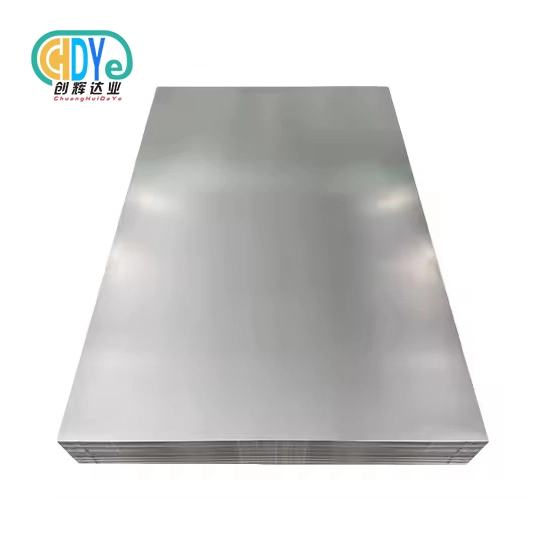
Understanding Titanium Alloy Plates: Composition, Properties, and Types
Chemical Composition and Alloying Elements
Titanium alloy plates speak to modern metallurgical accomplishments that combine immaculate titanium with key alloying components to improve particular execution characteristics. The base titanium substance ordinarily ranges from 85% to 99%, depending on the expected application and review determination. Common alloying components incorporate aluminum, vanadium, molybdenum, and press, each contributing interesting properties to the last product.
Grade 5 (Ti-6Al-4V) stands as the most broadly utilized titanium alloy, containing around 6% aluminum and 4% vanadium. This composition conveys remarkable quality while keeping up amazing erosion resistance and workability. Review 2, known as commercially unadulterated titanium, contains negligible alloying components but offers predominant formability and erosion resistance. Review 12 joins molybdenum and nickel increments, giving upgraded resistance to hole erosion in challenging chemical environments.
Industry Standards and Specifications
Manufacturing titanium plates requires adherence to exacting universal measures that guarantee reliable quality and execution. ASTM B265 and ASME SB265 determinations oversee the generation of titanium and titanium combination sheets, strips, and plates for common applications. These benchmarks characterize chemical composition limits, mechanical property prerequisites, and testing methods that producers must follow.
Medical review applications require compliance with ASTM F67 for unalloyed titanium and ASTM F136 for Ti-6Al-4V combination. These determinations incorporate extra cleanliness requirements and biocompatibility testing conventions basic for implantable gadgets. ISO-5832-2 and ISO-5832-3 give universal reciprocals for therapeutic applications, guaranteeing worldwide compatibility and acceptance.
Key Material Properties and Performance Characteristics
The remarkable properties of titanium plates stem from their crystalline structure and chemical composition. Erosion resistance speaks to maybe the most critical advantage, with titanium shaping a steady oxide layer that gives security against chlorides, acids, and seawater. This detached layer ceaselessly recovers when harmed, guaranteeing long-term fabric resilience in forceful environments.
Strength-to-weight proportion characteristics empower critical weight reduction compared to steel, while maintaining comparable auxiliary execution. Ordinary titanium combinations display pliable qualities extending from 240 MPa to over 1000 MPa, depending on the review and warm treatment conditions. The thickness of roughly 4.5 g/cm³ speaks to generally half that of steel, deciphering to significant weight savings in aviation and car applications.
Advantages of Titanium Alloy Plates in Industrial Applications
Superior Corrosion and Temperature Resistance
The momentous erosion resistance of titanium plates gives unmatched execution in challenging mechanical situations where conventional materials quickly degrade. Chemical handling offices benefit massively from titanium's resistance to chlorine, sulfuric acid, and nitric acid corrosive introduction. Not at all like stainless steel, which can endure from setting and hole erosion in chloride-rich situations, titanium maintains its auxiliary keenness indeed beneath extraordinary conditions.
Temperature soundness expands over an amazing range, with numerous titanium combinations keeping up mechanical properties from cryogenic temperatures to 600°C or higher. This warm soundness demonstrates vital importance in aviation applications where material involvement involves temperature varieties amid flight operations. The coefficient of warm extension remains moderately low, decreasing warm push and progressing dimensional steadiness in accuracy applications.
Enhanced Mechanical Performance and Weight Reduction
Modern fabrication progressively requires materials that provide extraordinary quality while minimizing weight penalties. Titanium plates exceed expectations in this respect, advertising malleable qualities comparable to high-strength steels at generally half the weight. This advantage becomes especially critical in aviation applications where each kilogram of weight diminishment translates to made strides fuel efficiency and expanded payload capacity.
The tall modulus of versatility and weakness resistance empower titanium components to withstand cyclic stacking conditions that would cause disappointment in elective materials. Marine applications benefit from these properties, as titanium propeller shafts and frame components stand up to both erosion and mechanical wear in unforgiving saltwater situations. The combination of quality and adaptability permits imaginative plan arrangements that optimize execution while diminishing generally framework weight.
Long-term Cost-effectiveness and Lifecycle Benefits
Titanium alloy plates for titanium plates surpass those of customary metals, lifecycle investigation uncovers noteworthy financial focal points through diminished maintenance requirementsbenefitsd service life. Mechanical offices utilizing titanium warm exchangers and weight vessels report support intervals measured in decades or maybe than a long time. This expanded benefit life diminishes downtime, substitution costs, and related labor expenses.
Case studies from chemical preparation plants illustrate return on venture periopreparation a long period when exchangininvestments inss steel to years basicswitchingons. The end of visit component substitution, diminished review necessities, and morward handling of quality contribute to considerable long-term savings. Furthermore, titanium's recyclability guarantees end-of-life esteem recuperation, advancing the add up to taken a toll of ownership equation.
Comparing Titanium Alloy and the Life Cycle Coster Materials
Performance Analysis Against Stainless Steel
When assessing fabric determination for requesting mechanical applications, titanium plates reliably outperform stainless steel in a few basic regions. Erosion resistance speaks to the most noteworthy differentiator, especially in chloride-containing situations where stainless steel encounters setting and push erosion breaking. Titanium's detached oxide layer gives predominant security without the requirement for defensive coatings or cathodic protection systems.
Weight comparison uncovers titanium's noteworthy advantage, with thickness roughly 40% lower than stainless steel, while keeping up comparable or prevalent quality characteristics. This weight decrease empowers auxiliary plan optimization and progressed dealing with characteristics amid establishment and maintenance. The non-magnetic properties of titanium give extra benefits in electromagnetic-sensitive applications, where stainless steel's attractive porousnesscreatess operational challenges.
Comparison with Aluminum Alloys
Titanium plates offer considerable quality advantages over aluminum combinations, especially at elevated temperatures where aluminum loses mechanical properties quickly. Whereas aluminum gives lower beginning costs and fabulous erosion resistance in numerous situations, titanium's prevalent quality empowers more slender areas and a decrease in overall component weight. The temperature resistance of titanium expands far beyond aluminum's capabilities, making it fundamental for high-temperature applications.
Fatigue resistance speaks to another zone where titanium exceeds expectations, with continuance limits regularly 50-70% of extreme ductile quality compared to aluminum's 25-35%. This characteristic demonstrates significant potential in energetic stacking applications such as flying machine structures and turning apparatus components. The biocompatibility of titanium also empowers therapeutic applications where aluminum would be unacceptable due to poisonous quality concerns.
Material Selection Considerations for Optimal Performance
Selecting between titanium plates and sheets requires cautious thought of application-specific necessities and fabrication forms. Plates ordinarily extend from 6mmfabricationickness, giving auxiliary capability for weight vessels, aviation bulkheads, and overwhelming apparatus components. The expanded thickness empowers machining of complex geometries, while keeping up fabric astuteness and execution characteristics.
Surface wrap-up necessities regularly impact fabric determinwrap-upwith aerospace-grade choices advertising predominant surface quality and dimensional resistance control. These improved details guarantee compatibility with progressed fabricating forms such as electron pillar welding and precision machining. The accessibility of different precision optimization for particular natural conditions, mechanical prerequisites, and administrative compliance needs.
Hrequirementsum Alloy Plates Manufactured and Procured?
Manufacturing Process and Quality Control
The production of high-quality titanium plates begins with careful selection and preparation of raw materials, including titanium sponge, recycled titanium, and alloying elements. Vacuum melting processes ensure optimal chemical homogeneity while preventing contamination from atmospheric gases. Electron beam melting and vacuum arc remelting techniques produce ingots with exceptional purity and consistent composition throughout.
Hot forging and rolling operations transform cast ingots into plate form while developing optimal microstructure and mechanical properties. Multiple heating and rolling passes gradually reduce thickness while maintaining temperature control to prevent oxidation and ensure uniform grain structure. Annealing treatments between passes relieve internal stresses and optimize workability for subsequent processing operations.
Quality control protocols encompass every stage of production, from incoming material verification through final inspection and testing. Chemical analysis confirms alloy composition compliance with specification requirements, while mechanical testing validates strength, ductility, and impact properties. Ultrasonic inspection detects internal defects that could compromise performance, ensuring only defect-free material reaches customers.
Procurement Strategies and Supplier Evaluation
Titanium alloy plates of titanium plates requires comprehensive evaluation of supplier capabilities, quality systems, and delivery performance. ISO 9001:2015 certification provides baseline assurance of quality management system effectiveness, while AS9100 certification indicates aerospace industry compliance for critical applications. Mill Test Reports documenting chemical composition, mechanical properties, and dimensional verification provide essential traceability for quality assurance programs.
Lead time considerations become particularly important for titanium procurement, as production cycles typically extend 8-16 weeks depending on grade, size, and quantity requirements. Strategic suppliers maintain an inventory of common grades and sizes to reduce delivery times for urgent requirements. Establishing partnerships with multiple suppliers ensures supply chain resilience while maintaining competitive pricing through volume commitments.
Minimum order quantities vary significantly among suppliers, with specialized grades often requiring substantial minimum purchases to justify production setup costs. Custom sizes and specifications typically involve longer lead times and higher costs compared to standard mill products. Understanding these factors enables procurement professionals to optimize ordering strategies and manage inventory requirements effectively.
Chuanghui Daye: Your Trusted Partner for Premium Titanium Solutions
Company Expertise and Manufacturing Capabilities
Shaanxi Chuanghui Daye Metal Material Co., Ltd. represents a premier source for high-performance titanium plates, leveraging over three decades of rare metal industry expertise and strategic location in China's renowned "Titanium Capital." Our comprehensive manufacturing capabilities encompass the complete production cycle from raw material processing through finished product delivery, ensuring optimal quality control and customer satisfaction.
Our state-of-the-art facilities feature advanced vacuum melting furnaces, electron beam equipment, and precision rolling machinery that enable consistent production of superior titanium plates. Available grades include Gr1, Gr2, Gr5 (Ti-6Al-4V), Gr7, Gr12, and TC20, with thickness options ranging from 0.5mm to 50mm and widths up to 3000mm. This extensive range accommodates diverse application requirements across aerospace, chemical processing, medical device manufacturing, and industrial sectors.
Quality Assurance and Certification Standards
Quality represents the foundation of our competitive advantage, with ISO 9001:2015 certification ensuring rigorous control throughout every production stage. Our comprehensive quality management system encompasses raw material verification, process monitoring, mechanical testing, and final inspection protocols that exceed industry standards. Complete Mill Test Reports accompany every shipment, providing detailed documentation of chemical composition, mechanical properties, and dimensional compliance.
Testing capabilities include chemical analysis, tensile testing, impact testing, and ultrasonic inspection performed by certified technicians using calibrated equipment. Our quality laboratory maintains traceability to national standards, ensuring accurate and reliable test results that support customer quality requirements. Dimensional inspection utilizing precision measuring equipment confirms compliance with specified tolerances and surface finish requirements.
Technical Support and Customer Service Excellence
Our commitment to customer success extends beyond material supply to encompass comprehensive technical support and engineering consultation. Experienced metallurgists and application engineers collaborate with customers to optimize material selection, processing parameters, and performance characteristics for specific applications. This technical expertise enables innovative solutions that maximize material performance while controlling costs.
Logistics capabilities ensure timely delivery to global destinations through established shipping partnerships and export documentation expertise. Custom packaging solutions protect materials during transportation while facilitating efficient handling at customer facilities. After-sales support includes technical assistance, material performance optimization, and rapid response to any quality concerns or application challenges.
Conclusion
Titanium alloy plates have established themselves as essential materials for modern industrial manufacturing, delivering unmatched performance characteristics that enable technological advancement across multiple sectors. The combination of exceptional corrosion resistance, superior strength-to-weight ratios, and outstanding thermal stability makes these materials indispensable for applications where conventional metals fail to meet performance requirements. Understanding the composition, properties, and manufacturing processes enables informed material selection that optimizes both performance and lifecycle costs. Strategic supplier partnerships with certified manufacturers ensure access to high-quality materials backed by comprehensive technical support and quality assurance programs that meet the most demanding industrial applications.
FAQ
1. What factors should guide titanium alloy plate selection?
Material selection requires careful evaluation of environmental conditions, mechanical requirements, and regulatory compliance needs. Corrosive environment exposure, operating temperature ranges, and stress loading patterns influence grade selection between commercially pure titanium and various alloy compositions. Grade 2 provides excellent corrosion resistance and formability for moderate-strength applications, while Grade 5 delivers superior strength for structural components. Consider thickness requirements, surface finish specifications, and heat treatment conditions that optimize performance for intended applications.
2. How do costs compare with alternative materials over the product lifecycle?
While titanium plates command higher initial material costs compared to stainless steel or aluminum, lifecycle analysis typically demonstrates significant economic advantages through reduced maintenance, extended service life, and improved operational reliability. Chemical processing applications report 15-20 year service intervals compared to 3-5 years for stainless steel components. Aerospace applications benefit from weight reduction that improves fuel efficiency and payload capacity. Calculate the total cost of ownership, including maintenance, replacement, and operational benefits, rather than focusing solely on the material purchase price.
3. What lead times and minimum quantities apply to custom orders?
Standard grade materials typically require a 1-2 week delivery time, depending on size and quantity requirements. Custom compositions, special sizes, or unique specifications may extend lead times to 2-3 weeks based on production scheduling and material availability. Minimum order quantities vary by grade and thickness, ranging from 500kg for common specifications to 2000kg for specialized alloys. Establishing forecasted requirements and strategic inventory enables suppliers to reduce lead times and optimize pricing for planned purchases.
Partner with Chuanghui Daye for Superior Titanium Alloy Solutions
Discover how Chuanghui Daye's premium titanium alloy plate solutions can enhance your manufacturing capabilities and operational performance. As a leading titanium alloy plate manufacturer, we combine advanced production technology with decades of metallurgical expertise to deliver materials that exceed your most demanding requirements. Our comprehensive product range, ISO 9001:2015 certification, and commitment to customer success make us the ideal partner for your critical applications. Contact our technical team at info@chdymetal.com to discuss your specific requirements and receive personalized recommendations that optimize performance while controlling costs.
References
1. Boyer, R.R. "An Overview on the Use of Titanium in the Aerospace Industry." Materials Science and Engineering A 213, no. 1-2 (1996): 103-114.
2. Lutjering, G. and Williams, J.C. "Titanium: Engineering Materials and Processes." Manchester: Manchester University Press, 2007.
3. Donachie, Matthew J. "Titanium: A Technical Guide, 2nd Edition." Materials Park, OH: ASM International, 2000.
4. Peters, M., Kumpfert, J., Ward, C.H., and Leyens, C. "Titanium Alloys for Aerospace Applications." Advanced Engineering Materials 5, no. 6 (2003): 419-427.
5. Schutz, R.W. and Thomas, D.E. "Corrosion of Titanium and Titanium Alloys." ASM Handbook Volume 13: Corrosion. Materials Park, OH: ASM International, 1987.
6. American Society for Testing and Materials. "Standard Specification for Titanium and Titanium Alloy Strip, Sheet, and Plate." ASTM B265-15. West Conshohocken, PA: ASTM International, 2015.
Learn about our latest products and discounts through SMS or email