- English
- French
- German
- Portuguese
- Spanish
- Russian
- Japanese
- Korean
- Arabic
- Greek
- German
- Turkish
- Italian
- Danish
- Romanian
- Indonesian
- Czech
- Afrikaans
- Swedish
- Polish
- Basque
- Catalan
- Esperanto
- Hindi
- Lao
- Albanian
- Amharic
- Armenian
- Azerbaijani
- Belarusian
- Bengali
- Bosnian
- Bulgarian
- Cebuano
- Chichewa
- Corsican
- Croatian
- Dutch
- Estonian
- Filipino
- Finnish
- Frisian
- Galician
- Georgian
- Gujarati
- Haitian
- Hausa
- Hawaiian
- Hebrew
- Hmong
- Hungarian
- Icelandic
- Igbo
- Javanese
- Kannada
- Kazakh
- Khmer
- Kurdish
- Kyrgyz
- Latin
- Latvian
- Lithuanian
- Luxembou..
- Macedonian
- Malagasy
- Malay
- Malayalam
- Maltese
- Maori
- Marathi
- Mongolian
- Burmese
- Nepali
- Norwegian
- Pashto
- Persian
- Punjabi
- Serbian
- Sesotho
- Sinhala
- Slovak
- Slovenian
- Somali
- Samoan
- Scots Gaelic
- Shona
- Sindhi
- Sundanese
- Swahili
- Tajik
- Tamil
- Telugu
- Thai
- Ukrainian
- Urdu
- Uzbek
- Vietnamese
- Welsh
- Xhosa
- Yiddish
- Yoruba
- Zulu
Can Titanium Plate Withstand Extreme Temperatures?
The titanium plate demonstrates exceptional performance under extreme temperature conditions, maintaining structural integrity and corrosion resistance at temperatures ranging from cryogenic levels to over 600°C (1112°F). Titanium is the best material for aerospace, chemical processing, and high-temperature industrial applications that need reliable performance under thermal stress. This is because it has unique metallurgical properties and a better strength-to-weight ratio than traditional materials like steel and aluminum.
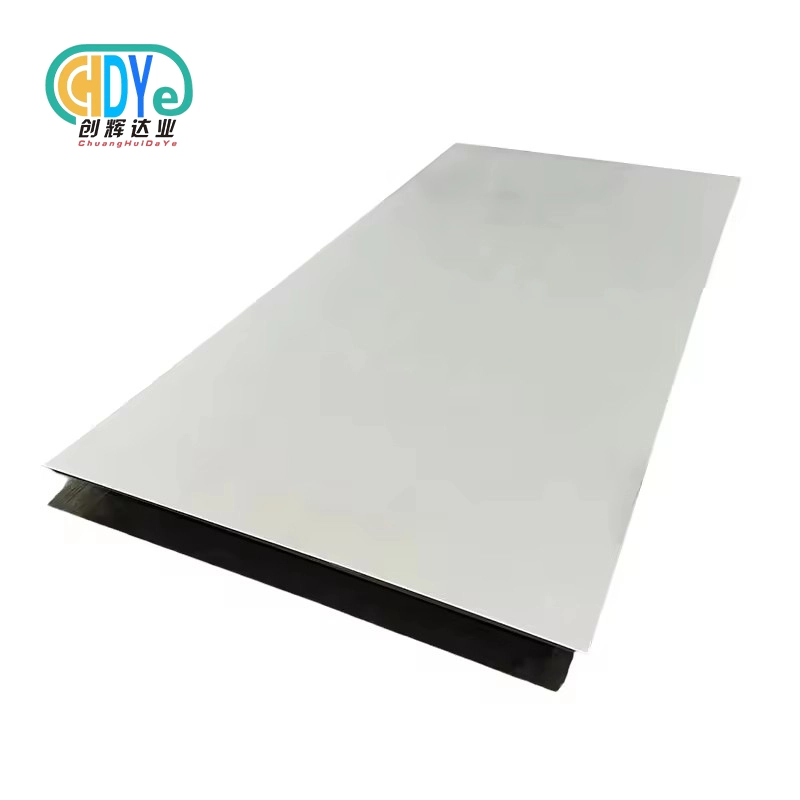
Understanding Titanium Plates and Their Heat Resistance
On the other hand, a titanium plate works very well when it's very hot or very cold. It won't change form at -196°C (1112°F) or over 600°C (1112°F). When it comes to parts that need to work at high temperatures all the time, titanium is the best metal. This is true in chemical processing, airplanes, and other areas. This is because it is a special metal that is harder than steel and aluminum for the same weight.
Find out about titanium plates and how well they can handle heat.
A titanium plate is one of the most high-tech metal items you can buy right now. Strict hot rolling and cold rolling methods are used to make flat-rolled goods that are usually more than 4.75 mm thick. The unique atomic structure of titanium gives these well-machined parts their great qualities. Titanium naturally doesn't break down or oxidize when it gets hot.
Chemical Composition and Metallurgical Properties
Titanium is very strong against heat because it is solid and has chemicals that are very strong. The form of pure titanium changes from an HCP (hexagonal close-packed) structure to a BCC (body-centered cubic) structure when it gets very hot. This change takes place at around 882°C. More oxide is added to titanium during the phase change, which helps keep it from oxidizing. Because of this, titanium can keep its shape at a lot of different temperatures.
Aluminum and vanadium are added to titanium metals used in business to make them better in some ways. Ti-6Al-4V titanium is a grade that is often used in airplanes. It has 6% aluminum and 4% vanadium in it, which makes it stronger at high temperatures. We use types of titanium plates like Gr 5, Gr 5 ELI, and Gr23 ELI for our medical goods. These plates are safe and stable at high temperatures, making them great for use in surgery.
Distinguishing Titanium Plates from Sheets in High-Temperature Applications
The difference between titanium plates and sheets is very important when picking materials for places where the temperature is very high. For the same amount of heat, plates stay the same size even when the temperature changes because they are larger. Even when temperatures change quickly, plates don't bend because they are thicker. They stay flat. Because of this, they can be used in pressure tanks and as building materials in places where the temperature is high.
How Titanium Plates Perform Under Extreme Temperature Conditions
It is better than most other elements at a lot of important things when it comes to high temperatures. Between room temperature and 300°C, titanium keeps about 80% of its strength. Many aluminum metals lose a lot of their strength above 150°C. TiO2 is great for uses that need to keep buildings strong under heat stress because it doesn't change its material properties.
Comparative Heat Resistance Analysis
It works better at a wider range of temperatures than steel, aluminum, and copper, according to tests. When steel gets above 500°C, its microstructure changes, making it much less strong. Above 300°C, aluminum metals stop working consistently. Many times, a titanium plate can still be used up to 600°C because it is strong enough, and some types can even work at even higher temperatures.
Another great thing about titanium is that it doesn't rust at high temperatures. Intergranular rust or sensitization can happen to stainless steel at high temperatures. Titanium, on the other hand, gets a strong, stick-together metal layer that makes it safer and stronger. This layer of oxide, which is mostly titanium dioxide, stays stable and safe even in places where it is reacting at about 500°C.
Real-World Performance in Critical Industries
People who work in aircraft have used titanium consistently in parts of jet engines that are heated to over 400°C all the time. Titanium alloys are used to make gas turbine blades that can be heated and cooled thousands of times without losing their shape or strength. In the same way, titanium bone plates are used in medicine and can withstand cleaning methods with temperatures as high as 134°C without losing their ability to work with living things or their shape.
Titanium tools that are used to work with chemicals last a very long time in tough, high-temperature conditions. It doesn't take long for heat exchangers and reaction tanks to break down when they work at temperatures above 300°C in chloride-containing atmospheres. But steel equipment that does the same thing often needs to be changed because rust causes problems.
Selecting the Right Titanium Plate Grade for High-Temperature Applications
One of the most important things engineers have to think about when they choose titanium for high temperatures is which grade to use. Different types of titanium are better for different things, depending on their mechanical and heating needs.
Comparative Analysis of Popular Titanium Grades
Titanium grade 2 doesn't rust easily, but it's not very strong, so it can be used for building at temperatures up to 300°C. It is economically pure, which makes it perfect for hardware used in chemical processes that need to be strong but not rusty. The strength of grade 5 titanium (Ti-6Al-4V) stays better at high temperatures, and its useful mechanical properties can be maintained up to 400°C for uses in space.
When the temperature is high, Grade 23 (Ti-6Al-4V ELI) bends and wears less easily, but it still stays strong at high temperatures like Grade 5. While sterilizing things in a hospital, this extra-low interstitial grade works better than others because it maintains biocompatibility and temperature stability.
Framework for Grade Selection Based on Temperature Requirements
To pick the right grade, you need to fit the material's features with what you need it for. If you need something that works steadily below 300°C and doesn't rust, Grade 2 is a good choice. When temperatures between 300°C and 400°C hit Grade 5, it needs to have better features. To make sure they last a long time in harsh environments with temperatures above 400°C, they need special metals or coatings that protect them.
They are also picked in different sizes based on how much they grow or shrink when heated or cooled. Grade 2 has a thermal expansion coefficient of about 8.6 × 10⁻⁶/°C, while Grade 5 has a slightly higher coefficient. By knowing these differences, you can help make sure that heat stress doesn't destroy limited systems.
Procurement Considerations for Titanium Plates Used in Extreme Environments
If you need a titanium plate for high-temperature uses, you should carefully look at the providers' quality methods and skills. It's hard to do a good job of making titanium, so service providers need to know how to handle and describe very hot materials.
Quality Certification and Standards Compliance
Companies that sell titanium plates must have at least ISO 9001:2015 approval. It makes sure that quality control stays the same during the whole process of making something. The plant where I work in Baoji, China's "Titanium Capital," follows ASTM B265 and ASME SB265 rules to the letter and gives full tracking paperwork for each batch. When the material is used at high temperatures, where a mistake could be very bad, this permission is very important.
For medical-grade titanium plates to be approved, they must meet extra standards like ASTM F67 and ASTM F136. These standards make sure the plates are safe for humans and don't break down at high temperatures. As part of our review process, we look at the item's appearance and size, test it with an ultrasound, and check all of its mechanical features to make sure it will work in tough conditions.
Custom Manufacturing and Bulk Procurement Options
When used at high temperatures, things often need to be made to order in specific shapes and heated in unique ways. Using electron beam ovens, exact rolling tools, and specialized annealing systems that can make titanium plate that works best at certain temperature levels, we can make high-tech items. For some thermal cycling needs, custom heat treatment methods can make the grains stronger and better at their structure.
People who buy in bulk can save a lot of money when they need things that are the same for many parts of a big job. You can save money and be sure that all the materials are the same when you buy them in bulk. This is especially important when the thermal expansion stops, and assembly pressures need to be matched.
Best Practices for Maximizing Titanium Plate Performance at High Temperatures
For titanium plate products to work best in places with very high temperatures, you need to know how to heat treat, handle, and take care of them. Things that are subject to weather stress last longer and work better when these habits are followed.
Recommended Heat Treatment Processes
Stress relief annealing gets rid of any leftover pressures from the shaping process while keeping the mechanical properties. It does this at temperatures between 480°C and 650°C. This step is needed for complicated forms that are going to be heated and cooled many times. It stops stress collection points that could start failure mechanisms. How well the material works at high temperatures depends on how quickly it cools down during the heat treatment process. This changes the structure of the grains.
Solution annealing and aging are two processes that can help materials stay strong at high temperatures. It is good for grade 5 titanium to be solution treated at 955°C and then aged at 540°C because it makes microstructures that stay strong after being exposed to high temperatures for a long time.
Maintenance and Handling Guidelines
If you clean the surface the right way, it won't get dirty, which could affect how well it works at high temperatures. Titanium changes when it comes in contact with hydrogen, oxygen, and nitrogen at high temperatures. This means that the surface must be kept clean and the air pressure must be managed during service and installation. As part of regular checks, you should look for surface darkening that could mean there is too much rust or contamination.
Slow rises in temperature should be part of thermal cycle methods so that thermal shock is kept to a minimum. When you heat or cool something quickly, the thermal pressure can get higher than the material's yield strength. This is especially true in systems with limited room. Cycling the heat in a controlled way makes it last longer and keeps the size the same at all temperatures.
Conclusion
A titanium plate can withstand extremely high temperatures due to a unique combination of mechanical properties. Because of this, it is necessary for important high-temperature uses in business, medicine, and space travel. Titanium is the best material for hard temperatures because it can keep its structure, resistance to rust, and mechanical properties at temperatures above 600°C. It is also the lightest material that is strong for its weight. It is important to pick the right grade, get it from a reputable source, and follow best practices to get the best performance and reliability. This will provide long-term value for uses where material failure is not an option.
FAQ
Q: Can titanium plates maintain structural integrity above 600°C?
A: Titanium plates can stay physically sound at temperatures above 600°C, but how well they work varies on the grade and the task at hand. If you keep Grade 5 titanium at 400°C, it will still be strong. Some high-temperature metals can be used safely at temperatures close to 600°C for short periods of time. The most important thing is to pick the right grade and know what technical qualities each job needs.
Q: How does titanium compare to stainless steel for high-temperature corrosion resistance?
A: At high temperatures, titanium doesn't rust as easily as stainless steel does. This is especially true in places where there are oxidizing agents and chlorides. Above 400°C, intergranular rust or sensitization may happen to stainless steel. When the temperature goes up, titanium, on the other hand, makes an oxide layer that stays strong and stays stable. This is why titanium is the best material for tools that handle chemicals and need to work in hard heat and acidic conditions.
Q: What factors influence the cost-efficiency of different titanium grades for high-temperature applications?
A: To save money, you need to weigh the initial costs of goods against how long they will last and how well they will work. When used at temperatures below 300°C, Grade 2 is cheaper to start with, but Grade 5 is more valuable in the long run because it stays stronger at higher temperatures. Specialty types cost more, but they work better in difficult conditions and often have a lower total cost of ownership because they last longer and need less maintenance.
Partner with Chuanghui Daye for Superior Titanium Plate Solutions
Shaaanxi Chuanghui Daye Metal Material Co., Ltd. can help you with your high-temperature needs by making titanium plate products that meet exact standards. Our plant in China's Titanium Capital is ISO 9001:2015 approved. It combines more than 30 years of knowledge in the field with the most up-to-date production tools to make materials that will always work, even in the hottest conditions. The plates we sell are sure to meet all of your needs, whether you need medical-grade plates for surgery or high-strength metal for flight parts. This is because we have strict quality control measures in place and can make things to order. Talk to our expert team about your high-temperature material needs by emailing info@chdymetal.com. You'll get personalized help from a trustworthy titanium plate provider who wants you to succeed.
References
1. American Society for Testing and Materials. "Standard Specification for Titanium and Titanium Alloy Strip, Sheet, and Plate." ASTM B265-20a, 2020.
2. Boyer, R., Welsch, G., and Collings, E.W. "Materials Properties Handbook: Titanium Alloys." ASM International Materials Park, Ohio, 1994.
3. Donachie, Matthew J. "Titanium: A Technical Guide, 2nd Edition." ASM International, Materials Park, Ohio, 2000.
4.Leyens, Christoph und Peters, Manfred. "Titanium and Titanium Alloys: Fundamentals and Applications." Wiley-VCH Verlag GmbH & Co. KGaA, Weinheim, Germany, 2003.
5. Lutjering, Gerd and Williams, James C. "Titanium: Engineering Materials and Processes." Springer-Verlag Berlin Heidelberg, 2007.
6. Rack, H.J. and Qazi, J.I. "Titanium alloys for biomedical applications." Materials Science and Engineering: C, Volume 26, Issues 8, 2006.
Learn about our latest products and discounts through SMS or email