- English
- French
- German
- Portuguese
- Spanish
- Russian
- Japanese
- Korean
- Arabic
- Greek
- German
- Turkish
- Italian
- Danish
- Romanian
- Indonesian
- Czech
- Afrikaans
- Swedish
- Polish
- Basque
- Catalan
- Esperanto
- Hindi
- Lao
- Albanian
- Amharic
- Armenian
- Azerbaijani
- Belarusian
- Bengali
- Bosnian
- Bulgarian
- Cebuano
- Chichewa
- Corsican
- Croatian
- Dutch
- Estonian
- Filipino
- Finnish
- Frisian
- Galician
- Georgian
- Gujarati
- Haitian
- Hausa
- Hawaiian
- Hebrew
- Hmong
- Hungarian
- Icelandic
- Igbo
- Javanese
- Kannada
- Kazakh
- Khmer
- Kurdish
- Kyrgyz
- Latin
- Latvian
- Lithuanian
- Luxembou..
- Macedonian
- Malagasy
- Malay
- Malayalam
- Maltese
- Maori
- Marathi
- Mongolian
- Burmese
- Nepali
- Norwegian
- Pashto
- Persian
- Punjabi
- Serbian
- Sesotho
- Sinhala
- Slovak
- Slovenian
- Somali
- Samoan
- Scots Gaelic
- Shona
- Sindhi
- Sundanese
- Swahili
- Tajik
- Tamil
- Telugu
- Thai
- Ukrainian
- Urdu
- Uzbek
- Vietnamese
- Welsh
- Xhosa
- Yiddish
- Yoruba
- Zulu
Can Titanium Welded Pipe Withstand Harsh Environments?
Titanium-welded pipe can definitely stand up to tough conditions. Titanium's high resistance to corrosion, high strength-to-weight ratio, and remarkable chemical stability make these precision-engineered pipes work great in harsh circumstances. When titanium welding pipe is exposed to harsh acids, high temperatures, salty environments, or chemicals that break down metal, it keeps its shape and works well even when other materials fail. When TIG or plasma welding is done correctly, the process makes joints that match the resistance properties of the base material. This makes sure that the whole pipe system is protected.
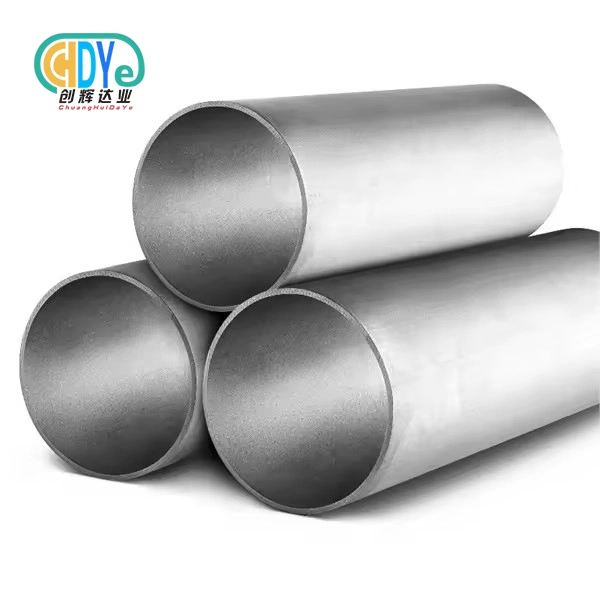
Understanding Titanium Welded Pipes and Their Properties
Titanium welded pipes are made by joining titanium sheets or plates together using very precise welding methods. They are cheaper and work better than seamless pipes. This part explains the changes in how titanium is made and talks about how it is very resistant to corrosion, heat, and chemicals. It also has strong mechanical properties that make it perfect for tough jobs.
Manufacturing Process and Quality Standards
To make titanium welded channels, titanium sheets or strips are rolled into barrel shapes, and at that point, the closures are joined utilizing advanced welding strategies. We utilize cutting-edge TIG and plasma welding innovations at Shaanxi Chuanghui Daye Metal Fabric Co., Ltd. to ensure beyond any doubt that our welds are solid and that the surfaces are smooth. In our generation, we keep a close eye on the temperature and discuss quality to keep things clean and ensure beyond any doubt that the mechanical properties are fair.
Our items completely meet the benchmarks set by ASTM B338, ASTM B861, and ASME SB-338. They too meet the best guidelines of clients around the world in the chemical, marine, and aviation businesses. These universal guidelines set rules for pipe quality, divider thickness, resistances, chemical composition, and mechanical qualities. They allow obtaining groups to establish imperative specialized benchmarks for making beyond any doubt that determinations are met.
Material Properties and Characteristics
Titanium tubes that have been welded together are solid, light, and have awesome mechanical qualities that make them great for intense occupations. The normal oxide layer of the fabric ensures against erosion and repairs itself when it gets broken. This detached film shapes in seconds when uncovered to discuss, making a boundary that most destructive substances can't get through.
Titanium is more grounded and lighter than steel, and it also remains steady at high temperatures and doesn't wear down effectively. These highlights lead to longer benefit lives, fewer support needs, and superior working productivity in a wide range of mechanical settings.
Performance of Titanium Welded Pipes in Harsh Environments
It is much longer lasting for titanium welded pipes than stainless steel or carbon steel options because they are much more resistant to oxidation, acidic compounds, and salt water. Because they are resistant to heat and mechanically stable, they keep working well even when temperatures change and get high, which is very important in fields like chemical processing and aircraft.
Corrosion Resistance in Aggressive Media
Titanium has a very high corrosion resistance because it can form a stable, protective oxide film that stays intact even in very harsh conditions. This inactive layer is very good at protecting itself from chlorine compounds, organic acids, and oxidizing solutions that would normally break down materials very quickly. Titanium-welded pipes will always keep their structural integrity when they are used with seawater. This makes them perfect for desalination plants and sites that are out at sea.
Titanium is very resistant to nitric acid, chromic acid, and chlorine dioxide solutions, which is very useful for chemical processing plants. Unlike stainless steel, which can rust in chloride-rich settings through pitting and crevice corrosion, titanium doesn't rust anywhere on its surface, even where it's welded.
Temperature Performance and Thermal Stability
Titanium rods that have been welded together keep their mechanical properties even when they are very cold or very hot, more than 300°C. The low thermal expansion rate of the material lowers stress levels during thermal cycling. This lowers the risk of fatigue failure in situations where temperatures change often.
Case studies from nuclear power plants show that titanium works well in heat exchanges and steam condensers that are heated to high temperatures. It's been decades since these installations haven't broken down much, which gives procurement managers faith through documented industry applications where safety, durability, and cost-effectiveness meet operational needs.
Titanium Welded Pipe Compared to Other Materials: Making an Informed Choice
This part compares titanium welded pipes to common materials like carbon steel and stainless steel, focusing on how well they resist corrosion, how heavy they are, how much they cost over their lifetime, and how often they need to be maintained. It also talks about the differences between welded and seamless titanium pipes and the trade-offs in price, manufacturing complexity, and efficiency in certain applications.
Material Comparison Matrix
When evaluating piping materials for harsh environments, several key factors must be considered to make informed procurement decisions. Here are the primary comparison criteria that distinguish titanium from conventional alternatives:
- Corrosion Resistance: Titanium offers superior resistance to chloride stress corrosion cracking, pitting, and crevice corrosion compared to 316L stainless steel. While stainless steel may provide adequate protection in mildly corrosive environments, titanium excels in aggressive chemical processing applications where long-term reliability is paramount.
- Weight Considerations: Titanium welded pipes weigh approximately 45% less than equivalent stainless steel pipes, reducing structural support requirements and installation costs. This weight advantage becomes particularly significant in aerospace applications and offshore platforms where every pound impacts overall system performance.
- Lifecycle Cost Analysis: Although titanium carries higher initial costs, the extended service life and reduced maintenance requirements often result in lower total cost of ownership. Industries experiencing frequent pipe replacement due to corrosion find that titanium solutions pay for themselves through reduced downtime and maintenance expenses.
These material advantages directly address common industrial challenges while providing a measurable return on investment through improved operational efficiency and reduced maintenance overhead.
Welded versus Seamless Titanium Pipes
You can choose between welded and seamless titanium pipes based on the needs of the purpose, the required pressure, and the cost. Welded titanium pipes have many benefits, such as the ability to come in larger diameters, lower costs for uses that don't require high pressure, and faster delivery times because the manufacturing process is easier.
Because they are harder to make, seamless pipes usually cost more, but they can handle higher pressures and have walls that are all the same width. The procurement decision-makers will find advice on how to choose the right titanium alloys for the chemical, aircraft, or marine industries. The focus will be on certifications and standards that affect the reliability and compliance of the product.
Procurement Insights: How to Source and Buy Titanium Welded Pipes Efficiently?
To find titanium welding pipes quickly, you need to know how prices work, such as the price per meter, the minimum order quantity, and any discounts that are available for buying in bulk. To find reliable suppliers, you need to look at things like certifications, production skills, and geographical advantages. One important thing to do is to compare well-known manufacturers in different areas.
Supplier Evaluation Criteria
A good procurement process starts with a careful evaluation of the supplier, paying special attention to quality certifications, production capabilities, and expert support services. Certification in ISO 9001:2015 means that quality management systems are in place, and compliance with ASTM and ASME standards means that product specifications meet foreign standards. When figuring out production capacity, it's important to look at both what's possible now and how it can be expanded to meet future needs.
Geography is a very important factor in planning transportation and figuring out total costs. Suppliers in areas that are already known for making titanium often offer better prices because the raw materials are closer and there are more skilled workers available. However, being close to where the product will be used may cancel out any cost savings from manufacturing by lowering shipping costs and shortening wait times.
Customization and Technical Support
This part also talks about delivery times, customization options, and customer service factors. This helps procurement professionals improve the ordering process, cut down on wait times, and get technical support that works with their project requirements and operational schedules. Custom sizes, alloy mixes, and end preparations can have a big effect on the success of a project, but they need to be carefully coordinated with production plans.
When changing titanium solutions to replace old materials or making new systems, technical consulting services are very helpful. Application engineering support is given by experienced suppliers who help optimize pipe specifications for specific working conditions while making sure they are in line with industry standards.
Company Introduction and Our Product & Service Offering
Shaanxi Chuanghui Daye Metal Material Co., Ltd. is proud of its decades of experience making titanium welded pipes. They do this by mixing cutting-edge production technologies with strict quality control. Our company is in the Baoji High-tech Development Zone in Shaanxi Province, which is known as China's "Titanium Capital." The area has good transportation links and a well-established industrial infrastructure.
Our Manufacturing Excellence
Since it was started by a rare metal expert with more than 30 years of experience, Chuanghui Daye has built a strong professional base and technical power. We are experts at making precision-engineered titanium welded pipes by carefully controlling the rolling and joining of titanium sheets. Our goods have a great mix of being lightweight, resistant to corrosion, and strong, which makes them perfect for cost-effective industrial uses.
There are annealing furnaces, electron beam furnaces, precision lathes, smelting equipment, rolling machines, and specialized cutting tools in our production facility. With this wide range of production options, we can provide big-diameter titanium welded pipes that are precisely made to meet the needs of each project.
Quality Assurance and Standards Compliance
We have a lot of different types and sizes of titanium, as well as customization services, OEM production, and strong support after the sale. Our focus on the client means that we can provide full technical support, faster order delivery, and global logistics solutions. We build long-lasting relationships with our clients that give procurement teams the tools they need to meet strict industry standards and confidently drive project success.
Quality is still what makes us successful, and our ISO 9001:2015 Quality Management System Certification makes sure that we have tight control over the whole production process. Every step of the process, from checking the raw materials to melting, forging, machining, and finally packaging, is thoroughly checked for quality to make sure that the result always works well and is reliable.
Conclusion
Titanium welded pipes are the best choice for uses that need to be used in harsh environments because they are more resistant to corrosion, have higher mechanical strength, and last longer than other materials. There is strong evidence that these pipes can resist harsh chemicals, high temperatures, and corrosive conditions while still remaining structurally sound and working properly for long periods of time. Titanium has special properties that help many fields, from chemical processing and aerospace to marine engineering and nuclear power. These properties make operations more efficient and lower repair costs. Titanium welded pipes often offer a better return on investment over their entire lifetime, even though they cost more at first. This makes them a smart choice for high-stakes situations where dependability can't be sacrificed.
FAQ
Q: Can titanium-welded pipes replace stainless steel in chemical processing applications?
A: Yes, titanium-welded pipes can effectively replace stainless steel in most chemical processing applications, particularly where chloride-containing solutions, organic acids, or oxidizing environments are present. Titanium offers superior resistance to stress corrosion cracking and pitting compared to 316L stainless steel, making it ideal for more aggressive chemical environments.
Q: What certifications should I look for when purchasing titanium welded pipes?
A: Critical certifications include ASTM B338, ASTM B861, and ASME SB-338 standards for titanium welded pipes. Additionally, ensure your supplier holds ISO 9001:2015 Quality Management System certification and can provide material test certificates (MTCs) with full chemical and mechanical property documentation for traceability.
Q: What are typical delivery timeframes for bulk titanium welded pipe orders?
A: Standard delivery timeframes range from 1-2 weeks for common sizes and grades, while custom specifications may require 2-3 weeks, depending on complexity and order quantity. Planning procurement schedules early and maintaining open communication with suppliers helps mitigate potential logistics challenges and ensures timely project completion.
Partner with Chuanghui Daye for Superior Titanium Welded Pipe Solutions
Ready to experience the exceptional performance and reliability of premium titanium welded pipes? Shaanxi Chuanghui Daye's three decades of rare metal expertise and state-of-the-art manufacturing capabilities ensure you receive products that exceed the most demanding specifications. Our ISO 9001:2015 certified facility produces titanium welded pipe solutions that deliver outstanding corrosion resistance and mechanical performance for your harshest applications. Contact our technical team at info@chdymetal.com to discuss your specific requirements and discover why leading manufacturers choose Chuanghui Daye as their trusted titanium welded pipe supplier for mission-critical projects.
References
1. Boyer, R., Welsch, G., & Collings, E.W. "Materials Properties Handbook: Titanium Alloys." ASM International, Materials Park, Ohio.
2. Schutz, R.W. & Thomas, D.E. "Corrosion of Titanium and Titanium Alloys in Industrial Environments." Metals Handbook, Volume 13, Corrosion, ASM International.
3. American Society for Testing and Materials. "ASTM B338 Standard Specification for Seamless and Welded Titanium and Titanium Alloy Tubes for Condensers and Heat Exchangers."
4. Donachie, Matthew J. "Titanium: A Technical Guide, Second Edition." ASM International, Materials Park, Ohio.
5. Lutjering, G. & Williams, J.C. "Titanium: Engineering Materials and Processes." Springer-Verlag, Berlin Heidelberg.
6. American Society of Mechanical Engineers. "ASME SB-338 Specification for Seamless and Welded Titanium and Titanium Alloy Tubes for Condensers and Heat Exchangers."
Learn about our latest products and discounts through SMS or email