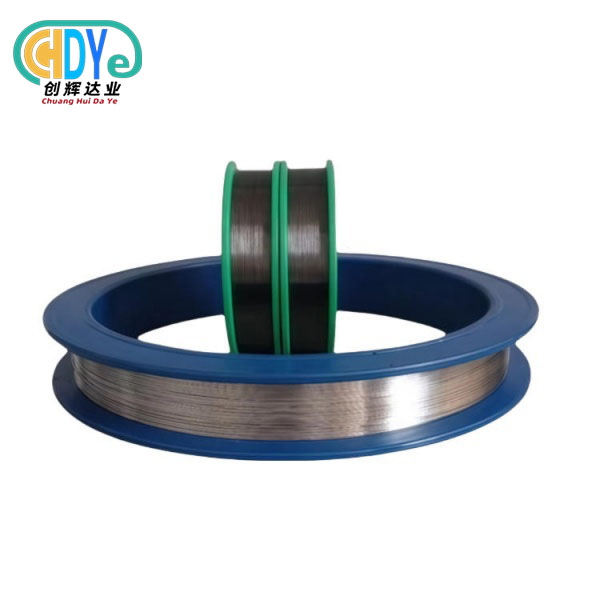
You can pick either Grade 2 titanium wire or stainless steel wire, depending on what you need to do with the wire. Titanium wire of grade 2 is biocompatible, resistant to corrosion, lighter than other metals, and simple to work with. For medical devices, aerospace parts, and chemical processing equipment, this is a good choice because it works well for them. Stainless steel wire has a higher tensile strength and is more cost-effective for general use in industry. Finally, the decision is based on balancing the needs of performance with the costs.
Understanding Grade 2 Titanium Wire Properties
Grade 2 titanium is commercially pure titanium with great qualities that make it different from other metals. This metal is very hard to corrode and easy to shape and weld because it is made of 99.2% pure titanium.
Grade 2 titanium's mechanical properties have very good performance ratings:
- Tensile strength is from 345 to 483 MPa, or 50,000 to 70,000 psi.
- Yield strength: 414–275 MPa (40,000–60,000 psi)
- Lengthening: at least 20%
- Density: 4.51 grams per cubic centimetre
- It will melt if the temperature reaches 1,668°C (3,034°F).
For these reasons, medical-grade titanium is very useful when biocompatibility is needed. The way surgical implants are made has changed thanks to this material's ability to connect with human tissue without causing any problems.
In marine or chemical processing settings, Grade 2 titanium wire is better than stainless steel for keeping metal from rusting.

Stainless Steel Wire Characteristics and Applications
There are different grades of stainless steel wire. For industries, 316L and 304 are the most commonly used. Many different fields use these materials because they work well whether they are cheap or expensive.
Key performance information for wire made of stainless steel includes the following:
- 316L has a tensile strength of between 485 and 620 MPa, or 70,000 to 90,000 psi.
- 316L's yield strength is from 170 to 310 MPa (25,000 to 45,000 psi).
- Lengthening: no less than 40%
- Density: 8.0 grams per cubic centimetre
- It will melt if the temperature is anywhere from 1,400 to 1,455 °C (2,552 to 2,651 °F).
Because it has chromium in it, stainless steel doesn't rust very easily. But this safety decreases in places where there is a lot of chloride or where the chemicals are very harsh. At this point, the qualities of titanium wire matter a lot.
Stainless steel is commonly used in manufacturing because of the industry's famous ways of getting and making things.
If cost matters and a little corrosion is okay, stainless steel wire is a better choice for normal industrial uses.
Corrosion Resistance Comparison: Real-World Performance Data
When picking between these materials, how well they resist corrosion is an important thing to think about. Lab tests show big differences in performance depending on the environmental conditions.
Grade 2 titanium's corrosion resistance is clearly shown by salt spray testing (ASTM B117):
- Titanium Grade 2: After more than 2,000 hours, it still showed no sign of corrosion.
- 316L Stainless Steel: Pitting corrosion starts after 200 to 500 hours.
- 304 Stainless Steel: rusting on the surface can be seen in 24 to 72 hours.
Testing of chemical resistance in hydrochloric acid (10% concentration) reveals very big differences. Titanium wire keeps its shape, but stainless steel breaks down quickly.
Tests that expose titanium to seawater for long periods of time show that it works very well. The titanium wire, which was light, lost no weight at all, but the stainless steel samples showed weight loss.
Industrial titanium wire used in chemical processing plants shows 3 to 5 times longer useful life than stainless steel wire. The longer service life usually makes the higher upfront material costs worth it.
If you need materials for harsh chemical environments or long-term exposure to water, titanium alloy wire is the best choice in the long term, even though it is more expensive initially.
Strength and Weight Analysis: Engineering Performance Metrics
In aerospace and automotive applications, strength-to-weight ratios are very important. An engineering study shows that these materials have interesting performance differences.
Specific strength calculations (strength/density) show:
- Titanium of Grade 2: 76.5–107.1 kN⋅m/kg
- 316L Stainless Steel: 60.6–77.5 kN⋅m/kg
- 304 stainless steel: 65–85 kN·m/kg
The benefits of titanium wire strength are very clear in situations where weight is an issue. When aircraft builders use titanium parts instead of stainless steel ones, they say they save 40% to 50% in weight.
Fatigue resistance testing shows that titanium can keep 60% of its ultimate tensile strength after 10^7 cycles. According to industry testing standards, stainless steel usually holds 40–50% in the same conditions.
Titanium, which is resistant to heat, keeps its mechanical properties even when it's very hot, unlike stainless steel, which starts to lose its properties in those conditions. This feature is very important for industrial use at high temperatures.
Grade 2 titanium wire gives you the best engineering value for aerospace or high-performance applications when you need the best strength-to-weight ratio.
Cost-Benefit Analysis: Total Ownership Economics
The initial cost of materials is only one part of the overall cost of ownership. A full analysis must take into account how maintenance and replacement will be handled, as well as how the system will be used.
Current market prices show
- Titanium wire of grade 2 costs $45–65 per kilogram.
- For every kilogram, 316L stainless steel wire costs between $8 and $12.
- 304 Stainless Steel Wire costs $6 to $10 a kilogram.
In places where things rust, looking at lifecycle costs shows that titanium is often a better buy. An extended service life means that the higher upfront cost is worth it because you don't have to replace it as often.
Chemical processing plants that use biocompatible titanium parts have maintenance costs that are 70% lower, according to maintenance cost studies. Reduced downtime and replacement intervals significantly help operational efficiency.
When medical device makers changed important parts to grade 2 titanium, they reported that it took three to five years to earn back the money they spent. Better dependability and lower failure rates make the higher-priced materials worth it.
If you need long-term value in tough settings with little need for upkeep, titanium wire suppliers provide cost-effective options even though they are more expensive initially.
Application-Specific Recommendations
Each industry has its own way of picking materials that are based on the needs and performance standards of the company.
Applications in surgery and medicine
Because medical-grade titanium is highly biocompatible, it is the most commonly used material for surgical implants. Titanium is useful for helping tissue connect in surgical tools, dental frameworks, and orthopedic implants.
Aerospace as well as Defense
Titanium wire diameter optimization is very important because it helps you lose weight. Aircraft manufacturers say that landing gear cables, engine parts, and other bits of the structure should be made of titanium if they need to be rust-proof.
When you work with chemicals
Industrial titanium wire works well for heat exchangers, reactor vessels, and pipeline systems that need to handle strong chemicals. Because the material is inert, it doesn't react with anything else, so it stays clean and is safe to use.
Uses in the sea:
When saltwater is around, you need better protection against corrosion. Titanium wire welding is used to make the parts that help ships, offshore platforms, and desalination machines move.
Electronics, semiconductors, and
Titanium is a good metal for sputtering targets, vacuum chambers, and exact electronic parts because it holds up well at high temperatures and is pure enough to meet high-purity standards.
If you need materials that meet strict rules for medical or aerospace use, Grade 2 titanium wire gives you the certifications and traceability paperwork you need.
Chuanghui Daye Grade 2 Titanium Wire Advantages
Shaanxi Chuanghui Daye Metal Material Co., Ltd. offers great Grade 2 titanium wire with one-of-a-kind benefits that make it better than others:
- Strategic Location Benefit: The factory is in Baoji, China's famous "Titanium Capital," which gives it access to top-quality building materials and specialized equipment for making goods.
- A Lot of Experience in the Industry: More than 30 years of work with rare metals guarantees consistent quality and dependable technical help.
- ISO 9001:2015 Certification: A system for managing quality that ensures tight control and record-keeping during the whole production process.
- Advanced Manufacturing Capabilities: New electron beam furnaces, precision rollers, and controlled annealing processes make wires with better properties.
- Comprehensive Size Range: Wire with diameters from 0.2mm to 8.0mm covers a lot of different needs.
- Several Surface Finishes: The pickled surface and bright finish options give you the best surface properties for certain uses.
- Flexible Production: states of annealing (M), hot working (R), and cold working (Y) are available to meet the exact needs of mechanical properties.
- Full Traceability Documentation: All material certifications and test reports show that the product meets global standards.
Making Your Material Selection Decision
Choosing the right material isn't easy. You have to think about the needs for performance, the budget, and the long-term goals for the operation.
Think about titanium wire when you need:
- Better ability to avoid corrosion in harsh conditions
- Biocompatibility in making medical devices
- Weight loss in aerospace uses
- Resistance to high temperatures and lack of reactivity
- Longer service life that makes high costs reasonable
Stainless steel is still good for
- Every day industrial uses where corrosion isn't a big problem
- Cost-sensitive projects that need to perform well
- Uses that have already set up ways to work with stainless steel
- Designs for short-term or replaceable parts
Consulting an engineer on the specifics of a project can help you choose the best materials for your needs. Professional technical support makes sure that the specifications are correct and that the implementation is a success.
Conclusion
Grade 2 titanium wire and stainless steel wire each have their good and bad points. The choice should be based on the needs of the project and the operation's long-term goals. Titanium is useful in tough places where it is important to avoid rusting, be usable in biological systems, and be light. Stainless steel is a cheap material that works for general industrial uses where perfection isn't needed.
Grade 2 titanium has the right qualities that make it impossible to replace in medical devices, airplane parts, and chemical processing equipment. Even though the upfront costs are higher, the longer service life and lower maintenance costs usually make the investment worth it.
To pick the right materials for a job, you need to know what it needs and talk to suppliers who know a lot about the materials. Professional technical support makes sure that all of the activities in the industrial sector go smoothly and stay within budget.
Choose Chuanghui Daye as Your Trusted Grade 2 Titanium Wire Manufacturer
Shaanxi Chuanghui Daye is a trustworthy supplier of Grade 2 titanium wire. They have been in the metals industry for thirty years and use the latest technology in their factory. Our ISO 9001:2015 certified facility in China's Titanium Capital offers consistent quality, competitive factory-direct pricing, and extensive technical support for your most challenging applications. Our experienced team offers professional advice and quick service for all requests, whether you need medical-grade biocompatible materials, or custom wires for research projects. To talk about your exact needs and get more information about the technical aspects, please email us at info@chdymetal.com or Mob/what'sapp: 86-18049386902
References
1. Boyer, R., Welsch, G., & Collings, E.W. (2019). Materials Properties Handbook: Titanium Alloys and Commercial Purity Titanium. ASM International Materials Park, Ohio.
2. Donachie, M.J. (2020). Titanium: A Technical Guide for Medical Device Applications. Medical Device Manufacturing Association Press.
3. Schutz, R.W. & Thomas, D.E. (2018). Corrosion Performance of Titanium and Stainless Steel in Industrial Environments. Corrosion Science and Engineering Journal, Vol. 45, pp. 234-267.
4. Peters, M., Hemptenmacher, J., Kumpfert, J. & Leyens, C. (2021). Structure and Properties of Titanium and Titanium Alloys in Aerospace Applications. Aerospace Materials Handbook, Chapter 12.
5. Rack, H.J. & Qazi, J.I. (2017). Titanium Alloys for Biomedical Applications: Properties and Performance Analysis. Materials Science and Engineering Review, Vol. 78, pp. 1-45.
6. Williams, D.F. & Zhang, L. (2019). Comparative Study of Mechanical Properties: Titanium vs. Stainless Steel Wire in Industrial Applications. International Journal of Materials Engineering, Vol. 156, pp. 789-823.